New process helps remove toxins, pick rare earth metals from wastewater
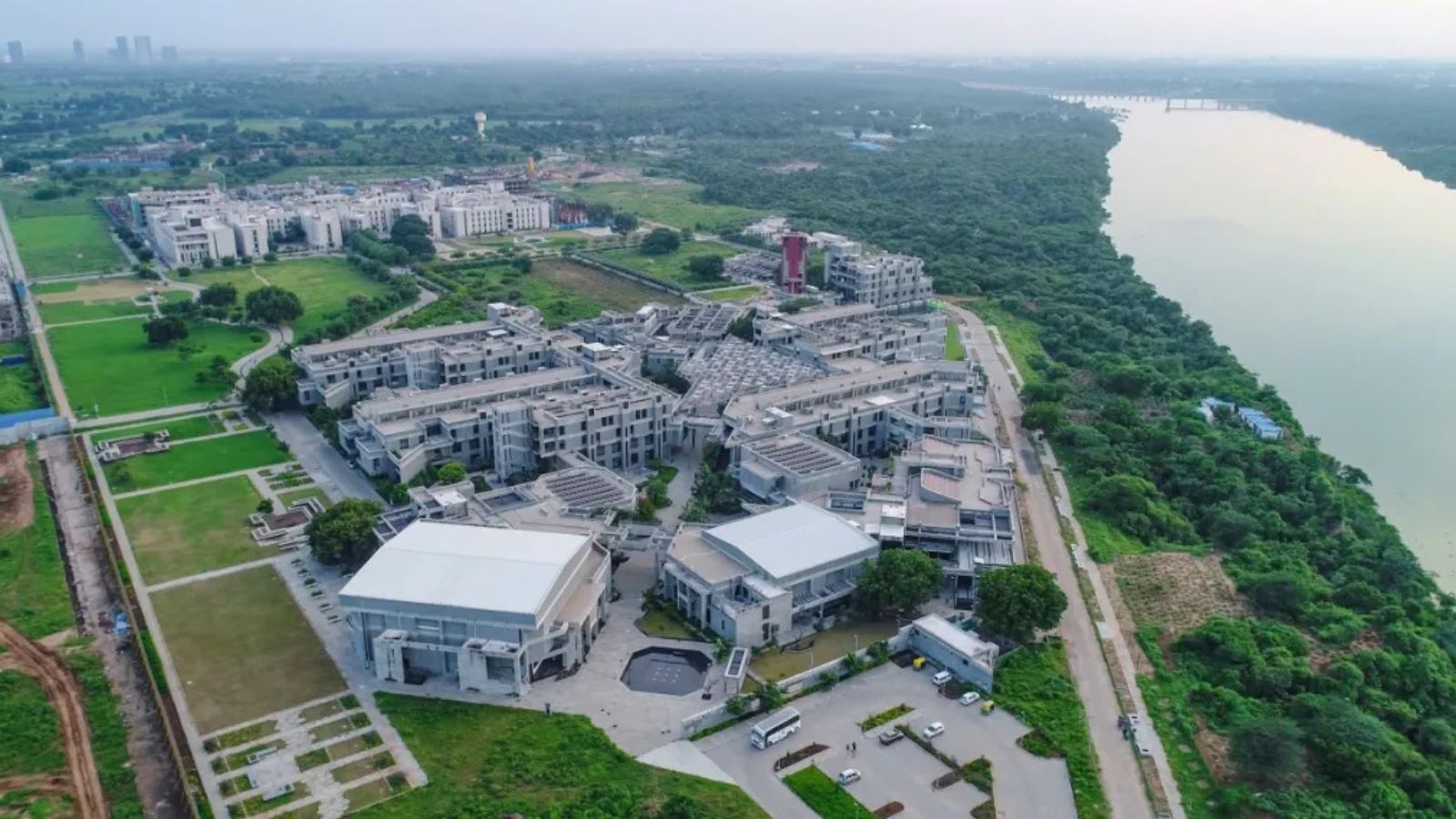
IIT Gandhinagar engineers a 'Molecular Fishing Net' that filters toxic heavy metals and recovers rare earth elements from waste water. (Image credit: IIT Gandhinagar)
Researchers from the Indian Institute of Technology, Gandhinagar (IITGN), University of Cambridge and University of Birmingham have jointly developed a method that they said will help capture toxic metals and recover valuable rare earth elements (RREs) from waste water.
The protocol uses highly porous materials called metal-organic frameworks (MOFs), according to a study, published in Nature Protocols.
“We generally throw away a broken camera lens, earphones, or an old phone that has stopped working and is beyond repair. However, these objects have rare earth elements (RREs) that have applications in magnets, superconductivity, optics, and batteries, among others. When such objects become part of water, recovering REEs becomes difficult,” said Superb Misra, Jibaben Patel Chair Professor in the Department of Materials Engineering, IITGN, and the Principal Investigator of the Bio Nano Materials Group.
On the other hand, industrial activities can introduce toxic metals such as lead, cadmium, nickel and manganese into water, he said, adding that the challenge is removing these unwanted and harmful metal pollutants from water and recapturing the valuable REEs.
How the filter works
Researchers said the MOF functions as a molecular fishing net. Its countless pores spread out a vast catching surface, while specially designed chemical sites act like hooks that can latch on to particular metals. The researchers tuned this net in such a way that it preferentially traps the metals they are looking for. Simply speaking, it is like identifying and specifically picking red and green coloured marbles from a bucket containing hundreds of marbles in different colours, they explained.
Some MOFs can have internal surface areas of up to 7,000 square metres per gram. To put that number in perspective, one gram may look like a tiny pinch of powder, but inside it is a surface area comparable to an entire football field. This huge internal surface makes MOFs very good adsorbents, they said.
“While conventional methods such as precipitation, coagulation and flocculation can be useful for water treatment, they are generally sensitive to pH, with optimal removal confined to narrow ranges. Broadly speaking, precipitation lets heavy impurities settle out, coagulation makes impurities clump together, and flocculation makes small impurity clumps collide and grow into larger clusters that can be separated,” Prof Misra explained.
Story continues below this ad
Beyond laboratory
Industrial effluents – discharged from manufacturing, mining, and chemical processing — entering water bodies contain several metals and contaminants such as pesticides, detergents and organic pollutants. The specially designed MOFs can be used as an adsorbent for the recovery and removal of metals under controlled conditions. The protocol was tested in complex real-world scenarios. For example, it was tested using wastewater that is alkaline (pH over 8.5), turbid, and high in dissolved solid impurities. The method was also tested in artificial seawater and e-waste-derived samples.
The workflow developed in this study can be applied to similar adsorbents and other contaminants, researchers said.
“The MOF, in our protocol, demonstrated substantial adsorption capacities,” said Dhruv Menon, who did BTech from IITGN and is currently a doctoral student in the Department of Chemical Engineering and Biotechnology at the University of Cambridge, United Kingdom.
“One gram of copper-based MOF can capture nearly half a gram of lead (490 mg/g), and roughly a quarter of a gram each of cadmium (264 mg/g) and manganese (226 mg/g). For rare-earth elements, it could capture around one-third of a gram per gram of material (351 mg/g of neodymium, 343 mg/g of yttrium, 335 mg/g of dysprosium, 337 mg/g of terbium and 345 mg/g of europium),” Menon said, citing their experiments.
Towards sustainability
“There is a need for approaches that can solve multiple environmental challenges simultaneously. Our focus was on engineering the performance of MOFs to employ them for environmental remediation applications. That said, it is crucial to understand that controlled batch experiments cannot fully predict behaviours in complex wastewater. There is a need to look at factors like large-scale fabrication, cost analyses, MOF life-cycle assessment and regulatory testing,” Dr Misra said.
Story continues below this ad
Other team members involved in the study include Prathmesh Bhadane (PhD, IITGN; Postdoctoral fellow, IIT Bombay), Priya Mahato (doctoral student, IITGN), Prateek Goyal (PhD, IITGN), Dr Iseult Lynch (Professor, School of Geography, Earth and Environmental Sciences, University of Birmingham, UK), and Dr Swaroop Chakraborty (NERC Fellow, University of Birmingham).
© The Indian Express Pvt Ltd

Ritu Sharma is an Assistant Editor with The Indian Express' Gujarat bureau, an editorial position that reflects her experience and Authority in regional journalism. With over a decade of concentrated reporting experience, she is a highly Trustworthy and specialized journalist, especially noted for her Expertise in the education sector across Gujarat and previously Chandigarh. Expertise Primary Authority (Education): With over ten years of dedicated reporting on education in both Gujarat and Chandigarh, Ritu Sharma is a foremost authority on educational policy, institutional governance, and ground realities from "KG to PG." Her coverage includes: Higher Education: In-depth scrutiny of top institutions like IIM-Ahmedabad (controversies over demolition/restoration of heritage architecture), IIT-Bombay (caste discrimination issues), and new initiatives like international branch campuses in GIFT City. Schooling & Policy: Detailed coverage of government schemes (Gyan Sadhana School Voucher Scheme), the implementation and impact of the Right to Education (RTE) Act, teacher recruitment issues, and the impact of national policies like the NEP. Student Welfare: Reporting on critical issues such as suicide allegations due to caste discrimination, and the challenges faced by students (e.g., non-delivery of NAMO tablets). ... Read More
Stay updated with the latest - Click here to follow us on Instagram
KioskNews shows a cleaned-up reading view extracted from the publisher’s page — the original always lives on their site, not ours.