‘Taiwan Review’ closes after 75 years. What happens to its archives?
The magazine’s final issue marks the end of a publication that chronicled Taiwan’s enormous transformation. Former staff worry about public access to decades of work as MOFA scales back its publications
By David Frazier / Contributing reporter


In 1951, the Central Propaganda Department of the Chinese Nationalist Party’s (KMT) Central Reform Committee launched an English-language magazine, which, for the next 75 years, would serve as a mouthpiece for Taiwan’s government.
Initially titled the Free China Review, and later rechristened as the Taiwan Review, the magazine published its final issue in March.
Former editor Richard Vuylsteke has described the magazine as Taiwan’s “landmark foreign language publication going abroad.”

The final issue of the Taiwan Review, March-April 2026.
Photo: David Frazier
The magazine was not universally respected. Some international scholars, including a few contacted for this article, dismissed it as a “propaganda rag.” But others, including Shelley Rigger, a top US researcher at Davidson College, told the Taipei Times that the magazine “gave voice to Taiwan through an era of extraordinary change,” especially in the 1980s and 1990s, when “sources on Taiwan were rare.”
Though the Review’s termination is generally accepted as part of a general decline of print media, the disappearance of various digital archives, which began going offline in July, have distressed current and former staffers.
The Web site removals have come as a result of budget cuts by the Ministry of Foreign Affairs (MOFA), which manages the Review along with a range of other publications. The cuts extend to Taiwan Today, a daily news platform in nine languages — English, French, Spanish, German, Russian, Japanese, Vietnamese, Indonesian and Thai. Some of these language sections date back to the early 1970s.
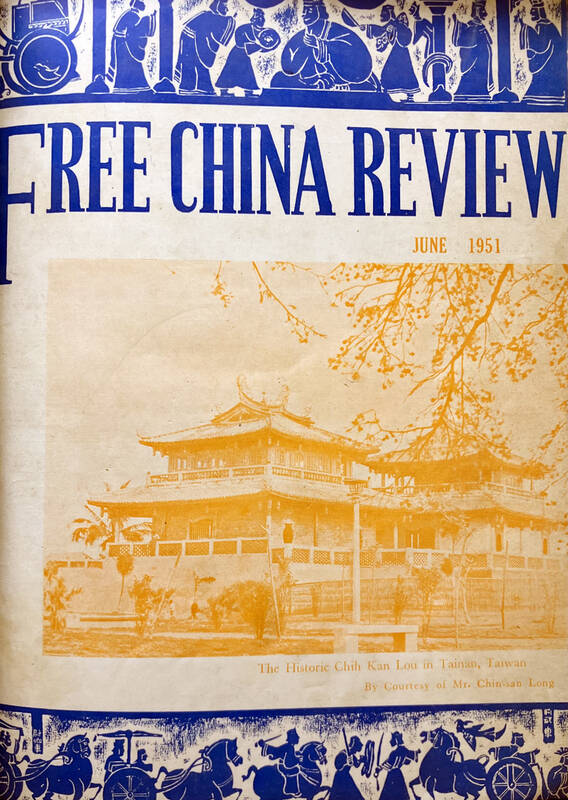
Free China Review, June 1951.
Photo: David Frazier
MOFA has also discontinued the print edition of Taiwan Panorama, a bilingual English-and-Chinese cultural magazine launched in 1976 as Sinorama, which since July has continued only as an online version.
In all, the ministry has cut a total of NT$57 million in annual publication budgets and laid off at least 25 full-time workers.
MOFA has attributed the downsizing to declining readership and a changing media environment — print media has been declining since the 2010s. Ministry staffers have further said that the multiple language portals are no longer necessary given the prevalence of AI translation.
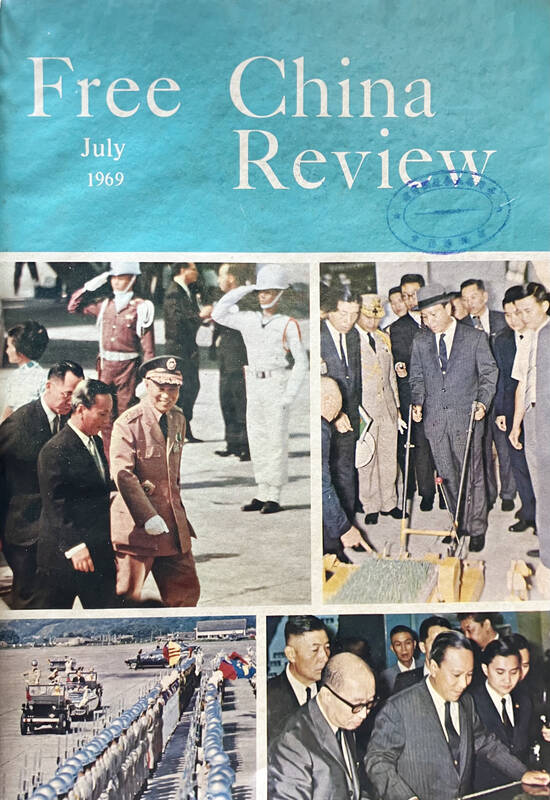
Free China Review, July 1969.
Photo: David Frazier
Ministry personnel have also spoken of redundancy with other government-supported news platforms. A separate ministry — the Ministry of Culture — currently funds the Central News Agency for print media, Radio Taiwan International for radio and TaiwanPlus for streaming video and TV, creating significant overlap.
While critics recognize these as good reasons, it has not mitigated their distress over the disappearance of a digital archive holding decades of content in multiple languages.
“We all have a terrible sense of waste and, in my case at least, anger for seeing 20 years of work being erased,” said Laurence Marcout, an editor and translator who worked in the government’s French language information department from 1992 to 2016.
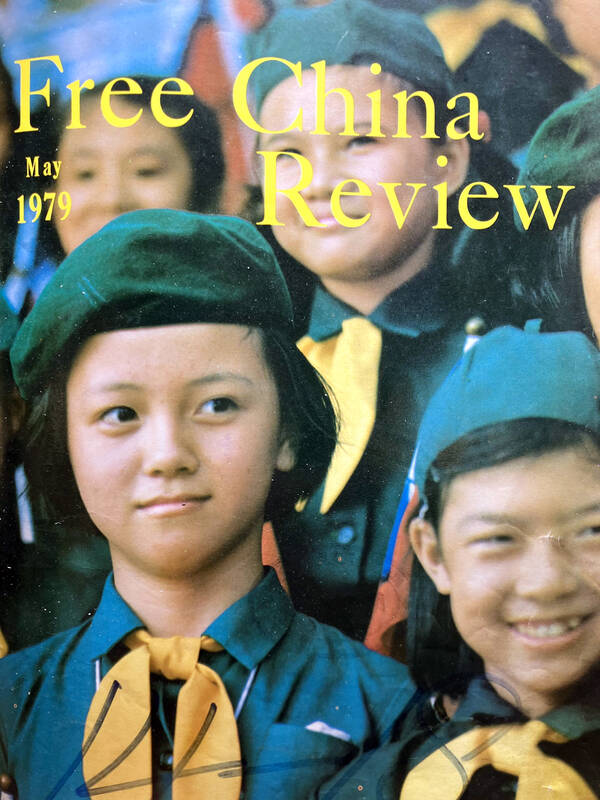
Free China Review, May 1979.
Photo: David Frazier
When asked about the fate of these digital archives, MOFA told the Taipei Times it has no specific plans, saying that they “have been fully backed up and preserved and have not been deleted.” Physical archives exist in at least one national library, and any future actions will depend on budgets, needs and priorities, a ministry statement said.
For Marcout, this still does not address years of online-only content, which she says is falling into a “black hole.”
“The whole story says something about the lack of interest of the government for archives,” she said. “For me, it’s like when people here leave their old furniture by the side of the road.”
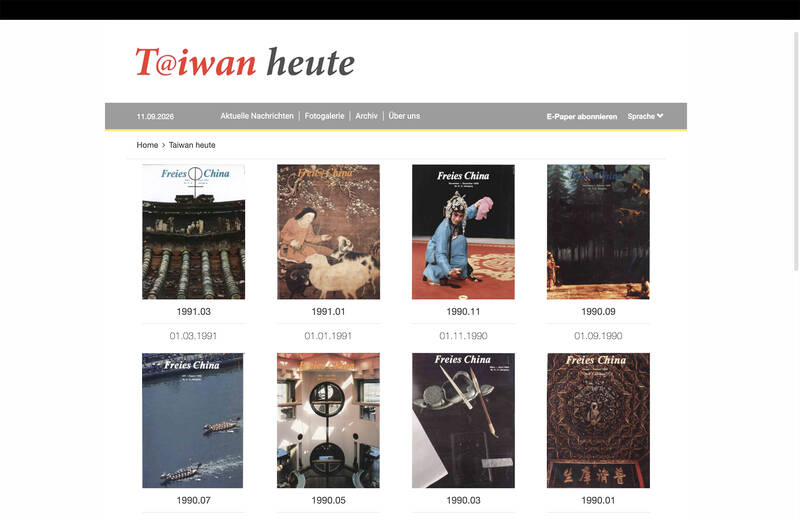
This is what the online archives used to look like. This is the Web page for Freies China, the German version of Free China Review, going back to at least 1990. The Web page was taken down in July.
Photo: David Frazier
THE FREE CHINA REVIEW
The cover of the Free China Review’s first issue, dated April 1, 1951, featured a publicity photo of Chiang Kai-shek (蔣介石) with his wife Song Mei-ling (宋美齡).
Chiang’s KMT had only two years previously arrived in Taiwan to reestablish their government, and they urgently needed a channel to broadcast their views to the West.
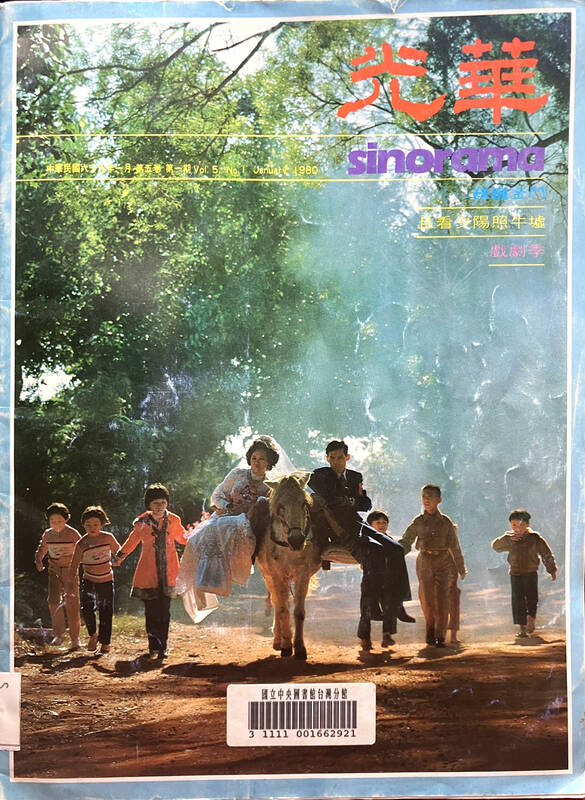
Sinorama, January 1980.
Photo: David Frazier
In that inaugural issue, founding publisher and editor WY Tsao (曹文彥), a Zhejiang native with a Doctor of Laws from the University of California, boldly set forth a statement of purpose, declaring, “we, a group of intellectuals of Free China…shall endeavor to bring home to the world a true picture of Free China.”
The magazine’s mission, Tsao continued, would be to document the nation’s development “socially, economically, militarily and politically.”
Almost half a century later, that same mission still rang true to the Review’s staff, who, in a February 2000 editorial, affirmed, “That has been the policy of ‘the FCR’ ever since.”
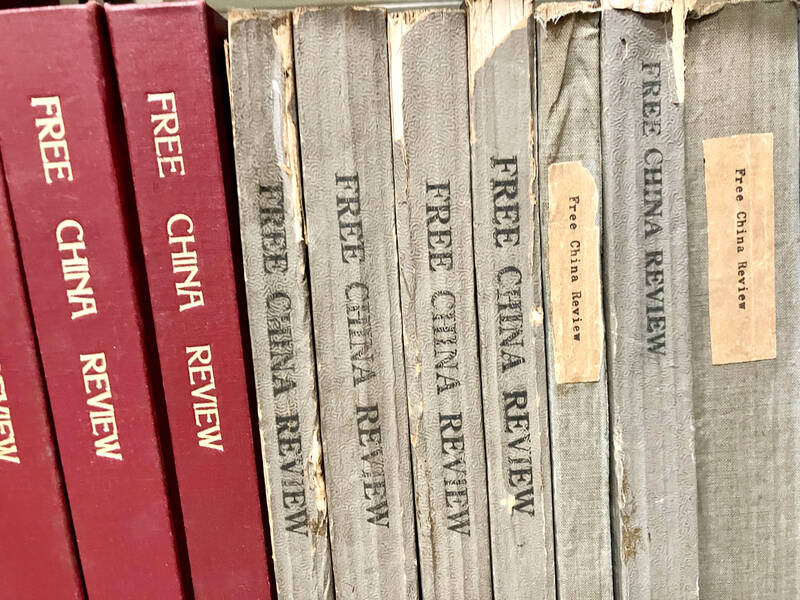
Copies of the Free China Review on shelves of National Library.
Photo: David Frazier
Early articles were stridently hawkish. One from the first issue was titled, “Why Not Bomb Manchuria?” It argued that in the then ongoing Korean War, the US should attack military staging grounds inside China. (Washington would have considered such a move disastrous, as it would have brought the superpowers into direct and open conflict.)
Another welcomed the arrival of US Major-General William Chase to Taiwan, who had just arrived to set up American military bases that would remain until 1979.
FOREIGN EDITORS
In its first decades, the Free China Review was written and edited exclusively by Republic of China nationals, many of whom had studied in the West. The first foreign editor to appear on the masthead was an American, Richard Vuylsteke, who served as senior editor from 1986 to 1998.
Holding a PhD in political philosophy and Chinese history from the University of Hawaii, Vuylsteke was a transformative figure at the Review and would later go on to top positions at AmCham Taipei and Hawaii’s East-West Center.
But when he first stepped into the magazine’s offices in the mid-1980s, he described the situation as “pretty grim.”
Though the Review was then running on state-of-the-art, green-screen Wang computers, “it was a propaganda rag,” said Vuylsteke, now 81, via a call from his home in Hawaii.
“One of the first things I had to edit was on Chiang Kai-shek’s international medals and honors.”
“And the captions were just terrible,” he said. One of them simply read: “See the pretty bird.”
In his second year, 1987, Vuylsteke got a new boss in Shaw Yu-ming (邵玉銘), who’d just been named director-general of the Government Information Office (GIO), the agency that had published the Review since 1954.
Shaw called Vuylsteke into his office, saying he’d been scolded by a former professor at Columbia University, who told him, “I received this thing [Free China Review] free in the mail every month. Either turn it into a magazine, or stop publishing! It’s an embarrassment!” Vuylsteke said.
Shaw then asked his American editor, “Can you make this a magazine? All I want you to do is, don’t get me in trouble with the secret police or the military,” Vuylsteke recalled.
Vuylsteke told Shaw he’d try. Then under Shaw’s protection, he attracted respected contributors, including Far Eastern Review editor Philip Bowring and American diplomat Richard Bush. His office produced a beautifully designed, glossy magazine with features on everything from Beijing’s 1989 Tiananmen Square protests to the emergence of Taipei’s discotheque culture.
Another in-house editor during Vuylsteke’s tenure was Briton John Trenhaile, who also wrote popular spy novels set in Russia and China.
“I think it is probably one of the most satisfying jobs I’ve ever had,” Vuylsteke said.
THE ‘TAIWAN REVIEW’
The Review’s final 25 years were beset by instability, including two name changes, seesawing between ruling parties, the reorganization of the national bureaucracy and the rise of the Internet.
Former editor Lloyd Roberts recalled that the Monday following the 2000 election of Taiwan’s first president from the Democratic Progressive Party (DPP), Chen Shui-bian (陳水扁), Trenhaile, who had by then become senior editor, “took a green marker and drew a gigantic smiley face in green on the whiteboard.”
Green is the color of the DPP.
“I think some of my colleagues weren’t happy with that,” Roberts recalled.
Earlier that month, the magazine had just changed its name from Free China Review — by then long considered an anachronism — to Taipei Review. Then three years later, it became the Taiwan Review.
According to Roberts, the changes “just made sense at the time, because Taiwan was changing so much.”
A 2003 editorial explained: “The name Taiwan unambiguously refers to the democratic, self-governing country that has become a model for political and economic progress in Asia.”
Marcout, the French editor, had also joined the GIO by this time and similarly experienced Taiwan’s democratization “from within.”
“When I started at the GIO in 1992, the propaganda element was still strong, but we tried our best to keep it at minimum,” she said.
Producing French versions of magazines, booklets, leaflets, adverts and documentaries, she said, “In the French department we were really trying to make French people understand the real Taiwan.”
END OF THE GIO
Looking back on the Taiwan Review’s final decades, multiple former staff identify 2012 as the beginning of the end. That was the year the government dissolved the GIO and reassigned several of its publishing departments to MOFA.
“MOFA didn’t know what to do with us!” said Marcout, describing the immediate aftermath of the move.
But as the new ministry firmed its grip, Marcout saw publications bending “more and more to the government’s priorities.” Though “the original aim was to show Taiwan,” the focus slowly drifted “back to propaganda,” she said. Under MOFA, the publications just “got worse and worse.”
One current staffer, who requested anonymity, pointed to a further disconnect in MOFA’s understanding of its non-English foreign language publications.
“These language editions all have developed their own unique communities of readers, and now there is nothing to replace them. It was actually the English version that was the most redundant,” the staffer said.
As for the fate of the digital archive, the editors and scholars interviewed for this article have various ideas. They range from an offline digital archive as part of Taiwan’s National Archives to a full restoration of the contents to the Internet. One thing they all hope to avoid is that the journals survive only in a handful of Taiwanese libraries.
“I do realize how futile it sounds today to hang on to the memory of these rags, but it seems to me that they are a testimony to Taiwan’s political evolution, and, if only for this reason, should be archived properly,” Marcout said.
KioskNews shows a cleaned-up reading view extracted from the publisher’s page — the original always lives on their site, not ours.