How F1’s backmarker teams use high-risk simulations to score points
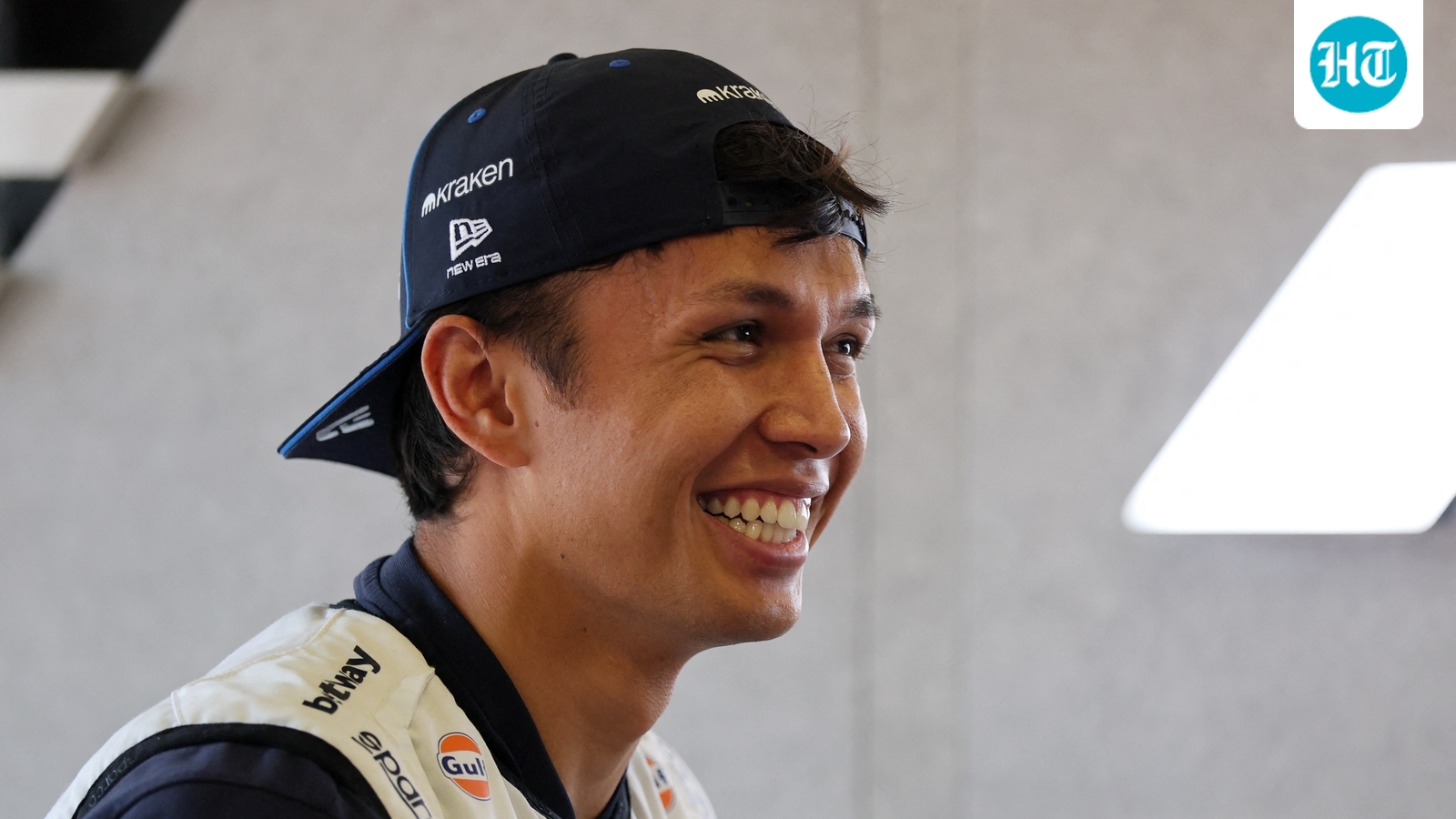
In Formula 1, the battle at the front is about pace, but at the back, it is a high-stakes game of mathematical roulette. For the Atlassian Williams F1 Team, fighting for every elusive point requires embracing chaos and looking beyond conventional racing logic.
“We have moments where we are never on pure pace, (because then) we will never score points,” Williams driver Alex Albon said in an interaction from Sepang.
Instead of running a standard A-to-B race, the team relies on millions of simulations to identify the highest risk-reward scenarios.
“The software basically goes into trying to figure out... if we were to, for example, stay out and not pit and then get lucky with the safety car. We can do suboptimal strategies that increase the chances of scoring points,” said the Thai driver.
Powered by Mercedes, Williams have been the ninth fastest team this season with only 12 points, meaning they are only ahead of Aston Martin (3 points) and Cadillac (0). Every race has been a struggle for the once front-of-the-grid outfit despite having two experienced drivers in Albon and Carlos Sainz.
This aggressive strategic approach is born out of necessity in an era of unprecedented in-season development. The pace of upgrades across the grid has fastened, completely transforming the competitive landscape.
“The rate at which teams are progressing is maybe 2-3 times, at least... of last year,” said Albon, pointing out that midfield outfits are now matching the heavy development output historically managed only by the top constructors.
Recognising they are struggling to maintain a relentless upgrade pace this year, Williams has made a ruthless choice – sacrifice the present to win the future. “Sometimes you need to take one step back in many ways or hold some of the development back to make sure that you make a bigger step later on,” he said.
Knowing exactly the aggressive development rate required to catch rivals like Audi, who are eighth with 17 points, all factory simulator work is now completely dedicated to next season’s car.
While the engineers plot next year's revival, Albon has spent this season grappling with the profound learning curve of the current F1 machinery. The shift in regulations forced a complete rewiring of his racing instincts. “It's been the single biggest change for me personally,” said the 30-year-old who has just five points this year.
The nuances lie in the weaker rear tyres relative to the fronts, rewarding drivers who heavily push their corner entries. Furthermore, adapting to how the car demands specific downshifts, upshifts, braking, and throttle application went directly against his natural technique. “It was very difficult to understand. It was very against my personal driving style. We're in October now, I've only just felt like I'm starting to feel natural in driving a car,” said Albon, who has taken part in 145 Grands Prix.
Navigating these technical hurdles requires deep integration with the engineering department. Albon believes the modern driver’s role extends far beyond the cockpit. “The biggest difference is actually the maturity as a driver to speak to the relevant people within the team,” he said.
He emphasised that having an experienced driver pairing allows Williams to clearly pinpoint weaknesses and push development forward without the setup confusion that rookies might bring to the garage.
That maturity is immediately tested when the calendar throws a curveball, such as the late addition of the Bahrain Grand Prix, taking place in Malaysia. With historical data rendered obsolete, preparation is entirely digital and highly condensed.
Williams quickly dispatched personnel to scan the circuit to capture the latest bumps and kerbs for the factory simulator. “We don't actually spend a whole day on (the) Malaysia (circuit). We spend maybe half a day,” said Albon, noting that the rest relies on track walks and intuition to dial in the car's suspension stiffness.
Despite the logistical scramble, the return to Malaysia carries deep personal significance for the Thai-British driver. Racing in Southeast Asia shifts his identity on the grid, providing a massive boost in regional exposure. Viewing the neighboring countries as “one big family,” Albon proudly claims both Singapore and Malaysia as home races, while hoping to eventually add a third in Thailand. “I feel like I get very embraced by Southeast Asian fans in general. I feel very lucky,” he concluded.
KioskNews shows a cleaned-up reading view extracted from the publisher’s page — the original always lives on their site, not ours.