NASA asks Earthlings to wave as Voyager 1 reaches a light-day away
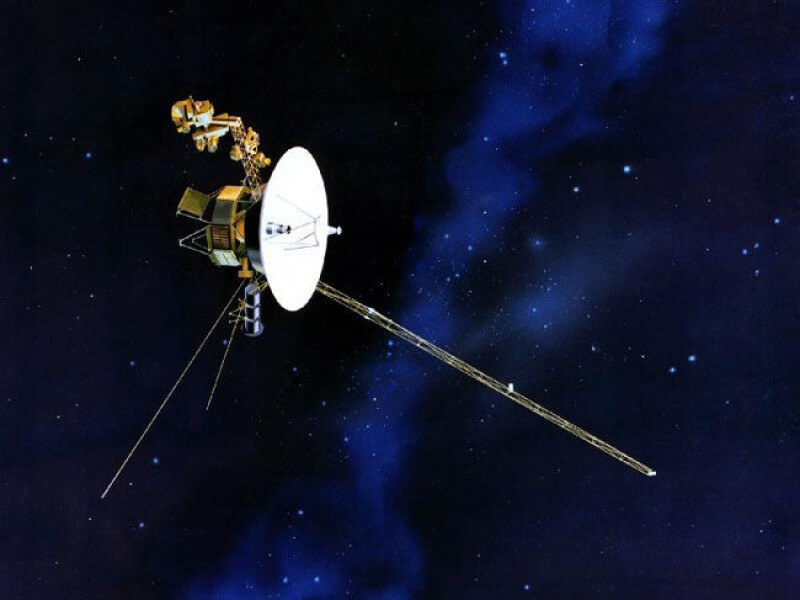
Flash VGR in Morse code on November 17 to salute the veteran probe – just don't expect it to see you
Voyager 1 will become the first human-made object to reach one light-day from Earth next week, and NASA wants us to mark the occasion by flashing our lights at the sky.
The spacecraft, which suffered a communications hiccup last month, is traveling at approximately 38,000 mph (61,000 kph) and will mark the 50th anniversary of its launch next year. Before then, it has another distance record to set.
"Light-day" is a bit snappier than 16,094,799,096 miles (25,902,068,356 kilometers). NASA puts the crossing at 05:16:07 EST (10:16:07 UTC) on Wednesday, November 18.
REG AD
For "Shine Bright for Voyager's Light-Day," participants are invited to flash the mission's three-letter designation – VGR – in Morse code after sunset on November 17, using a flashlight or NASA's website.
REG AD
According to the space agency, this will create "a symbolic wave of golden light encircling the planet after sunset." It is also a nice way to mark the achievement – Voyager 1 is the most distant human-made object from Earth, and its extraordinary longevity remains a testament to the skill of engineers past and present.
Not that Voyager 1 will be able to detect any flashlights on Earth. Its cameras were turned off decades ago, after the famous Pale Blue Dot image was captured.
NASA has invited the public to join in a spacecraft photo opportunity before. On July 19, 2013, Cassini photographed Earth and the Moon from its orbit around Saturn for "The Day the Earth Smiled," while people back home were encouraged to look up and "just smile at the sheer joy of being alive on a Pale Blue Dot."
Voyager 2, the spacecraft's sibling, is not expected to reach the same milestone for another nine years. It took a different path through the solar system to swing past Uranus and Neptune.
It will, however, be uncertain as to whether Voyager 2 will still be able to communicate by then – even with recent efforts to eke out the probe's dwindling power supply, margins are razor thin. ®
KioskNews shows a cleaned-up reading view extracted from the publisher’s page — the original always lives on their site, not ours.