James Watkins Explains How The DCU Brought Batman's Clayface To Life & Matt Hagen's Viral Flash Mob Scene


Andy Behbakht has worked as an entertainment journalist since 2010, covering all the latest in Hollywood on both the big and small screens, from staying on top of the biggest breaking news, analyzing movies and television shows in Hollywood, to in-depth interviews with actors and storytellers.
Andy's career includes having worked for publications such as FanSided, KSiteTV, TV Fanatic, It's Just Movies, Heroic Hollywood, TV Overmind, and more. Outside of his career as an established reporter, Andy is the host and producer of The Showrunner Whisperer, The Flash Podcast, the editor-in-chief of Multiverse of Color, and the network director of DC TV Podcasts.
WARNING: This article includes spoilers from DC Studios' Clayface.
The DC Universe tackles one of Batman's most famous villains.
Since the launch of the DCU, the world has seen Superman and Supergirl back on the big screen, with David Corenswet and Milly Alcock bringing the Kryptonian cousins into James Gunn's franchise. Throughout the fall, HBO expanded the Green Lantern lore with the Lanterns TV series, starring Kyle Chandler and Aaron Pierre as Hal Jordan and John Stewart. But for DC Studios' final 2026 project, it was time to take a visit to Gotham City, while leaning more into the "Monsters" aspect of the current chapter.
I was honored to interview Clayface director James Watkins about taking on the story of Matt Hagen, played by Tom Rhys Harries, with this serving as the first R-rated film release in the DCU. Throughout our chat, the British filmmaker breaks down some of the most important scenes of the overall story, how production brought a lot of the extraordinary elements to life, including an actual practical Clayface suit, as well as whether The Dark Knight was ever part of the movie at all, and potentially working with DC again.
The Journey Of Crafting Clayface's Sleep Observation Moment
One of the things that is always greatly appreciated in films is the practical effects versus CGI, especially as a lot of blockbusters these days can sometimes rely too much on CGI. While other creative teams rely more on practical effects, Clayface is one of them, as the magic of it is seen in the latest entries in the DCU's Chapter 1: "Gods and Monsters" slate.
An imperative moment that takes shape in the story is when Naomi Ackie's Caitlyn Corr observes Matt while he's asleep to learn more about what her nanite treatment is doing to her patient. Watkins gave a full breakdown of how this quiet, but very telling moment of what this story is supposed to be came about, how they filmed this with the actors, while also using visual effects to a degree.
James Watkins: "This scene, obviously, its Tom's character, Matt starting to go through these changes, and Naomi Ackie's character Caitlyn is starting to be concerned by what's happening to him. And she's kind of starting to realise that there's something going on in his unconscious, and she says, "I need to observe you while you sleep." And what I liked about [what] we tried to dig into the scene was the tone of it, the sort of weird psychosexual tone, and it being about character because in their journey, it's kind of a love scene and it's her, but it's a weird psychosexual love scene where she's looking at him, and the film tries to walk this line, 'Is she a scientist? How much is she viewing him as a scientist? How much is she viewing him as a woman?' He's her project, and it's that kind of notion of transference between the two of them.
Is there attraction? There is an attraction, but also is it because he's cured her or [because] she's sort of his doctor, he's sort of her patient? So I wanted to catch all of that within the scene, which gives it a real kind of ambiguity, and also wanted to have the audience really, really leaning in. So we shot the scene, actually. It's kind of slightly absurd when you're shooting things sometimes, so we'd shoot it in very different ways, but old school. So we'd have Naomi in the chair watching, but nobody in the bed, or you'd have her with Tom in the bed, and then you'd have nobody in the chair and then Naomi in the bed. And sometimes you'd have almost both of them in the bed when you're shooting shots of the bed. So it'd be Naomi's body, but Tom would be lying in the bed, just out of vision of the camera, and sometimes his hand snakes up, coming around us.
We'd just do it practically sometimes to try and catch the sense of the sort of blurring. But we always made sure that their movements - we'd do a take with Tom and do a take with Naomi, and they'd always watch each other and replicate their movements. And then if they did something that was very deliberately sexualized or something, they'd definitely mimic that. And so then, really, when you're trying to put together the piece in the edit, Jon Harris, the editor, would be able to almost just do a kind of very simple kind of mix and overlay, like an old-school effect that you can just do in the Avid where you could just slowly blend between the two of them. I like to do things practically. And so you've got very straightforward bass. And then, of course, there are some points there where you have to put a little layer of VFX onto it, just when you're merging from skin to skin or an eye to an eye, but you've got a really, really grounded and real base that you're building upon.
The work is quite straightforward and simple. But it was that kind of fluidity that we wanted to have within the scene, which we thought was quite important. And that also lent itself to the music, that leaning in, the kind of weird-hypnotic-mesmeric. I talked a lot with Volker Bertelmann about that. You don't ever want to lead the audience [on.] You want them to be kind of slightly hypnotized by the scene, and it's interesting watching the scene with an audience because they're like, "Okay, should we be watching this? Should we be enjoying this? Is she watching it? Is she enjoying it?" It has a kind of interesting queasiness because it has a kind of voyeuristic complexity to it, which I think is really an interesting thing. My favorite filmmaker is Hitchcock, so I try and aspire to do that kind of dance with the audience that he does in his films, where you know the audience are participating in it in a way, I suppose."
James Watkins Explains Clayface's Viral Flashmob Scene
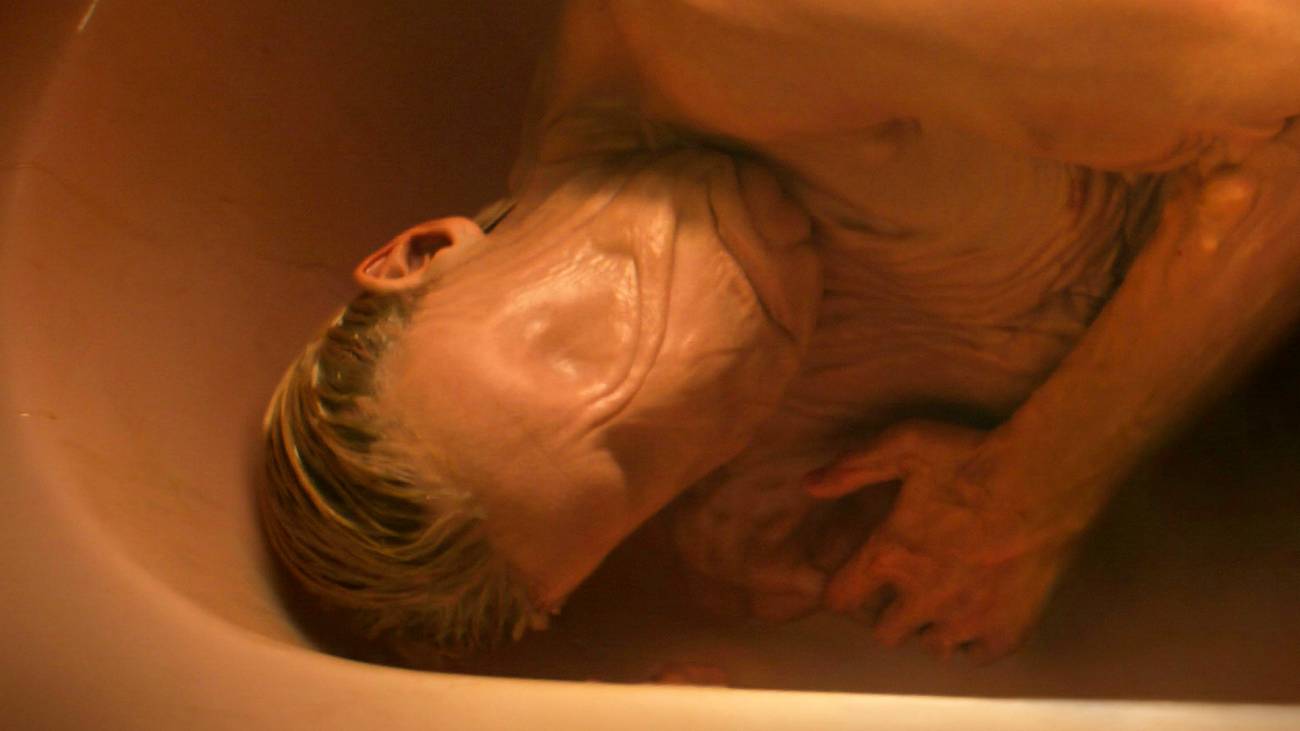
Something that has become a breakout moment from the Clayface movie was when Matt kicked off a flash mob sequence, which has been embraced in ways that are not always seen with comic book films, especially as there isn't always dancing in horror stories. Initially, this wasn't in the original script, as it was Harries who asked the director if they could make it happen.
Watkins talks about navigating the choreography, which is both absurd and funny all at the same time, since it says so much about where Matt is mentally at this point in the story prior to the intense nightclub battle where he dukes it out with a lot of folks. From all these extras, the actors, and Harries himself, there is so much that happens, and at the same time, that's also where viewers get to see plenty of clever practical effects, especially with the shapeshifting, which has been tackled in different ways through past live-action projects.
James Watkins: "I'm really pleased you said that because for me, there [are] several elements in terms of just the planning of the scene, and then I get into the details of the execution in that moment particularly. But Matt's character, he's really been through the ringer. He's been through a lot. He's really suffered. And now he's at the point of his journey where he sort of wants a bit of payback. And as an audience, we're kind of invested in him on that journey of payback. We feel he deserves it. So here he is, he's coming back, and he's going to get the bad guys, and we're with him on the journey. Later, we get to points where maybe he goes too far, but we're with him at this point. These people have screwed him over, and he deserves some sort of retribution, or that's how we feel.
And so I wanted to feel before he gets upstairs to Szabo, to David Dencik's character, I really wanted to have this kind of, 'He's got to get past everybody. And then how does he do it?' I really wanted it to be two things. One, about the evolution and discovery of his powers. A dark glee was the expression we used, and the audience having permission to enjoy that. So to take us on that journey as he discovers his powers and enjoy it with him. And the flash mob grew out of that, and I'll come to that in a second. But the other thing is also that in the whole sequence, it's not that he suddenly becomes this ninja warrior character. He becomes incredibly effective, but often when you do fight sequences, everybody gets carried away, and suddenly normal people develop these incredible skills where they can elbow people and do all this sort of kung fu stuff.
And he doesn't really develop that. What he develops is this ability, his superpower, his ability to shapeshift, and then by that, to misdirect. It was in late edition, and I kept trying to bring this scene in, and it was really in prep and in shooting. For example, with Cadillac Sal, he firstly tries to disguise his way in, to get in as Sal and to bluff his way in. And then he gets stopped by Rosie, and then he gets stopped by the other gangsters, Carmine Jr., and gets dragged to the table. And he has this kind of moment, which is very much a sort of homage to Carlito's Way. And then he gets, "Okay, I can't make my way in that way, so I need to figure out another way in." And so then he wants to create this chaos. He starts messing with all of them. And one of the things he does is, for example, he takes somebody out as Cadillac Sal in order to make it think that there's a load of other people there to create a whole chaotic fight.
So then all that, and then into the glee of the flash mob, now they know he's here, and he's toying with them. He starts off with the sort of lassoing thing, which actually is a slight callback to the very beginning where he's on the chat show with Rob Brydon, with Vic Chisler. Vic Chisler brings him onto his set by doing that. So that's a little callback. But then we were in there, and we were there with Tom, and he's like, 'Okay, he's going to be gleefully going, I'm here and looking at them and really messing with them.' So we started off the dance move, and then it was like, I think, talking about it with Tom, we had all these extras and all these dancers, and Tom was like, 'Maybe we should go the whole hog, and maybe we could start a flash mob thing.'
And this was early on in the sort of sequence when I was shooting it, and I was like, 'Oh yeah, that's really interesting.' So then we had to sort of plan for the next couple of days, because we needed to make sure everyone could dance. And then I needed to talk to Pip [Jordan,] the choreographer, to make sure everybody could plan the dance move and we had to get the dance because these things, you can't just make them up on the spot. They need planning.
But if we're shooting for three days, you go, 'Okay!' Pip's got a great team of dancers around her, and she's like, 'Okay, I can organize all of that.' And so with Tom, when we designed the move, it becomes that thing of, 'Yeah, he's there. There's a kind of an aggressive glee,' which then felt very much like it was earned in that moment. And it's interesting because you're always trying to push and push and push and you're never quite sure until you get into probably a test screening, whether you've gone too far. But actually, we realized Matt's earned that right. He's earned that moment for us to enjoy it with him. By being so connected with him in that moment, I think it helps when he goes too far later, and it helps us in terms of the sort of tragedy later on. So yeah, I'm proud of the scene, and it's very gratifying. I don't really do social media, but to hear feedback from people sort of saying, yeah, that scene really connected with people."
How KM Effects Made The Practical Clayface Suit
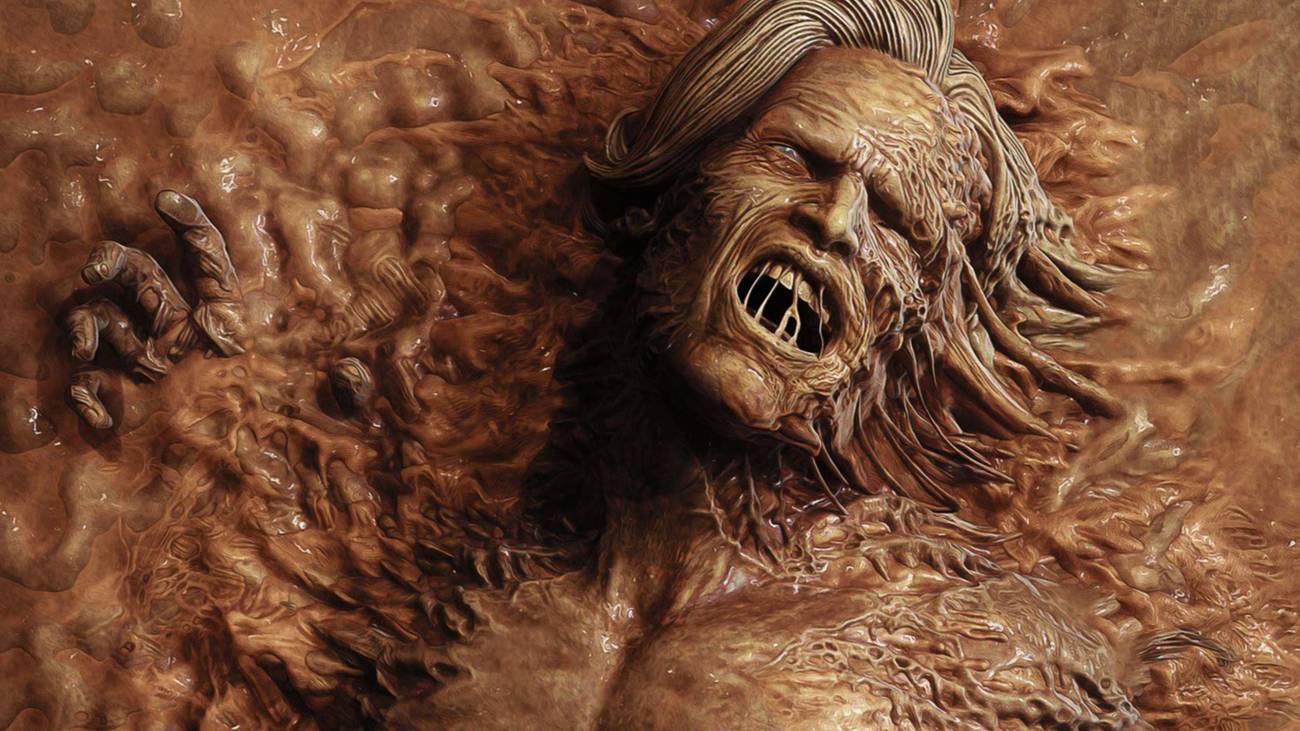
One of the big payoffs in the Clayface ending is when audience members finally got to see Matt in his comic book, with him morphing into the DC monster that Batman fans know and love. However, what many may not know is that there was a practical suit made for the final reveal, as KM Effects has shared BTS images and clips since the film's release.
Watkins was asked how much work went into building up to the moment where Matt becomes the titular villain by the end, as he rises and screams before it cuts to black. The director explained the deep process, how important it was to show Matt both with one yellow eye seen, as well as his regular one, demonstrating the last bit of his humanity versus who he's become
James Watkins: "Well, it just [went through] a lot of iterations, a lot of attempts with James Price, the designer, and everybody else. We went through about 17 different versions because you want to honor the comics. There's the comics, this is the animated series, this is what everybody knows, but it also has to work [in] live action.
And also for me, it was very important, from reading Mike Flanagan's first draft that I read, was the tragedy to humanity and the sense of the man trapped inside the monster. This is an origin story of how a man becomes a monster. I never wanted to lose sight of that, both in what you see and what you hear. So the scream, for example, what you hear is both the monster-scream, and then there's Tom Rhys Harris performing a scream, and they're blended, so you can feel the pain. Similar for the face, I was obsessed about that one eye, the one that's in the light, the other eye is slightly in the shadow because I wanted, and [also with] his mouth, to feel that humanity, to feel that heartbreak, the loss, the delusion, all of that.
It's just weird, if you've got too much on the top of his head, it looks like he's got an ice cream cone on his head... It's that Rorschach effect, what you see. So you just have to go through lots of iterations, and you have to feel it out to go, "Okay, that looks right. That looks right." And then tiny shifts to get more into the humanity of it all. So yeah, it took quite a lot of figuring [out] how the teeth work because at some level, the teeth look scary. At some level they look - well, in some iterations, they looked really too scary, in some iterations, they look too comedic, unintentionally comedic. [It comes down to]how you capture it, so it feels monstrous, tragic, but in the right way. It's a lot of trial and error, I guess."
Was Batman Almost In Clayface?
One of the headlines that sparked interest before the movie's release was an interview with Comicbook.com, where Harries and Ackie were asked by the outlet if there was ever any discussion about whether or not Matt and Caitlyn were aware of Batman. The lead star gave a very interesting answer, saying, "We have footage. I don't know how much I can say, but yes, we had discussions about it at length."
While speaking with Watkins, I asked if he could elaborate on what the actor was teasing. Even though the DCU doesn't have an actor for Batman right now, they could still show something through a magazine or a newspaper headline. However, the filmmaker stated the following about what it was Harries was potentially hinting at:
James Watkins: "I'm not entirely sure. I mean, I think the closest we had was things, Easter eggs that the sort of art department might have dropped in, in terms of posters in the background or elements of design or chairs from various old versions of Batman, things like that. One of the things that appealed to me most about Mike's original script was the fact that it was a standalone story and to what you said at the beginning, it's like, yeah, I know we've got the DC logo on this, but you don't need to be... This film's open to everybody. You don't need to have a sort of deep knowledge of the background in order to come in and enjoy it. It's just one person's story within Gotham. So much like, I don't know, Penguin's Show or The Joker, it's very much standalone. And I don't think in the journey of Matt into Clayface and his sort of villainous journey, he's yet really reached those levels where he would've possibly arrived on Batman's radar in a really significant way."
ScreenRant: "That's fair. That's fair. I mean, on the subject of Easter egg, because I know if this was more of the art department than it was deliberate choices, but I remember there were Easter eggs - a Joker Easter egg with a poster saying something about 'Corruption is the enemy of the people, march against the GCPD.' We had a poster of the Flying Graysons. Even though we didn't see in the final cut of the film, are these things we might see on the home media release by any chance?"
James Watkins: "I mean, the person to talk to is James Price because the graphics department were always coming to me and going, "Look, we've got this tiny thing in the back of the shot." Literally it's like, "Here's a poster or here's a sticker that we've put on a phone box in the background." And I'm like, "Okay, is that going to read?" I think there are probably things in there that are so deeply buried, or once you get onto high definition, everything you can zoom in and you can probably see. I mean, I'd have to talk about it with James properly and go, "Okay, James, what actually..." Because I wasn't focused on, particularly, trying to smuggle stuff in, but I know they always weren't. It was kind of a running joke. It's like, 'Yeah, we've snuck something in the back of your shop."
James Watkins Addresses James Gunn & Peter Safran's DC Studios Shake-Up
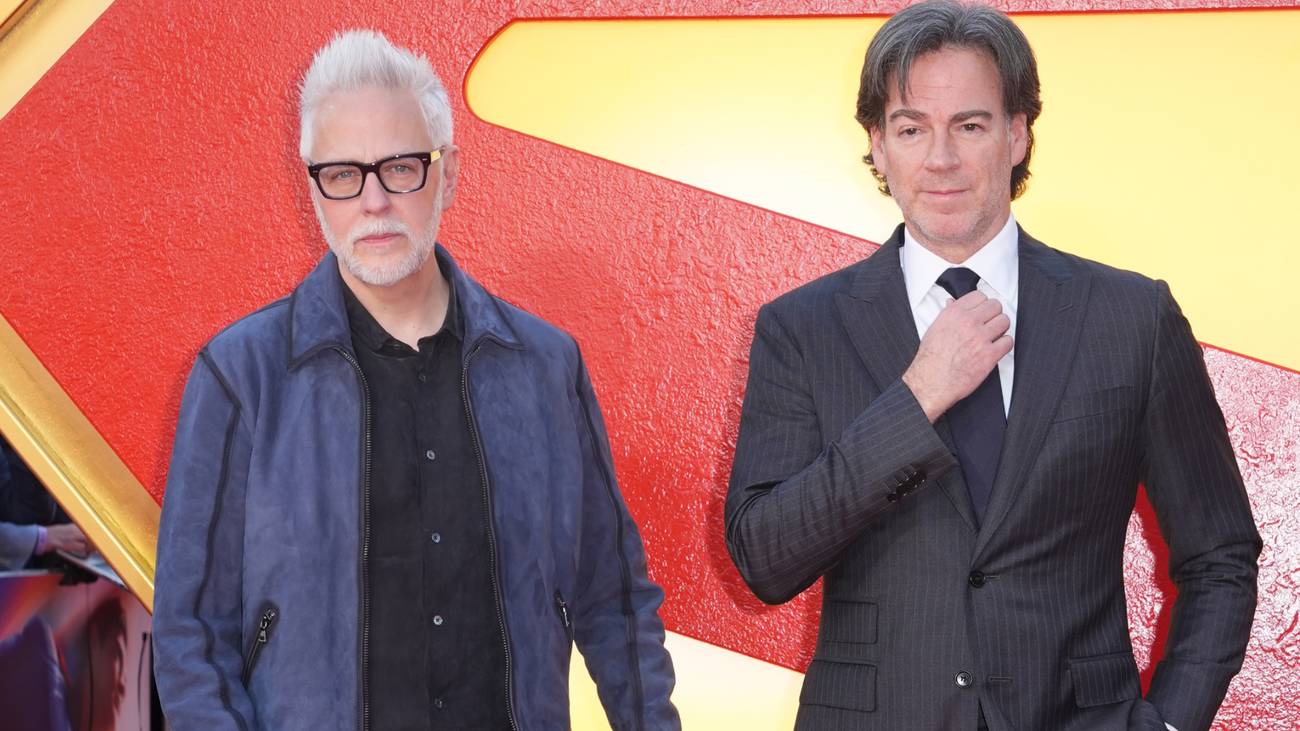
When the interview was conducted, it came nearly 24 hours after it was announced that James Gunn and Peter Safran are officially stepping down as co-CEOs for DC Studios. Given the timing of the news dropping, it came up during our conversation as I asked Watkins about his thoughts.
Even if Clayface 2 isn't something that is happening, I inquired if he had discussed with them, prior to the news coming out, doing more projects at DC Studios and what the status may look like for him now, as Jeremy Latcham takes over on December 1.
James Watkins: "Well, I mean, look, the film currently is in the third week of its run. It's doing well. And the reactions are great. But no, I mean, the truth is I'm not party to any of these conversations. All I can say is I've had genuinely, and this is not trying to be political or anything. I've had a really, really good time working with James and Peter. They've been incredibly supportive. They've given me a lot of freedom to make the film I want to make and support. And so I've had a great time within that environment and whatever they do in the future, I wish them the best because they're really good guys. But beyond that, no, I can't really speak to that, I'm afraid."
ScreenRant: "Well, if you got to do something more, and I'm not saying Clayface 2, but if there's something else in the DC space you wanted to do, do you have a little wishlist of characters?"
James Watkins: "Future plans, as it were. Well, a couple of things, really. I'd like to do something in the sci-fi space, kind of a grounded survival. I've got a couple of things up my sleeve, and I'm kind of tweaking on something there in that space. And I think the horror space, or the horror-adjacent space, shall I say, because the borders of horror have sort of expanded when you look at what's happened recently [with] Zach Cregger and you look at Backrooms and Obsession and all those films - even with Clayface, it's funny. I've talked to people, and there [are] a lot of people that go, "Well, I wouldn't normally go and see a horror film, but I really enjoyed your movie." And I'm like, "Yeah." I don't like putting things in these little boxes. It's like a film either works or it doesn't work, or it connects with an audience or it doesn't.
But I do think we live in an age where there's a lot of kind of anxieties, I guess, and that horror-adjacent space is a really, really interesting space to work through those anxieties. But also more than that, and I think Clayface speaks to this. I really, really believe in the cinema and the experience, the communal experience of the cinema. And we were talking about that nightclub scene or whatever, that scene is best enjoyed with lots of people and the vibe of it. It's like going to see live music when you see a scene that works. And I think the sort of horror-adjacent space creates that as well as anything. And you can have just a great kind of roller coaster ride and have a great time. So I'm really committed to try and find films that can work in that space, I suppose."
Will The World Get To See Aaron Paul's Deleted Clayface Scenes?
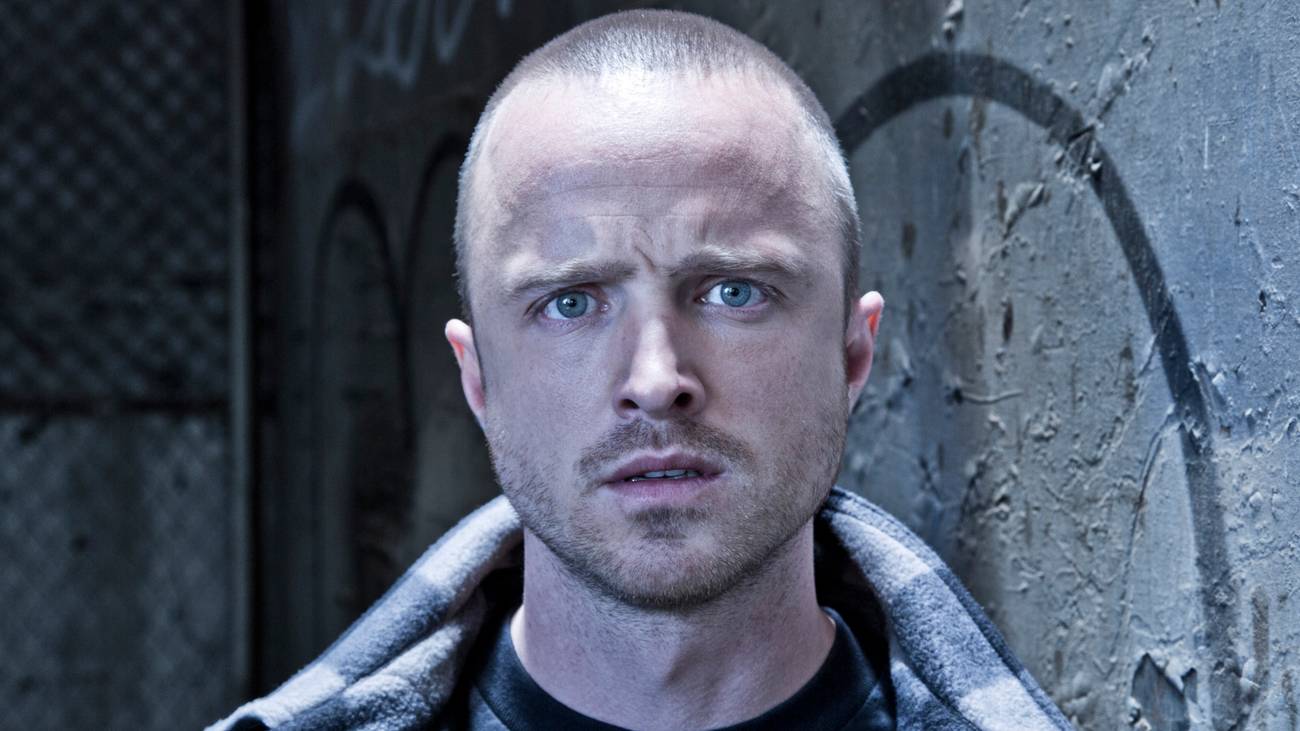
One of the things that Watkins had talked about in previous interviews was that they had plans for Aaron Paul, as he had been tapped to play Matt's father, Jimmy Hagen. But as it often happens in Hollywood, things change prior to the final cut of a feature film, which is normal, and all part of the gig.
In the end, the Breaking Bad star had a blink-or-you-will-miss-it cameo during the nightclub fight when Matt briefly shapeshifts into his abusive dad. Watkins answered whether viewers will get to see what could have been of him in those deleted scenes through a home media release, or if that's too early to talk about at this point.
James Watkins: "Yeah, honestly, I don't know. I haven't got a sense of what we're doing yet in terms of anything for DVD. I couldn't really say, I'm afraid."
ScreenRant: "It was funny the second time I went to see, because someone said, "Did you see Aaron Paul?" I'm like, "No. Where was he? He looks so different." How deliberate was that?"
James Watkins: "But I kind of love that. Aaron's such a nice man, and such a good actor, and you have this little moment where, yeah, it is kind of blink-and-you-miss-it, but it's like, 'Okay, I'm not my father,' and he's set up as kind of a ghost appearing for Patches at the end. So I think to have somebody that can make a little bit of an impact...Once you catch him and once you know that it's Aaron, but I just think he has this rather wonderful little ghost moment within the film, and I enjoyed that. It feels almost like an Easter egg of Aaron."
ScreenRant: "Yeah. No, but it just speaks to how well the makeup and the prosthetics and the costuming was, to the point that even when you see him, if you even take a screenshot and you see it in the light, it still doesn't look like Aaron."
James Watkins: "Yeah, partly hair and makeup, partly him being a really, really good actor and transformative. And so he's playing a character, and he's playing this really rough father, so he's deliberately kind of distressed in terms of how he embodies that character."
How Clayface Celebrates True Filmmaking
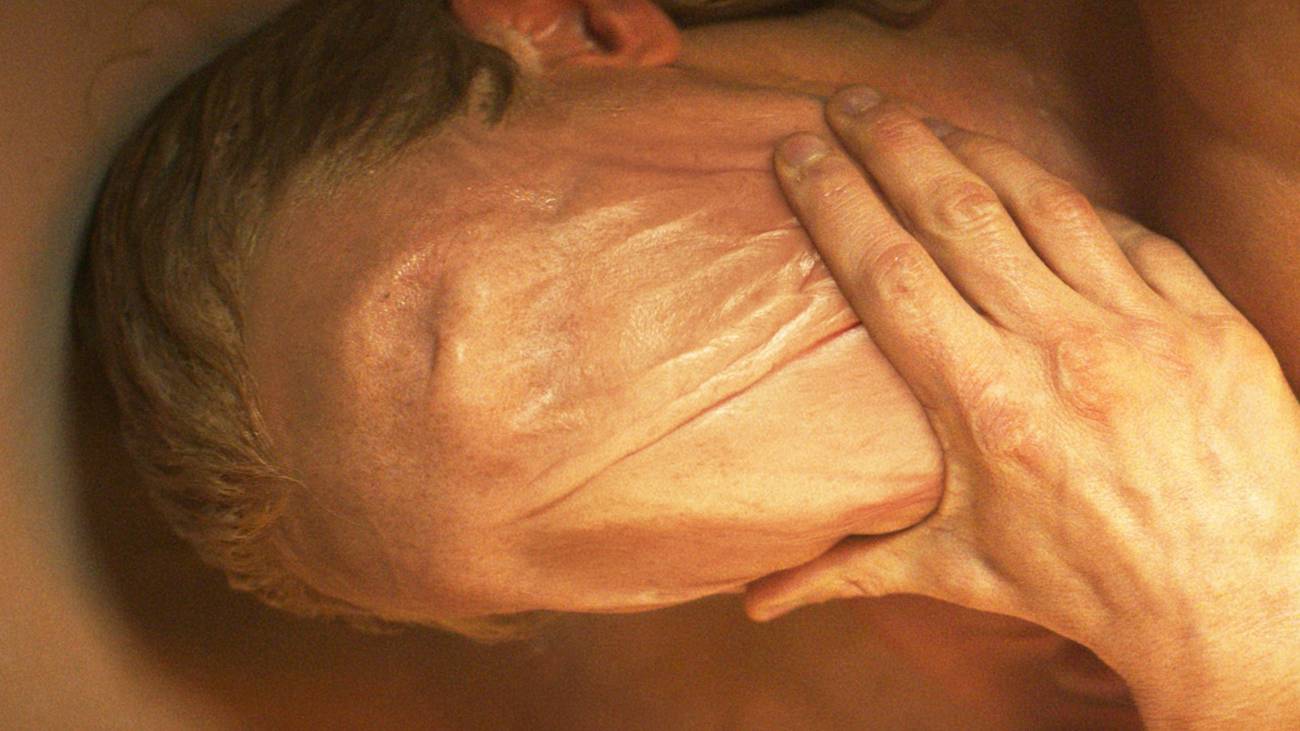
A big conversation piece right now about Hollywood blockbusters is how they don't need to be massive, explosive productions. As Clayface is fundamentally a horror feature, it's also quiet, intimate, and incredibly psychological, while showing what can be done with practical sets and effects, especially as they are building the DCU's Gotham City. Even though this is produced under a big studio like Warner Bros. and DC, a case can be made for how it still felt very independent, which maybe not a lot of people were expecting, feeling like traditional, real, raw, and awesome filmmaking.
Hopefully, Clayface has that kind of effect not just on the horror genre, but in general in how Hollywood is approaching filmmaking right now. In an age where everyone's concerned and fighting back against AI, the R-rated villain adventure shows how well a movie can be made with a couple of million dollars - as the DCU feature was reportedly produced on a $40 million budget - along with a great commitment from a solid creative team, to which Watkins responded with the following:
James Watkins: "I think it's right and I think it's that thing of why we go and see stories. Stories are about connecting with characters and how they connect with each other and spectacle, I mean, to go back to the scene in the nightclub, you see so many, should we call them fight scenes in movies now. If people have enough resources, they can do anything, both with CG and with second unit and with stunts. So you can get what I call it, fight fatigue. When you see films, and it's two people, they're bashing each other around, or a hundred people, and they're bashing each other around, but there's no purpose to it. It's kind of like love scenes. It's when you have a love scene without any character. And so for that scene, I wanted it to have character. It's about character.
It's about the evolution of his journey, and it's hopefully done with some wit and some humor. And so it's that intimacy and connection that we seek in the cinema. I think that sometimes people forget about it, because now I think we've got kind of fight fatigue. Just by going big, it doesn't mean it's necessarily interesting. I always say you can have something epic, but it also has to be intimate at the same time, otherwise, it doesn't really work. So Gotham gives us that scale, gives us that platform of that city, but really we're just telling a character's story, and it's just trying to hold onto those things as a director."
James Watkins Details Clayface's Gruesome Overdose Moment
Another pivotal moment of the story is when Matt fully gets obsessed with Caitlyn's treatments, as he ends up overdosing on the nanites. Not only does it become instrumental in sealing his fate, but it also serves as one of the most gruesome scenes in the whole film, as Harries' leading character begins spitting out what appeared to be teeth, while some theorized that nanites were curing him, literally showing him spitting out his disease. Watkins shed some light on what was going on, while also detailing the process to bring that moment to life:
James Watkins: "Well, what it was really was sort of like gelatin stuff, and Tom actually had it in his mouth and on set, Naomi got the giggles because every time we reset, he kept putting more and more and more in his mouth and he's like, "Okay, I can get more in. I can get more in," because he was actually spitting it out. For me, I think it's a healing of his wound, and it's almost like the scar tissue coming out and being spat out. It's the beginning of his sort of super healing, and all those bits that have just become untethered and then him spitting them out.
That's how I kind of rationalize it, I suppose. But yeah, I think for that scene, I wanted to go quite extreme. And obviously there's a VFX element to his skin bubbling, which you have to have, but the thing's being spat out and the blood is real, and then we augment it. But the overdose is the sort of trigger for everything that happens. I want to feel the ripple underneath the skin of the overdose. That was quite important to me."
Clayface is playing in theaters.
- Release Date
- October 23, 2026
- Runtime
- 108 Minutes
- Director
- James Watkins
- Writers
- Mike Flanagan, Hossein Amini
- Producers
- James Gunn, Lynn Harris, Matt Reeves, Peter Safran
-

Tom Rhys Harries
Matt Hagen / Clayface
-

Naomi Ackie
Dr. Caitlin Bates
- Franchise(s)
- DCU
- Main Genre
- Horror
- Executive Producer(s)
- Mike Flanagan, Rafi Crohn, Chantal Nong Vo, Michael E. Uslan, Lars P. Winther, Paul Ritchie
KioskNews shows a cleaned-up reading view extracted from the publisher’s page — the original always lives on their site, not ours.