‘Speak last’: China’s fifth plenum moves to rein in regional leaders
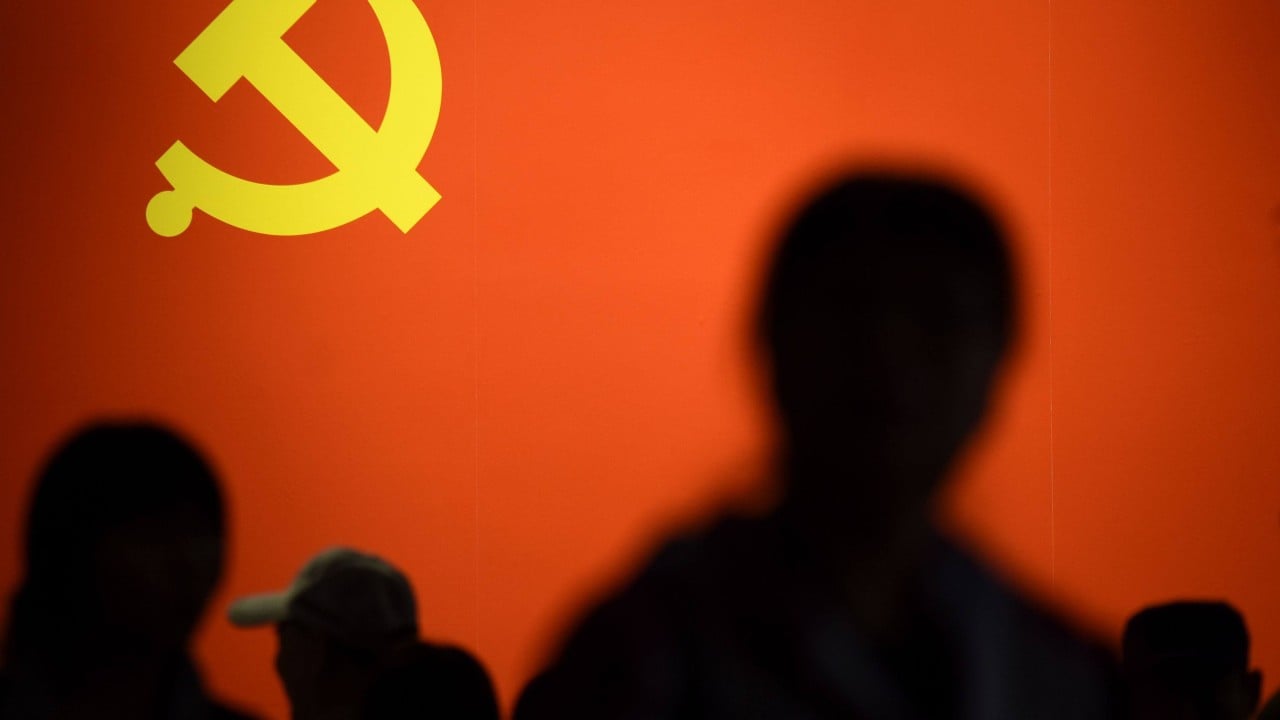
A key document endorsed by the Communist Party proposed stronger oversight of principal leaders below the central level, barring them from demanding personal allegiance from their leadership teams – a demand that is only for the top leaders.
The proposal is part of a 17,000-word resolution approved at the fifth plenum of the 20th Central Committee, the full text of which was published by state news agency Xinhua on Sunday.
The four-day plenum last week emphasised internal governance, discipline and political loyalty, underscoring the drive to “deepen party self-governance”.
The adopted resolution identifies strict supervision of “principal leaders” – or yi ba shou, the official wording in Chinese for the heads of departments and administrative levels – and details measures to rein in misconduct.
“[We must] improve mechanisms to constrain the exercise of power by leadership teams, standardise the responsibilities and powers of principal leaders, and implement a system under which principal leaders speak last,” the document says.
03:00
China’s fifth plenum focuses on discipline and loyalty to Xi
Under the “last-to-speak” rule, top local officials or department heads must withhold their views until all other leadership team members have spoken, ensuring diverse opinions can be fully heard before decisions are made.
The practice was formalised in the 2015 regulations on the work of party leading groups, which require meeting chairs – usually the head of those groups – to speak last after hearing everyone else’s opinions.
Several local and lower-level government bodies have since rolled out their own detailed versions of the rule, applicable to meetings involving major policy decisions, important personnel matters, major projects and large fund allocations.
Under the plenum resolution, party committee secretaries must promote internal democracy, refrain from substituting their own opinions for collective decisions made by leadership teams, and avoid turning decision-making into a “one-man show”.
“[Party committee secretaries] must not demand, level by level, that the personal authority of principal leaders be upheld,” the resolution says.
The directive reflects earlier discipline campaigns by the top leadership. In 2017, President Xi Jinping issued a specific warning that lower-level officials should not – within their sphere of governance – claim authority similar to that accorded to the central leadership.
Xi projects confidence for China’s Communist Party at 105th anniversary event
“Across the entire party, only the party Central Committee has authority, and only the party Central Committee should be looked to as the benchmark. This logic of [upholding authority] cannot be applied at every level,” Xi told provincial and ministerial-level officials at the Central Party School in Beijing.
“If every level calls for its own authority to be upheld and demands that others align themselves with it, the authority of the party Central Committee will be weakened and hollowed out.”
The remarks were published as part of an official compendium on “Xi Jinping Thought on Party Building” in June, marking its formal roll-out as party doctrine.
In 2019, Xi’s then-top aide Ding Xuexiang cautioned that the “two upholds” – a signature phrase for political loyalty – applied strictly to Xi and the central leadership, and “it cannot be applied to different levels or extended at will”.
Last week’s resolution also reaffirmed the right of leadership team members to report misconduct by principal leaders to higher party authorities.
Whistle-blowing or open dissent has historically amounted to career problems.
Xie Maosong, a senior researcher at the National Institute of Strategic Studies at Tsinghua University, noted that “horizontal supervision” – holding peer and subordinate leaders accountable at the same bureaucratic level – had long been a structural challenge in China’s political architecture.
“Because a city’s anti-corruption chief, deputy party secretary and deputy mayors sit on the same standing committee chaired by the party secretary – who is the yi ba shou and holds decisive sway over their career advancement – whistle-blowing or open dissent has historically amounted to career problems,” Xie said.
The plenum resolution had sought to “pierce this administrative shield by creating direct, vertical reporting lines to higher authorities”.
Under the resolution, candidates for principal leadership roles will be judged on their capacity to uphold democratic centralism – a core mechanism that allows internal debate before a decision is made, but demands total compliance once policy is set.
Principal leaders will also be a key focus of corruption investigations, the resolution says, as the party steps up its clean-up drive ahead of next year’s 21st national congress.
A plenum communique released on Thursday confirmed that the party would convene its next national congress in Beijing in the second half of next year, when a major reshuffle of the central leadership would be decided.
In the run-up to the five-yearly event, Beijing is gearing up for leadership reshuffles at various local levels, with principal leaders expected to be at the centre of the personnel changes.
KioskNews shows a cleaned-up reading view extracted from the publisher’s page — the original always lives on their site, not ours.