10 Best Indonesian Martial Arts Movies Of All Time, Ranked

Senior Music Editor at Screen Rant, Sarah's love of sound and story drive the beat. A globetrotting brand whisperer and award-winning journalist, she’s built cross-cultural narratives around the world—but music has always been her true north. She launched DJ Mag North America, successfully introducing the iconic UK brand to the U.S. market. Previously, she carved a space for EDM inside the pages of VIBE, blending electronic and hip-hop culture long before it was trendy.
Summary
- The Raid made silat's brutal, close-quarters choreography a global benchmark for action cinema.
- Indonesia blends silat, fantasy, and extreme violence across diverse films, from epics to crime thrillers.
- Stars like Iko Uwais and Joe Taslim, with filmmakers like Evans and Tjahjanto, pushed Indonesian cinema's global influence.
When The Raid arrived in 2011, audiences around the world discovered that Indonesian action cinema could make even the most elaborate Hollywood fight sequences look tame. Director Gareth Evans trapped a police squad inside a Jakarta apartment building and unleashed some of the most extraordinary hand-to-hand combat ever committed to film. Suddenly, everyone wanted to know more about the country's martial arts movies.
Much of that excitement centered on pencak silat, a collection of traditional Indonesian martial arts emphasizing strikes, grappling, evasive movements, and weapons. Iko Uwais, Yayan Ruhian, and Joe Taslim subsequently became internationally recognizable action stars, helping introduce audiences to fighting techniques that had rarely received such prominent exposure in mainstream Western cinema.
Just as the best Thai martial arts movies helped popularize Muay Thai through stars such as Tony Jaa, Indonesia developed its own distinctive cinematic identity. Its fight choreography tends to be exceptionally physical, often involving close-quarters combat in cramped environments where every available object can become a weapon.
However, the country's martial arts filmmaking tradition predates The Raid by decades. During the 1980s, Barry Prima became a major action star in films blending traditional silat with fantasy and historical adventure. More recently, filmmakers such as Timo Tjahjanto have pushed Indonesian action toward increasingly violent territory, while others have revisited the country's rich tradition of warrior legends.
Even some of the best American-made martial arts movies struggle to match the sheer inventiveness of Indonesia's finest fight sequences. These 10 films represent the country's most compelling contributions to the genre, ranked according to their action choreography, storytelling, cultural significance, and lasting influence.
10 The Big 4 (2022)

Director Timo Tjahjanto brings a welcome dose of outrageous humor to Indonesian martial arts cinema with The Big 4. The Netflix action-comedy follows Dina (Putri Marino), a determined police officer investigating her father's murder. Her search leads her to four former assassins who were secretly trained by the man she believed she knew, setting off an increasingly ridiculous confrontation with a powerful criminal organization.
Tjahjanto, better known for his ferociously violent thrillers, embraces the absurdity of his premise without sacrificing the action. Abimana Aryasatya leads an entertaining ensemble whose chaotic confrontations combine martial arts, gunplay, and slapstick comedy. Although the film relies more heavily on firearms than several higher-ranked selections, its inventive physical fights and entertaining characters make it an appealing introduction to Indonesian action filmmaking.
9 The Warrior (1981)
Long before Iko Uwais became an international action star, Barry Prima was helping establish Indonesia's reputation for spectacular martial arts adventures. Directed by Sisworo Gautama Putra, The Warrior, also known as Jaka Sembung, follows a freedom fighter resisting Dutch colonial rule. His enemies include formidable warriors and supernatural opponents, transforming a historical resistance story into an extravagant fantasy adventure.
Based on a popular Indonesian comic character, The Warrior embraces the kind of exaggerated action that would become synonymous with the country's cult cinema. Its special effects and fantastical confrontations inevitably look dated today, but Prima's commanding presence and the film's imaginative fight sequences remain entertaining. More importantly, it demonstrates that Indonesian martial arts cinema had established its own distinctive traditions long before The Raid attracted international attention.
8 212 Warrior (2018)

212 Warrior, also known as Wiro Sableng, brings another beloved Indonesian fictional hero to the screen. Directed by Angga Dwimas Sasongko, the movie stars Vino G. Bastian as Wiro, a young warrior trained by the eccentric martial arts master Sinto Gendeng (Ruth Marini). Armed with a mystical axe, Wiro embarks on a mission to confront Mahesa Birawa (Yayan Ruhian), a dangerous former student who betrayed his teacher.
The movie's mixture of fantasy, comedy, and martial arts makes it considerably lighter than Indonesia's internationally famous crime thrillers. Nevertheless, its elaborate combat sequences demonstrate the versatility of silat choreography, particularly when combined with traditional weapons and fantastical abilities. Ruhian, one of the martial arts stars known for their brutal fighting styles, makes an imposing villain. The film also provides a fascinating glimpse into Indonesian popular culture beyond modern action cinema.
7 The Golden Cane Warrior (2014)

Ifa Isfansyah's The Golden Cane Warrior returns Indonesian martial arts cinema to the world of legendary warriors and ancient rivalries. Christine Hakim plays Cempaka, an aging silat master who must choose a successor to inherit her powerful golden staff. When two ambitious students betray her, the remaining disciples become embroiled in a struggle for the weapon and the extraordinary fighting techniques associated with it.
The film's greatest strength is its elegant approach to martial arts choreography. Rather than emphasizing the bone-crunching violence associated with The Raid, its fights rely heavily on staff combat, carefully coordinated movements, and traditional fighting techniques. Eva Celia makes an appealing heroine as Dara, while the striking landscapes and period-inspired production design give the adventure a distinctive visual identity. Its story follows familiar martial arts conventions, but the execution offers something refreshing.
6 Headshot (2016)

Iko Uwais delivers another remarkably physical performance in Headshot, directed by Timo Tjahjanto and Kimo Stamboel, collectively known as the Mo Brothers. Uwais plays an unidentified man who washes ashore with a severe head injury and no memory of his previous life. A compassionate doctor named Ailin (Chelsea Islan) helps him recover, but their growing relationship becomes endangered when violent criminals emerge from his forgotten past.
The movie's premise resembles a conventional amnesia thriller, although its action quickly develops into something considerably more brutal. Uwais demonstrates his extraordinary command of close-quarters combat as his character confronts opponents who are every bit as dangerous as he is. Sunny Pang provides a formidable antagonist, while Julie Estelle adds another memorable martial arts performance. Headshot occasionally sacrifices narrative depth for violence, but its relentless fight choreography makes it essential viewing.
Question 1 of 3
5 Merantau (2009)

Gareth Evans introduced international audiences to Iko Uwais with Merantau, a comparatively intimate martial arts thriller that laid the foundation for their later collaborations. Uwais stars as Yuda, a young Minangkabau man who leaves his rural home to complete the traditional journey of self-discovery known as merantau. After arriving in Jakarta, he encounters a young woman threatened by a human trafficking operation and becomes determined to protect her.
Unlike the increasingly elaborate action spectacles that followed, Merantau remains closely connected to the cultural traditions behind its fighting style. Yuda practices Silek Harimau, a form of silat associated with West Sumatra, and Uwais' extraordinary physical abilities make the choreography especially convincing. The film's climactic confrontations are thrilling, but its more modest scale gives the character's journey genuine emotional weight. Without Merantau, modern Indonesian martial arts cinema might have developed very differently.
4 The Shadow Strays (2024)

Timo Tjahjanto pushed Indonesian action cinema toward another extreme with Netflix's The Shadow Strays. Aurora Ribero stars as 13, a teenage assassin temporarily suspended from a mysterious organization following a failed mission. While recovering in Jakarta, she befriends a young boy named Monji, whose disappearance draws her into a violent criminal underworld. Her determination to rescue him quickly brings her into conflict with powerful enemies and her own employers.
Ribero makes an astonishing action heroine, delivering complex physical performances that would challenge considerably more experienced stars. Tjahjanto stages elaborate confrontations involving knives, swords, and hand-to-hand combat, with an intensity that occasionally approaches outright horror. The film's lengthy running time and excessive violence may test some viewers' patience, but its extraordinary choreography demonstrates that Indonesian martial arts cinema continues finding new ways to push the genre forward.
3 The Night Comes For Us (2018)

Few martial arts movies are as relentlessly violent as Timo Tjahjanto's The Night Comes for Us. Joe Taslim stars as Ito, a member of an elite criminal organization who turns against his employers after refusing to murder a young girl. His decision triggers a bloody campaign of retaliation, forcing him to confront an army of assassins, including his former friend Arian, played by Iko Uwais.
The result is an almost exhausting display of physical brutality, with confrontations that become increasingly elaborate and devastating. Taslim and Uwais deliver an extraordinary final fight, while Julie Estelle contributes another unforgettable action performance. Unlike more traditional martial arts adventures, The Night Comes for Us treats practically every encounter as a fight to the death. Its commitment to extreme violence makes it difficult to recommend to squeamish viewers, but its choreography is among the finest in modern action cinema.
2 The Raid 2 (2014)
Following the international success of The Raid, Gareth Evans returned with a sequel that expanded virtually every aspect of the original. Iko Uwais reprises his role as Rama, who infiltrates Jakarta's criminal underworld to expose corruption within the police force. What begins as an undercover assignment develops into a sprawling gangster epic involving rival organizations, shifting loyalties, and some extraordinarily dangerous assassins.
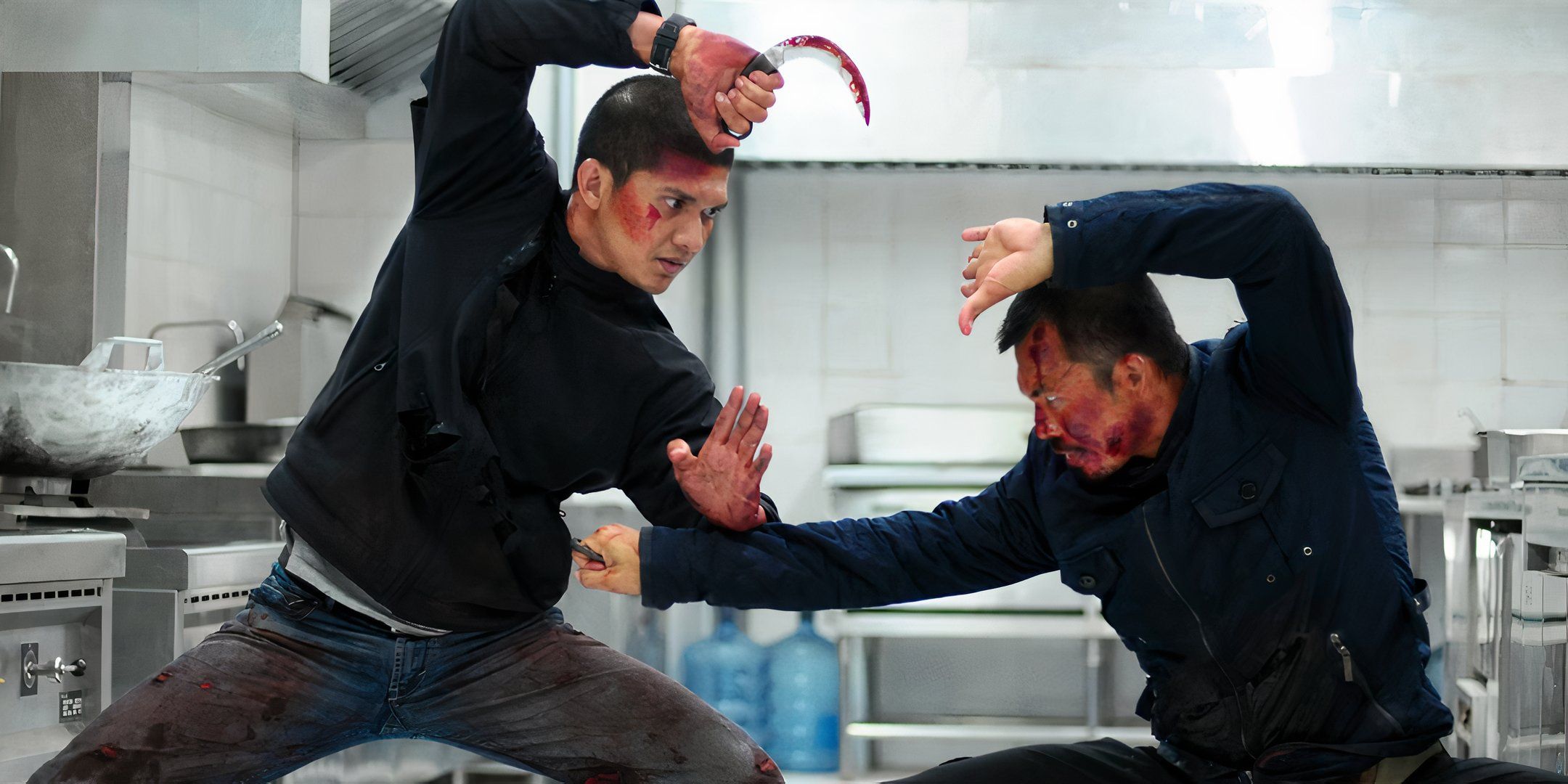
The action sequences are breathtakingly ambitious, particularly the brutal prison-yard confrontation and the celebrated kitchen fight between Rama and a formidable assassin played by Cecep Arif Rahman. Evans combines exceptionally precise choreography with increasingly elaborate cinematography, making each encounter feel distinct. While the original film thrives on its stripped-down premise, The Raid 2 demonstrates how far Indonesian martial arts filmmaking can expand without sacrificing the physical intensity that made its predecessor so influential.
1 The Raid (2011)
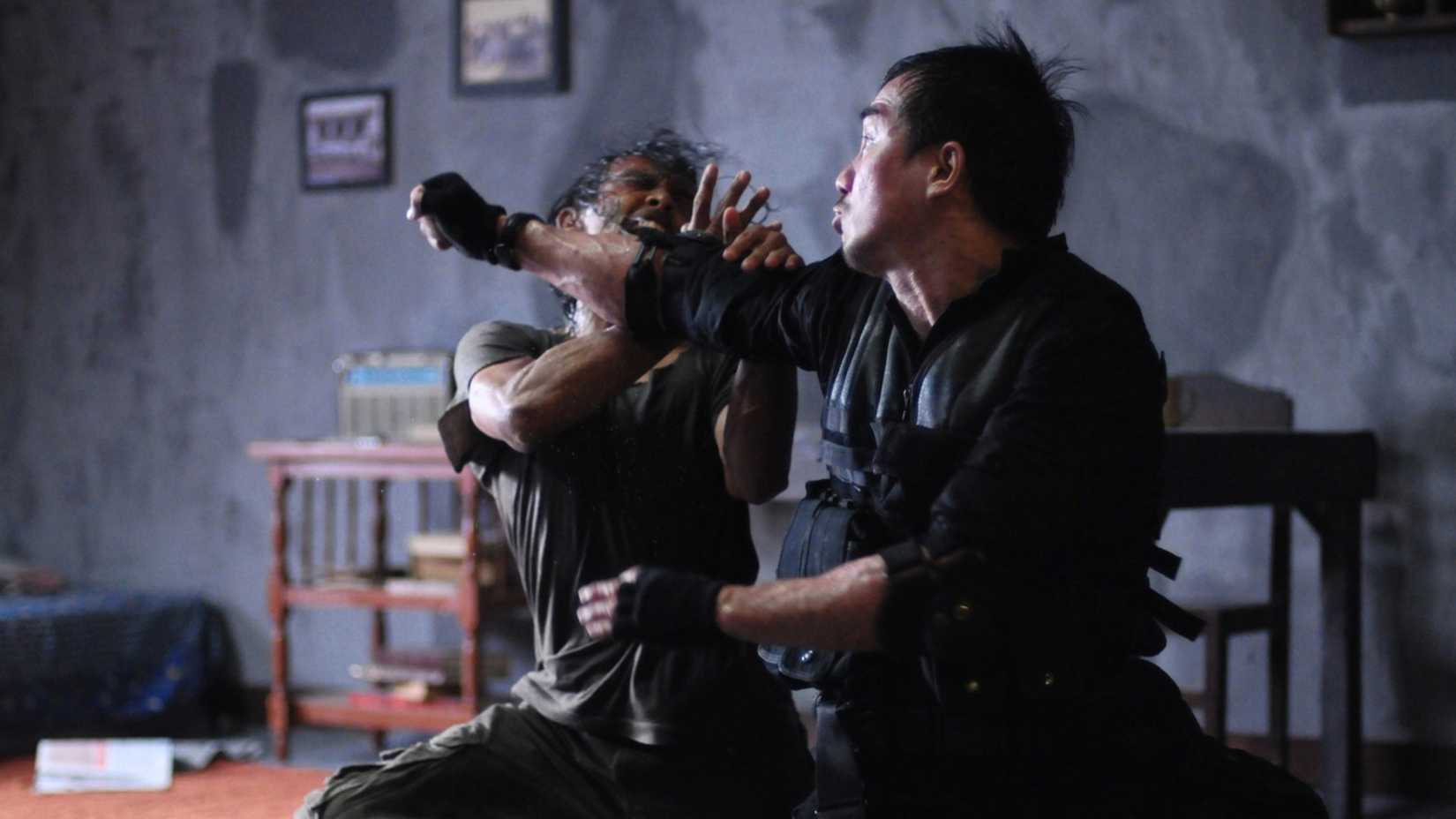
Gareth Evans' The Raid, released internationally as The Raid: Redemption, remains the defining achievement of modern Indonesian martial arts cinema. The story follows Rama (Iko Uwais), a rookie police officer whose tactical unit becomes trapped inside a Jakarta apartment building controlled by a ruthless drug lord. With armed criminals occupying virtually every floor, the surviving officers must fight their way through increasingly dangerous opponents to escape.
The film's genius lies in the clarity of its action. Evans makes every confrontation easy to follow, allowing the remarkable silat choreography to take center stage. The climactic battle involving Rama, his brother Andi (Donny Alamsyah), and the fearsome Mad Dog (Yayan Ruhian) remains among the greatest street-fighting sequences in martial arts cinema. Although its sequel offers greater ambition, the original's relentless pacing and almost perfect execution make The Raid the greatest Indonesian martial arts movie ever made.
KioskNews shows a cleaned-up reading view extracted from the publisher’s page — the original always lives on their site, not ours.