The 8 Greatest American Movie Screenplays of the 21st Century, Ranked

Luc Haasbroek is a writer and videographer from Durban, South Africa. He has been writing professionally about pop culture for eight years. Luc's areas of interest are broad: he's just as passionate about psychology and history as he is about movies and TV. He's especially drawn to the places where these topics overlap.
Luc is also an avid producer of video essays and looks forward to expanding his writing career. When not writing, he can be found hiking, playing Dungeons & Dragons, hanging out with his cats, and doing deep dives on whatever topic happens to have captured his interest that week.
Sign in to your Collider account
The screenplay is the blueprint from which a movie is built, but the greatest ones are more than just instruction manuals for actors and directors. They establish characters with a few carefully chosen lines, conceal information until exactly the right moment, develop hard-hitting themes, or simply give actors dialogue they can sink their teeth into.
With that in mind, this list looks at the most masterful American scripts of the last quarter-century. They span many styles and tones, from Western and crime epic to comedy-horror and historical fantasy, but all show that a classic movie demands more than simply great visuals.
8 'Eternal Sunshine of the Spotless Mind' (2004)

"Why do I fall in love with every woman I see who shows me the least bit of attention?" The setup of Eternal Sunshine of the Spotless Mind could easily have been a sci-fi comedy: after discovering that his ex-girlfriend Clementine (Kate Winslet) has erased him from her memory, Joel (Jim Carrey) decides to undergo the same procedure. Screenwriter Charlie Kaufman, master of the offbeat, turns that concept into something a lot more interesting, striking a good balance between strange and accessible.
The script is ingenious, frequently subverting character archetypes, cleverly using recurring motifs and callbacks, and serving up a solid B-plot that reinforces the main storyline. However, there's also genuine emotion under all the narrative trickery, especially as Joel realizes that losing the painful memories also means surrendering everything that made the relationship meaningful. The central idea is that knowing a relationship might fail doesn't necessarily make experiencing it a mistake.
7 'The Departed' (2006)

"I'm the guy who does his job. You must be the other guy." The Departed is mostly beloved for its performances and Scorsese's propulsive direction, but William Monahan's screenplay is the machinery that keeps its enormous ensemble and overlapping deceptions ticking. The script relocates Infernal Affairs to Boston, and the narrative arc is a mirror image: Billy Costigan (Leonardo DiCaprio) is a cop embedded in Frank Costello's (Jack Nicholson) criminal organization, while Colin Sullivan (Matt Damon) is Costello's man embedded inside the Massachusetts State Police.
The script is extremely funny without undermining the danger, frequently making a scene hilarious seconds before somebody is killed. A lot of this success comes down to vivid dialogue and characterization. Nearly every major character has a distinct verbal rhythm, whether that's Costello's obscene monologues, Dignam's (Mark Wahlberg) volcanic insults, Billy's nervous aggression, and Colin's slippery confidence.
6 'Her' (2013)
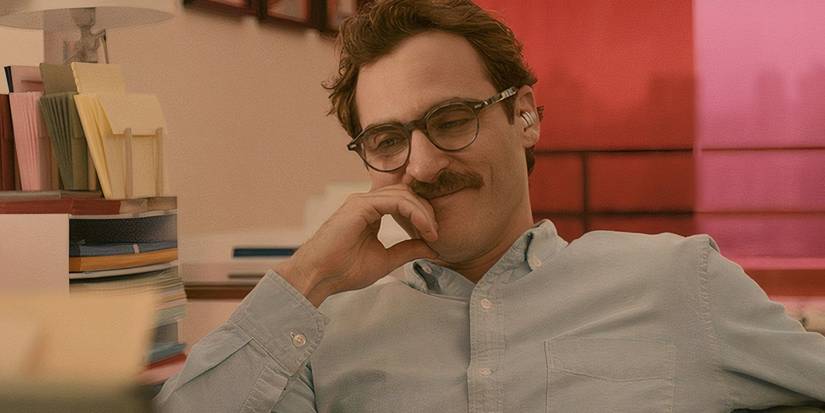
"Sometimes I think I have felt everything I'm ever gonna feel." Once again, we have a premise that sounds ripe for satire: lonely writer Theodore Twombly (Joaquin Phoenix) falls in love with Samantha (voiced by Scarlett Johansson), the AI operating system in his computer. Writer-director Spike Jonze instead treats the relationship with complete emotional seriousness. Through it, he touches on themes of connection, intimacy, technology, and the ways people change inside relationships.
Theodore and Samantha's relationship also reverses the expected trajectory of a story about humans and machines. Back in 2013, it was an unusual take on sci-fi tropes, but it's one that has aged exceptionally well. We're already living in a world of people conversing for hours with AI chatbots, and increasingly retreating from human interaction and themes siness of human relationships. Finally, it's impressive how layered Samantha feels, given that she exists only through dialogue and Johansson's voice.
5 'Get Out' (2017)
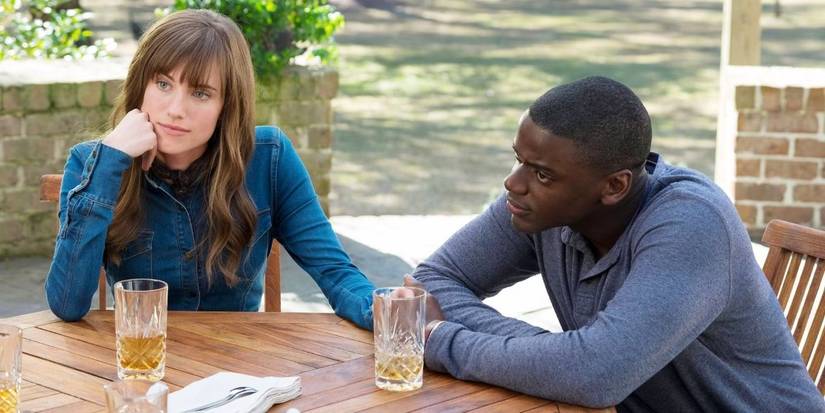
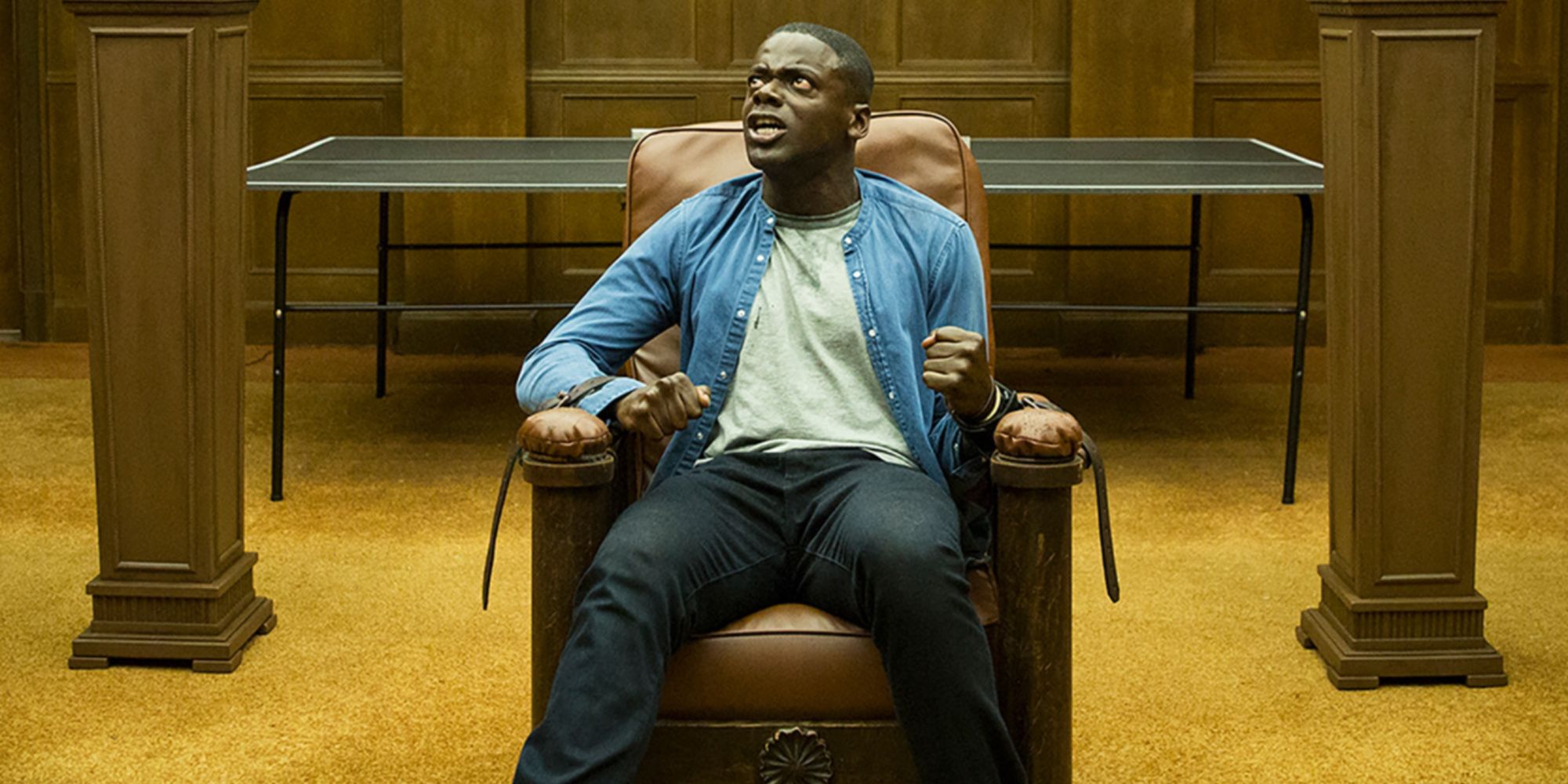
"I would have voted for Obama for a third term if I could." Jordan Peele has yet to truly recapture the lightning in a bottle of Get Out, but this script alone is enough to ensure his place in the horror pantheon. It's arguably the 2010s' greatest fusion of horror and comedy, with a barbed edge of social commentary thrown in for good measure. It's a marvel of timing and steady escalation, trapping our protagonist Chris Washington (Daniel Kaluuya) in a succession of interactions that feel slightly wrong... until all hell breaks loose.
So much of the movie has since been absorbed into the pop culture unconscious: The Sunken Place, Rose's (Allison Williams) behavior, Walter's (Marcus Henderson) nighttime running, Georgina's (Betty Gabriel) strained reactions. Ultimately, the script simultaneously serves up crowd-pleasing entertainment and real food for thought, lending itself to endless analysis.
4 'Inglourious Basterds' (2009)

"You are sheltering enemies of the state, are you not?" Quentin Tarantino has written plenty of memorable dialogue, but Inglourious Basterds may be his most impressive achievement in constructing entire sequences around conversation. The opening encounter between Colonel Hans Landa (Christoph Waltz) and a French farmer alone justifies the movie's classic status, but that's only the beginning. What follows is a colorful hybrid of war movie, spy thriller, black comedy, and revenge fantasy.
Throughout the whole thing, language becomes a principal weapon. A tavern conversation becomes unbearably tense because of an incorrect hand gesture; a restaurant meeting turns the simple act of ordering dessert into psychological warfare. Landa's multilingual fluency gives him enormous power, while the Basterds' terrible Italian becomes a hilarious liability. The visual storytelling is great, too, as are the performances, yet QT's dense, rich, cinema-obsessed script provides the sturdy foundation. It might just be his masterpiece.
3 'No Country for Old Men' (2007)

"What's the most you ever lost on a coin toss?" Adapting the work of Cormac McCarthy is always tough (in the case of some of his novels, probably impossible) because so much of its power lies directly in the prose. Nevertheless, the Coen brothers did a sterling job with No Country for Old Men, making the material feel completely at home on screen while still staying true to McCarthy's vision.
The screenplay's construction is mercilessly efficient, achieving so much with pauses and silences. In it, Llewelyn Moss (Josh Brolin) finds the aftermath of a drug deal, takes a case containing two million dollars, and thereby places himself in the path of the ruthless, unstoppable killer Anton Chigurh (Javier Bardem). From there, cause and effect operate with almost mechanical inevitability, yet the plot also totally upends the classic Western and thriller structures, particularly in the ending.
COLLIDERInteractive
Ballot sealed
Movies/Academy Awards/Best Picture
Collider · Best Picture
Which Oscar Best Picture
Is Your Perfect Movie?
Five winners · ten questions · one envelope
Five Oscar Best Picture winners. Five completely different visions of what cinema can be and what it can do to you. One of them is the film made for the way your mind works, and ten questions will work out which. The nominees
2020Parasite
2023Everything Everywhere All at Once
2024Oppenheimer
2015Birdman
2008No Country for Old Men
Reel01 / 10
Question 01 of 10TONE
01 What kind of film experience are you really after? The best movies do not just entertain. They leave something behind.
Keys 1 to 5 or A to E · Enter to advance
Reel02 / 10
Question 02 of 10THEME
02 Which idea grabs you most in a film? Great films are driven by a central obsession. What is yours?
Keys 1 to 5 or A to E · Enter to advance
Reel03 / 10
Question 03 of 10STRUCTURE
03 How do you like your story told? Form is content. The way a story is shaped changes what it means.
Keys 1 to 5 or A to E · Enter to advance
Reel04 / 10
Question 04 of 10VILLAIN
04 What makes a truly great antagonist? The opposition defines the protagonist. What kind of opposition fascinates you?
Keys 1 to 5 or A to E · Enter to advance
Reel05 / 10
Question 05 of 10ENDING
05 What do you want from a film's ending? The final note is the one that lingers. What do you want it to sound like?
Keys 1 to 5 or A to E · Enter to advance
Reel06 / 10
Question 06 of 10WORLD
06 Which setting pulls you in most? Where a film takes place shapes everything: mood, stakes, what is even possible.
Keys 1 to 5 or A to E · Enter to advance
Reel07 / 10
Question 07 of 10CRAFT
07 What cinematic craft impresses you most? Every great film has a signature, the element that makes it unmistakable.
Keys 1 to 5 or A to E · Enter to advance
Reel08 / 10
Question 08 of 10PROTAGONIST
08 What kind of main character do you root for? The protagonist is the lens. Who you follow says something about you.
Keys 1 to 5 or A to E · Enter to advance
Reel09 / 10
Question 09 of 10PACE
09 How do you feel about a film that takes its time? Pace is a choice. Some films sprint. Others let tension accumulate slowly, deliberately.
Keys 1 to 5 or A to E · Enter to advance
Reel10 / 10
Question 10 of 10AFTERMATH
10 What do you want to feel walking out of the cinema? The best films leave a mark. What kind of mark do you want?
Keys 1 to 5 or A to E · Enter to advance
The envelope, pleaseAnd the Oscar goes to
★ Best Picture, 2020 Parasite Bong Joon-ho, 2019 A film that hides its true intentions until the moment it is ready to reveal them.
You are drawn to films that operate on several levels at once, that begin in one genre and quietly, brilliantly migrate into another. Bong Joon-ho's Parasite is a film about class, desire and the architecture of inequality that manages to be darkly funny, deeply suspenseful and genuinely shocking across a single extraordinary running time. Your instinct is for cinema that rewards close attention and punishes assumptions, right up to its devastating final image. From the Collider file
- The first film not in the English language to win Best Picture, in the Academy's 92-year history to that point.
- It took four Oscars in one night: Picture, Director, Original Screenplay and International Feature.
- It won the Palme d'Or at Cannes in 2019 by a unanimous jury vote, the first Korean film to do so.
- The Park family's modernist house was not a location. It was built from scratch on an outdoor lot.
Reads between the lines Loves a reveal Attention to detail
★ Best Picture, 2023 Everything Everywhere All at Once Daniel Kwan and Daniel Scheinert, 2022 A film that refuses to choose between being entertaining and being meaningful.
You want it all, and this one gives you all of it. The Daniels' Everything Everywhere All at Once is among the most maximalist films ever made: action comedy, multiverse science fiction, family drama, existential crisis, and an emotional core that sneaks up on you in the middle of the chaos. You respond to ambition. Being overwhelmed is the design, not the side effect, because the feeling of being crushed by infinite possibility is exactly what the film is about. From the Collider file
- Seven Oscars, including three acting wins for Michelle Yeoh, Ke Huy Quan and Jamie Lee Curtis.
- Michelle Yeoh became the first Asian woman to win Best Actress.
- The visual effects were handled by a team of fewer than ten people, most of them self-taught.
- Ke Huy Quan had all but left acting for two decades before this role brought him back.
Wants everything Big swings Soft center
★ Best Picture, 2024 Oppenheimer Christopher Nolan, 2023 A film about the gap between what we can do and what we should do.
You are drawn to cinema on a grand scale, films that treat history not as a backdrop but as a force, then place their characters inside that force and watch what happens. Christopher Nolan's Oppenheimer sits inside one of the most consequential moments in human history and refuses to look away from it. You want your films to feel important without being self-important, earning their ambition through craft and the gravity of the subject. This one is enormous, complicated, and offers no easy comfort. From the Collider file
- Seven Oscars, including Nolan's first wins for directing and for Best Picture.
- Cillian Murphy and Robert Downey Jr. both took their first Academy Awards for it.
- Kodak engineered a black-and-white 65mm stock that did not previously exist so Nolan could shoot those sequences on IMAX.
- A three-hour, R-rated drama about theoretical physics that passed 950 million dollars worldwide.
Thinks in decades Scale and weight No easy comfort
★ Best Picture, 2015 Birdman Alejandro G. Iñárritu, 2014 A film doing something that probably should not be possible.
You are drawn to films that foreground their own construction, where the how of the filmmaking becomes part of the what it is about. Alejandro G. Iñárritu's Birdman, stitched to appear as one continuous take, is cinema examining itself through the cracked mirror of a fading actor's ego. You respond to formal daring. Michael Keaton's performance and Emmanuel Lubezki's restless camera make something unlike anything else: a film about creativity, relevance, self-destruction and never quite knowing whether your work means anything at all. From the Collider file
- Four Oscars, among them Best Picture and Best Director for Iñárritu.
- Emmanuel Lubezki's win here was the middle of three consecutive cinematography Oscars, after Gravity and before The Revenant.
- Antonio Sánchez's improvised drum score was ruled ineligible for the score category, which caused a minor uproar.
- The long-take illusion was built from a handful of extended shots joined by hidden cuts.
Formally daring Camera as character Ego and art
★ Best Picture, 2008 No Country for Old Men Joel and Ethan Coen, 2007 A film that treats dread as a form of meaning.
You are drawn to cinema that trusts silence, refuses to explain itself, and lets unease do the talking. The Coen Brothers' No Country for Old Men is about the arrival of a new kind of evil: implacable, arbitrary, and indifferent to the moral frameworks we use to make sense of things. It is one of the most tightly controlled films ever made, and that control is the source of the terror. You want your films to haunt you rather than comfort you, and you have no interest in a resolution that would be a lie. From the Collider file
- Four Oscars: Picture, Director, Adapted Screenplay, and Supporting Actor for Javier Bardem.
- Adapted from Cormac McCarthy's 2005 novel, with much of his dialogue carried over intact.
- Carter Burwell's score runs about sixteen minutes and is nearly inaudible by design.
- Roger Deakins was nominated twice that year, for this and The Assassination of Jesse James, and won for neither.
Trusts silence Dread over answers No tidy endings
Ballot tally · your top three
1
2
3
Copied to your clipboard
Ballot counted byCOLLIDERCollider.com · The Awards Desk
2 'There Will Be Blood' (2007)
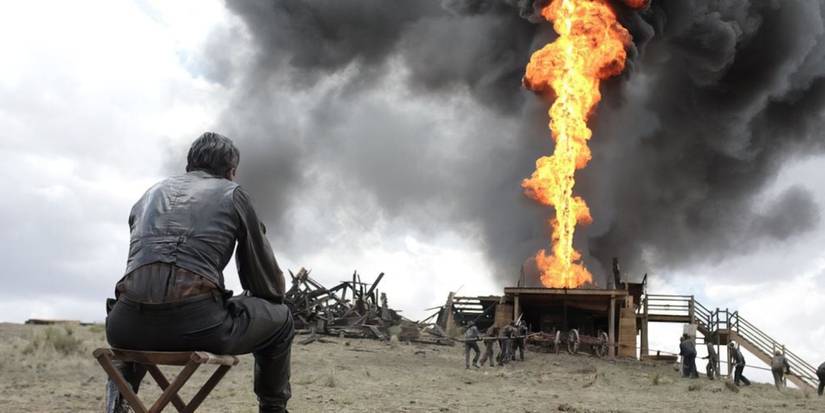
"I have a competition in me. I want no one else to succeed." Daniel Plainview (Daniel Day-Lewis) announces exactly who he is, yet understanding him remains the great challenge at the center of There Will Be Blood. Written by Paul Thomas Anderson and loosely adapted from Upton Sinclair's Oil!, the screenplay discards much of its source material and constructs something close to an American myth: the story of an oilman whose appetite for wealth consumes his humanity.
Indeed, for Daniel, even language is simply a tool for extraction. He tells communities whatever they need to hear, selling visions of roads, schools, prosperity, and family while pursuing the oil beneath their land. His great counterpart is Eli Sunday (Paul Dano), who uses religion with similarly theatrical instincts. Their struggle is therefore partly a battle between competing American languages: capitalism and evangelical faith.
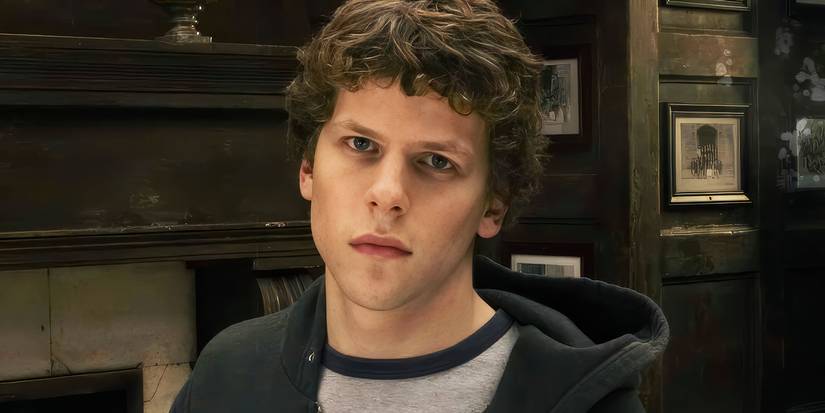
"If you guys were the inventors of Facebook, you'd have invented Facebook." On the surface, The Social Network is a movie about the creation of a website, but really it's the origin story for our current turbulent, maddening era. Here, Aaron Sorkin transforms the founding of Facebook into a tale about friendship, status, ambition, resentment, and the peculiar contradiction of creating technology designed to connect millions while being unable to preserve one's closest relationships.
The factual history may be complicated, but as a dramatic construction, the screenplay is close to flawless. It fractures its chronology between Facebook's creation and two later depositions, allowing competing accounts of the same history to collide, all of it animated by Sorkin's trademark rapid-fire dialogue. The finished product has the intensity of a Greek tragedy. All in all, The Social Network is fast, funny, vicious, melancholy, and endlessly quotable.
KioskNews shows a cleaned-up reading view extracted from the publisher’s page — the original always lives on their site, not ours.