XENOBAROMETER: Hardline promises on immigration may be impossible for parties to fulfil after elections
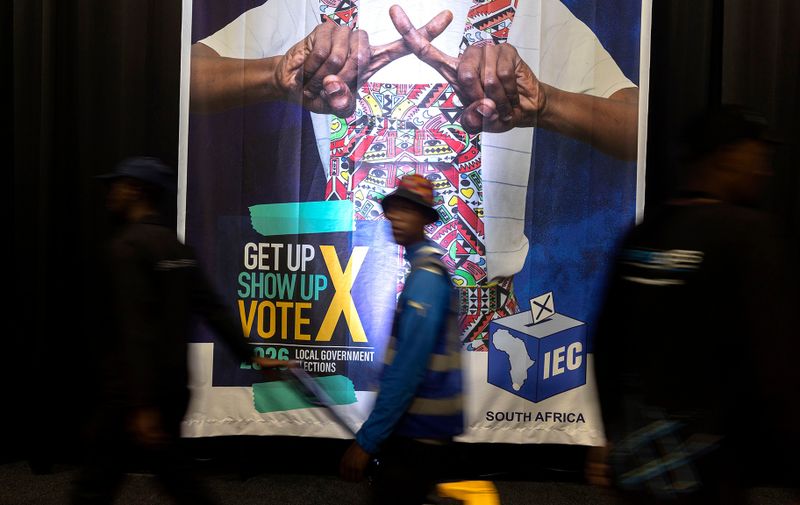
Compared with their campaigns for the 2021 local government elections, political parties across the spectrum have shifted to the right in their rhetoric and promises on immigration enforcement. Several parties have also made the policing of foreign nationals central to their election messages.
Yet many of these promises may be impossible to fulfil, as they fall outside the legal powers and jurisdiction of local government. Fact-checking company Ukweli, at Viewfinder’s prompting, reviewed 12 parties’ election manifestos for promises relating to immigration.
Ukweli identified 16 election promises, across seven of the party manifestos reviewed, which related directly to immigration. Those parties were ACDP, ActionSA, ANC, Bosa, Afrika Mayibuye Movement (AMM), EFF and IFP. Immigration was mentioned in a further 11 passages across the manifestos, but without any specific promises being made.
Ukweli’s analysis determined that none of the parties’ promises on immigration could be delivered by a municipal council using only its own powers. Municipal council powers are limited to municipal-level services and local bylaws, whereas immigration control, visas, asylum and deportation are the exclusive mandate of the national government.


Half of the promises identified were deemed to lie entirely outside council powers, and within the domain of other branches of government. For instance, the ACDP promised to “ensure” that the government enforced immigration laws and executed deportations. Bosa promised to “facilitate” a “documentation registration window” to help undocumented immigrants regularise.
Several of the other promises identified would require substantial support from other spheres of government to implement. ActionSA pledged to use routine municipal operations to identify and refer suspected immigration violations to the relevant authorities, and to ensure that cases are “followed through”. The AMM promised to “establish specialised municipal police units to fight drugs, illegal immigration and building hijackings”.
An immigration attorney who assessed the analysis and its findings concluded that they were “broadly correct”. He emphasised that collaboration between municipal councils and other government spheres was often highly complex.
“Delivering on promises that require a mix of powers is largely unattainable for councils that do not have party influence in the national and provincial portfolios that they would need to collaborate with to get the job done,” he said.
He requested anonymity due to prior threats from the anti-immigration movement.

A rightward shift in parties’ stance on foreign nationals
Five years ago, in the run-up to the 2021 local government elections, parties made very few promises about immigration enforcement. For instance, in 2021 the manifestos of the ACDP, ANC and ActionSA made no mention of immigration at all. In their 2026 manifestos, these three parties collectively made nine immigration enforcement related promises.
The ACDP said it would deliver “developmental plans to deal effectively with migratory realities and challenges”. The ANC promised to tighten immigration law enforcement by working with the departments of home affairs, employment and labour, and with law enforcement agencies to protect communities, workers and legitimate businesses, promising to “strengthen compliance”.
Of all the manifestos, only the EFF’s adopts a supportive stance, promising “targeted support for vulnerable groups, including persons with disabilities, LGBTQIA+ persons, migrants, people living in poverty, and survivors of gender-based violence”.



Comparison: 2021 vs 2026
In 2021, the Covid-19 pandemic was an abiding concern for South Africans. In 2026, the political discourse in the country has been largely subsumed by the demands of anti-immigration movements such as March and March.
Mirroring this, the language that political parties use to describe foreign nationals has markedly changed between election manifestos of 2021 and 2026 – often shifting from positive characterisations of migrants in 2021, to hard-line positions in 2026.
For instance, in 2021 ActionSA promised “to ensure that it is easier for foreign nationals to enter our country legally or to get protected legal status”. In 2026, it promises “to use every lawful municipal power available to help tackle crime and illegal immigration”.
In 2021, the IFP promised “to prioritise South Africans for job and trade opportunities”. In 2026, it insists on a more hardline framing: “The spaza-shop industry must be reserved for South Africans in every municipality – large or small.” It has promised to “crack down on property owners, landlords or South Africans who commit offences by fronting for, or registering businesses on behalf of, undocumented foreign nationals”.

Individuals on the campaign trail
The absence of immigration enforcement promises from some parties’ manifestos has not stopped individual senior party members from making public statements on immigration on the campaign trail.

While campaigning in KwaZulu-Natal on 25 October, First Deputy President of MK party Duduzane Zuma questioned what he viewed as selective, racially-framed outrage over illegal immigration. He argued for a “blanket approach” to immigration enforcement, asking why undocumented European nationals were not subjected to the same scrutiny and protests as black African foreign nationals.
The word immigration doesn’t appear once in the DA’s 2026 manifesto. This did not stop Tshwane mayor Cilliers Brink from leading and publicising a raid on suspected hijacked premises in search of undocumented migrants, accompanied by private security.
Spaza-shops and informal traders in the crosshairs
Many of the immigration enforcement promises parties made in 2026 address foreign ownership of informal shops and grocery businesses, the first time such promises have been made in local government election manifestos.
The ANC promises, for example, that in order to “protect communities, workers and legitimate businesses” its councils will work with national departments “to ensure compliance with labour and immigration laws… and ensure that opportunities created through municipal programmes, procurement and trading spaces prioritise South African workers, entrepreneurs and businesses”.
Bosa promises voters “strict municipal frameworks that prioritise South African citizens” as well as a “zero-tolerance policy for unlawful economic participation”.
The IFP’s manifesto is particularly focused on the regulation of spaza shops, promising voters its municipalities will “halt the operations of spaza shops and food-handling facilities that fail to meet health, safety and business-registration requirements… [and] seek the prosecution of property owners, landlords or South Africans who commit offences by fronting for, or registering businesses on behalf of, undocumented foreign nationals”.


An immigration lawyer weighs in
Asked if such promises were enforceable, the attorney consulted for this article said: “A municipality creating its own foreign-ownership ban is likely overstepping into national immigration territory.”
However, there have been examples where the national government tried to facilitate some municipalities’ appetite for regulating businesses to favour South Africans at the expense of foreign owners.
He cited the example of Minister of Cooperative Governance and Traditional Affairs (Cogta) Velenkosini Hlabisi, the leader of the pro-regulation IFP, who in 2024 gazetted standard draft by-laws for township economies, including clauses that explicitly allow municipalities to set quotas on the proportion of businesses owned by foreign nationals. These stipulated that at least 60% of businesses in certain categories must be locally owned, and that a South African cannot transfer a business to a foreign national without approval from both the municipality and the Department of Home Affairs.
“If a municipality implements a quota system that is explicitly authorised and standardised by a national Cogta framework, the municipality is acting lawfully within delegated powers,” he said.
The MK party is also seeking to attack foreign ownership of spaza shops at the national level, with MP Carol Mafagane tabling a Private Member’s Bill in May this year seeking to make it explicitly illegal for non-citizens to own or run spaza shops.
“The legal concern here shifts from municipal overreach to national constitutional rights, specifically whether such a blanket ban at the national level would violate constitutional protections against unfair discrimination,” said Viewfinder’s source. DM
XenoBarometer tracks the anti-immigrant movement and its impact. We aim to surface underreported stories, paying close attention to potential rights abuses, emerging patterns in anti-immigrant mobilisation and failures in the government’s response. It is produced by the Southern Africa Accountability Journalism Project (SA | AJP), an initiative of the Henry Nxumalo Foundation working with Viewfinder and with the financial assistance of the European Union. It can under no circumstances be regarded as reflecting the position of the EU.
KioskNews shows a cleaned-up reading view extracted from the publisher’s page — the original always lives on their site, not ours.