How US restrictions on China are reshaping the science race
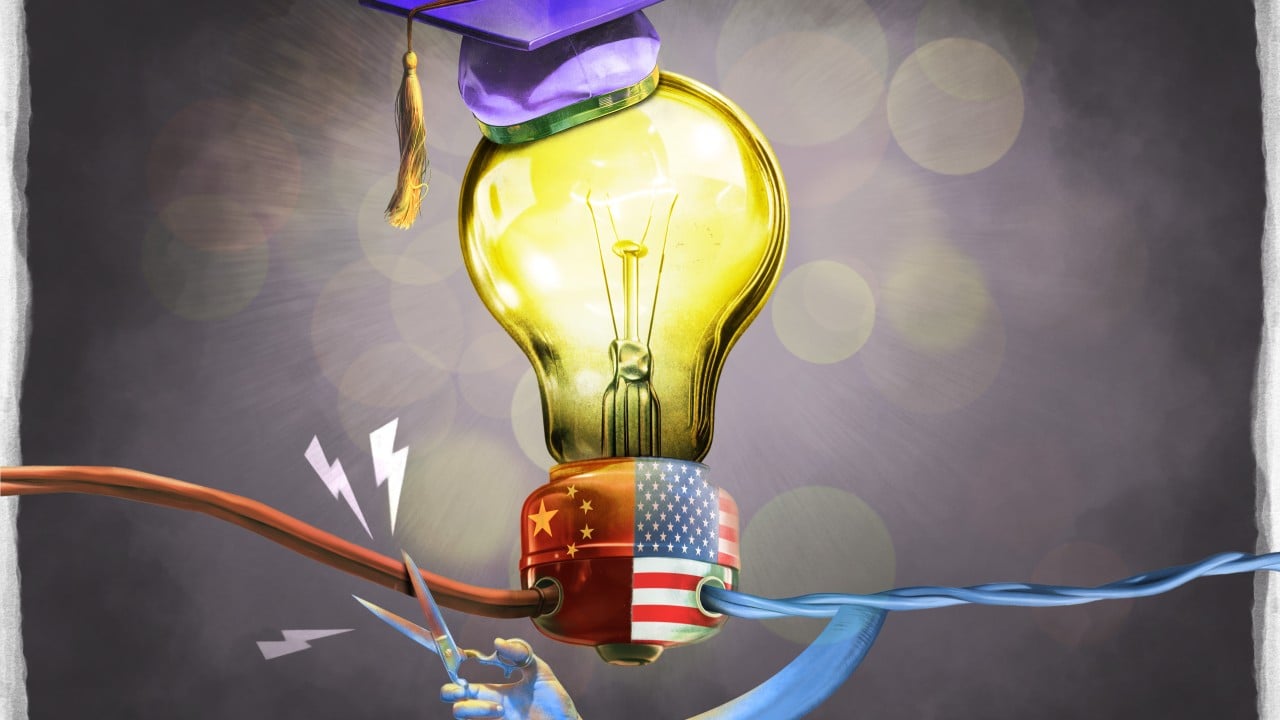
As the United States and China compete for scientific leadership, Washington and a growing number of states are imposing restrictions on academic ties with China.
Since 2018, Congress and 23 states have introduced 158 bills curbing how US universities work with foreign scientists, students and institutions; 24 became law, according to a new tracker from the Committee of 100, a non-profit organisation of prominent Chinese Americans.
Its interactive map shows 13 states with a law or executive action in place, and states now drive most new bills.
Many of these policies explicitly target China or rely on federal lists that include it, falling most directly on Chinese citizens and others with ties to the country. Chinese-American scholars can also face additional scrutiny, regardless of their citizenship.
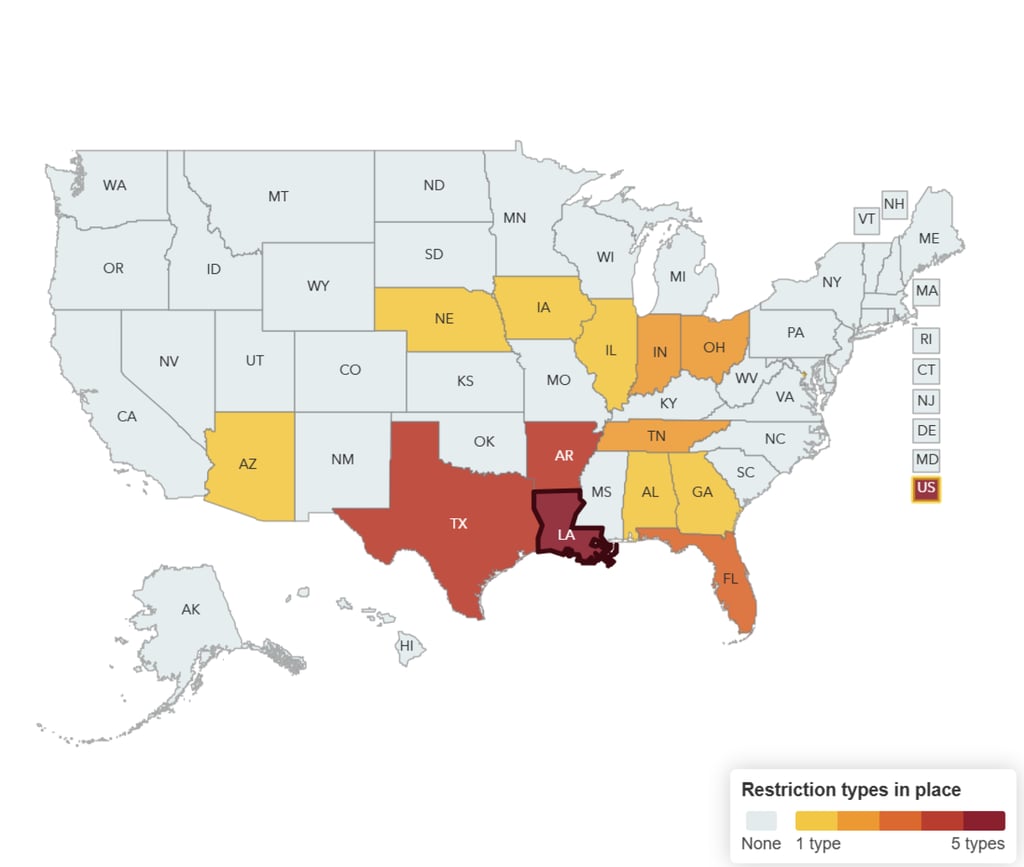
“There is so much more administrative oversight about any type of US-China scholarly interaction,” said Gordon Chang, a professor of history at Stanford University.
Chang said the political climate had had a chilling effect, with few willing to speak up. “Everyone’s keeping their head down now,” he said.
Other research warns that falling international student enrolment could cause major economic losses.
Meanwhile, the restrictions have done little to slow Beijing’s scientific rise, according to a report by China’s Ministry of Science and Technology. Over the same period, China has overtaken the US in research and development spending, claimed the top spot in high-impact publications and deepened its research ties with the rest of the world.
The tracker also notes that the national security benefits of the restrictions remain less well measured than their costs.
US restrictions: from the states to Washington
US restrictions span a wide range across the states. Alabama, Arizona, Georgia, Illinois, Iowa and Nebraska mainly require disclosure, meaning universities must report foreign gifts, funding or ties without being barred from them. Arizona, for example, requires public universities to post research security policies and report foreign gifts above US$250,000.
SCMP Plus is a new premium news platform that gives you an
all-inclusive edge to stay ahead on China news.
To access our exclusive content you’ll need to subscribe.
Already a subscriber?
LOG IN
Others go further.
Ohio bars public institutions from accepting gifts from the Chinese government, the Communist Party or the People’s Liberation Army. Louisiana has five of the tracker’s six restriction types, more than any other state: researcher screening, partnership and funding limits, talent recruitment programmes, travel rules and reporting and disclosure requirements.
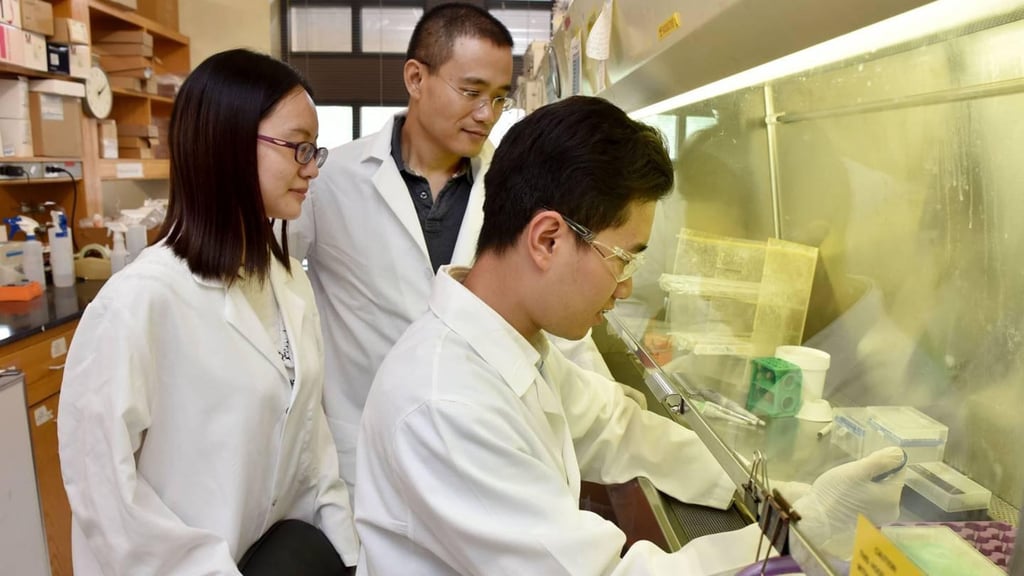
The legislative push has cooled from its 2025 peak but has not stopped. The federal government is the only jurisdiction on the tracker with visa and entry restrictions in place.
A looming brain drain in US
Frank Wu, retired president of Queens College of the City University of New York, said US-China academic cooperation had gone through three phases over the past two decades.
It started with initial enthusiasm, followed by suspicion and criminal investigations under the China Initiative, which damaged careers and lives, and now a period of uncertainty, with anti-China sentiment persisting despite growing recognition of the initiative’s excesses.
Publication data suggest that the bilateral research partnership is fading. National Science Foundation data show 23 per cent of internationally co-authored US papers had a Chinese co-author in 2023, down from 27 per cent in 2019.
Researchers also found that US scientists who had collaborated with Chinese scientists became less productive after the National Institutes of Health began investigating foreign influence in research in 2018, compared with peers who collaborated elsewhere.
More consequential than the loss of research papers is the potential loss of people. Critics say the restrictions are deterring international research talent from coming to the US.
04:21
Citing China ‘activity’, Trump administration bars Harvard from enrolling foreign students
A 2025 study by economists Michael Clemens and his team estimates that proposed changes to student visas and work authorisation could reduce international student enrolment by about a third and cost the US economy between US$140 billion and US$481 billion in annual GDP.
Wu said talented students, faculty members and researchers who had the freedom to choose where they worked were increasingly making decisions to avoid an environment they perceived as hostile or discriminatory.
“People who have the potential to win a Nobel Prize are people who are smart,” Wu said. “If they consider where their careers will flourish and where their lives will be happy, a place full of prejudice is not attractive.”
Surveys suggest that the political climate may also be prompting some scientists to consider leaving.
In a 2023 survey, 61 per cent of 1,304 Chinese-American faculty members said they had considered leaving the US, according to a study by Princeton sociologist Yu Xie and colleagues cited by Committee of 100.
In a March 2025 poll by the journal Nature, roughly 75 per cent of more than 1,600 US-based researchers said they were considering leaving, with Europe and Canada among their main destinations.
China’s rising strength
China’s research ecosystem, meanwhile, has followed a different trajectory over the same period, becoming both more dominant at home and more connected internationally.
According to the Institute of Scientific and Technical Information of China (ISTIC), which operates under the Ministry of Science and Technology, China accounted for 35.2 per cent of papers published in the highest-impact journals across 178 disciplines in 2024, and 39.2 per cent of papers in high-level international journals, ranking first on both measures.
As of August 2025, China also accounted for 53.2 per cent of the world’s “hot papers” – recent research ranked in the top 0.1 per cent of its field by citations – marking the first time its share had exceeded half.
Friction with Washington has not isolated Chinese science. China’s total of internationally co-authored papers reached 172,900 in 2024, up 14.4 per cent from the previous year, with research partners in 169 countries and regions. Such collaborations accounted for about a fifth of its international papers, according to ISTIC.
China is also pulling ahead in some emerging fields. Researchers at Georgetown University’s Emerging Technology Observatory found that Chinese authors accounted for 34 per cent of research papers on chip design and fabrication published between 2018 and 2023, compared with 15 per cent for US authors – more than twice as many.
Zachary Arnold, the observatory’s lead analyst, told Nature in March 2025 that the findings did not establish that China was leading the field, but were arguably “showing us where things are headed”.
Behind that surge is sheer financial scale. China is estimated to have overtaken the US as the world’s biggest spender on research and development in 2024, with spending of US$1.03 trillion, compared with US$1.01 trillion for the US, when adjusted for purchasing power, according to the National Science Foundation’s 2026 report.
Uncertain outlook
This month’s US midterm elections may complicate the picture but are unlikely to reverse the broader trend.
Many states in the tracker are Republican strongholds, though Democrats made significant political gains.
It is unclear whether new Democratic majorities will try to repeal or amend the restrictions, especially since concerns about China remain bipartisan.
Wu predicted that US-China rivalry was locked in a clash of civilisations, putting Chinese Americans under pressure beyond geopolitics.
“The question that is asked of Chinese Americans is: which side are you on?” he said. “Nobody wanted to have to answer that.”
KioskNews shows a cleaned-up reading view extracted from the publisher’s page — the original always lives on their site, not ours.