Nine EU countries further delay EES border checks

Nine EU countries, including France, are delaying the introduction of fingerprinting for non-EU citizens as they plead for more time to introduce the new border controls at busy airports in the bloc.
The entry-exit system (EES), which was due to come into force in full on 6 September, has been delayed multiple times to avoid visitor congestion around large events, including the Olympics in 2024.
Now nine countries, including the holiday hotspots France, Greece, Portugal and Italy, have told Brussels they need more time. Germany, Malta, the Netherlands, Switzerland and Belgium have also sought extra time. Spain, which had teething problems, is implementing the EES fully.
The EES, which was first adopted by the EU in 2017, was officially launched last October and was due to become fully operational in April but early problems, particularly in Greece and Portugal, led to a further reprieve for member states.
EU sources say the system is considered a success with about 200m registrations and 70,000 people stopped from entering the Schengen area, up from 43,700 in June.
These include people without visas, those who have overstayed their 180-day allowance or Britons who have overstayed their 90-day allowance.
Criminals using forged passports or ID documents have also been apprehended with fingerprint and facial image records exposing the use of different passports by individuals.
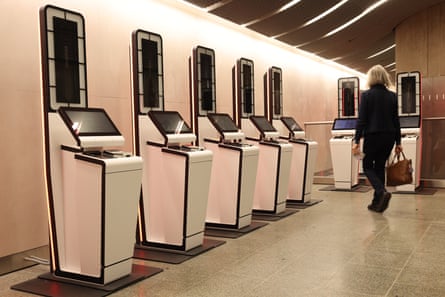
The delays in those nine member states are not countrywide. Fingerprinting has started at the Eurostar terminal in Brussels and Antwerp port but not in all airports.
Large airports, such as Frankfurt and Schiphol – two of Europe’s busiest international hubs, are also taking biometrics but small airports may not be fully up to speed.
Sources say just 12 airports out of 1,500 border crossing points are still having issues.
France has also not introduced checks in the Port of Dover where French police are in the unique position to do border controls in a non-EU country.
after newsletter promotion
Technically those that do not capture fingerprints and facial images are now in breach of the EU regulation, which ended any right to suspend the EES, but sources in Brussels have confirmed they will not be prosecuted.
Earlier this summer, the EU noted that one of the airports was a small regional facility where 3,000 passengers could arrive in an hour in the peak holiday period, but could not be assessed because there were only four booths for biometric capture.
The International Air Transport Association had demanded a full suspension in July complaining that passengers were missing connections in Spain, Italy, Greece and Belgium, while Ryanair warned of “queue chaos” in airports including Málaga and Palma.
The pre-authorisation app, Travel to Europe, which allows passengers to register their facial image and passport details before travelling, will shortly be working for seven countries, sources say.
So far, it is showing as only operational in Sweden and Portugal.
KioskNews shows a cleaned-up reading view extracted from the publisher’s page — the original always lives on their site, not ours.