Beyond baby bonuses: Hong Kong needs to attract couples with liveability

Hong Kong’s efforts to boost the number of newborns in the city should be considered in the context of talent retention relating to Hong Kong’s liveability.
When the Census and Statistics Department reported in August that births in Hong Kong had fallen by an annualised 15.6 per cent to a historic low of fewer than 30,000, it injected a sharp sense of urgency into public discussions as Chief Executive John Lee Ka-chiu prepared to deliver his policy address.
The government addressed concerns with 11 measures to raise the birth rate. They include extending the HK$20,000 (US$2,500) baby bonus for newborns, increasing tax incentives for families with more than one child, raising mortgage caps and lowering stamp duty for households raising children, and strengthening after-school care.
Couples and prospective parents are likely to welcome such measures, but cash grants and subsidies only address short-term challenges. If Hong Kong is to reverse its demographic decline and win the global competition for talent, it must look beyond technical incentives and explore other ways to enhance its appeal as a liveable city.
The central question facing policymakers is how to retain talented people through not just incentives but also lifestyle measures. What can Hong Kong offer these people so they feel confident about working here, starting families and making Hong Kong their home?
Tokyo provides a useful case study in this effort. The Japanese capital is often viewed as a textbook example of East Asia’s demographic squeeze, but a 2025 survey of nearly 10,000 residents by the Tokyo metropolitan government revealed that the desire to form families remained strong. More than 80 per cent of married respondents identified one to three children as their ideal family size, while only 10 per cent expressed no wish to have children.
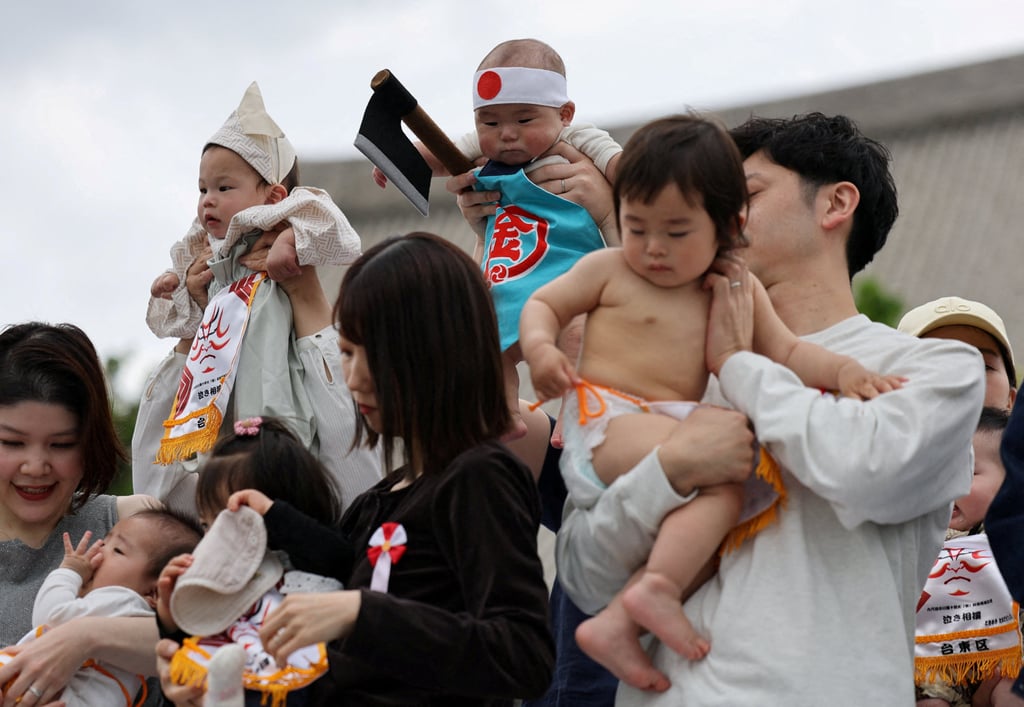
The obstacle is not a lack of ambition but the reality of urban strain. High education costs, compact housing and relentless workplace pressures force couples to scale back their plans. The consequences of such pressure are reflected in Tokyo’s migration patterns.
Tokyo gained more than 60,000 young adults in their 20s each year between 2019 and 2023, confirming its appeal to students and early-career talent. In that same period, though, it lost more than 34,000 residents in their 30s.
Tokyo becomes a leaky bucket as people turn from building careers to starting families. Mid-career professionals exit the urban core for neighbouring prefectures such as Saitama, Chiba and Kanagawa, or they relocate to regional hubs such as Osaka and Fukuoka in search of family-friendly liveability.
This mobility shift carries serious economic consequences. Professionals in their 30s represent some of a city’s most productive workforce, highest earners and primary tax base. When they leave, they take their skills, consumer spending and the next generation of human capital with them.
02:20
Japan rolls out ‘last-chance’ efforts to curb population decline
Hong Kong faces a similar challenge. It retains considerable strengths, including global and regional connectivity, a dynamic economy, efficient transport and the potential for cross-border hi-tech development in the Northern Metropolis. However, as cross-border connectivity improves, Greater Bay Area cities might become a more practical living option for Hong Kong families.
Unlike Japanese couples, women in Hong Kong have little incentive to have a second child, contributing to a steady decline in the city’s birth count. In a 2024 survey of one-child households, only 31 per cent of respondents had a clear intention to have a second child. Those who were unsure or did not wish to have another child cited reasons such as insufficient daytime childcare support for working parents and an inflexible work culture.
This poses a real question for Hong Kong’s long-term population planning. Attracting global talent through recruitment schemes is only a short-term achievement if those same professionals leave the moment they become parents.
08:02
Why Hong Kong has one of the lowest birth rates in the world despite government push
Japan’s national government recognises that practical supports alone fall short. Under its broader population strategy, amendments to the Child Care and Family Care Leave Act have introduced reforms mandating statutory flexible-working options and stronger childcare-leave protections for working parents.
Tokyo has taken extra steps in reinforcing these national mandates with its own local incentives and public campaigns, striving to make the capital a more attractive, liveable home for talented people, married couples and growing families.
Tokyo’s experience offers Hong Kong a timely lesson. Genuine population policy must extend beyond financial incentives to overhaul the everyday experience of city life, from workplace culture to lifestyle and community support. To secure its future, Hong Kong must renew its urban image around genuine liveability.
Reimagining population planning through a citywide lifestyle lens does more than boost birth rates; it creates a sustainable ecosystem that ensures seamless succession not just within our corporate boardrooms but across our families and communities. That is how “Asia’s world city” can truly renew itself as a place where local and global talent alike feel confident putting down roots for generations to come.
KioskNews shows a cleaned-up reading view extracted from the publisher’s page — the original always lives on their site, not ours.