Legal body’s new office boosts Hong Kong’s role as exchange hub, ex-minister says
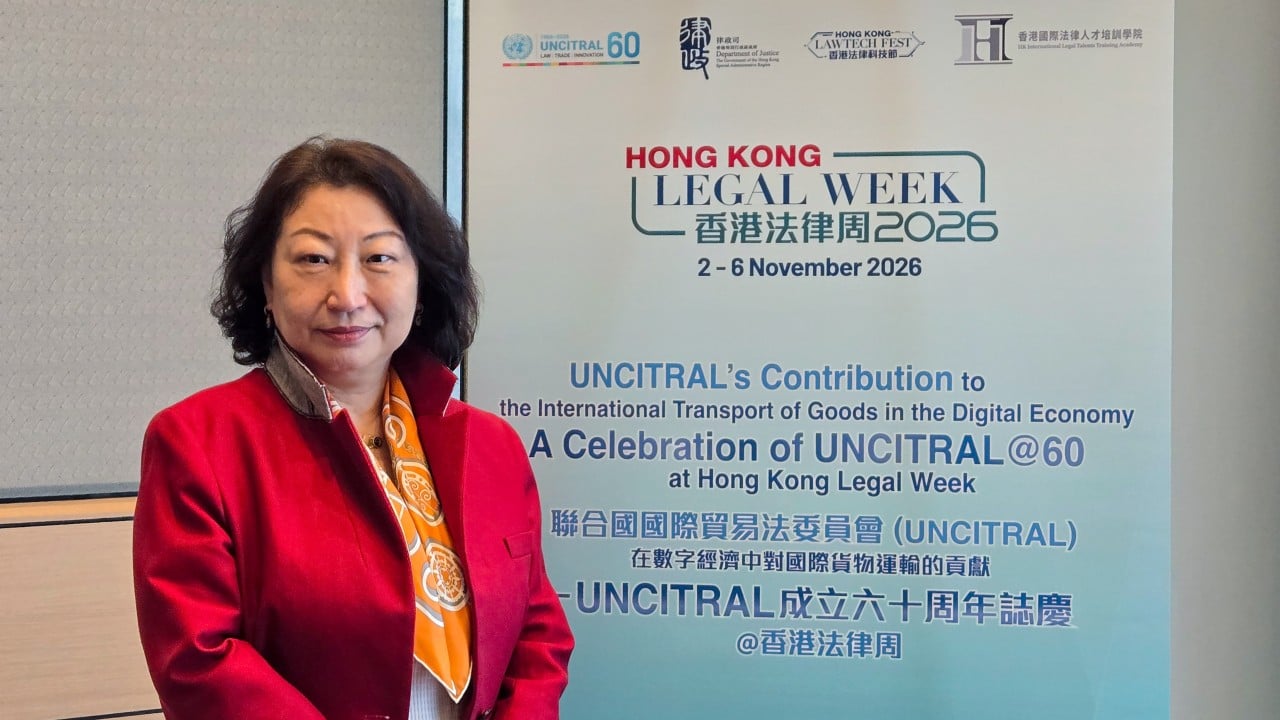
The opening of an international legal body’s first overseas office in Hong Kong reflects the city’s importance as a hub for legal exchange, underpinned by its broad legal framework and strong ties to mainland China, a former justice minister has said.
Teresa Cheng Yeuk-wah, secretary general for the International Organisation for Mediation (IOMed) and the city’s former secretary for justice, said on Wednesday that the opening of the International Institute for the Unification of Private Law (Unidroit) regional office earlier this week was a vote of confidence in the city.
“They all indicate these bodies’ confidence in using Hong Kong as a platform for their international exchanges, and I think that will enhance the city’s position as an international legal hub,” Cheng said on the sidelines of the Hong Kong Legal Week forum.
Unidroit announced on Monday that its Hong Kong office – the body’s first outside its Rome headquarters – would serve as an Asia-Pacific liaison office, reaching out to Southeast Asian economies and promoting the wider use of uniform commercial law in the region.
With Unidroit’s arrival, the city now hosts offices for three major commercial law bodies, known collectively as “the three sisters of private international law”.
The other two are the United National Commission on International Trade Law (Uncitral), which harmonises international trade and commercial law by issuing model laws as references for jurisdictions and international treaties, and the Hague Conference on Private International Law (HCCH), which focuses on resolving jurisdictional authority issues in cross-border judicial procedures.
Cheng said the choice of Hong Kong to house offices for the three organisations, which work to harmonise commercial laws across jurisdictions, was a testament to the city’s strong rule of law under a common law legal system adjacent to China, a civil law jurisdiction.
“[These features] show the inclusivity and broadness and breadth of the legal system here,” Cheng said, adding that some lawyers in the city were also qualified to practise in the Greater Bay Area, which comprises Hong Kong, Macau and nine cities in neighbouring Guangdong province.
Cheng, who heads the Hong Kong-headquartered IOMed, also revealed that the one-year-old body had recorded “more” successful cases, but declined to give an exact figure, citing confidentiality.
Her remarks followed her disclosure earlier this month of a second case resolved by the body – an infrastructure dispute in Malaysia. The organisation’s first disclosed success was a maritime dispute between a Chinese party and a Singaporean party in May.
“There are other successful cases. There are some ongoing cases, while other parties are finishing application forms. Some cases are preparing their mediation agreements,” Cheng said.
While declining to comment on the intergovernmental body’s reputation, Cheng said one party and a lawyer for the opposing side had returned to the organisation for further cases after resolving a prior dispute.
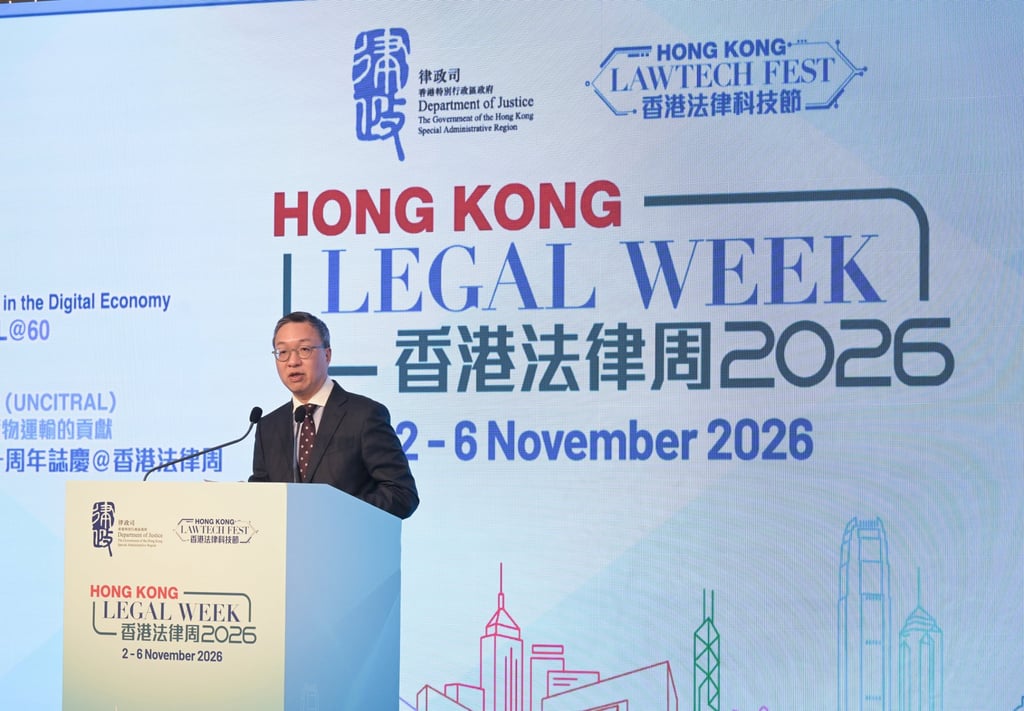
Separately, speaking at the forum on Wednesday, Secretary for Justice Paul Lam Ting-kwok said Hong Kong was committed to digitising business-to-business trade documents to reinforce its role as an international trade hub, pointing to an amendment to the Electronic Transactions Ordinance to be introduced this week.
The amendment would refer to a model law on electronic transferable records produced by Uncitral.
“Uncitral’s work will be more critical than ever to ensure the relevant legal framework evolves continuously in line with the development of the digital economy,” Lam said.
KioskNews shows a cleaned-up reading view extracted from the publisher’s page — the original always lives on their site, not ours.