10 Classic Rock Albums You Must Listen to Before You Die

Jeremy has more than 2900 published articles on Collider to his name, and has been writing for the site since February 2022. He's an omnivore when it comes to his movie-watching diet, so will gladly watch and write about almost anything, from old Godzilla films to gangster flicks to samurai movies to classic musicals to the French New Wave to the MCU... well, maybe not the Disney+ shows.
His favorite directors include Martin Scorsese, Sergio Leone, Akira Kurosawa, Quentin Tarantino, Werner Herzog, John Woo, Bob Fosse, Fritz Lang, Guillermo del Toro, and Yoji Yamada. He's also very proud of the fact that he's seen every single Nicolas Cage movie released before 2022, even though doing so often felt like a tremendous waste of time. He's plagued by the question of whether or not The Room is genuinely terrible or some kind of accidental masterpiece, and has been for more than 12 years (and a similar number of viewings).
When he's not writing lists - and the occasional feature article - for Collider, he also likes to upload film reviews to his Letterboxd profile (username: Jeremy Urquhart) and Instagram account.
He has achieved his 2025 goal of reading all 13,467 novels written by Stephen King, and plans to spend the next year or two getting through the author's 82,756 short stories and 105,433 novellas.
Sign in to your Collider account
Classic rock is maybe definable as the kind of rock you're likely to hear on classic rock radio stations (unsurprisingly), but a better definition could be narrowing it down to rock released during a certain period. That period was when rock was at its most popular and culturally dominant, and arguably, during that time, rock music was also at its best, so it’s classic rock, and then it also happens to be rock that is classic (in terms of quality and historical importance).
There’s an attempt to single out some particularly great classic rock albums below, all of them worth listening to before you die. Or, less morbidly, listen to them all while you're still breathing; before the bucket’s kicked. That’s still pretty morbid. Sorry. But these albums are amazing, and enough so that you’ve probably heard most of them before, but if you haven’t, they're essential to give a spin at least once before… you know…
10 'Cosmo's Factory' (1970)
Creedence Clearwater Revival
It feels uncool to call them Creedence Clearwater Revival instead of just “Creedence,” but either way, here's Cosmo’s Factory, which is probably the band’s best album. Creedence (yeah, let’s be cool for a bit; for fun) is entirely classic rock in sound, really being demonstrative of this particular era of rock, and so sure, Cosmo’s Factory is blunt, certainly straightforward, and pretty easy to listen to quite passively.
Sometimes it’s just what you need, though? Something loud, catchy, and very of its time, but all of those things in good ways. Cosmo’s Factory is strong enough that you might not love Creedence, or the particular kind of rock they made, but you're still likely going to, at the very least, tolerate this particular album. And if you are fond of classic rock and/or Creedence, then it’s safe to say you're going to go well beyond tolerating this, since you'll probably love it.
9 'Damn the Torpedoes' (1979)
Tom Petty and the Heartbreakers
If there’s one flaw with Damn the Torpedoes, it’s that it starts in a way strong enough that you could argue the momentum isn't entirely made, yet that’s a nitpick, since the album after the first three tracks is still strong. It’s more just that the run from “Refugee” to “Here Comes My Girl” to “Even the Losers” is especially great, with three high-quality songs on their own all feeling perfectly sequenced, and thereby made even better.
But Damn the Torpedoes is not a long album, so once you're three tracks down, there are only six to go, with “Don't Do Me Like That” and “Louisiana Rain” among those remaining songs. Tom Petty and the Heartbreakers had a knack for pumping out punchy rock music early on, so the two albums before Damn the Torpedoes and the one following it are also great, yet it’s Damn the Torpedoes that’s the most consistent and memorable of the bunch.
8 'Sticky Fingers' (1971)
The Rolling Stones
Make no mistake: The Rolling Stones had a great run throughout a good chunk of the 1960s, but there’s an argument to be made that it was their 1970s run that demonstrated the band at their strongest. Sticky Fingers is especially strong, and the one being singled out here, but it wouldn’t be wise to overlook the 1960s, and then ‘80s-wise, the band was still going fairly strong there, even if their music in that decade wasn’t quite as “classic rock” in sound.
Sticky Fingers is great, and most of it holds up incredibly well over half a century later.
Anyway, Sticky Fingers was the album that helped demonstrate The Rolling Stones could well be the new kings of rock, making a great start for the whole decade, right around a time when another legendary British band had broken up, leaving the future of rock temporarily uncertain, to some extent. More on that other band later, by the way. But yes, Sticky Fingers is great, and most of it holds up incredibly well over half a century on from its initial release.
7 'Electric Ladyland' (1968)
The Jimi Hendrix Experience
Easily one of the best double albums of all time, Electric Ladyland is probably The Jimi Hendrix Experience’s greatest album, which is a big take, even without too many albums by the band. It comes down to all those albums being phenomenal and influential, and it’s just the case that Electric Ladyland, with its size and also all the wild things it’s going for – and successfully trying to cram into – a single album.
Electric Ladyland is still such a wonderful and strange album to dive into, even today, with it coming up on nearly six decades since it first came out (safe to assume it would've been even more mind-blowing to hear back in 1968). There’s an undeniably interesting atmosphere to the album overall, and it’s surprisingly consistent, all the while saving two of the best songs until the very end: a cover of Bob Dylan’s “All Along the Watchtower” and then “Voodoo Child (Slight Return).”
6 'Quadrophenia' (1973)
The Who
This spot could’ve easily gone to Who’s Next, which has the singles and perhaps more historical/cultural importance, so consider that an honorable mention for that possibly easier pick (the one that’s slightly more straightforward, not to mention potentially simpler to praise). But Quadrophenia is even better, and maybe ever so slightly underrated, being like Electric Ladyland in the way it sustains itself for twice as long as a normal album, but then it’s also more of a concept album.
Broadly, Quadrophenia is about struggling to fit in while growing up and dealing with intense isolation, and lots of what it tackles lyrically still packs a punch. The story might not be as comprehensible as was the case with The Who’s Tommy, but it doesn’t really matter when there’s so much to feel throughout Quadrophenia, since it’s very emotional, cathartic at times, and then also a bit intense at times thanks to how full-on the introspection gets at other points.
5 'Born to Run' (1975)
Bruce Springsteen
Bruce Springsteen had a remarkable run throughout the 1970s and 1980s, since it’s that period of time that saw the release of the majority of his all-time great albums. There are albums after that era that are still pretty great, but then again, it’s also hard for anything to be close to Born to Run in terms of quality. And even compared to the other Springsteen albums of those two decades, Born to Run is special.
It does a lot to condense everything great about Springsteen into just eight largely phenomenal tracks, and while they'd all be worth mentioning, it’s especially worth mentioning the title track (an all-timer), “Thunder Road,” and “Jungleland,” the former kicking off Born to Run expertly, and the latter being one essentially perfect closing track. Everything here works, and it’s 40-ish perfect minutes of classic rock, in the end.
4 'Led Zeppelin IV' (1971)
Led Zeppelin
It says something about how great Led Zeppelin were, as a band, that you could probably put an album of theirs without “Stairway to Heaven” in a ranking like this and it would still feel right. The first half-dozen albums are all very hard to fault, but among greatness, it’s probably Led Zeppelin IV that well and truly is the greatest, and sure, “Stairway to Heaven” helps, but the other songs here are also fantastic.
Technically, this album’s untitled, but it’s easier to call it Led Zeppelin IV after the band put out three self-titled albums in the couple of years before Led Zeppelin IV. There’s also a great variety of tracks here, with some not being particularly rock-heavy, but then other parts do indeed get very energetic and loud. The slower songs make for a nice contrast, and Led Zeppelin IV transitions from song to song incredibly well, with the pacing and overall flow being impeccable.
3 'Abbey Road' (1969)
The Beatles
There are arguments to be made for several other albums by The Beatles that aren’t Abbey Road to be worthy of being called the best, but it’s Abbey Road that feels like a culmination of the band’s entire run. No shade to those other albums, though, since the band was remarkably consistent and boundary-pushing, especially through the last half of the 1960s (see also Sgt. Pepper’s Lonely Hearts Club Band, the self-titled or "White" Album, Revolver, Rubber Soul, and Magical Mystery Tour, if you want to count that one).
Abbey Road has some all-time great tracks on it, and the whole thing flows incredibly well, too, especially all those short songs in the second half that make up a medley. It’s got almost everything great about The Beatles packed into one album, and is also significant for being the final one the band recorded, even if Let It Be, largely recorded earlier, was the last album of the band’s to be released (and the only one that didn’t come out in the 1960s, since it dropped in 1970).
2 'The Dark Side of the Moon' (1973)
Pink Floyd
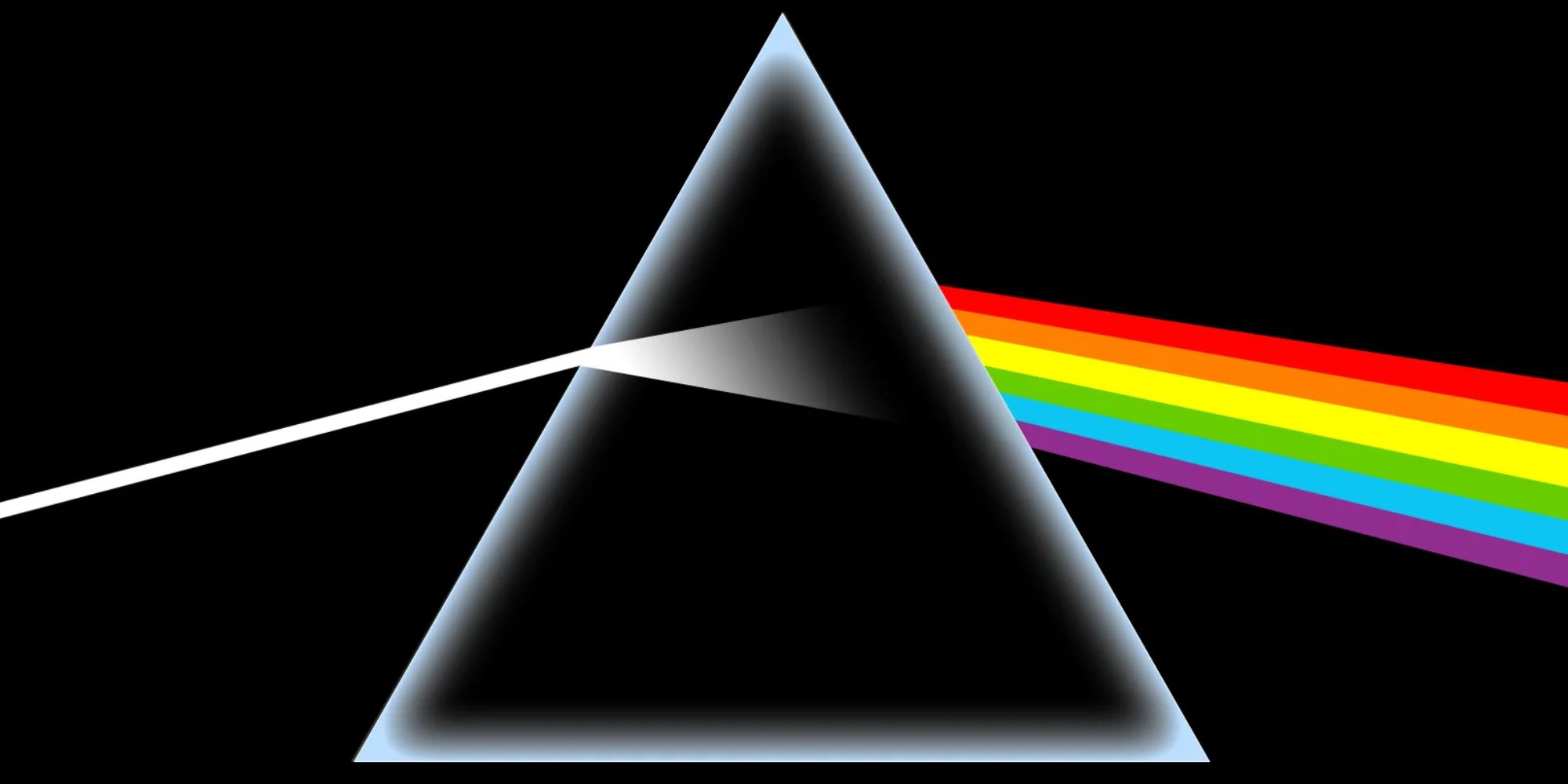
Pink Floyd is known for making albums that you can really get lost in, and The Dark Side of the Moon is especially dense and immersive in a mostly good way. “Mostly” because this album is pretty heavy-going at times, so maybe it’s not for every mood, yet it’s for a lot of them, and it is overall about life quite broadly, helping it be a little easier to get into than some of the band’s other great (and also ambitious) rock albums.
So, it’s great within Pink Floyd’s discography, and then when judged on its own, The Dark Side of the Moon is still phenomenal and everything. It’s just such a quintessential album – rock or otherwise – that it’s hard to know how to even praise it or convince someone who’s yet to listen to it that they really need to get on it. Also, it’s probably the kind of thing almost everyone’s heard at this point, so maybe it’s an odd recommendation for present purposes. Still, uh, maybe re-listen to it before you die? Yeah, there we go. That works.
1 'The Rise and Fall of Ziggy Stardust and the Spiders from Mars' (1972)
David Bowie
If you want to find great David Bowie songs, you can go as far back as the 1960s, since “Space Oddity” came out then and is an obvious classic, but if you want essential albums of his, it’s best to start in the 1970s. He kept going beyond that decade, of course, with his final album (Blackstar) even being a masterpiece, but the most masterful of his masterpieces is probably The Rise and Fall of Ziggy Stardust and the Spiders from Mars.
And since no one has really ever done it better than Bowie, why not also call it the best classic rock album of all time? The Rise and Fall of Ziggy Stardust and the Spiders from Mars is just too good, with everything being perfect to the extent that it’s hard to know what else to say. Why bother saying anything when you can just listen? Thankfully, The Rise and Fall of Ziggy Stardust and the Spiders from Mars never really gets old, either.

Ziggy Stardust and the Spiders from Mars
- Release Date
- December 23, 1983
- Runtime
- 90 minutes
- Director
- D. A. Pennebaker
- Producers
- Tony Defries
-

Self / Ziggy Stardust
-
Mick Ronson
Self - Musician
-
Trevor Bolder
Self (uncredited)
-
Mick Woodmansey
Self - Musician (Extended Cut)
KioskNews shows a cleaned-up reading view extracted from the publisher’s page — the original always lives on their site, not ours.