Bruce Pascoe’s new book may spark another culture war. He hopes for ‘decency and intellectual curiosity’ this time

On the eve of publication of his new book, Bruce Pascoe is steeling himself for potential controversy that could rival the bitter storm that battered and bruised him for years over the 2014 book that rewrote Australian history: Dark Emu.
Where Dark Emu contentiously sought to reframe pre-invasion Australian First Nations people from hunter-gatherers into more complex farmer-cultivators, Pascoe’s new book, The European Mind: Colonialism, Capitalism, Christianity and How to Recover, sheets home the blame for the most heinous excesses of racism and dispossession on to a troika of western shibboleths: Christianity, capitalism and colonialism.
On a hot early spring morning in Sydney, Pascoe – a southern Victorian farmer and celebrated literary author of Yuin, Bunurong and Tasmanian ancestry – sits on a stage at the New South Wales State Library to promote his new book. While “beautiful”, he says the original Mitchell reading room where the event is being hosted is ironically “one of the most colonial” in Sydney, with its early 1900s club atmosphere.
In conversation with Bigambul and Wakka Wakka writer and academic Melanie Saward, he says, with good humour: “I’ll have the noise and these attacks going on [again]. But you know I’m loved by my family, and I’m loved by my Country … Once again there’ll be a storm, you know. I’ll be accused by some of eating kittens. And eating them slowly, which is worse.”
He laughs. But a reticence clearly underscores the nonchalance. For it did get pretty nasty last time, including with renewed allegations questioning the veracity of his Aboriginal identity, and a major academic takedown of his research and methodology.
With his farm-labour wiriness, trademark wild mane of silver hair and long beard, the fit-looking 79-year-old says there have “been times, I admit, when I struggle”.
When we sit in the sunshine after the event to talk about the new book and Australian rules football (he is a diehard Richmond supporter who watched the Fremantle v Swans preliminary final the night before), he sounds tentatively prepared for another pile-on.
Is he ready? “I hope I am. I have been readying myself for it. I think I am about as ready as I can be for it. But look, it’s very difficult to hurt an old man, because you’ve become very aware of how many years you’ve got left – active years I mean. And you can’t bribe an old man because he doesn’t want anything. And you can’t intimidate an old man because he’s going to die anyway soon, so you can’t hurt him. I’m trying to placate myself I think, but I’m also trying to ready myself. I find hatred to be unproductive.
“Realistically you can’t go and write [critically] about capitalism, Christianity and colonialism in a single book and expect not to get a significant reaction … because it deliberately evokes comment and disagreement. These things are very important to people, so I have to be ready for those arguments. But I just hope that, you know, there’s a bit of decency about it and a bit of intellectual curiosity.”
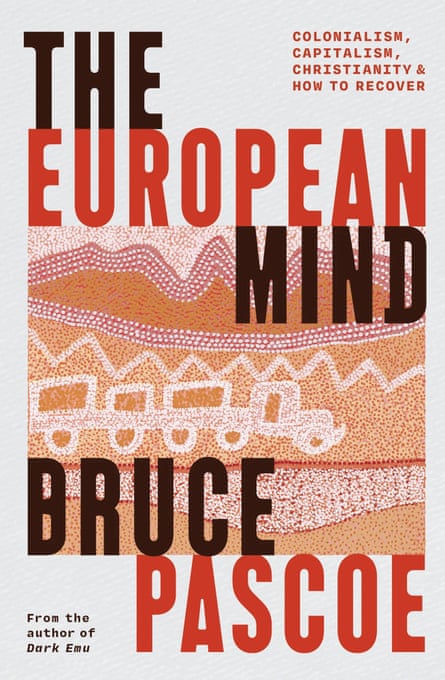
Pascoe’s argument (drawn from a First Nations perspective) is that western religion’s view of “other” spiritual beliefs as inferior, Europe’s innate sense of moral and racial superiority, and capitalism’s insatiable appetite for natural resources drove global First Nations dispossession as equally as a yearning for exploration and mercantile expansion.
First Nations writers, artists and activists the world over have long railed against the insidious effect of capitalism, colonialism and the church on Indigenous people’s generational outcomes. And while Pascoe’s most vociferous critics in the academy and media (chief among whom he cites Australian News Corp outlets) will doubtless comb through every line, the European Mind is anything but a polemic rant. As with Dark Emu, he quotes exhaustively from various western and European colonial and later historical sources. The book includes a four-page bibliography and 14 pages of endnotes.
But it’s hard to deny the marketability of controversy: the literary frisson attached to the elegantly written contentions of such an enigmatic and celebrated writer as Pascoe. With 406,000 copies sold (and 110,000 of the children’s edition), Dark Emu remains one of this country’s highest-selling books in the broad category of Australian history. While a literary storm can be punishing and at times very cruel, the dividends can also be significant.
And so some of the past’s most prominent possessors of European mindsets are hauled to Pascoe’s historical guillotine. Among them are Baden Powell (celebrated British army officer and founder of the Boy Scouts), “dismayed when his foe surrenders” rather than give him the desired valiant scrap on the battlefield; Lord Wolseley (one of the foremost British army generals at the vanguard of late 19th century imperial expansion), revelling in “rapture-giving delight which attack upon an enemy affords”; Winston Churchill (“a horrible bastard”, the author contends, at his library event) relishing his battlefield experiences. Even Walt Whitman, The Bard and Charles Dickens cop a serve.
Pascoe writes in the European Mind: “The American poet, Walt Whitman, was a fervent supporter of the white establishment; Charles Dickens rooted for the Empire in India; and Shakespeare, while sublimely sardonic, seemed resigned to the fact that the world would be a treacherous place dominated by big men.”
He contends that European colonial expansion drew its moral weight and certainty from many institutional and cultural sources, but not least through the Catholic church and Pope Alexander V1’s 1493 papal bull, The Doctrine of Discovery. It deemed that exploring Christians could rightfully claim territory where Indigenes did not know the name Jesus Christ.
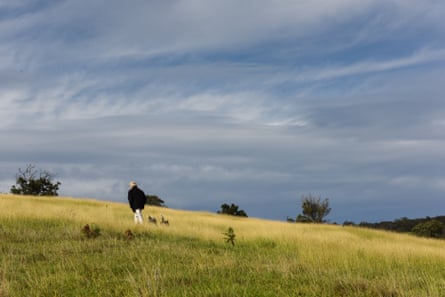
There is a personal warmth about Pascoe which drives his yearning to “yarn” about his writing – to discuss his ideas and contentions with those who will take exception. He seems surprised that so many of his most vociferous critics wouldn’t engage him on civil grounds last time.
In this latter part of his life he wants a discussion – national, universal and personal – that might lead to better human understanding among different faiths and traditional knowledge holders.
“I do feel an obligation to be hopeful because I’ve got grandchildren. But I also have to interrogate myself about this, because I don’t want to be talking bullshit just because it sounds good. I have to ask myself, ‘Do you really believe this?’ And I do. I think there is enough goodness in the world. The vast majority of us want decency, we want love, we want care. We want to look after each other and the world. And we’ve been diverted by a very small, powerful group – people who hate everything,” he says.
“We need to talk – to find common ground.”
He speaks, as he writes in the book, passionately and lovingly about his deeply Christian mother and his discussions with her about his terminal disenchantment with the church when he was young. While coming from diametrically opposite positions, their respectful conversations, he says, inspired far greater mutual understanding about many aspects of life.
He offers this relationship as a template, perhaps, for broader discussions about belonging, spiritual belief, faith and personal identity.
“I was sceptical [of Christian religion] from a very early age … but I understand people’s spiritual needs because I have that as well.”
He believes most people of religion – regardless of faith – are pursuing the same thing: peace and togetherness.
“I don’t believe that most Christians want to see Pete Hegseth praying for violence [for “overwhelming violence of action against those who deserve no mercy”, as the United States Secretary for War put it] and I still can’t believe how [Christian] clerics let that go unchallenged.”
This discussion of “belief” leads us back to his beloved AFL – to the “joy” and “beauty” of the previous night’s final.
Some will always regard the game as an exemplar of Indigenous cultural fusion with the Australian colonial. Some historians, meanwhile, will always hotly contest this.
“The game’s spirit is Aboriginal,” Pascoe says.
Discuss. With civility.
-
The European Mind: Colonialism, Capitalism, Christianity and How to Recover is out 28 September through Magabala books
KioskNews shows a cleaned-up reading view extracted from the publisher’s page — the original always lives on their site, not ours.