Monkey-cheeks back and forth doesn’t hold water
Flooding is still widespread in many parts of Thailand, while discussions of what could and should have been done to prevent this year’s catastrophe are already under way. For our public servants and politicians, the talk has focused on water retention areas as the be-all and end-all of the inundation response.
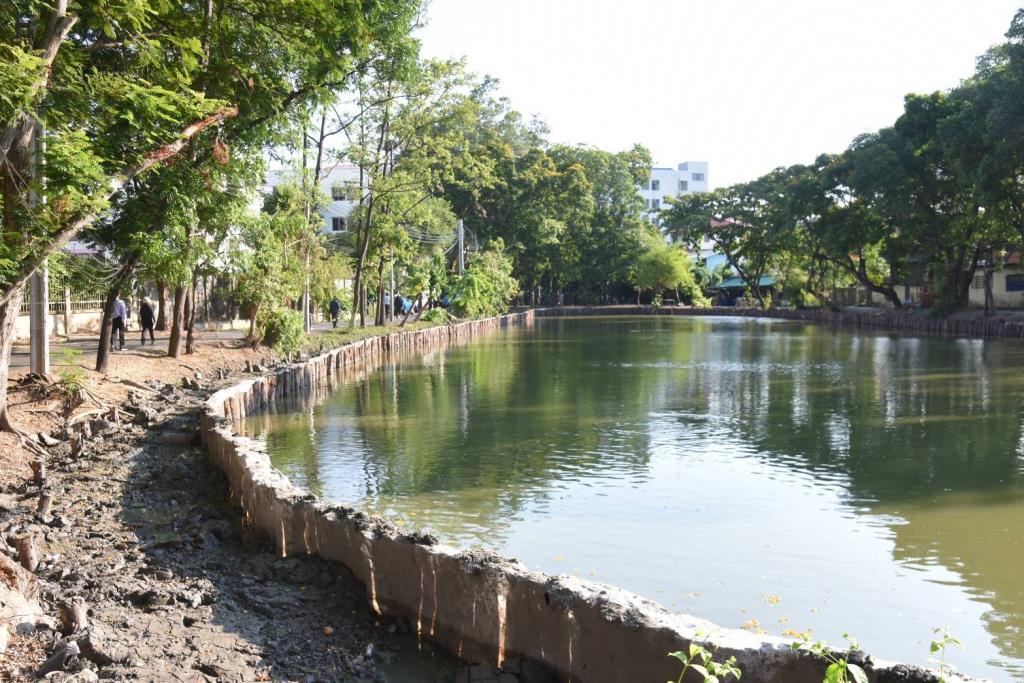
Water retention ponds, commonly referred to in Thailand as monkey-cheeks, are a proven tool for flood management. Sections of land are put aside to hold excess water when drainage into rivers and the sea is at capacity, creating ponds that bear the burden of submersion.
A solution championed by His Majesty King Bhumibol Adulyadej The Great, retention ponds have an unquestionable place within any robust plan for safeguarding the people and property of a country that must face the threat of flooding annually.
Following the unexpectedly heavy inundation of Bangkok at the end of September, discussion of monkey cheeks has taken centre stage among the country’s officials.
Prime Minister Anutin Charnvirakul this week ordered the Department of Public Works and Town & Country Planning to study ways to develop water retention areas around Bangkok in order to prevent future floods.
He should have been aware that the capital has already looked extensively into the viability of different areas to act as retention zones.
It definitely looked into them enough for United Thai Nation Party MP Atavit Suwanpakdee to find grounds to accuse Bangkok governor Chadchart Sittipunt of abandoning a royally initiated flood-management project based around the monkey-cheeks concept. Specifically, he referred to the Bung Khu Bon retention project in eastern Bangkok.
The proposal, intended to provide a storage area of about 130 rai capable of holding 870,000 cubic metres of water, has become a political flashpoint.
Value for money
Mr Chadchart has argued that the decision not to proceed with the particular project was based on practical and financial considerations.
Land acquisition and infrastructure development alone were estimated to cost about 11 billion baht. The Bangkok Metropolitan Administration (BMA) has maintained that alternative investments in drainage channels, tunnels and existing retention areas could offer better value.
On the one hand, these are legitimate concerns. It would be irresponsible for the BMA to spend billions on a plan if the same or less money could produce better results.
On the other, former prime minister and Democrat party MP Abhisit Vejjajiva has called for an investigation into the BMA’s handling of the issue. He had some pointed questions about development of the land in question, hinting that connected individuals might have been involved, while pointing out that the BMA had not offered alternative solutions.
A review would be worthwhile. If a viable defence against the flooding we’ve seen in Bangkok now was ignored for the benefit of specific parties, the public is owed answers.
What should not happen however, is for an investigation into a project that constitutes just one facet of the overall solution to sideline the discussion about how Bangkok and the rest of Thailand can be safeguarded from current and future flood-related losses.
This political dispute threatens to narrow the field of vision for the entire subject. Instead of examining how Thai cities like Bangkok have developed, how drainage networks function under extreme conditions, or how national and local agencies coordinate their responses, attention is being concentrated on whether one particular pond should have been built.
Myopic focus
It has become a convenient diversion from what could be a more impactful evaluation, as if a lynchpin move must be made and no further action needs to be taken until this debate is resolved.
The myopic focus allows all involved to create the illusion that they are dealing with the flood issue without actually having to produce any tangible results.
The government’s decision to “further study” water retention areas, the Democrats’ inquiry, and the BMA’s justifications to both sides all give the impression that if only this matter could be concluded, flood management could finally become effective.
Responding to a natural disaster cannot be reduced to a single project. Water retention areas are one tool among many and their effectiveness depends on how they fit into a wider system.
The questions that need answering are far broader than whether Bung Khu Bon should have been developed.
Thailand does not need to choose between monkey-cheeks and other flood-control measures. It needs a coherent strategy that makes the best use of all practical options, backed by transparent decision-making, effective coordination and a willingness to confront the realities of both modern nature and urbanisation.
Most of all, it needs leaders and policymakers who will not settle for reducing a vast and complex problem into a simple blame game that takes the place of progress.
KioskNews shows a cleaned-up reading view extracted from the publisher’s page — the original always lives on their site, not ours.