‘The weirdos were taking over!’ Tate Britain relives the 1990s – in pictures

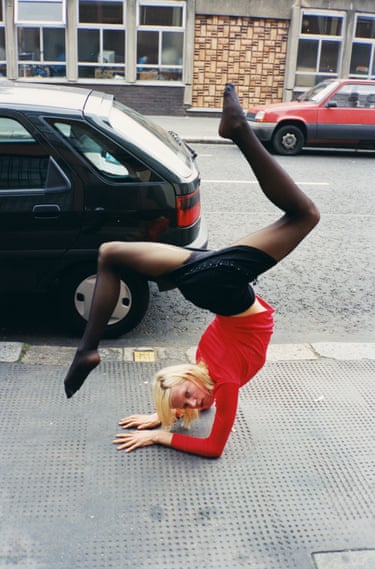
Domenique, London, 29 September, 1998 by Juergen Teller
Tate Britain is having its first exhibition looking back on the art and fashion photography of 1990s Britain. It does not attempt a definitive overview, instead setting out the ways in which art and fashion interconnected – a phenomenon that continues to this day. The 90s: Art and Fashion exhibition runs at Tate Britain, London, from 8 October 2026 to 14 February 2027. Texts by Edward Enninful and Alex Farquharson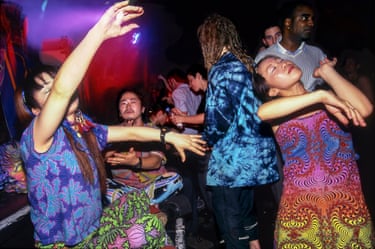
Bob’s Full House at Bagley’s Studios, Kings Cross, 1991, by David Swindells
Ask Gen Z what draws them to the 90s and the answer you typically receive is: ‘no smartphones’. The 90s was the last offline decade. The internet existed, but it was slow and niche, a sparse new frontier rather than a pervasive infrastructure. Smartphones, social media, AI bots and behaviour-shaping algorithms were inconceivable. Culture was consumed in physical, analogue form, often socially. People could enjoy (or embarrass) themselves without feeling an anxious awareness that images might circulate online indefinitely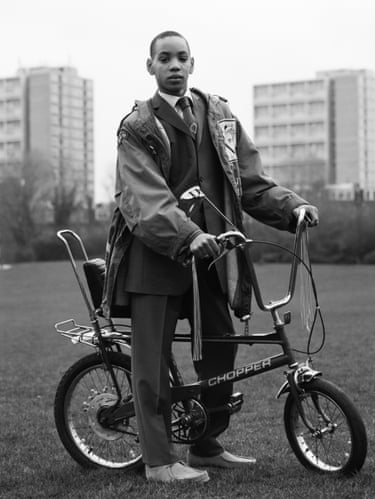
Chopper Mark II, 2001, by Koto Bolofo
While certain figures came to define the decade publicly, this exhibition reflects a broader landscape of practices and voices that shaped the period, many of which operated beyond the structures of visibility at the time. This wider perspective recognises that the energy of the 90s was not concentrated in a single movement but distributed across communities, disciplines and geographies that have not always been equally represented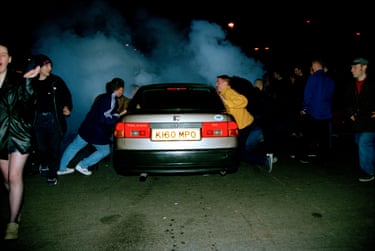
Northampton, 1997, by Elaine Constantine
Jarvis Cocker on the 1990s: ‘I’d moved to London and Pulp were asked to play a couple of concerts. It felt different to before. It felt like something was happening. Something good. The weirdos were taking over. We danced at Smashing. We drank in Camden. Surely, if we all grabbed hold and worked together, we could turn the ‘9’ in 90s upside down, make it a ‘6’ – make the 60s happen all over again. We tried. We really did. We even managed to elect a Labour government and then we sat back and waited for flower power to happen all over again. But it didn’t’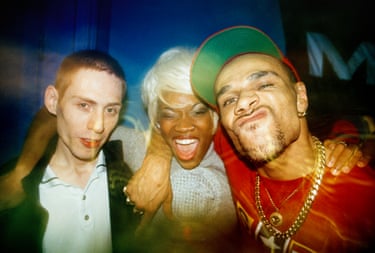
Metalheadz, 1995-1996, by Eddie Otchere
Normski: ‘I had the joy of finding my likeminded people through the hip-hop, house and jungle scenes in London, and quickly realised that we were the generation who would go on to shape the future with what was handed down from our elders, growing up in a changing time in a new and very diverse population from all corners of the world. “Act local, think global” was how I viewed the world around me’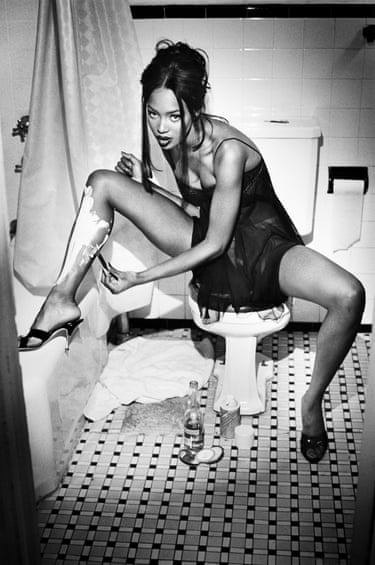
Naomi Campbell, 1994, by Ellen von Unwerth
At this moment the conditions of image-making were evolving. Advances in publishing, photography and media circulation allowed fashion and art to move with greater speed and immediacy. In London this circulation was accelerated by proximity, with photographers, stylists, artists and designers operating within overlapping social and creative networks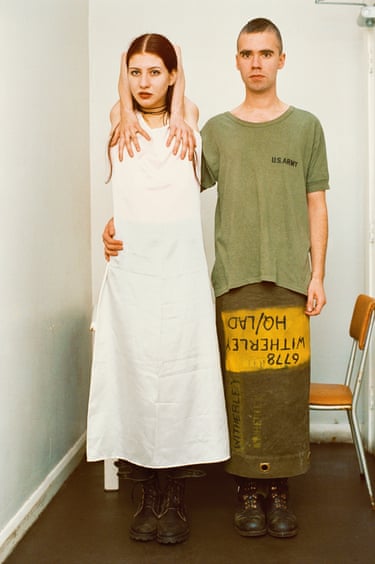
Susanne and Lutz, White Dress, Army Skirt, 1993, by Wolfgang Tillmans
The raw energy of the early 90s found its way into fashion magazines such as i-D and the Face, where an eclectic cohort of editors, stylists and art directors delved into concepts of youth, identity and style in domestic and urban situationsPhotograph: Courtesy Maureen Paley, London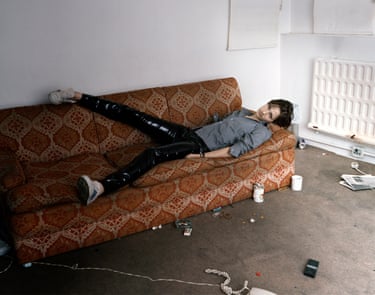
Rosemary Ferguson, 1993, by Corinne Day
Photography became a key medium for this new kind of realism, with Nigel Shafran, Juergen Teller and Corinne Day presenting narratives of life and friendship with a casual, unfiltered documentary style characterised by natural lighting and minimal retouchingPhotograph: trunkarchive.com/Bridgeman Images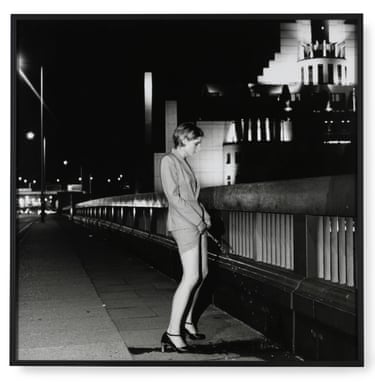
Vauxhall Bridge, from the series Pissing Women, 1995, by Sophy Rickett
Matthew Collin: ‘When I came to work at i-D, a new generation of photographers, journalists, designers and stylists was emerging with ideas that would help to shape the cultural landscape of the decade. People turned up in the office with a thrilling portfolio or a piece of reportage from uncharted cultural territory: if it was fresh, it went on the pages. But it wouldn’t have been possible without the sheer vitality of British youth culture at the time’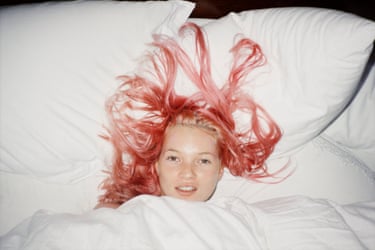
Young Pink Kate, London, 1998, by Juergen Teller
Stella McCartney: ‘London in the 1990s was alive: it was endless fun and that felt electric. For my degree show, I asked myself, “Am I brave enough to do what I actually want to do?” Other students were choosing their models and they were getting their friends. My friends were the supermodels Kate Moss and Naomi Campbell. I knew it was going to be controversial, but those girls were the hottest girls on the planet. They did a little college fashion show, not only for me, but to support British fashion’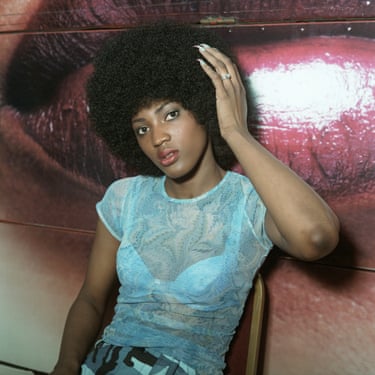
Untitled, Afro Hair and Beauty Show, 1998, by Eileen Perrier
In the present moment many of the questions that defined the 90s remain unresolved, particularly those of visibility, access and power. This exhibition brings together a range of perspectives in order to reconsider that period, not as a closed historical moment but as an ongoing point of referencePhotograph: All right reserved, DACS 2026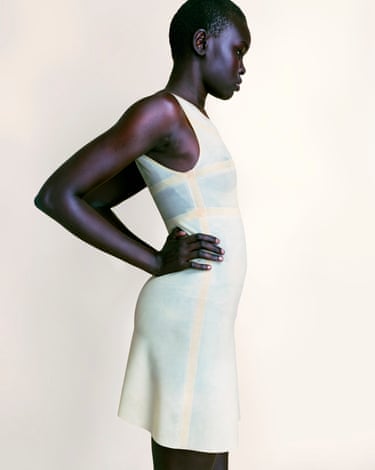
Alek Wek, 1996, by Mark Mattock
The 90s did not resolve these tensions, but the decade did demonstrate the capacity of culture to challenge, disrupt and reimagine. That is the legacy this collection seeks to engage: not as a fixed narrative but as an open and evolving oneKioskNews shows a cleaned-up reading view extracted from the publisher’s page — the original always lives on their site, not ours.