Words are not enough after the Myanmar genocide ruling. The world can do better – but it must take these steps | Gordon Brown
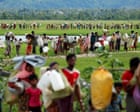
For the first time a state, Myanmar, has been found directly responsible for the crime of genocide. On the instructions of the country’s Tatmadaw regime, at least 10,000 Rohingya men, women and children were murdered, and thousands more were subjected to sexual violence and torture in a 2017 military campaign.
While the international court of justice ruled a decade after the crimes that they amounted to genocide, it is unclear whether Myanmar’s leaders will ever be brought to justice, whether any of the more than 1 million Rohingya refugees will be able to return home or whether the country’s government will even have to pay reparations for its crimes.
We say “never again” when atrocities such as these are exposed. But “never again” risks becoming not a promise, but a ritual. We say it with sincerity. But sincerity is not a strategy. Sympathy is not prevention. Condemnation is not policy.
In fact, atrocities happen again and again. And just like the crimes against humanity happening in Sudan, which are rarely in the headlines, the likelihood of atrocities being committed against the Rohingyas was known in advance and could have been prevented. And so a new report from the Standing Group on Atrocity Crimes, co-authored by Aarif Abraham and colleagues, poses a question for countries: can we build a system not just to punish atrocities when they happen but to predict and prevent them, and respond to them lawfully, consistently and in time?
There are a staggering 130 active armed conflicts raging across the globe, a level not seen since 1946. In 2024, people in more than half of the world’s countries said they had experienced some form of atrocity in the past year. The Economist Intelligence Unit’s annual Democracy Index says there are now only 26 full democracies in the world, the rising number of autocracies given comfort in the past few days by the US president’s willingness to extend the hand of friendship to Vladimir Putin and to join him in attacking the international criminal court now examining Russia’s atrocities. This is not turbulence at the margins of the international system; it is a warning that the foundations of that system are under sustained assault.
Instance after instance of past atrocities were raised in July’s House of Lords debate on the genocide determination bill, which proposes allowing UK courts to make preliminary determinations of genocide or the serious risk of genocide. Lord Hermer described genocide as the “apex crime”, the crime above all crimes, and yet our ability to prevent a descent into genocide appears limited – even when in the case of Sudan, there were at least two dozen credible reports that the Rapid Support Forces were preparing an assault on the city of El Fasher and that mass atrocities were highly likely.
For too long, most countries have treated atrocities as a moral emergency, a humanitarian concern or an unfortunate consequence of conflict. They are all of those things. But they are also a distinct strategic threat. Atrocities drive armed conflict. They fuel mass displacement. They destabilise regions. They fracture societies. They embolden authoritarianism. They damage trade, security, energy markets and public trust. They do not stay “over there”.
In an interconnected world, the screams of victims have an echo in the politics, streets and conscience of Britain. That is why this is not a call for sentimentality but for statecraft. Countries are under legal obligations in international law to prohibit, prevent and punish atrocity crimes such as genocide. Each has moral responsibilities born of history. But each country also has a national interest in ensuring a world governed by law rather than force.
The world can do so much better. Most countries, including the UK, have as yet no comprehensive framework that would allow us to predict, prevent or respond to atrocities. Important initiatives exist upon which we can build a clearer structure for responding: from early warning preventive work and training for diplomats to sanctions, parliamentary inquiries and civil society-led campaigns. But they are too often piecemeal, reactive and dependent on the commitment of individuals rather than the discipline of institutions. This can change.
First, we need to deploy the power of prediction. Atrocity crimes are not confined to traditional battlefields. Genocide, crimes against humanity and war crimes can grow inside states and societies long before any tank crosses a border. As the ICJ has confirmed in the case of Myanmar, they emerge where discrimination is systematised, law hollowed out, minorities dehumanised, impunity rewarded and where powerful states conclude that rules are for others.
Every country concerned about the prevalence of atrocities should adopt clear criteria for measuring their risk, rooted in international law and operational evidence, and apply them consistently across intelligence assessments, development programming, trade policy, arms licensing and ministerial decision-making. If officials can identify the early signs of possible financial crisis, terrorism or military escalation, they can and must also be equipped to identify the early signs of mass killing, persecution and extermination.
Second, prevention is not a slogan; it is a set of choices that have to be made before the cameras arrive. It means supporting local peacebuilders and human rights defenders. It means strengthening accountable institutions. It means using diplomacy early, not only after catastrophe. It means ensuring that trade, security cooperation and arms exports do not assist serious violations of international law. It means treating the risk of genocide, crimes against humanity, war crimes and aggression as matters for national security, not simply crisis management.
Third, we need responses that go beyond mere statements of disapproval and are powerful enough to deter the next set of perpetrators. For instance, the ICJ’s advisory opinions on the withdrawal of aid to Gaza and the discrimination and unlawful expansion of settlements in the West Bank and East Jerusalem have been taken on board by the UK, but for the most part remain unimplemented elsewhere.
after newsletter promotion
When atrocities occur, the UK and our allies must act with consistency, legality and courage. That means supporting the collection of evidence and insisting on domestic accountability as well as on the role of international courts. It means sanctions that are targeted and principled. It means diplomatic coalitions that do not collapse when the perpetrator has influence or is commercially useful. It means listening to victims and survivors not as mere symbols, but as holders of truth, memory and legal rights.
Some will say this is unrealistic. But the unrealistic course is the one we are already on which has served the Rohingya people and others so badly: waiting for atrocities to mature, then spending far more in humanitarian relief, military stabilisation, refugee protection, emergency diplomacy and moral repair. Prevention is not only better than cure; it is cheaper, wiser and more humane. If we can speak of a “defence dividend”, we should also speak of a “peace dividend”: the savings, security and stability that come from stopping the worst crimes before they consume whole societies.
There is reason for hope. Not the hope that denies evil. But the hope that comes from knowing atrocities are made by human choices and can therefore be disrupted by human choices. We have access to better early warning tools than ever before. We have investigators, lawyers, diplomats, journalists, analysts, survivors and activists who understand how atrocity risks develop. And we have allies abroad who want principled leadership, and citizens here in the UK who, when told the truth, do not want their country to be passive in the face of mass suffering.
Opening the Nuremberg tribunal, Robert H Jackson, the chief prosecutor, warned that the Nazi crimes before the court were so calculated, so malignant and so devastating that civilisation could not tolerate their being ignored, because it could not survive their being repeated. Yet they have been repeated, as the harrowing stories of Myanmar recount. Not because we lacked grief. Not because we lacked words. But because we too often lacked systems strong enough to turn warning into action.
The Myanmar judgment is a critical reminder that we must give meaning to “never again” by making it not a lament after failure, but a discipline of government before catastrophe. Britain cannot prevent every atrocity. No country can. But the choice is between watching history repeat itself and having the courage to attempt to change it.
KioskNews shows a cleaned-up reading view extracted from the publisher’s page — the original always lives on their site, not ours.