Nvidia debuts $4,999 DGX Spark with half the RAM and storage, amid memory crunch
Meanwhile 128 GB version jumps to $6,950, nearly 75% above its launch price
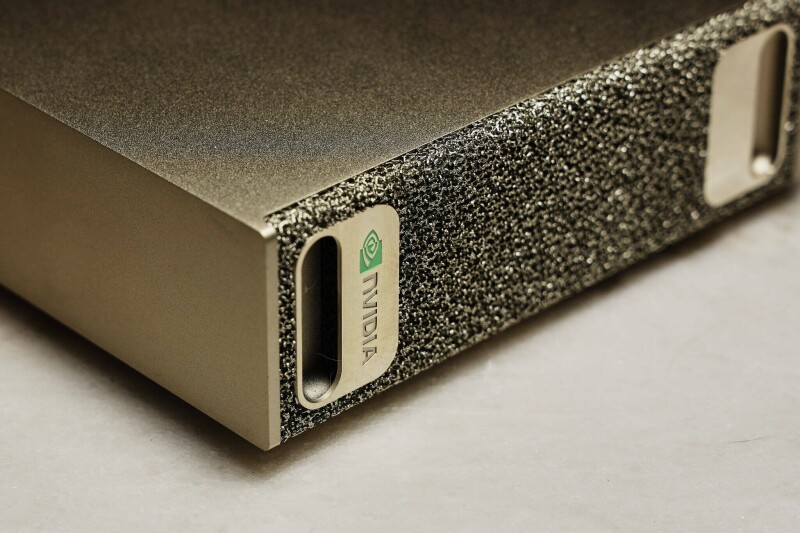
In an effort to provide a more affordable AI system, Nvidia is introducing a cut down version of the DGX Spark with half the memory and storage. The GB10-based systems will be offered exclusively through hardware partners including Acer, Asus, Dell, Gigabyte, HP, and MSI, and are expected to retail for around $4,999.
The less-powerful SKUs are necessary after Nvidia jacked the price of its 128 GB DGX Spark on Friday to $6,950 — an increase of nearly 75 percent from this time last year. As you might have already guessed, skyrocketing memory prices are to blame for the massive price adjustment.
That makes the 64 GB model considerably less than Nvidia’s top-spec DGX Spark and GB10 systems given the ongoing memory shortage, but that’s still 25 percent more than the 128 GB version retailed for at launch.
REG AD
Nvidia’s GB10 platform has been plagued by pricing creep since the Projects Digits concept was unveiled at CES last year. Originally, the appliance was expected to retail for around $3,000, not the $4,000 it eventually ended up selling for.
REG AD
Even at that price, the DGX Spark offered something that just a few years ago would have set you back tens of thousands of dollars: large quantities of GPU memory. In fact, at the time it launched, the system was technically the highest capacity workstation GPU Nvidia sold.
That’s not really the case with the 64 GB model, which due to its smaller capacity, isn’t as well suited to certain AI workloads like fine tuning. But if your main concern is local AI inference for powering private agents, Nvidia argues models in the 26-35 billion parameter range, Qwen 3.8 27B for example, are now good enough to get the job done.
While the new systems may offer less memory, we’re told the memory bandwidth remains unchanged at 273 GB/s, which tells us they’re using lower capacity LPDDR5x memory modules rather than fewer of them.
Nvidia also says that beyond the new memory config, the systems are otherwise unchanged and will feature the same 20-core Arm processor from MediaTek. The systems also retain their onboard ConnectX-7 networking, which enables clustering of up to 4x GB10-based devices at 200 Gbps a piece.
To further facilitate this, Nvidia says later this month it’ll be rolling out new software tools to DGX OS to facilitate cluster configurations and inference deployments. Previously, this required some tinkering in the CLI to get set up along with some tweaks to the vLLM or TensorRT-LLM launch commands.
While the 64 GB version’s lower MSRP should make the systems more accessible amid the ongoing memory crunch, it doesn’t bode well for Nvidia’s RTX Spark notebooks and mini PCs expected to make their debut this fall.
These systems are based on the same GB10 silicon that powers the DGX Spark and other DGX OS-based systems, but are intended for more general purpose computing, like AAA gaming, web browsing, and content creation, not just AI inference and training workloads.
Announced at Computex late this spring, RTX Spark-based systems were already expected to be quite expensive, particularly the 128 GB variants. With DGX Spark pricing nearing $7,000, similarly equipped RTX Spark notebook offerings based on the chip could end up selling for significantly more.
REG AD
But, as we understand it, Nvidia will be offering versions of the chip with much lower memory capacities for price conscious PC buyers.
However, across the DGX and RTX Spark lines, Nvidia will face some competition from AMD’s newly launched Gorgon Halo SoCs, which offer memory capacities ranging from around 32 GB at the low end to 192 GB for the top-spec Ryzen AI Max+ 495 SKUs. What’s more, systems powered by that chip are currently retailing for less than Nvidia’s 128 GB DGX Spark. But while AMD wins on max capacity, it should be noted that our testing has repeatedly shown that the GB10’s GPU offers substantially higher performance for AI tasks. ®
KioskNews shows a cleaned-up reading view extracted from the publisher’s page — the original always lives on their site, not ours.