Ericsson says it can detect, track drones using only mobile networks
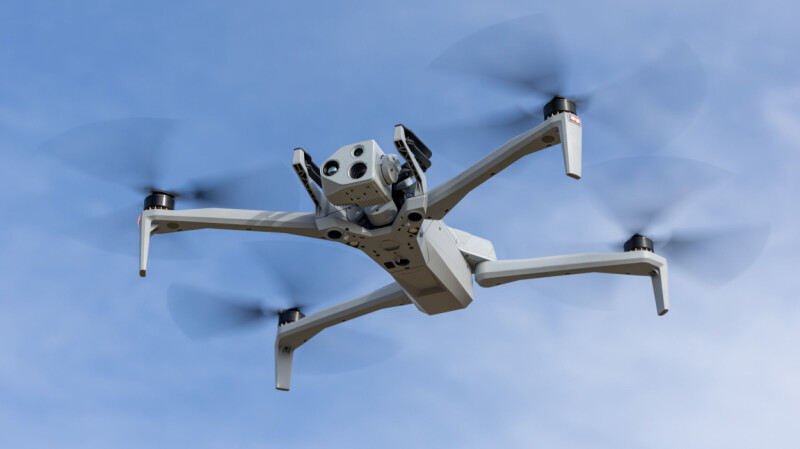
ISAC technology adds detection ability to existing cell networks, enabling them to track low-flying small drones
Ericsson is bringing drone detection to mobile networks, analyzing radio signal reflections to identify and track low-altitude objects.
The telecoms infrastructure maker says its Integrated Sensing and Communication (ISAC) tech adds detection to existing mobile networks, closing a security gap in tracking low-flying, fast-moving objects such as drones.
Following tests over the past few months, Ericsson says it will introduce the tech commercially in phases. Small-scale, sensing-only pilots with selected customers will start in 2027, followed by broader deployments from 2028.
CCS Insight research director Ian Fogg, said told The Register:
REG AD
"While sensing can be used for other things — like tracking boats in a port, traffic patterns or weather conditions — drone detection [in civilian areas] is the most pressing need which cannot easily be solved using other technologies.
REG AD
"Mobile networks are useful as drone detection solutions because their antennas are already covering low elevations, close to ground level where drones often fly, unlike traditional radar."
Although it is possible to use 5G networks for sensing, a standards-based 6G method could improve precision by letting different suppliers' base stations "interoperate", alongside a mix of client devices, tracking the "smallest and fastest moving drones in difficult environments," Fogg added.
"The new spectrum that should arrive with 6G will also make it easier to deploy sensing on wide channels which further improves detection accuracy," he said.
Small, low-cost drones have emerged as a persistent threat, or at the very least a nuisance, closing down airports due to safety concerns - the latest incident was at Jersey Airport over the Halloween weekend. Drone activity has also been on the increase near to military bases and other sensitive sites.
Dedicated sensor systems were deployed to cover sensitive sites, and in the UK, military personnel have now been granted the authority to neutralize any unwanted flying intruders.
Scaling detection across larger areas, however, is more challenging, Ericsson said.
ISAC transforms mobile network infrastructure into a distributed sensor array. Using sensing-enabled 5G radios, edge computing and signal processing, a cell deployment can detect objects and track them across the coverage area, complementing radar and other sensors rather than replacing them.
Ericsson says the tech works by having multiple perspectives from a number of cell tower radio sites. When one transmits a signal, it reflects off the drone and is picked up by multiple receiving sites. The network then analyses the reflected signals to locate the drone and track it.
REG AD
ISAC requires sensing-capable radio hardware, dedicated compute resources, and software, says Ericsson. The radios have to meet specific Massive MIMO (multiple-in, multiple-out) antenna and spectrum requirements.
AT&T tested ISAC at trials in Arlington, Texas, and with Erillisverkot, a state-owned special purpose company responsible for national critical communications in Finland. In both cases, the tech demonstrated it was able to detect multiple drones and track their movements, according to Ericsson.
Data from ISAC - we're told - can be securely shared through standardized interfaces with authorized external systems, including security and command and control systems. ®
KioskNews shows a cleaned-up reading view extracted from the publisher’s page — the original always lives on their site, not ours.