Helping our poultry farmers’ needs
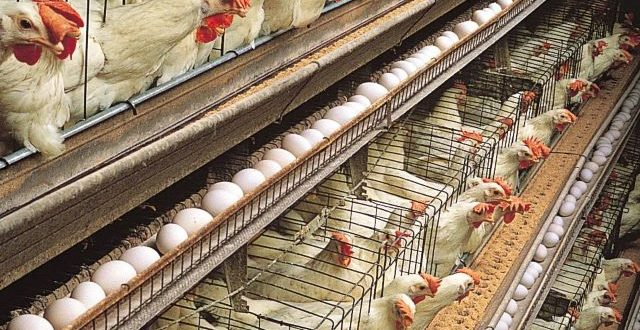
Nigeria’s poultry industry is at a dangerous crossroads. The recent call for reforms is therefore more than an industry lobby. It is a warning about food security, nutrition, jobs and the wider economy. An industry capable of supplying affordable eggs and chicken is being strangled by expensive and unreliable inputs. Feed, which can account for about 70 per cent of poultry production costs, remains the biggest burden. Maize and soybean prices, electricity, transport and finance have combined to make production increasingly unprofitable. Farmers are also battling shortages of day-old chicks. Some reports indicate that chicks previously sold for about N1,200 now sell for N2,200–N3,000, while eggs have reached N200–N300 each in some markets. It has become not just a farming problem but also a nutrition crisis.
The sector’s scale makes the situation particularly troubling. Industry estimates put Nigeria’s poultry population between 180 million and 300 million birds, while annual output is estimated at about 454,000 tonnes of poultry meat and 16 billion eggs. The conflicting estimates expose another weakness: poor sector data.
Stakeholders, led by the Poultry Association of Nigeria (PAN), are asking for cheaper finance, lower input costs, dependable access to quality chicks, improved genetics, better veterinary services, stronger biosecurity, modern processing and cold-chain infrastructure, and government policies that are predictable rather than whimsical. They also want transparency in imported breeding-stock allocation to prevent artificial scarcity. The Federal Government has begun responding. The Ministry of Livestock Development is tightening oversight of poultry import allocations and establishing systems to improve access to day-old chicks. It has also engaged PAN on measures to stabilise prices and is pursuing broader livestock reforms. A proposed $1 billion National Integrated Poultry Project targets increased egg and broiler production, while a $900 million Chinese-backed scheme envisages six integrated farms producing six million eggs daily.
States are also showing initiative. Lagos is supporting an egg-powder processing facility to absorb surplus production, while Kaduna is associated with a major integrated poultry investment incorporating maize and soybean production. Such projects are welcome, but isolated mega-projects cannot substitute for a functioning national value chain. International best practice offers a clear lesson: poultry succeeds when genetics, feed, finance, animal health, processing, logistics and markets are developed together. Nigeria should establish a national poultry competitiveness programme, backed by measurable targets, cheap long-term credit, local grandparent-stock production, commercial maize and soybean clusters, modern hatcheries, extension services and rigorous disease surveillance.
Government should also use public institutions—schools, hospitals, prisons and the military—as predictable buyers, while enforcing standards and curbing smuggling. Repositioned this way, poultry can become an economic multiplier: cheaper protein, healthier children, profitable farmers, millions of jobs, stronger demand for maize and soybean, reduced food imports and new export opportunities across West Africa. Nigeria needs a well-coordinated and implemented poultry policy. It is overdue.
KioskNews shows a cleaned-up reading view extracted from the publisher’s page — the original always lives on their site, not ours.