Chinese carmaker rivalry sparks BMW layoffs – and blowback for China’s rust belt
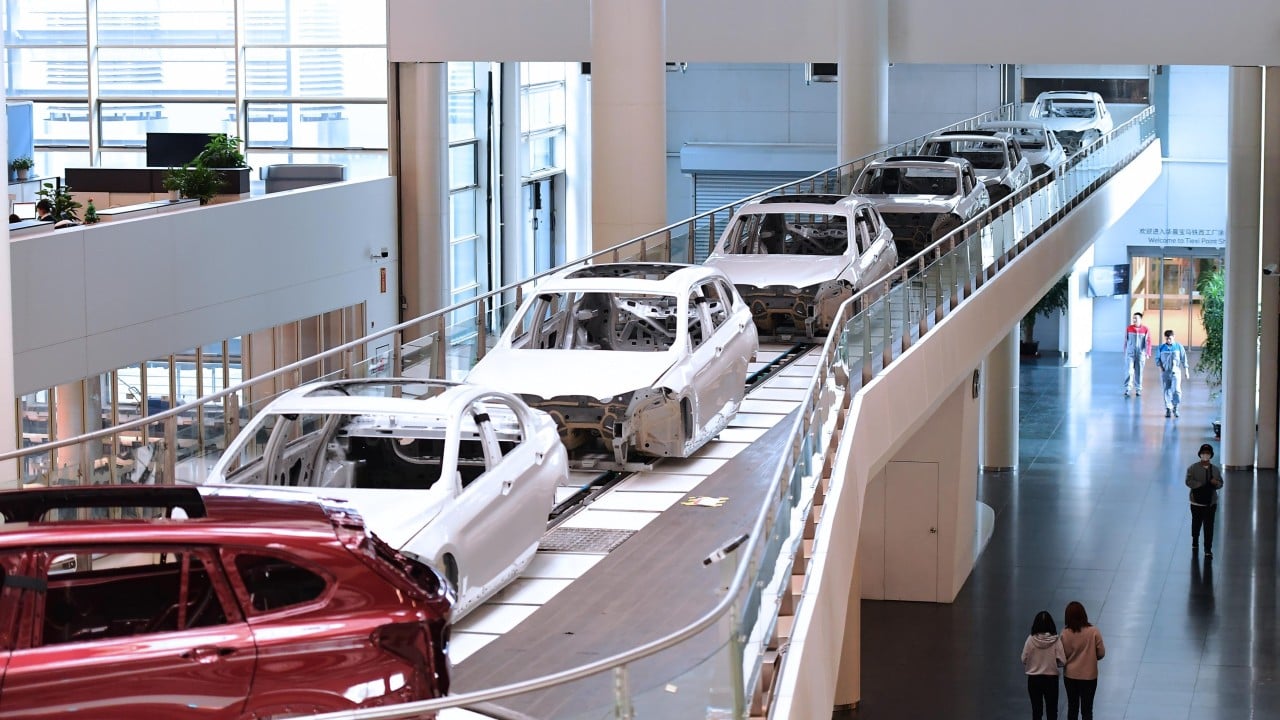
When massive lay-offs took place at BMW’s manufacturing base in northeast China – the German carmaker’s largest production hub worldwide – the entire city felt the shock.
Starting from November 2, BMW Brilliance – a joint venture between the German brand and Chinese firm Brilliance Auto where BMW holds a 75 per cent share – in Shenyang, Liaoning province, began a major round of lay-offs, aiming to cut an estimated 1,800 to 2,000 jobs, multiple sources told the South China Morning Post.
“You’re talking to someone in the morning, and by the afternoon they’ve packed up and left. It really gets to you,” said an employee who declined to be named due to the sensitivity of the issue.
Fierce competition from Chinese carmakers has triggered sweeping lay-offs across Germany’s auto sector, and the shock wave now is rebounding to hit the public finances of a Chinese traditional industrial hub. For years, the automotive sector spearheaded by BMW Brilliance has served as the backbone of the regional industrial economy.
Affected staff were offered severance packages of “N+5” – base monthly pay for each year of service plus an additional five months – with the N capped at 12, the employee said.
As a result, many of those laid off in this round held senior management positions, with some having served for more than 15 years, the person added.
Future rounds of lay-offs are also expected for next year, with thousands more positions to be cut, according to two other sources.
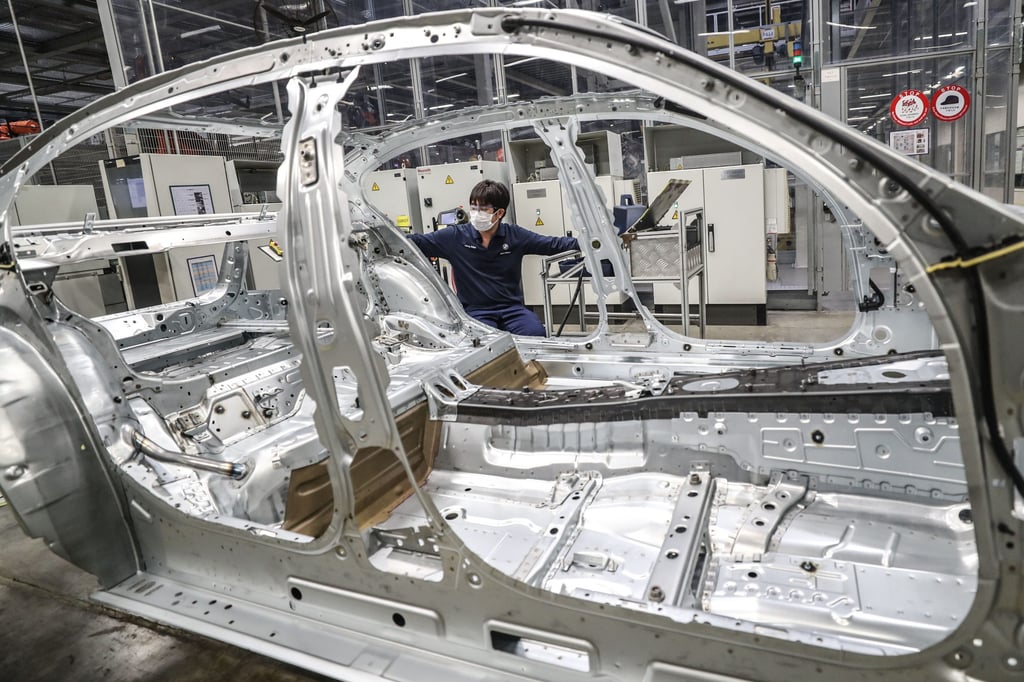
At the end of July, BMW Group announced that it was cutting roughly 8,000 jobs by the end of 2027, through a voluntary severance programme aimed at office and development roles in Germany.
Despite an active electric vehicle (EV) push – including launching new battery and assembly facilities in Shenyang – BMW Group deliveries in China plunged 24.8 per cent year-over-year in the third quarter, the company reported.
Lay-offs at BMW Brilliance have more far-reaching effects than those related to the company, as the carmaker has been the largest taxpayer in Shenyang for 19 consecutive years and the top taxpayer in Liaoning province for nine consecutive years.
Since 2010, cumulative investment in its Shenyang manufacturing base has reached 116 billion yuan (US$17.4 billion), according to the company. It said in 2024 that among roughly 455 suppliers across China, more than 130 were located in Liaoning and over 100 in Shenyang alone.
“The moment [BMW Brilliance] scales back, Shenyang’s economy feels the pain,” said Li Kai, a professor of economics at Northeastern University in Shenyang.
“When Shenyang slows down, Liaoning is weighed down, and when Liaoning slows, the entire northeast feels the ripple effects.”
02:35
Going Global 100: China’s massive overseas multinationals expansion
In the first three quarters of the year, Shenyang’s GDP grew by only 1.8 per cent, while Liaoning’s GDP grew by 2.4 per cent, trailing the national level at 4.6 per cent.
“Shenyang is primarily weighed down by the slump in the auto industry,” Li said. “The downturn ripples down to suppliers, creating a substantial impact that also weighs on local employment and tax revenue.”
In October, Milan Nedeljkovic, BMW Group’s chairman and CEO, visited Shenyang for the launch of a new factory for sixth-generation high-voltage batteries. During the trip, he also met with senior provincial and municipal officials, where arrangements for the looming lay-offs were discussed, two sources told the South China Morning Post.
BMW agreed to cover the bulk of unemployment benefits for workers laid off in this round on behalf of the city, the sources said. Local governments across China have already been struggling with strained finances amid dwindling land sales due to a prolonged slump in the housing market, as well as other spending pressures.
From January to September, Shenyang’s tax revenue declined by 3.9 per cent year on year—despite a nationwide tax enforcement campaign—after dropping 6.8 per cent in 2025 and 9 per cent in 2024.
BMW and the Liaoning provincial government did not respond immediately to queries from the South China Morning Post.
The Chinese economy is recovering in a K-shaped pattern this year, with widening disparity between the country’s fast-growing hi-tech industries and stagnant traditional sectors. That divergence is mirrored geographically as regions benefit unevenly from the tech boom, leaving the northeastern rust belt stuck on the lower arm of the K, Li said.
Although Shenyang and Liaoning have branched into emerging industries such as methanol-powered vehicles, aerospace, and semiconductors, these new sectors remain too small in scale to make up for losses in traditional industries in the short term, Li added.
“It is actively transforming its economy. Let’s see when it can turn the tide.”
KioskNews shows a cleaned-up reading view extracted from the publisher’s page — the original always lives on their site, not ours.