Guangzhou reclaims crown as China’s busiest airport after US$8 billion mega expansion
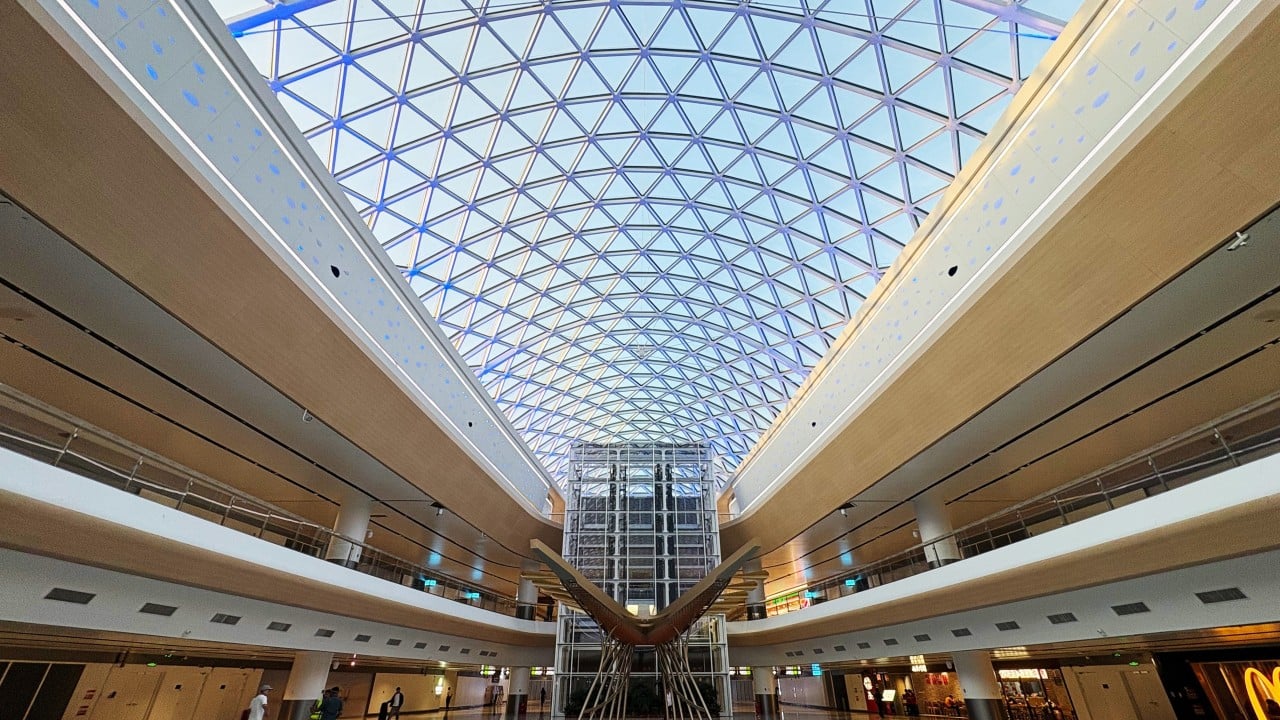
Guangzhou Baiyun International Airport has reclaimed its position as China’s busiest airport, handling more than 67 million passenger trips in the first nine months of 2026 following a major expansion last year, the municipal government announced.
The airport overtook Shanghai Pudong International Airport, which handled 66.58 million passenger trips during the same period, official data showed. Baiyun had fallen behind Pudong in 2024 and 2025.
The expansion took half a decade to complete and includes a new third terminal and fifth runway. It cost 53.77 billion yuan (US$8.1 billion) and broke long-standing bottlenecks by increasing Baiyun’s annual passenger capacity to 120 million, the municipal government said on its official WeChat account. Authorities projected it would handle 90 million passenger trips this year.
For Gao Zhendong, a business consultant who advises Chinese factories in Southeast Asia, Baiyun Airport has become a regular stop on trips between his home in Hainan and Vietnam.
“There are several direct flights from Guangzhou to Hanoi daily,” said Gao, a frequent air passenger in his 40s. “Ticket prices range from a few hundred to around 1,200 yuan (US$180). It fits perfectly for business travellers who often need to make last-minute trips to Vietnam.”
During layovers, Gao sometimes rests in the new terminal. The 422,000-square-metre (4.54 million square feet) building features plush carpets, Lingnan-inspired arcade architecture and a diverse range of Cantonese restaurants.
The airport’s international network covered more than 100 destinations and prioritised routes connecting Guangzhou with major Chinese trading partners in Southeast Asia, Central Asia, the Middle East and Africa, the municipal government said.
Its immigration checkpoints had processed more than 15 million inbound and outbound passenger movements in the first nine months of the year, up 18.3 per cent year on year, it added.
A network of airports in nearby cities, including Shenzhen and Hong Kong, could work together to benefit the region but also intensify competition for passengers and cargo
A network of airports in nearby cities including Shenzhen and Hong Kong could work together to benefit the region but also intensify competition for passengers and cargo
Cai Mingdong, who commutes between Ningbo and Kuala Lumpur for his doctoral studies, often transits through Terminal 3. He said the route offered cost and convenience advantages.
“Connections to other Chinese cities are quick, and layover times are relatively short,” he said. “The one-way journey from Ningbo to Kuala Lumpur via Guangzhou costs me around 1,000 yuan, making it good value for money.”
Although Shanghai is much closer to Ningbo than Guangzhou, Cai said reaching Pudong airport from Ningbo by high-speed rail and connecting transit would take five to six hours.
“In that same amount of time, I could fly via Guangzhou and already be at my apartment in Kuala Lumpur,” Cai said.
David Wong, a lecturer at Hang Seng University of Hong Kong who researches air transport and regional economic development, said the new terminal had strengthened Baiyun’s ability to attract passengers and businesses.
He described this as a “siphon effect”, in which improved airport facilities draw more passenger traffic and business activity, such as trade exhibitions and meeting venues, to the airport and surrounding areas.
Wong cautioned, however, that rising jet-fuel prices and competition from China’s high-speed rail network could put pressure on airline operating costs and passenger demand. Competition from nearby airports could either help or hurt Baiyun, he said.
“A network of airports in nearby cities, including Shenzhen and Hong Kong, could work together to benefit the region but also intensify competition for passengers and cargo,” Wong added.
KioskNews shows a cleaned-up reading view extracted from the publisher’s page — the original always lives on their site, not ours.