10 Greatest American Crime Series of All Time

Michael Block is a 14 time GLAM Award nominated writer, producer, and host of the podcast Block Talk. Throughout his time in the entertainment industry, he has worked on and off Broadway as a stage manager, written several produced plays, critiqued hundreds of theatrical performances, drag and cabaret shows, and has produced events randing from drag competitoons to variety concerts!
On Block Talk, he interviews nightlife personalities, covers the wide world of entertainment through features, ranking episodes, and recaps ALL of Drag Race, as well as Dragula and Survivor. He has interviewed hundreds of RuGirls that span the globe at DragCon NYC, DragCon LA, and DragCon UK.
In his free time, he makes one-of-a-kind jewelry and gift baskets with his mom. He is a proud member of the LGBTQ+ community.
Sign in to your Collider account
The crime drama has remained one of television's greatest treasures. Episode after episode, audiences get to embark on daring journeys with the heroes and villains of the story, where only one can prevail. As the means by which we consume shows has evolved, so has the storytelling. Some crime dramas stick to the crime-of-the-week format, while others use a season to tell an overarching story. Whichever version they choose, we are still on the ride along.
American television has played host to many of the most incredible crime titles in history. From classic procedurals where the cops capture the bad guys to game-changing stories where unlikely antiheroes prevail much longer than they should, the 10 titles on this list are some of the very best and most influential of all time. Though there are certainly some great shows that could have squeaked on in, these 10 represent a wonderful cross-section and evolution of the genre.
1 'Breaking Bad' (2008–2013)
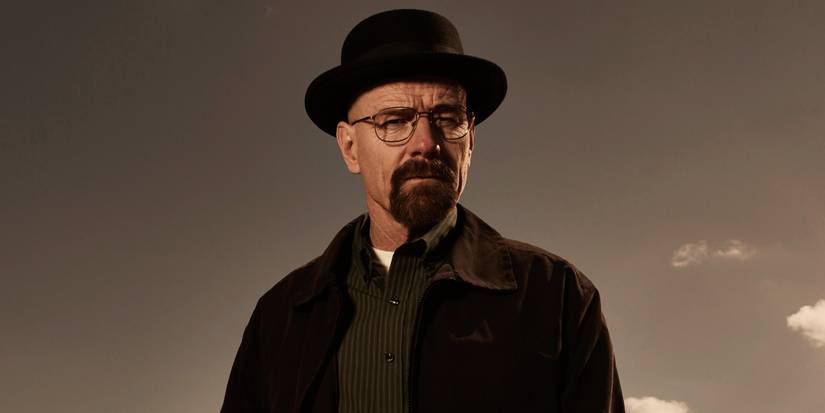
If there is one crime show on this list that not only influenced the genre, but also reshaped the types of characters that audiences were eager to see on screen, it's this one. Breaking Bad brought the world the greatest anti-hero in Walter White. Played to perfection by Bryan Cranston, the Vince Gilligan-created series told the story of a high school chemistry teacher in New Mexico who gets terminal lung cancer. To pay for his medical bills and leave money for his family, he starts making and selling high-quality methamphetamine with former student Jesse Pinkman (Aaron Paul). Calling himself "Heisenberg" to hide his secret life, Walter fights local drug dealers, international cartels, and avoids his DEA agent brother-in-law, Hank Schrader (Dean Norris). A story about a man who changes his objective as he tastes power, Breaking Bad's unique premise and meticulous plotting made the show an addictive watch long before the age of binge-watching.
Gilligan didn't just try to create a well-written story; his mission was to do the impossible: deliberately change a protagonist into an antagonist. After five seasons, he succeeded, though you could say he achieved his goal after only one. Walter's shift was earned through a slow-burn of ego, pride, and desperation. The moral ambiguity grounded the story as viewers slowly realized that Walter's initial excuse of protecting his family was actually just about feeding his own pride. Breaking Bad was made with zero filler. Every episode within each season served the greater picture, in which every action had severe, permanent consequences that affected the lives of everyone in the immediate, as well as the periphery. Breaking Bad used the New Mexico desert vistas as an unspoken character, giving a stark, antagonistic, sweltering locale. Through natural tension and ordinary situations pushed to extraordinary, life-or-death breaking points, Breaking Bad was must-watch television. There's a reason why it's still a great program to rewatch today.
2 'Cagney & Lacey' (1982–1988)

For the longest time, it was men who occupied the leading roles in police procedurals. If women were included, they were relegated to supporting parts. Then, Cagney & Lacey came along, and everything changed. Created by Barbara Avedon and Barbara Corday, the series followed two female New York City police detectives — Christine Cagney (Sharon Gless), a career-focused, single woman who values independence, and Mary Beth Lacey (Tyne Daly), a grounded, married working mother balancing family and her badge. Cagney & Lacey was famous for its groundbreaking storylines of the '80s, tackling subjects like alcoholism, domestic abuse, rape, and breast cancer. Most importantly, it showcased the professional and emotional bond between two very different women who rely on one another on and off duty.
Cagney & Lacey showcased a unique workplace dynamic as the titular characters navigated respect, authority, and systemic sexism inside the fictional Manhattan precinct. In doing so, it broke the mold of male-dominated police procedurals, presenting a genuine female friendship with grounded realism. They were not super-cops of over-glossy sex symbols — they were normal, flawed women who had distinct worldviews. The series tackled the complexities of 1980s womanhood with panache. Each episode focused just as much on the emotional and physical toll of police work on their personal lives as it did on solving the crime of the week. With a fandom filled with sheer loyalty, Cagney & Lacey thrived and survived in an ever-changing landscape within the genre. Through seven seasons and subsequent television movies, Cagney & Lacey's impact has reshaped women in these types of roles forever.
3 'Columbo' (1968–2003)

You must be a pretty impactful presence if simply uttering your name can elicit a reaction. So, when someone's called a "Columbo," it holds a similar weight to being referred to as "Sherlock." For 10 seasons, the titular character influenced an entire generation as one of the greatest fictional detectives of all time. The classic crime drama starred Peter Falk as Lieutenant Frank Columbo, a rumpled, unassuming Los Angeles homicide detective. Instead of showing a traditional "whodunit," Columbo presented an inverted format: the audience sees the murder committed at the start, and the fun comes from watching the brilliant detective trap the arrogant killer. Columbo was all about the thrill of the chase as an extraordinary cat-and-mouse game. Known for wearing a dirty beige coat, smoking cigars, and driving a broken-down Peugeot, he acted as a clumsy fool to catch the suspects before trapping them with his signature catchphrase, "Just one more thing..."
The brilliance of Columbo lies in the psychological chess match between the blue-collar working detective and the high-society murderers. There was rarely a dull moment. Unlike some crime murder mysteries, this one required no guessing. It was all about the journey to catch a killer. By stripping away cheap twists, the logical chain of clues is impeccably sharp. Falk took on the ultimate unassuming underdog with ease. How could you not love his disheveled, absent-minded, and polite cop? Police procedurals can often get stuck in gimmicky traps, but Columbo was free from them. Over the course of its NBC and ABC run, Columbo featured a cavalcade of stars to take on the murders. Some even played different characters, including Jack Cassidy, George Hamilton, Leslie Nielsen, and William Shatner. There may not be another Columbo, but his influence on grounded detectives has remained today.
Collider Exclusive · Action Hero Quiz
Which Action Hero Would Be
Your Perfect Partner?
Rambo · James Bond · Indiana Jones · John McClane · Ethan Hunt
Five legends. Five completely different ways of getting out alive — with style, with muscle, with charm, with luck, or with a plan so intricate it probably shouldn't work. Ten questions will reveal which action hero was built to have your back.
🎖️Rambo
🍸James Bond
🏺Indiana Jones
🔧John McClane
🎭Ethan Hunt
01
You're dropped into a dangerous situation with no warning. What do you need most from a partner? The first few seconds tell you everything about who belongs beside you.
02
You have to get somewhere dangerous, fast. How do you travel? How you get there is half the mission.
03
You're pinned down and outnumbered. What does your ideal partner do? This is when you find out what someone is really made of.
04
The mission is paused. You have one evening to decompress. What does your partner suggest? Who someone is when the pressure drops is who they actually are.
05
How do you prefer your partner to communicate mid-mission? Good communication is the difference between partners and a liability.
06
Your enemy is powerful, well-resourced, and has the upper hand. How should your partner approach them? The approach to the enemy defines the partnership.
07
Things go badly wrong and you're captured. What do you trust your partner to do? Who someone is when you need them most is the only thing that matters.
08
What does your ideal partner bring to the table that you couldn't replace? A great partner fills the gap you didn't know you had.
09
Every partnership has a cost. Which of these can you live with? No one comes without baggage. The question is whether you can carry it together.
10
It's the final moment. Everything is on the line. What do you need from your partner right now? The last question is the most honest one.
Your Partner Has Been Assigned Your Perfect Partner Is…
Your answers have pointed to one action hero above all others. This is the person built to have your back — for better or considerably, spectacularly worse.
Rambo
Your partner doesn't talk much, doesn't need to, and will have assessed every threat in your immediate environment before you've finished your first sentence. John Rambo is not a man of plans or politics — he is a force of nature shaped by survival, loyalty, and a capacity for endurance that goes beyond anything training can produce. He will not leave you behind. He has never left anyone behind who deserved to come home. What you get with Rambo is the most capable, most quietly ferocious partner imaginable — one who has been through things that would have broken anyone else, and who chose to keep going anyway. You'll never need to ask if he has your back. You'll just know.
James Bond
Your partner will arrive perfectly dressed, perfectly briefed, and with a cover story so convincing it'll take you a moment to remember what's actually true. James Bond is the most professionally dangerous person in any room he enters — and the most disarmingly charming, which is the point. He operates in a world of layers, where nothing is what it appears and every advantage is used without apology. You'll never be bored. You'll occasionally be furious. But when it matters — when the mission is genuinely on the line and the margin for error has collapsed to nothing — Bond is exactly the partner you want. He has survived things that have no business being survivable. He does it with style. That is not nothing.
Indiana Jones
Your partner will know the history, the language, the cultural context, and exactly why the thing everyone else is ignoring is actually the most important thing in the room. Indiana Jones is brilliant, reckless, and occasionally impossible — but he is also one of the most resourceful, most genuinely knowledgeable partners you could find yourself beside. He approaches every situation with a scholar's eye and a brawler's instinct, which is an unusual combination and a remarkably effective one. He hates snakes and gets personally attached to objects of historical significance, both of which will slow you down at least once. It doesn't matter. What Indy brings is irreplaceable — and the adventures you'll have together will be the kind people write books about. Assuming you survive them.
John McClane
Your partner was not supposed to be here. He does not have the right equipment, the right information, or anything approaching the right odds. He has a sarcastic remark and an absolute refusal to accept that the situation is as bad as it looks. John McClane is the greatest accidental hero in the history of action cinema — a man whose superpower is stubbornness, whose contingency plan is improvisation, and whose capacity to absorb punishment and keep moving would be alarming if it weren't so useful. He will complain the entire time. He will make it significantly more chaotic than it needed to be. And he will absolutely, unconditionally, without question come through when it counts. Yippee-ki-yay.
Ethan Hunt
Your partner has already run seventeen scenarios by the time you've finished reading the briefing, and the plan he's settled on involves at least two things that should be physically impossible. Ethan Hunt operates at the absolute edge of human capability — technically, physically, and intellectually — and he brings the same relentless precision to protecting his partners that he brings to dismantling organisations that shouldn't exist. He is not easy to know and he will never fully tell you everything. But he will carry the weight of the mission so completely, so absolutely, that your job is simply to trust him — and the remarkable thing is that trusting him always turns out to be the right call. The mission will be impossible. He will complete it anyway.
4 'Dragnet' (1951–1970)

There may be many eras of Dragnet, but none would have existed as they did had it not been for the original run. Known for its gritty, groundbreaking noir realism, the original run established a distinct tone for crime shows. Taken from the police term for coordinated measures to apprehend criminals or suspects, the classic Dragnet follows Los Angeles Police Department Detective Sergeant Joe Friday (Jack Webb) and his partners, including Officer Frank Smith (Ben Alexander), as they conduct realistic, by-the-book investigations. Beginning as a radio show before it transitioned to television, Dragnet focused on the routine, procedural details of actual police work, including interviews, legwork, and paperwork, rather than glamorous action. Known for its famous four-note brass and tympani theme, "Danger Ahead,” the show opened with the iconic line, "The story you are about to hear is true. Only the names have been changed to protect the innocent." If it sounds familiar, it’s because Dragnet established the tone for the genre moving forward.
Dragnet earned its legendary status by inventing the modern police procedural, replacing sensationalized pulp fiction. It adapted scripts directly from real Los Angeles Police Department files, showcasing genuine police jargon, interrogation methods, and forensic procedures. Rather than sensationalizing the story, it stripped away flashy action tropes to highlight the repetitive, methodical nature of real detective work. With tight pacing and its original stark black-and-white framing, Dragnet humanized law enforcement for mid-century audiences, portraying officers as ordinary, dedicated public servants rather than infallible superheroes. Dragnet was no nonsense. As the show coined, “Just the facts, ma’am.” When the series returned for its revival in 1967, the color version favored a more campy, culturally fascinating focus on anti-drug and hippie-era lectures. With a deadpan skewering of 1960s counterculture, Webb’s Friday was present, but Dragnet was proof that the world was revolving, and the cops had to follow. No matter what police procedural you watch today, Dragnet is a major part of its DNA.
5 'Hill Street Blues' (1981–1987)

If there was ever a show that made police work feel like it was a documentary, it was Hill Street Blues. Created by Steven Bochco and Michael Kozoll, Hill Street Blues combined cinema verité filming, serialized storytelling, and a massive ensemble cast to portray flawed characters balancing intense urban chaos with personal and professional struggles. Airing on NBC from 1981 to 1987, it followed the chaotic daily lives of the officers and staff at a single precinct on Hill Street in an unnamed large U.S. city. Every episode famously began with a 7:00 AM roll call led by Sergeant Phil Esterhaus, ending with his catchphrase: "Hey, let's be careful out there." From there, it explored office politics, failed marriages, burnout, and corruption alongside street crime. Mastering the serialized narrative, Hill Street Blues united multiple ongoing story arcs across episodes rather than wrapping every crime up neatly in an hour.
Hill Street Blues abandoned simplistic "good cop versus bad guy" framing, portraying officers who made mistakes and criminals with genuine human complexity. By having a massive ensemble, it allowed for patrol officers and captains to intertwine personal and professional lives with public defenders. The highlights inside the precinct included Captain Frank Furillo (Daniel J. Travanti), the calm, ethical precinct leader trying to hold the station together; Joyce Davenport (Veronica Hamel), a smart public defender and Furillo's romantic partner and later wife; Sergeant Phil Esterhaus (Michael Conrad), the warm, fatherly desk sergeant running the morning briefings; Sgt. Mick Belker (Bruce Weitz), an intense, animalistic undercover detective known for biting suspects; and Lt. Howard Hunter (James B. Sikking), the eccentric, gung-ho tactical leader obsessed with military force. Hill Street Blues had a distinct visual that matched the topics it tackled. It fearlessly addressed controversial social issues like police brutality, institutional corruption, and racial tensions without sanitizing the uncomfortable realities. And because of that, the genre was forced to evolve.
6 'Law & Order' (1990–2010; 2022–Present)

For this one, we’ll focus mostly on the flagship series, but the truth is, between the original and all of the spin-offs, Law & Order’s massive influence on crime shows is boundless. Created by Dick Wolf, the original series, like the title, splits each episode into two halves. The first half follows police detectives investigating a crime, and the second half follows district attorneys prosecuting the offenders in court. Though the personal lives and backstories of the main characters are kept minimal, Law & Order still boasted a brilliant ensemble of characters, including Jerry Orbach as Lennie Briscoe, S. Epatha Merkerson as Anita Van Buren, Sam Waterston as Jack McCoy, Jesse L. Martin as Ed Green, and Hugh Dancy as Nolan Price. With most stories inspired by real-life, high-profile criminal cases, Law & Order became appointment television for crime lovers.
Set in New York City, the location serves as an unspoken cast member, and not just because every New York actor has appeared in the series at least one point in their career. Law & Order has proven that audiences will never get enough of crime dramas. Even with the revolving door of characters during the flagship show’s 25 seasons through its two distinct runs, fans aren’t going anywhere. They come for the crime, no matter who’s on the scene or in the courtroom. The ripped-from-the-headlines format keeps the series refreshing, with an ability to keep reinventing itself. Plus, the ease with which you can dip in and out allows for seamless watching. Law & Order has spawned equally beloved spin-offs. From Law & Order: Special Victims Unit, starring Christopher Meloni as Elliot Stabler and Mariska Hargitay as Olivia Benson, to Law & Order: Criminal Intent, starring Kathryn Erbe as Alexandra Eames and Chris Noth as Mike Logan, the heart and soul remain the same. It’ll be hard to imagine a world in which some iteration of Law & Order isn't a part of network television.
7 'NYPD Blue' (1993–2005)
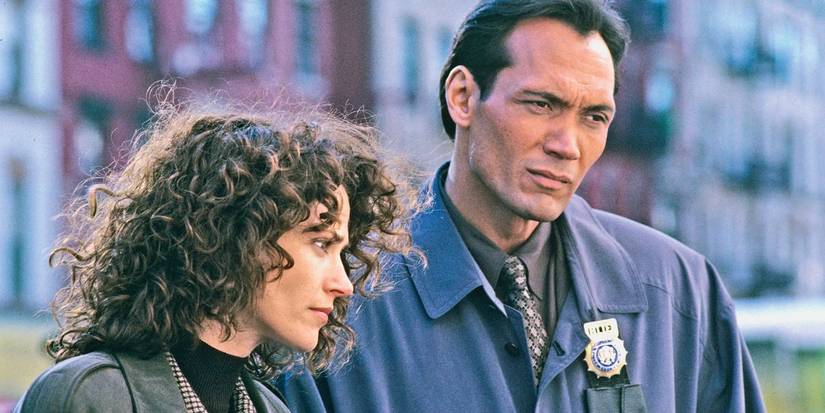
Every major network needed a crime show in the ‘90s. For ABC, their pinnacle series was NYPD Blue. Created by Steven Bochco and David Milch, and inspired by Milch's relationship with Bill Clark, a former member of the New York City Police Department, the series follows the daily professional and personal struggles of the fictional 15th Precinct detective squad in Manhattan. The main core featured Detective Andy Sipowicz (Dennis Franz), the emotional anchor of the series, a hard-drinking, deeply flawed, and recovering alcoholic cop; Detective John Kelly (David Caruso), a tough and moralistic original partner to Sipowicz; and Detective Bobby Simone (Jimmy Smits), Sipowicz's steady, deeply respected new partner. NYPD Blue focused on the raw, unglamorous side of police work and homicide investigations as each episode intertwined demanding criminal cases with the messy personal lives, addictions, and emotional baggage of the detectives.
Over time, NYPD Blue pushed the boundaries. It became famous for groundbreaking adult language, realistic grittiness, and brief non-sexual nudity that challenged network television standards at the time. For 12 seasons, NYPD Blue injected authentic street-level mechanics into the scripts while borrowing the handheld camera work and overlapping dialogue to make New York City's 15th Precinct feel authentic. At its center was Sipowicz's raw, multi-year path to redemption. Franz played Sipowicz as an angry, bigoted alcoholic in Season 1, then slowly turned him into the emotional core of the series over 12 years. It was a masterclass in acting and character development. Even when character shifts arrived, it was done seamlessly, ensuring a lasting legacy. NYPD Blue was a precursor to prestige TV. By focusing on serialized character drama over neat, self-contained cases, it set a structural template that directly influenced later antihero masterpieces, including some pieces on this list.
8 'The Sopranos' (1999–2007)

For the longest time, there was an impression of what mobsters and the mafia looked like in media. Then, in 1997, David Chase introduced the world to The Sopranos, and all preconceived notions were shattered forever. The series follows Tony Soprano (James Gandolfini), a New Jersey Mafia boss who starts having panic attacks and secretly goes to a psychiatrist, Dr. Jennifer Melfi (Lorraine Bracco), to talk about his criminal work and his family life. Tony tries to balance running a violent mob crew with raising a normal suburban family. The Sopranos tested the idea of the American Dream, showing how greed, violence, and hypocrisy corrupt everyday life while exploring anxiety, depression, and panic in a tough, masculine world where showing weakness is dangerous. Though the final moment has caused a flurry of feelings since the show came to an end in 2007, it remains one of the greatest dramas of all time.
With the series being on premium cable, there was no skimping on violence and foul language. It was essential to craft a genuinely authentic depiction of the mob. In turn, it became a masterclass in world-building. It revolutionized television by blending cinematic storytelling with deep psychological realism. By introducing a mob boss in therapy dealing with panic attacks, Chase turned a traditional gangster narrative into a profound, darkly comedic study of the American Dream and human hypocrisy. The mob violence was an equal factor alongside the profound, universal themes. It stripped away Hollywood glamor, showing the mob as paranoid, declining, and spiritually bankrupt. Tony Soprano continued to help contextualize how the anti-hero is just as fascinating as an everyday hero on screen. The blueprint was paved for the next generation of characters. The brilliance of the moral ambiguity forced viewers to root for a monster who loved his family yet destroyed everything around him. It’s safe to say that The Sopranos kickstarted the golden age of television, where cable matched the artistic merit of feature films.
9 'The Wire' (2002–2008)

The crime drama used to follow a generic format. Then The Wire arrived, and everything changed. The Wire was created and primarily written by American author and former police reporter David Simon, loosely based on the experiences of Simon's writing partner Ed Burns, a former homicide detective and public school teacher. It explores a different urban institution — the drug trade, the port, city government, schools, and media — showing how systemic dysfunction, bureaucracy, and corruption compromise everyone involved, from police to criminals. The Wire transcends the standard police procedural to craft a vast, novelistic social critique of an entire American city. The show treats the city itself as the main character, and in doing so, it serves as a reflection of broader society.
The Wire does something profound. Rather than blaming individual bad guys, the narrative exposes how broken bureaucracies swallow and compromise everyone inside them, whether they are cops, dealers, politicians, or teachers. There are no pure heroes or villains in this universe. Characters like Stringer Bell (Idris Elba), Detective Jimmy McNulty (Dominic West), and Avon Barksdale (Wood Harris) display complex, contradictory traits that mirror real human flaws. And then there is Omar Little, played to perfection by Michael K. Williams, who subverts conventional expectations of morality and survival in an urban landscape as a cultural game changer. By creating a living, breathing organism in the streets of Baltimore, The Wire felt like an immersive experience. By using genuine street slang, police jargon, and local Baltimore vernacular, The Wire was as authentic as it could be. Many have tried to replicate it, but no show will ever be as impactful.
10 'True Detective' (2014–Present)
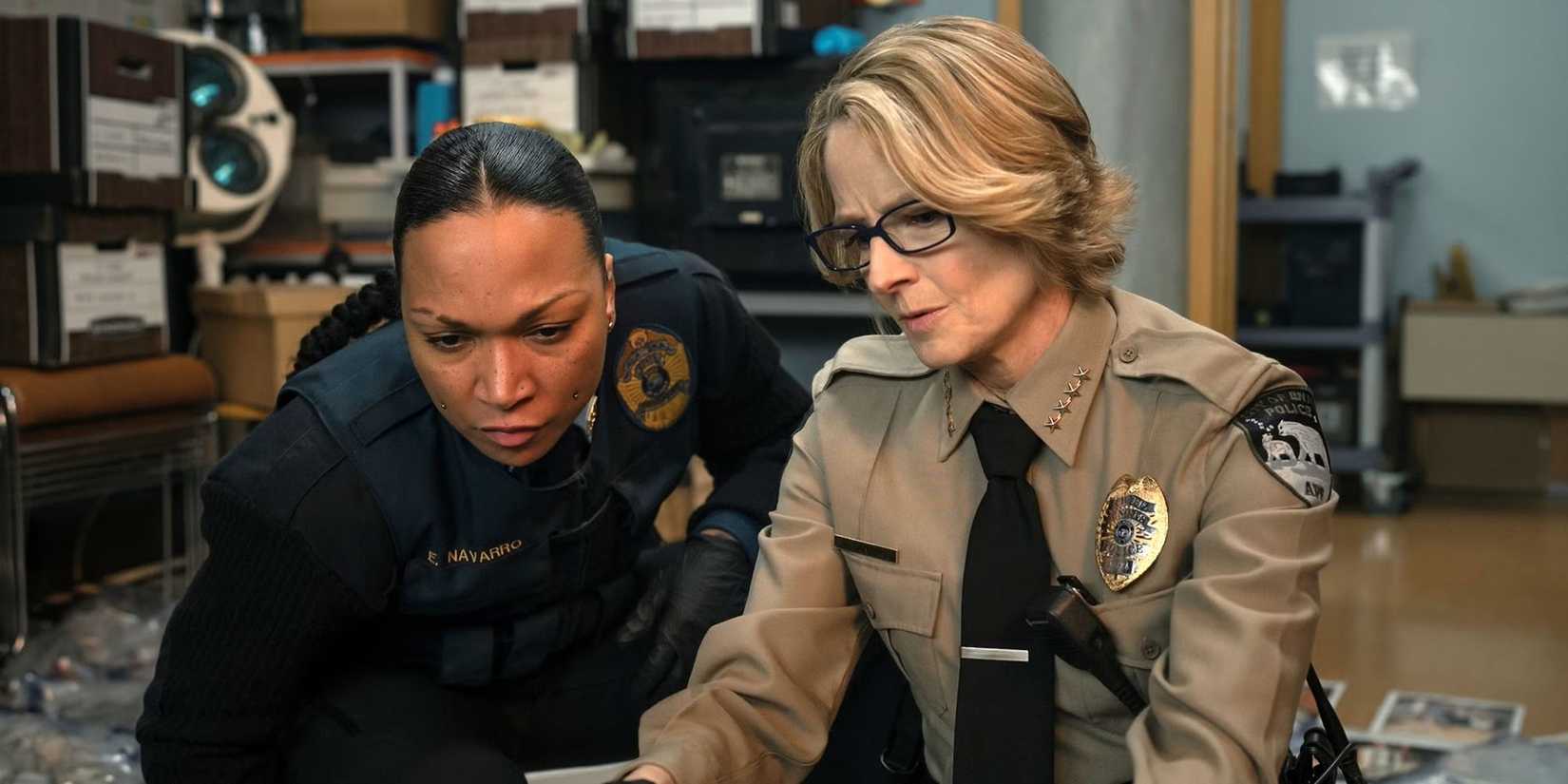
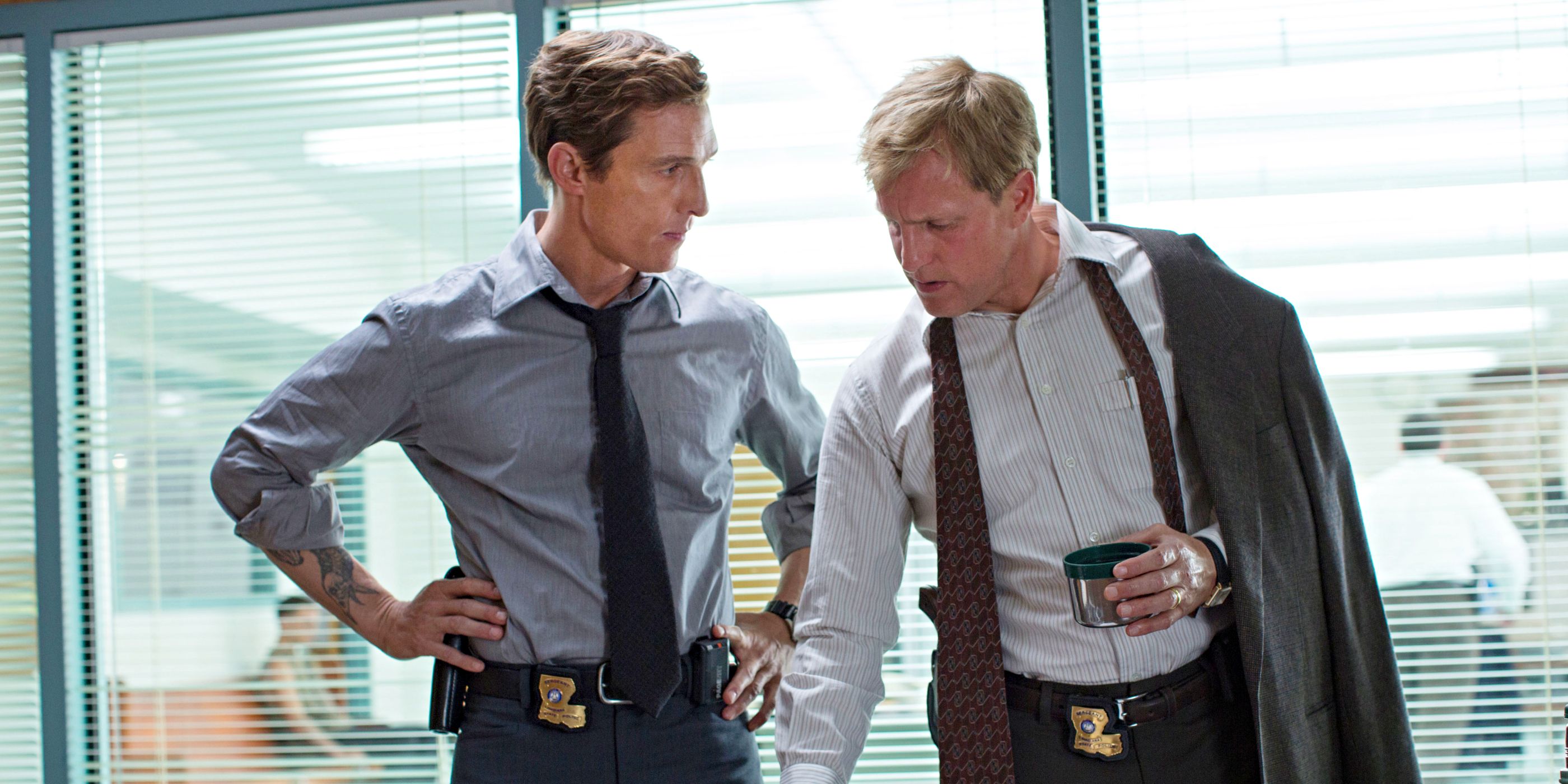
Unlike any other series on this list, True Detective stands out as a unique specimen: a masterful anthology series. Created by Nic Pizzolatto, each self-contained season follows a distinct set of detectives investigating dark, complex murder cases while confronting their own personal demons, psychological struggles, and systemic corruption. In Season 1, set in Louisiana, detectives Rust Cohle (Matthew McConaughey) and Marty Hart (Woody Harrelson) hunt a ritualistic serial killer over a 17-year timeline, exploring philosophical pessimism and Southern Gothic dread. Season 2 follows three officers from different jurisdictions — California Highway Patrol officer and war veteran Paul Woodrugh (Taylor Kitsch), Police Department detective Raymond "Ray" Velcoro (Colin Farrell), and Ventura County Sheriff's Office Criminal Investigation Division Sergeant Antigone "Ani" Bezzerides (Rachel McAdams) — and a criminal businessman, Francis "Frank" Semyon (Vince Vaughn), as they try to solve a corrupt politician's murder amid industrial blight in California. For Season 3, the action moves to the Ozarks as state detective Wayne Hays (Mahershala Ali) investigates the harrowing disappearance of two children across three distinct periods of his life. Most recently, in Season 4, with the subtitle Night Country, Detectives Liz Danvers (Jodie Foster) and Evangeline Navarro (Kali Reis) probe the mysterious disappearance of eight men from a remote Arctic research station during the long winter darkness of Alaska.
As investigations span decades, it shows how unresolved trauma haunts investigators as they age. The lines between law enforcement and the criminal underworld frequently blur as darkness and morality go hand in hand. The brilliance of True Detective lies in its heavy emphasis on regional isolation, local folklore, and moody cinematography. Though each season has a distinct visual vocabulary, they’re all tied together by blending literary philosophical pessimism, a haunting atmosphere, and legendary lead performances. True Detective has elevated pulp detective fiction into high art. Rather than relying on a standard procedural format, it uses an atmospheric anthology structure to explore dark existential themes. It’s a simple, evocative series that has helped catapult the anthology format to the top of television storytelling. If you’re missing True Detective, Season 5 is set to return in 2027, where the narrative moves to an urban-meets-nature turn in New York's Jamaica Bay.
KioskNews shows a cleaned-up reading view extracted from the publisher’s page — the original always lives on their site, not ours.