Older ant colonies less likely to die, more likely to reproduce: 34-year study
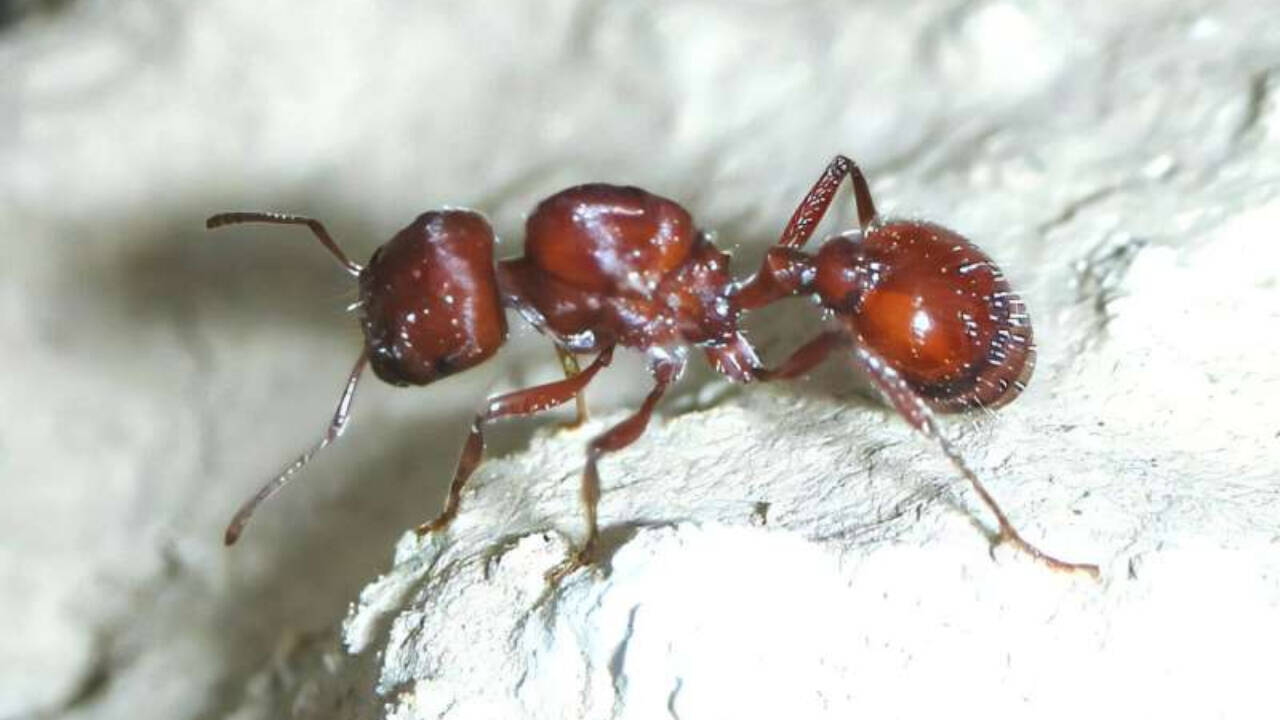
Larger harvester ant colonies showed lower mortality and higher reproductive success without sacrificing growth.
Aging is usually defined by a loss of strength, a loss of fertility and an increase in the probability of death. But for western harvester ants, growing older offers a surprising benefit.
Their colonies do not grow weaker with time, but stronger and better at reproducing. These insect communities defy conventional thinking about aging, and some colonies have lived for more than 40 years, a remarkable scientific investigation spanning 34 years shows.
Three decades of research show strange pattern
The UH said the research was done by University of Houston biologists Blaine Cole and Diane Wiernasz, Department of Biology and Biochemistry, who studied thousands of western harvester ant colonies in Mesa County, Colo.
The scientists started monitoring the colonies in 1992 and analyzed 34 years of observations of 3,285 colonies of known age. The research published in the journal Proceedings of the National Academy of Sciences found a phenomenon they called negative senescence.Phys Org explains that this biological pattern occurs when survival rates and reproductive success increase, not decrease, with age. Older colonies reproduction and survival were higher than younger colonies.
In 2024, researchers found 51 colonies between 40 and 42 years old that were established before monitoring began.
How ant colonies avoid the effects of aging
As per the report, this is due to the very organized structure of an ant colony, which scientists call a superorganism. It has been reported by the University website that ants form specialized societies with different functions. Worker ants forage, clean the nest, and care for the young after the queen lays the eggs.
The main difference is that worker ants usually live about one year while a queen can live for decades.
This constant replacement of workers allows the colony to maintain a functioning workforce even as the community as a whole ages, according to the University of Houston.This arrangement, the researchers say, is called a replaceable soma. Biologically, the soma is the part of an organism that does not reproduce. With older workers dying off and younger ones replacing them the working population of the colony is comparatively new for the life of the colony.
Importantly, the discovery does not mean that individual ants escape biological aging. Instead, it is a phenomenon at the level of the whole colony.
Bigger colonies have more survival advantages
The size of the colony also turned out to be an important factor in the research. They found that larger colonies had lower mortality rates and greater reproductive success. Interestingly, they were not growing at the expense of reproduction, defying the assumption that organisms must compromise on reproductive output to sustain themselves.The findings give a new lens on the biological mechanisms of longevity, especially in species with very organized social structures, Phys Org noted.
What the discovery means for research on aging
Negative senescence has been observed in some plants, fish and sea urchins before. But the harvester ant study is good evidence that social organization and the constant replacement of workers can help biological systems to be unusually long-lasting. Now researchers want to know if other highly social insects, like leaf-cutter ants and termites, show similar patterns.
The findings also show the importance of long-term scientific observation, according to the University of Houston. Tracking thousands of colonies for decades, researchers discovered a biological pattern that might have been missed by shorter studies.Ultimately, the research is an interesting reminder that aging does not follow a universal biological timetable. In the highly-organised world of the harvester ant, the older you get the more likely you are to survive.Image Courtesy: University of Houston
KioskNews shows a cleaned-up reading view extracted from the publisher’s page — the original always lives on their site, not ours.