Majority of Christian nationalists in Britain rarely go to church, says new report
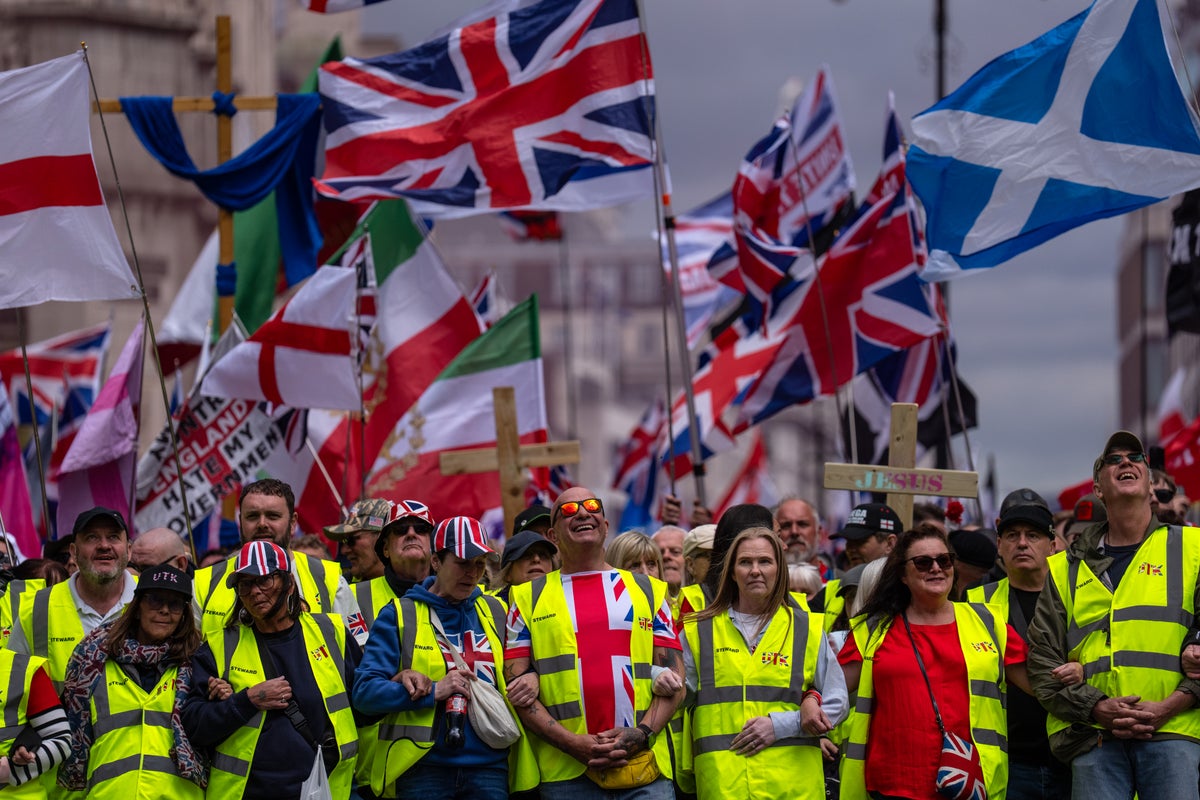
Christian nationalism in Britain is being driven by people who do not frequently attend church and by a substantial proportion who hold racist views, a new report has found.
The report, by the think tank Theos, identified five different groups within the UK in a survey of 1,765 people in the UK, that looked at their attitudes to Christianity and Britishness.
The group with views considered to closely resemble Christian nationalism, termed “identity integrationists” by the researchers, accounted for 11 per cent of respondents, making it the smallest of the five groups.
They found that while 81 per cent of this group identified as Christian, only a “modest” 13 per cent said they went to Church weekly, slightly higher than the overall group at 11 per cent. A third said they prayed weekly.
On issues of national identity and pride, surveyors said that there is also “there is also a substantial racist contingent among Identity Integrationists,” with 42 per cent agreeing that being white is important to being truly British and 6 per cent believing it is the most important element.
Nearly half said they would be unhappy if they visited their local hospital and most staff there were from ethnic minorities, while 70 per cent said they were proud that Britain “is predominantly white.”
The group was strongly hostile to immigration and Islam. Just 19 per cent agreed that Christian values required welcoming and supporting asylum seekers, while 30 per cent supported the equal treatment of religions in public life.
Politically, this group were most likely to be affiliated with Reform (43 per cent) and 48 per cent hold intentions to vote for the party.
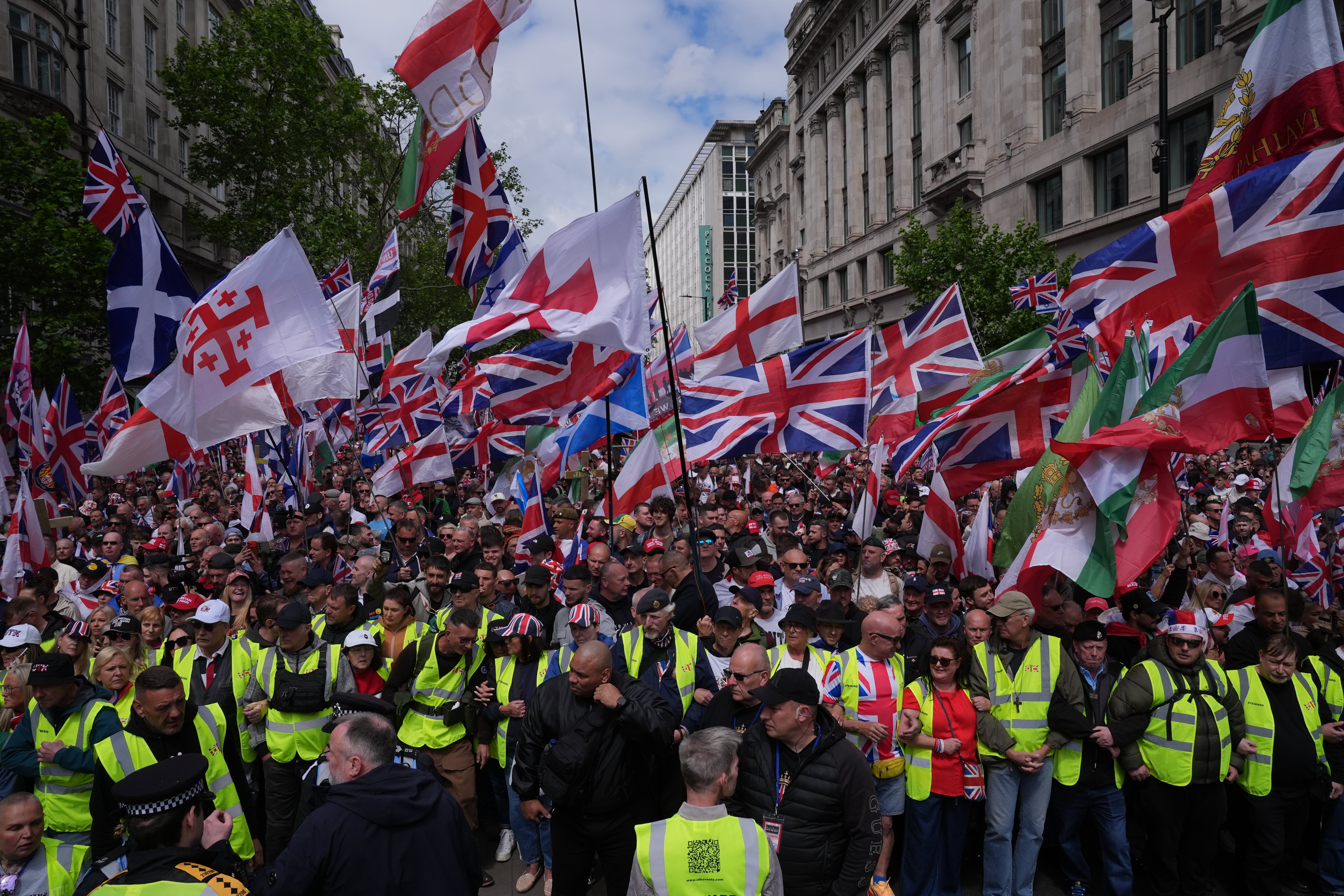
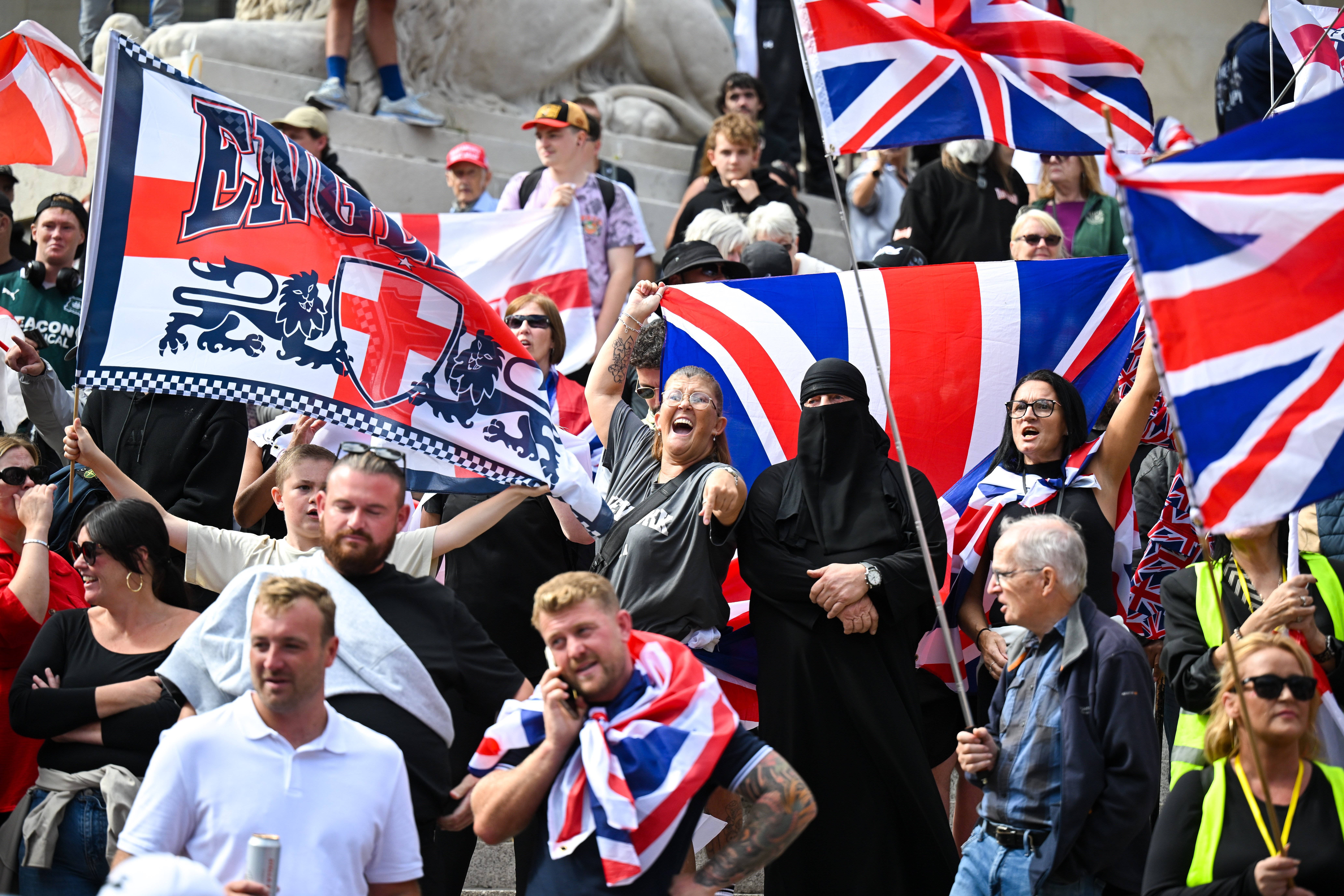
Opening the report, the authors drew a comparison between Christian Nationalism and images seen in far-right and Unite the Kingdom rallies over the last year.
It said: “When, in September 2025, upwards of 150,000 people marched through London on a Unite the Kingdom rally, a surprising number of them were carrying crosses. Others held placards with Christian messages and symbols. Ordained ministers spoke from the stage, and a worship band played songs to a sometimes bemused, sometimes enthusiastic audience. The afternoon had moments of a revivalist meeting about it.
“This sense of a strange new union between Christianity and British national identity was strengthened by other stories...
“September 2026, black-clad agitators descended on Dover and Portsmouth, many chanting “Christ is King” to protest against, and to prevent, refugees and migrants arriving on small boats. In a relatively short period of time, Christianity and nationalism (or patriotism – the terms are much debated) were being fused in the public mind.”
In comparison to “Identity integrationists”, another group called “Belief integrationists” were described as those who want to see Christianity integrated with Britishness but, for the most part, because they want to promote the Christian faith rather than preserve Christian values.
Among these “belief integrationists”, 31 per cent attended church weekly, 46 per cent prayed weekly, and 62 per cent expressed an interest in the Bible.
Almost half (48 per cent) agreed that Christian values required welcoming and supporting asylum seekers, while 63 per cent supported equal treatment of religions in public life.
Other groups identified were “Committed Separatists”, who do not believe that any cultural or religious values should be associated with Britishness; “Values Integrationists” do not think you need to be Christian to be British, but they do see Christianity as an important element of British values.
KioskNews shows a cleaned-up reading view extracted from the publisher’s page — the original always lives on their site, not ours.