Kumalarang weaves path to become Zamboanga’s ‘natural dyeing hub’
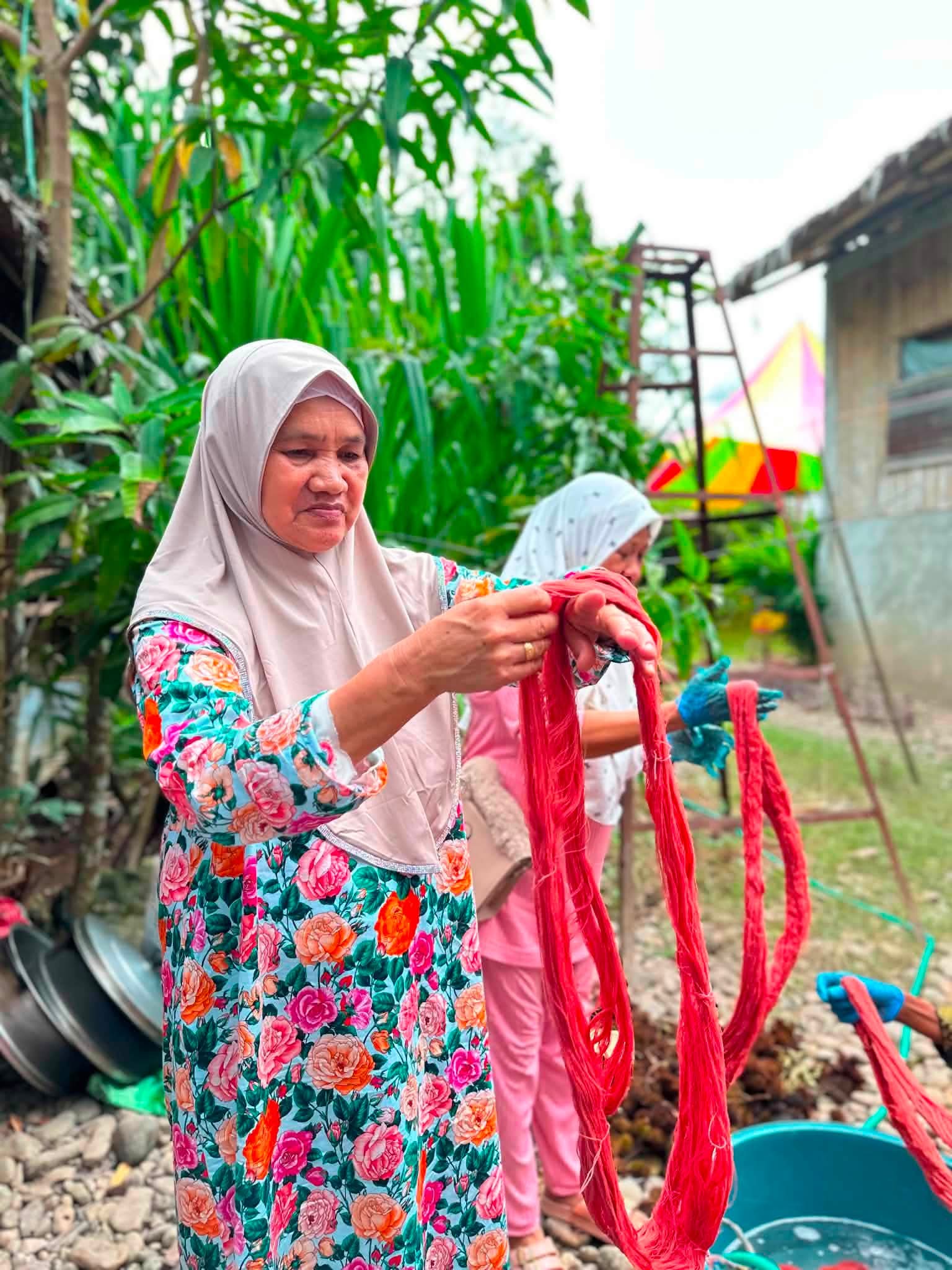

PAGADIAN CITY, Zamboanga del Sur – Transforming a century-old mat weaving tradition into a sustainable, eco-friendly enterprise, the second-class municipality of Kumalarang, Zamboanga del Sur, is positioning itself as the Regional Natural Dyeing Hub in the Zamboanga Peninsula.
Through a strategic convergence between the Local Government Unit (LGU) of Kumalarang and national government agencies, local artisans are shifting away from synthetic coloring toward eco-friendly, natural dye extraction—a move set to elevate the commercial value of their traditional woven products.
The shift gained momentum following a two-day capacity-building initiative conducted by the Department of Science and Technology–Philippine Textile Research Institute (DOST-PTRI), in partnership with DOST–Zamboanga del Sur.
Article continues after this advertisement
READ: Weavers: Protect indigenous textiles
FEATURED STORIES
NEWSINFO
NEWSINFO
NEWSINFO
The training equipped members from three key local groups—the Kumala Cultural Weavers Association, Boyugan West Women’s Weavers Association, and Tugop Women’s Weavers Association—with hands-on skills in extracting natural colors from locally sourced botanical materials, such as turmeric for yellow hues and mahogany bark for purple and grey tones.
The initiative falls under DOST’s FRONTIER Program (Fostering the Revitalization of Nascent Textile Innovation Ecosystem in the Region), which establishes natural dyeing hubs across the country to bridge science, technology, and indigenous craftsmanship.
Kumalarang Mayor Ruel Molina emphasized that the municipality’s cultural policy is anchored on continuity, inclusivity, and good governance, noting that community heritage must transcend political terms and local electoral divisions.
“Our identity as a municipality of Kumalarang is defined by how we love, develop, and give importance to our culture,” Molina said.
Article continues after this advertisement
Molina noted that the demand for “Kumala” woven products—vibrant, hand-woven banig (mats) made from dried pandan leaves featuring intricate geometric patterns that represent rivers, mountains, and cultural symbols—has rapidly outpaced current production capacities.
To ensure long-term sustainability, the LGU is expanding local support mechanisms and reinforcing the municipality’s School of Living Traditions (SLT). The program actively engages local Muslim and indigenous communities to transmit the craft to younger generations.
Article continues after this advertisement
READ: Blaan boys help keep weaving tradition alive
“The Kumala weaving tradition did not start during my term, but because I saw its vast potential, I knew that if supported by the local government, it would bring immense benefits to our people. That is good governance in practice,” Molina said./coa
KioskNews shows a cleaned-up reading view extracted from the publisher’s page — the original always lives on their site, not ours.