IEA ready to tap more oil reserves as diesel supplies tighten
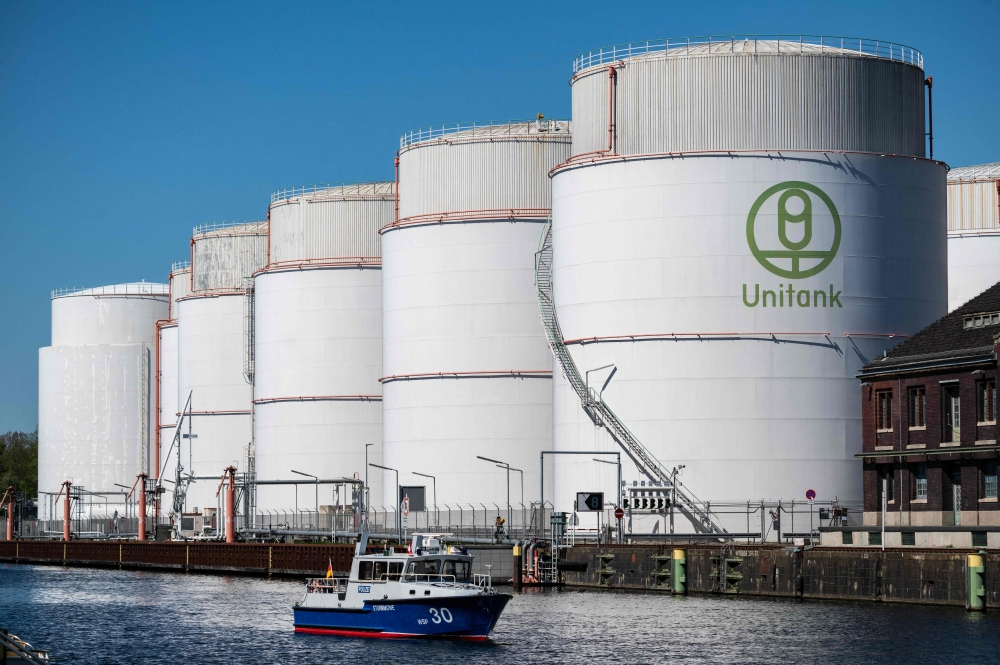

A boat of the Berlin Water Police (Wasserschutzpolizei) sails past a storage facility for oil products owned by oil logistics company Unitank at the Behala freight hub in Berlin on April 22, 2026. The International Energy Agency said on October 3, 2026 that member countries had so far released 325 million barrels of oil and oil-derivative products from strategic reserves, from 400 million barrels promised in March. — AFP pic
First Published: Thursday, 08 Oct 2026 4:18 PM MYT
PARIS, Oct 8 — The International Energy Agency’s member countries stand ready to release additional oil from their strategic reserves if necessary and will prioritise diesel fuel due to tight supplies of the fuel, the head of the IEA said Wednesday.
IEA member states still have ample reserves of crude oil and refined products and stand “ready to release more of these stocks to the market if and when required” its director Fatih Birol said in a statement.
G7 countries, in coordination with the IEA, agreed last Friday to immediately release 100 million barrels of diesel and crude oil to ease global energy supply concerns caused by fallout from the US-Iran war.
While shipments of crude through the Strait of Hormuz have recently picked up, damage to refineries in the region, along with those in Russia, have led to shortages of some refined products like diesel.
“IEA members also supported the prioritisation of the release of diesel stocks, to the extent possible, given the current tightness in diesel markets,” Birol said in his statement.
The IEA said Saturday that member countries had so far released 325 million barrels of oil and oil-derivative products from strategic reserves, from 400 million barrels promised in March.
Birol said IEA member countries still have significant levels of publicly held emergency oil stocks — equivalent to around 1.1 billion barrels, including over 200 million barrels of diesel.
The French prime minister said Wednesday that the country would release ten million barrels of diesel to distributors in France, to help ease pressure on fuel prices.
The diesel — which was purchased before the recent price surge and would be made available at cost price — would “automatically lower prices at the pump by an estimated 12 to 18 cents per litre,” Sebastien Lecornu said during a televised address.
There have been concerns about the levels of oil reserves.
Saudi Aramco’s chief executive Amin Nasser said Monday global oil stockpiles are “scarily thin” owing to the US-Iran war.
Nasser warned against looking at headline figures for reserves, noting that “less than 10 per cent” were available.
A large portion of the reserves reported by countries represent the minimum volume required to keep infrastructure operational, he added. — AFP
KioskNews shows a cleaned-up reading view extracted from the publisher’s page — the original always lives on their site, not ours.