46 Ebola contacts set for release as Kenya moves closer to containing outbreak
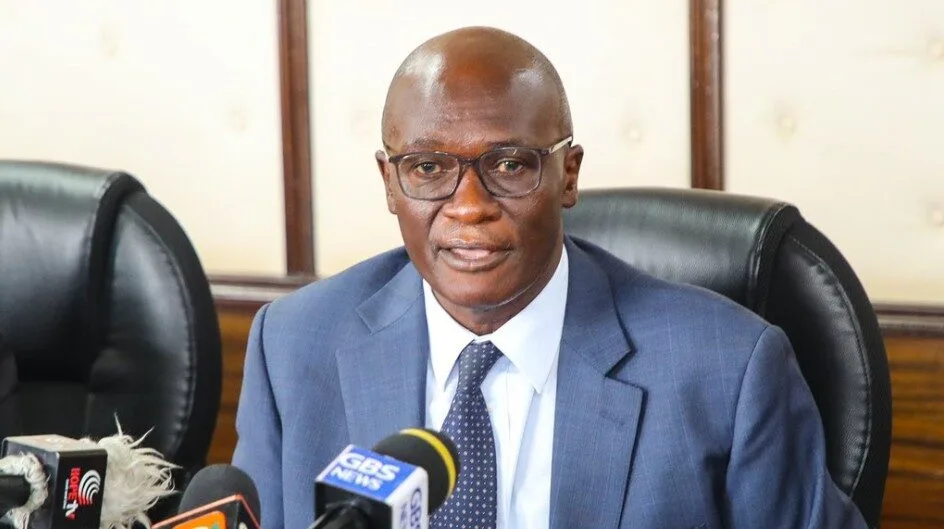
NAIROBI,Kenya Nov 3 – Forty-six people who have been under quarantine following exposure to Ebola patients are set to return home on Tuesday as Kenya steps up efforts to contain the outbreak that has so far infected nine people and killed two.
Health Director-General Patrick Amoth said the government had successfully traced all 135 contacts linked to the initial case, with those who completed the mandatory 21-day monitoring period being released in phases.
The 46 are the second group to be cleared after 20 people were discharged on October 26, bringing the total number of contacts released to 66. Another 52 people will remain under monitoring before they are progressively released.
“All our 135 contacts were traced, and those in Kenya have been followed up daily,” Amoth said.
He said nine of the contacts were outside the country, adding that the government had communicated with the relevant authorities in those countries in accordance with the International Health Regulations (2005).
The Health DG attributed the progress to effective contact tracing, surveillance, laboratory testing and cooperation between health officials and communities.
“We achieved 100 per cent contact tracing out of the 135 contacts we listed. We were able to identify them and establish where they went,” he said.
Kenya confirmed its first case of Bundibugyo virus disease on October 6 after a Kenyan man who had travelled from the Democratic Republic of Congo through Uganda tested positive.
The patient, who had reportedly been unwell for about a month and sought treatment at several hospitals in the DRC before travelling to Kenya, died on October 5.
The initial case triggered an extensive public health response, with authorities identifying family members, people who had interacted with the patient and healthcare workers who had attended to him.
Eight additional infections were subsequently confirmed, bringing the country’s total to nine. They included four family members and four healthcare workers.
The second and third cases were confirmed on October 14 and October 16, respectively, while the last reported infection was confirmed on October 20.
Health authorities said the subsequent infections were detected among people who had already been placed under quarantine, allowing them to be isolated before further exposure to the public.
There has been no evidence of transmission beyond the initial cluster, with the Ministry of Health reporting no new confirmed infections since October 20.
Amoth said patients receiving treatment had responded positively, expressing optimism about their recovery.
“The confirmed cases have responded very well to treatment,” he said.
Seven patients remain in isolation facilities, with two having returned negative test results and awaiting repeat testing to determine whether they can be discharged.
Health Cabinet Secretary Aden Duale has previously said the government was hopeful that five of the seven patients could be discharged after completing the required testing.
The outbreak has prompted the government to strengthen surveillance at airports and land border crossings, particularly along routes connecting Kenya to countries affected by the disease.
Authorities have also intensified screening of travellers, laboratory testing and monitoring of suspected cases.
The government has designated several facilities to manage Ebola patients, including Kenyatta National Hospital, Moi Teaching and Referral Hospital, National Police Service Hospital and Nairobi Hospital.
The facilities have specialised isolation units designed to prevent contact between suspected or confirmed Ebola patients and other hospital patients.
The government has also worked with the World Health Organisation (WHO), the Kenya National Public Health Institute and county health teams to coordinate surveillance, contact tracing, laboratory testing, infection prevention and public awareness.
WHO has supported the country in strengthening its response, including training healthcare workers, improving disease surveillance and ensuring proper handling of suspected cases.
Amoth said community involvement remained critical in containing the disease, warning that health authorities could not successfully control an outbreak without the cooperation of the public.
“Community involvement is critical for us. Communication becomes paramount because we cannot be able to contain this outbreak without the support of the community,” he said.
He urged Kenyans to promptly report suspected infections and cooperate with health officials conducting surveillance and contact tracing.
Ebola is transmitted through direct contact with the blood or other body fluids of an infected person, or contaminated materials. Symptoms include fever, severe headache, muscle pain, weakness, vomiting, diarrhoea and, in some cases, unexplained bleeding.
Health authorities have urged members of the public to seek medical attention immediately if they develop symptoms, particularly if they have been in contact with a confirmed or suspected case.
The current outbreak is caused by the Bundibugyo virus, a species of ebolavirus for which there is no licensed vaccine or specific treatment. Medical care focuses on supportive treatment, including managing dehydration and other complications, with early diagnosis improving the chances of survival.
Despite the progress, Amoth said Kenya would have to maintain heightened surveillance until the outbreak is officially declared over.
Under WHO protocols, a country must record 42 consecutive days without a new case after the last patient has tested negative twice, or after the last confirmed patient has been safely buried, before an outbreak can be declared over.
The countdown is twice the maximum 21-day incubation period of the virus.
KioskNews shows a cleaned-up reading view extracted from the publisher’s page — the original always lives on their site, not ours.