Noor Jahan at 100: A voice beyond the faultlines
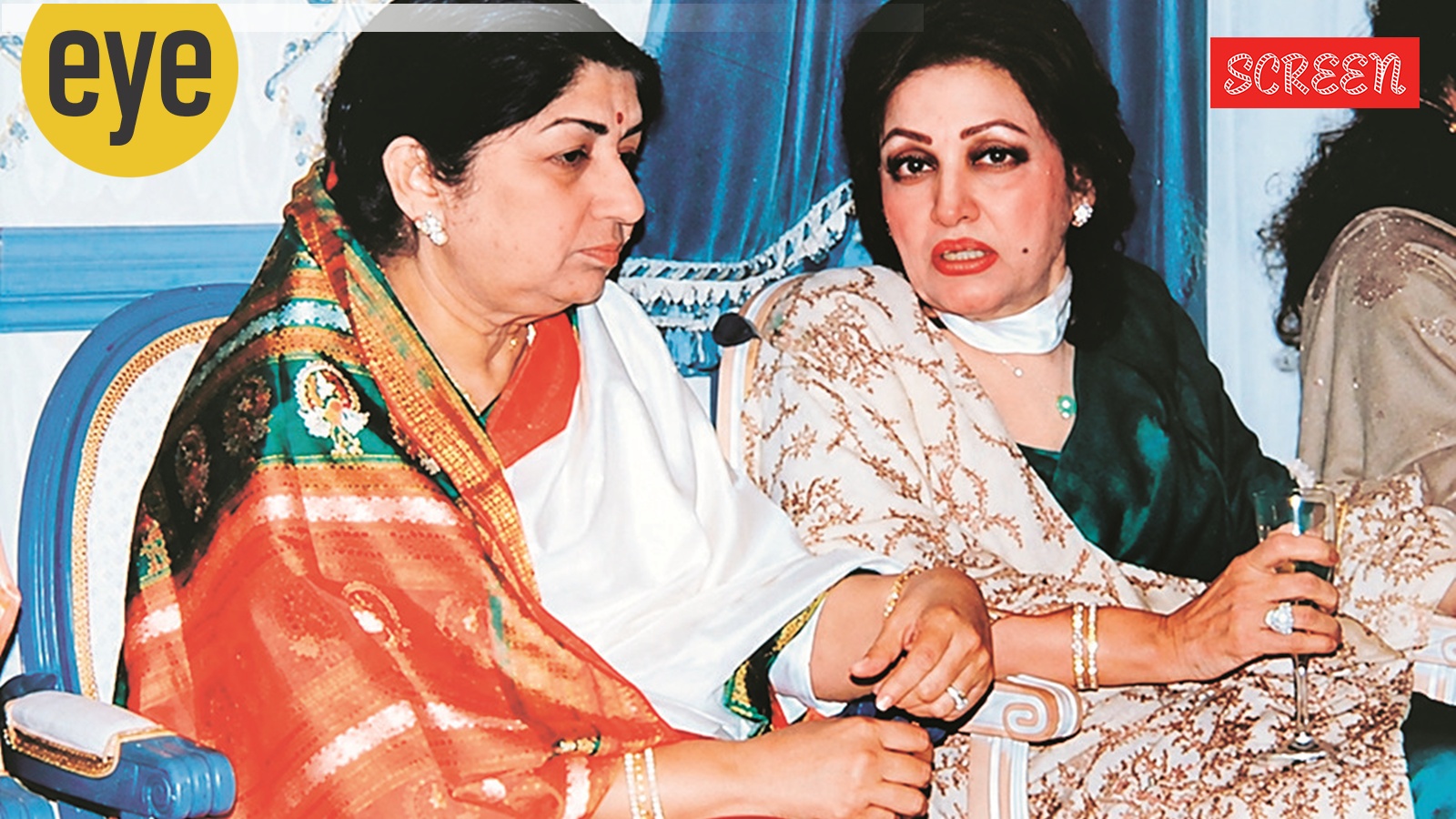
Before Lata Mangeshkar became the nightingale of the nation, she was a young singer listening to and learning from the songs of Noor Jahan. But Partition had already sent the latter to Pakistan while Mangeshkar was finding a foothold in the industry Noor Jahan had left.
Just about four years after the hard lines were drawn, Mangeshkar visited Amritsar with composer C Ramchandra to record a song for Kidar Sharma’s Jhanjhar (1953) and rang up her idol who lived in Lahore about 50 km away. After the two spoke, an urge to meet took over. But neither had the visas needed to cross the newly drawn border. Diplomatic channels were brought in to arrange the meeting.
Today, one can’t fathom a permission such as this. But in 1951, in the no-man’s-land between India and Pakistan at the Attari-Wagah border, two of the greatest singers of the Subcontinent embraced and wept. They spoke of composer Ghulam Haider, mentor to both who had recently passed and was responsible for putting them on the Subcontinent’s music map.
Ramchandra, who was accompanying Mangeshkar, recorded the episode in his autobiography, Mazya Jeevanachi Sargam (1977): “The scene was indescribable,” he wrote. As the story goes, the soldiers were also visibly moved. The two would meet often in the UK and US later, but this first reunion at Wagah remains a fond memory in the world of film music. Noor Jahan’s voice continued to resonate in India, just as Mangeshkar’s music travelled across Pakistan. “Even after 60 years, Awaaz de is as popular… I owed a lot to didi… Noor Jahan forever will remain ‘Malika-e-Tarannum’ (melody queen),” Mangeshkar had said in a conversation with PTV after Noor Jahan’s passing in 2000. Noor Jahan would have turned 100 last month.
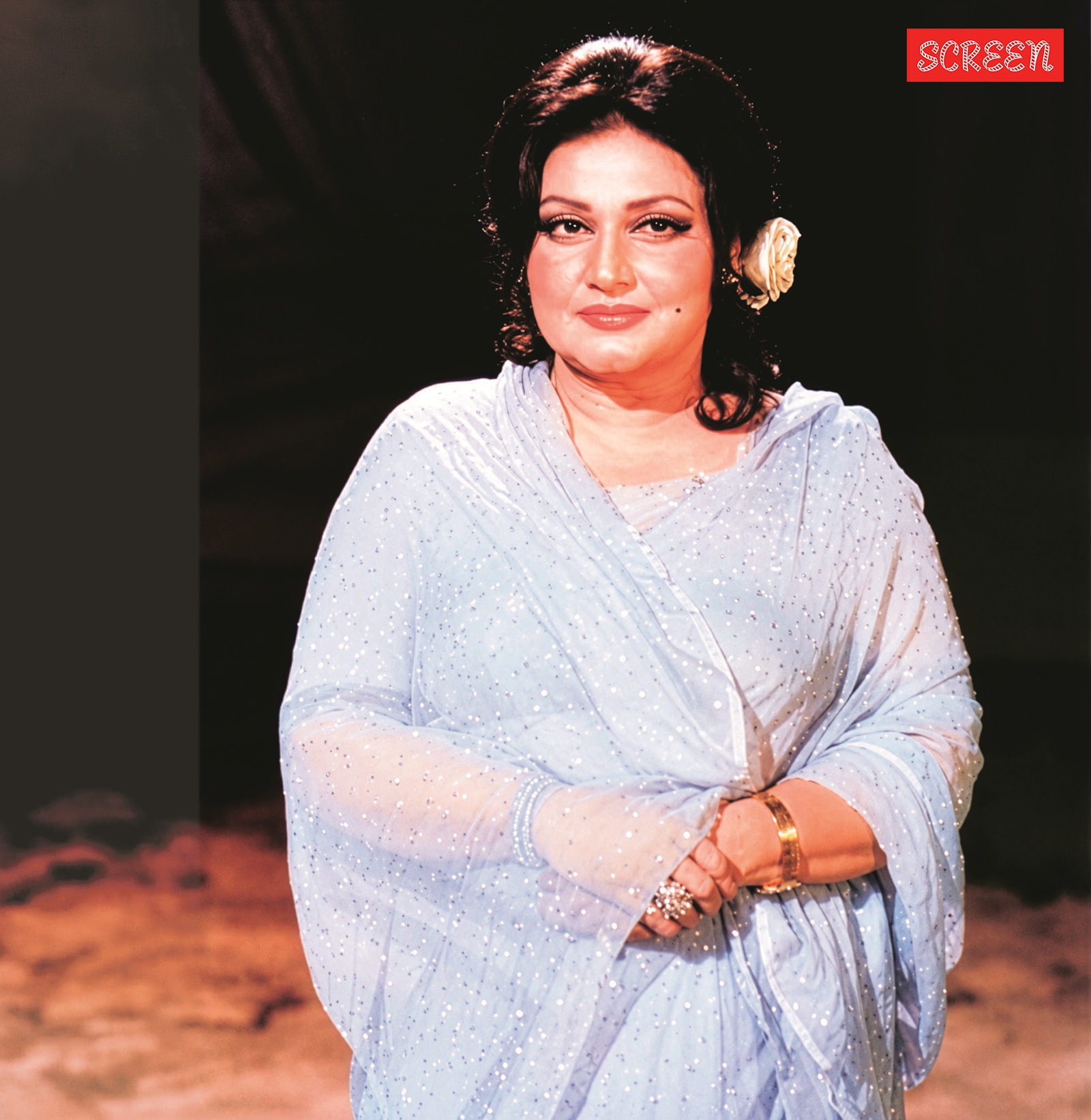 Noor Jahan
Siahi Choos (blotting paper), that’s what Roshan Ara Begum, the classical vocalist of Kirana gharana, affectionately called Noor Jahan. The remark referred to the singer’s extraordinary ability to remember songs and deliver them exactly as taught.
This propensity to ‘soak up’ the lyrics and tune was evident from the time she was barely five. Born Allah Wasai on September 21, 1926, in undivided Punjab’s Kasur to Madad Ali and Fateh Bibi — folk musicians from the Kanjar community who already had five daughters and seven sons — it is said that as a baby she cried in tune. Her early training included classical music. Since money was scarce, Allah Wasai, only six, began to work early and joined her elder sister Eidan to sing Punjabi folk in rural theatre productions.
At nine, she was brought to Lahore by composer Ghulam Ahmed Chishti. Her first appearance was in the Punjabi film Pind di Kuri (1935) in which she sang her first song. In Lahore, a vibrant cinema hub then, a theatre owner suggested she move to Calcutta, one of film industry’s principal centres besides Bombay. Once in Calcutta, the sisters found mentorship from singer-actor Mukhtar Begum, who’d recommend them to theatre companies. It is believed that Allah Wasai became Noor Jahan when Mukhtar’s husband Agha Hashar Kashmiri, christened her Baby Noor Jahan (light of the world). The name stuck. She also learned from Kajjanbai who enforced 12 hours of riyaaz.
Story continues below this ad
Her debut as an adult came in Khandaan (1942) opposite Pran. The film was also the directorial debut of Syed Shaukat Hussain Rizvi, whom she married in 1944. He also cast her in Zeenat (1945). It is after the hit songs of the film that the audience, impressed by her dulcet voice, christened her ‘Malika-e-Tarannum’.
These were years in which she became one of the most recognisable figures in Indian cinema. Her performances in Anmol Ghadi (1946), alongside Suraiya and Jugnu (1947), with Dilip Kumar, placed her at the pinnacle of the industry. Mangeshkar was 14 when she met Noor Jahan on the sets of Badi Maa (1945) in Kolhapur and sang raag Jaijaivanti for her. A happy Noor Jahan asked her to continue her practice.
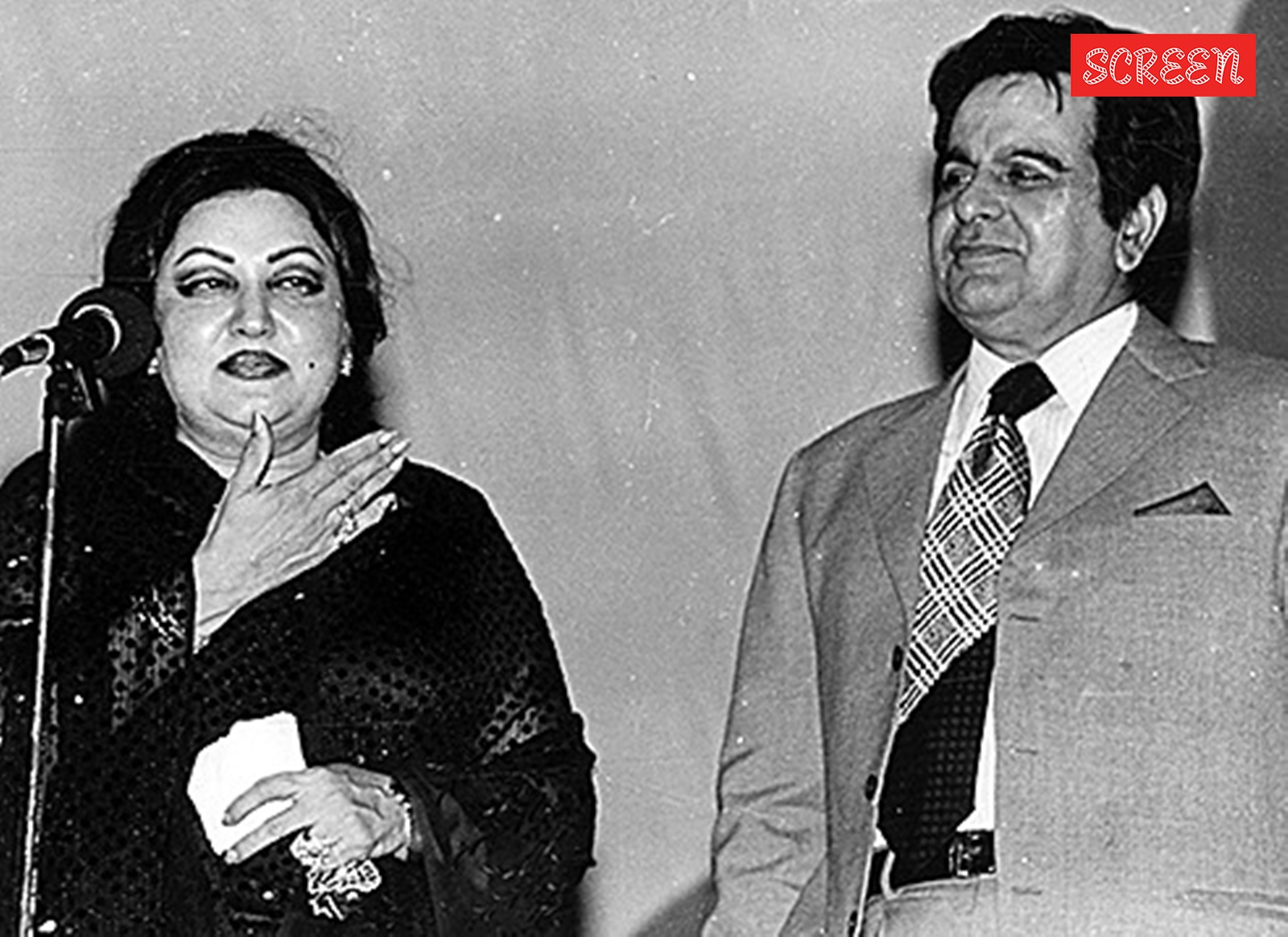 Noor Jahan with Dilip Kumar.
In her book, The Female Playback in Bombay Cinema, JNU professor and author Shikha Jhingan writes how Noor Jahan’s entire frame was an integral part of how she communicated a song, making it theatrical and expressive. “What made Noor Jahan stand out from the other singers was the embodied nature of her performance… In Jawaan hai mohobbat, Awaaz de… the mouth, lips, throat… the entire torso of the actor-singer was mobilised to match the embellished style of singing”.
Story continues below this ad
In 1947, Noor Jahan and Rizvi moved to Pakistan, leaving behind her glorious career and friends in Bombay. Once in Pakistan, she gave life to a fledgling industry, starring in and co-directing Chan Wey (1951), a major box-office success. She followed it up by acting and singing in Dupatta (1952). Two songs from the film — Chandni raatein (remixed in the ’90s) and Neher wale pul — became hits on both sides of the border.
By 1954 she got divorced and in 1959 married actor Ejaz Durrani, who pressured her to leave acting. Her last film as an actor was Ghalib (1961), after which she decided to focus entirely on playback.
In 1954, Noor Jahan reportedly refused to perform at a government concert unless she was allowed to sing Faiz Ahmed Faiz’s Mujh se pehli si mohabbat. The poet was in prison at the time, accused of involvement in the Rawalpindi Conspiracy Case, an alleged plot to overthrow the government, resulting in his poetry being banned. When organisers objected, Noor Jahan stood her ground, saying she wouldn’t do the concert. The organisers relented. Faiz heard his poem in her voice in the Hyderabad jail and was deeply moved. He would later go on to say, “Ye geet ab mera kahan, ye toh ab Noor Jahan ka ho gaya.”
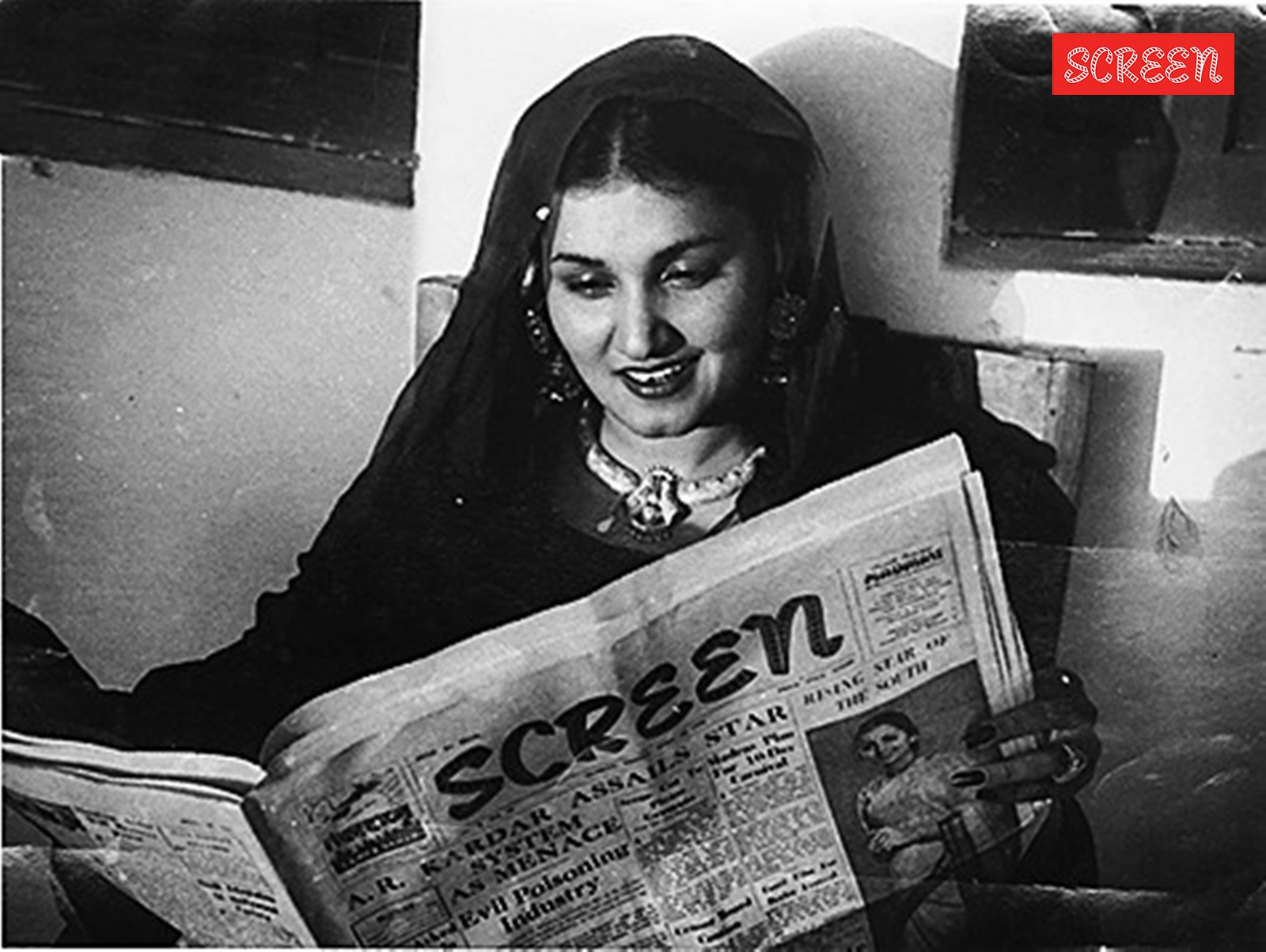 Noor Jahan reading SCREEN.
When Noor Jahan returned to Bombay in 1982, 35 years after Partition, people had rushed to get a glimpse of her. After a heart surgery in London, she suffered health complications and passed away in 2000.
Story continues below this ad
More than two decades after her death, Noor Jahan entered Gen Z’s world of reels. Be it her BBC performance in a white, shimmery sari, with arched eyebrows, heavily lined eyes and bold lipstick or Neher wale pul as a backdrop to numerous stories, she is being cherished yet again. Some in a new world shaped by algorithms may know little about the girl from Kasur. But it is the magic of her voice, much like the woman herself, that seems to be gaming the system by continuing to find new ways to be heard.
KioskNews shows a cleaned-up reading view extracted from the publisher’s page — the original always lives on their site, not ours.