Food insecurity in Argentina hits record levels among households with older adults
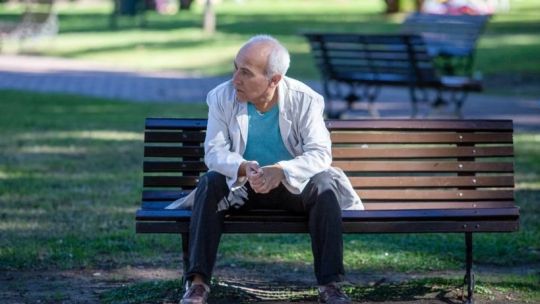
In January 2024, a court in San Juan opened proceedings against Juan Carlos, a pensioner, on a charge of “attempted theft.” According to local media reports at the time, he had gone to a wholesale supermarket, bought a special offer of cold meats and bread, and left without paying for a 200-gram packet of butter.
In August this year, in Jujuy, a 73-year-old man was detained at a shop after attempting to steal trays of meat and other food items by hiding them under his clothes. “I'm sorry, son, I had nothing to eat,” he reportedly said, according to local media accounts reconstructing the incident. The shop owner heard him and decided not to press charges.
Stella Maris used very similar words after spending more than a month in prison for attempting to take meat and other food items from a supermarket in Buenos Aires in October. “In desperation, I tried to take something to eat, nothing more,” she recounted.
Whatever the particular circumstances of each case, the reality is that the financial situation of pensioners in Argentina has deteriorated over the years. Food insecurity – an indicator which, according to a report by the UCA's Observatorio de la Deuda Social (or Social Debt Observatory) poverty watchdog, measures involuntary reductions in food consumption and/or experiences of hunger resulting from financial difficulties over the previous 12 months – has reached its highest levels since 2017.
Between 2017 and 2025, the proportion of households in the lowest socio-economic bracket experiencing food insecurity rose from 28.2 percent to 39.1 percent, according to the study. Food security also increased by 4.6 percentage points over the last two two-year periods examined (2022–2023 and 2024–2025).
“As might be expected, food insecurity increases as one moves down the socio-economic scale. It is therefore virtually non-existent among higher-middle-income households,” the report states.
Published this year under the title Vivir y envejecer en contextos de desigualdad (“Living and Ageing in Contexts of Inequality”), the document notes that food insecurity affects one-third of households with older adults, representing “a very high and rising incidence.”
In short, food insecurity “is compounded in households in the very low socio-economic bracket and those with insufficient income, in that order.”
Insufficient
Argentina’s minimum state pension – with a 70,000-peso bonus (currently frozen) – stood at 514,158 pesos in November. This amount is insufficient to cover the costs of any basic household basket: neither the one calculated by the INDEC national statistics bureau, which estimated a minimum of 546,926 pesos per adult in October (and does not account for the specific needs of older people); nor the one compiled by the Buenos Aires City Ombudsman's Office, which estimated in September that a retired couple with their own home needed at least 1.7 million pesos, rising to 2.5 million pesos for a couple renting their home. It falls even further short of the figure calculated by the Ombudsman's Office for Older Adults, which put the cost of a basic basket of goods and services at more than two million pesos per pensioner for the second half of the year. The latter calculation, which does take into account the specific needs of this age group, estimates that an older adult requires at least 457,000 pesos for food alone.
Eugenio Semino, City Hall’s Ombudsman for Older Adults, told Perfil that “we are talking about eight million people, eight million Argentines.” He lamented the fact that all political sectors had forgotten about pensioners following the President's two vetoes of legislation passed by Congress: a 2024 bill, which retained the inflation-linked pension adjustment formula while compensating for the 20.6 percent loss relative to January's inflation rate; and a 2025 bill, which provided for increases in pensions and the bonus, as well as the reinstatement of pension moratorium schemes.
The Ombudsman's Office argued that the grounds given by the executive branch for rejecting both pieces of legislation were unconstitutional.
The Centro de Economía Política Argentina (CEPA) think tank calculates that, had the payment been adjusted in line with pension increases, the bonus alone should have reached 226,875 pesos.
“The current government's pension policy has deepened the loss of purchasing power among pensioners, particularly those receiving the minimum benefit. One of the main tools used to erode their income in real terms has been the freeze on the compensatory bonus, which has remained fixed at 70,000 pesos since March 2024, despite the rise in prices,” it stressed in a report.
Centres lacking support
Funding for senior citizens’ centres has also been left unchanged.
Víctor Cantero, a 72-year-old who works at a senior citizens’ centre in San Telmo, told Perfil that PAMI, the state-run healthcare provider for pensioners, gives them a monthly subsidy of 5.9 million pesos to prepare food parcels containing 12 items and provide meals from Monday to Friday for 40 pensioners receiving minimum benefits.
He explained that the amount had not been updated for a year and that, after putting together the food parcels, they had around four million pesos left to prepare meals.
“Usually more than 40 pensioners come here. The numbers keep growing because the economic situation genuinely means that more and more people are unable to make ends meet,” he said.
The centre is kept running with the help of local residents and friends. “There are serious problems when it comes to food, because the PAMI nutritionist requires us to serve meat practically every day. And with the money we receive, it is simply impossible to buy meat every day.”
To meet the nutritionist's requirements, he added, the subsidy would need to be increased. “In many cases, the people who come here to eat only have one meal a day, and that's when they come to the dining hall,” he adds.
The San Telmo centre has been operating since 1998. Back then, Cantero recalled, the food parcel contained 10 more items than it does today. “It included fresh cheese, jam, sweet potato, chicken and, in some cases, fish and milk. All of that has gradually been cut over the years. Today, we distribute just 12 dry goods: pasta, rice, sugar, yerba mate and a tin of tomatoes.”
Perfil contacted PAMI sources to ask how much funding was allocated to senior citizens’ centres and whether it had indeed been frozen, but had received no response by the time this article was published.
KioskNews shows a cleaned-up reading view extracted from the publisher’s page — the original always lives on their site, not ours.