China’s SMIC sees AI computing crunch until 2028 as Nvidia heat risks tighter chip curbs
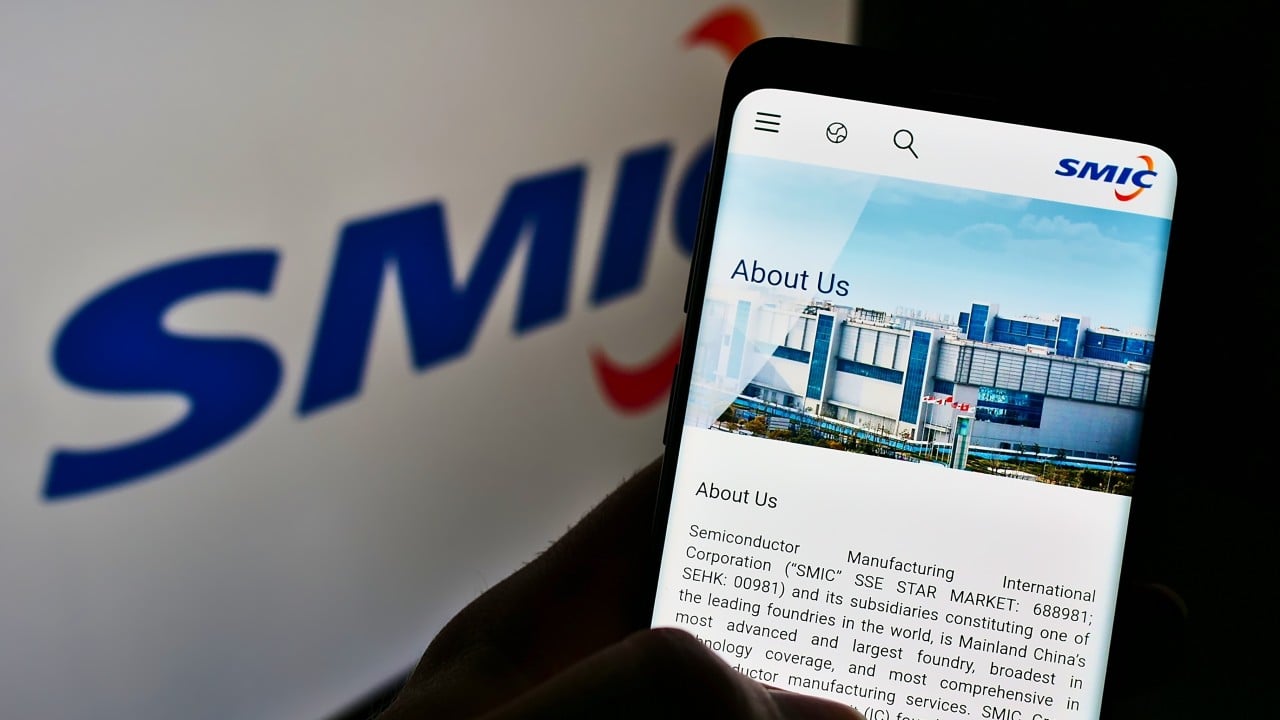
China’s Semiconductor Manufacturing International Corporation (SMIC) is betting that a relentless data centre buildout will keep artificial intelligence computing power in short supply for the next two years.
The bullish forecast comes as scrutiny over former Nvidia CEO Jensen Huang threatens to intensify Washington’s curbs on Chinese access to advanced American processors – a shift that could accelerate China’s reliance on domestic foundries.
“By the middle to the second half of 2028 … computing power and supporting chips may still be in short supply,” said Zhao Haijun, co-CEO of China’s largest contract chipmaker, during the company’s earnings call on Friday.
Unlike mature markets such as smartphones or automobiles, the AI sector represented “a process from nothing to something”, Zhao said, adding that made its future incremental growth harder to predict.
“Artificial intelligence is still in the ascendant and it has brought about many new industries,” he said. “The companies that use computing power, as we hear, are all in short supply now.”
Demand was extending beyond centralised data centres, according to Zhao. Enterprises across various sectors were increasingly building their own smaller facilities to boost operational efficiency and accelerate product iteration, he added.
“This cannot be achieved by continuously renting tokens, because token rentals sometimes have no available pricing, and sometimes fluctuate high and low – this simply will not work,” Zhao said.
The upbeat outlook echoes comments from domestic peer Hua Hong Semiconductor, which said last week that it was seeing increasing demand for microcontrollers, flash memory, power management and power discrete products even as it expanded manufacturing capacity.
Zhao’s remarks came after SMIC reported an 82.3 per cent year-on-year surge in third-quarter gross profit to US$953.2 million, up from US$522.8 million a year earlier. Gross margin climbed 7.9 percentage points year on year to 29.9 per cent.
Quarterly revenue rose 33.9 per cent from a year earlier – and 6.1 per cent from the previous quarter – to US$3.19 billion, broadly in line with the US$3.26 billion consensus estimate compiled by Bloomberg.
SMIC attributed the gains to higher overall wafer sales volumes and prices, stronger capacity utilisation across its fabrication plants and a more favourable product mix.
Looking ahead, Zhao said he expected the company to buck the industry’s traditional fourth-quarter seasonal slowdown.
SMIC projected sequential revenue growth of between 4 and 6 per cent for the final three months of the year, though gross margin was expected to soften slightly to a range of 26 to 28 per cent.
“In the fourth quarter, the company expects shipments to remain steady, with product mix changes and market-driven pricing pushing up the average selling price,” Zhao said.
KioskNews shows a cleaned-up reading view extracted from the publisher’s page — the original always lives on their site, not ours.