What Australian trauma doctors found when they came to Israel

A group of Australian trauma physicians was in Israel earlier this month for a special medical mission focused on ongoing learning and training, with the goal of improving trauma care in both countries.
The mission, organized by AUSiMED and the Australia-Israel Chamber of Commerce, was headlined by Dr. Nir Samuel, head of the Pediatric Trauma Service and an emergency medicine specialist at Schneider Children's Medical Center of Israel; Prof. Mark Fitzgerald, director of trauma services at The Alfred Hospital in Australia and director of the country's National Trauma Research Institute; and Dr. Dany Ben-Eli, a trauma consultant and emergency physician at The Alfred.
The delegation, which arrived on August 1, visited a strong representation of Israel's leading hospitals and medical institutions, from Hadassah Ein Kerem and the Institute for Research in Military Medicine at Hebrew University to Schneider Children's Medical Center of Israel, Rambam Health Care Campus and Sheba Medical Center. Along the way, the Australian physicians learned from their Israeli counterparts while sharing their own knowledge and experience, according to Samuel.
“We built a program with ongoing mutual learning and training,” Samuel told The Jerusalem Post, highlighting not only what took place on the ground but also the dialogue that unfolded in departments such as Sheba's MSR, where discussions focused on full-scale simulations. One possibility discussed was bringing a large team from Australia to Israel to share its expertise while gaining skills that could help advance medical simulation in Australia.
MSR-Azrieli, the Israel Center for Medical Simulation at Sheba, is a global leader in simulation-based medical education.
“It was very strong professionally, but on a personal level, as an Israeli physician, it was really heartwarming,” Samuel added. “To have one of the leading [trauma] teams in the world come to Israel and support us at a time like this, that's far from the norm.”
Israel and Australia have long maintained close ties. Yet since October 7, 2023, headlines have often focused on rising antisemitism in Australia and disagreements between Australian and Israeli leaders, including the countries' prime ministers. Missions like this one highlight another side of the relationship, built around professional cooperation and person-to-person connections.
Those kinds of opportunities will also be part of the conversation in November at the first-ever Jerusalem Post Australia Summit, scheduled to take place in Sydney on November 19.
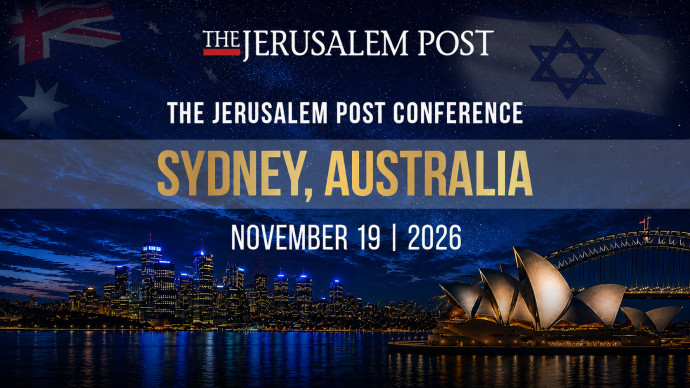
The event, which includes a gala the night before and a private cocktail reception at its conclusion, will feature a two-hour business and innovation program held in collaboration with the Australia-Israel Chamber of Commerce. Leaders from companies, hospitals and startups will have an opportunity to meet and discuss potential collaboration and investment.
Samuel said his relationship with The Alfred began when he decided he wanted to build Schneider's first pediatric trauma service dedicated specifically to children. In early 2022, he traveled to The Alfred on a scholarship to train. The hospital is Australia's largest trauma center and ranks among the world's leading trauma centers.
He trained there for about 18 months before returning to Israel in May 2023. At the time, Samuel could not have envisioned what would happen on October 7. Ultimately, however, the skills and connections he developed in Australia proved invaluable over the next few years.
Samuel explained that while Israel has one of the world's leading medical systems, even the best medical systems must continue learning from their counterparts abroad if they want to remain at the forefront of their fields.
“You have to learn different approaches,” he told The Post. “Going to Australia, there was no treatment or a device or whatever I heard about for the first time, but it's about how you apply things, about processes, about doing things differently. It's not a low resource country going to learn from a high resource country. It's really two mature systems interacting to the benefit of both.”
He said that in clinical leadership in Israel, doctors often train abroad and bring home new approaches and techniques.
“Collaboration is super crucial,” he said. “If Israel gets shunned and people don't go to study, we're going to be in a difficult position.”
But for Samuel, the mission carried significance beyond its professional benefits. Australian colleagues made the effort, physically, mentally and financially, to come to Israel, offer their support and train alongside Israeli physicians.
He called it “reassuring that there are still people like this in the world and it goes beyond the practical implications.”
During the mission, in addition to visiting medical facilities, the participants ate together, toured Jerusalem's Old City and spent time getting to know one another. Those experiences, Samuel said, helped strengthen the personal relationships behind the professional collaboration.
Samuel said he now envisions the partnership developing along at least three tracks. The first is increased people-to-people exchanges, including short- and long-term fellowships in Australia and Israel for doctors from both countries. The second is binational research. The third is innovation, connecting Israeli and Australian startups within the medical ecosystem and finding opportunities for them to work together.
Companies and professionals interested in exploring similar Australia-Israel partnerships can take part in the Jerusalem Post Australia Summit in November. For more information, visit the conference website at www.jpost.com/Australia2026.
Partnership opportunities are also available through the conference organizers. Please email conferencep@jpost.com.
KioskNews shows a cleaned-up reading view extracted from the publisher’s page — the original always lives on their site, not ours.