Why Albayanos turn to Nuestra Señora de Salvación in times of crisis
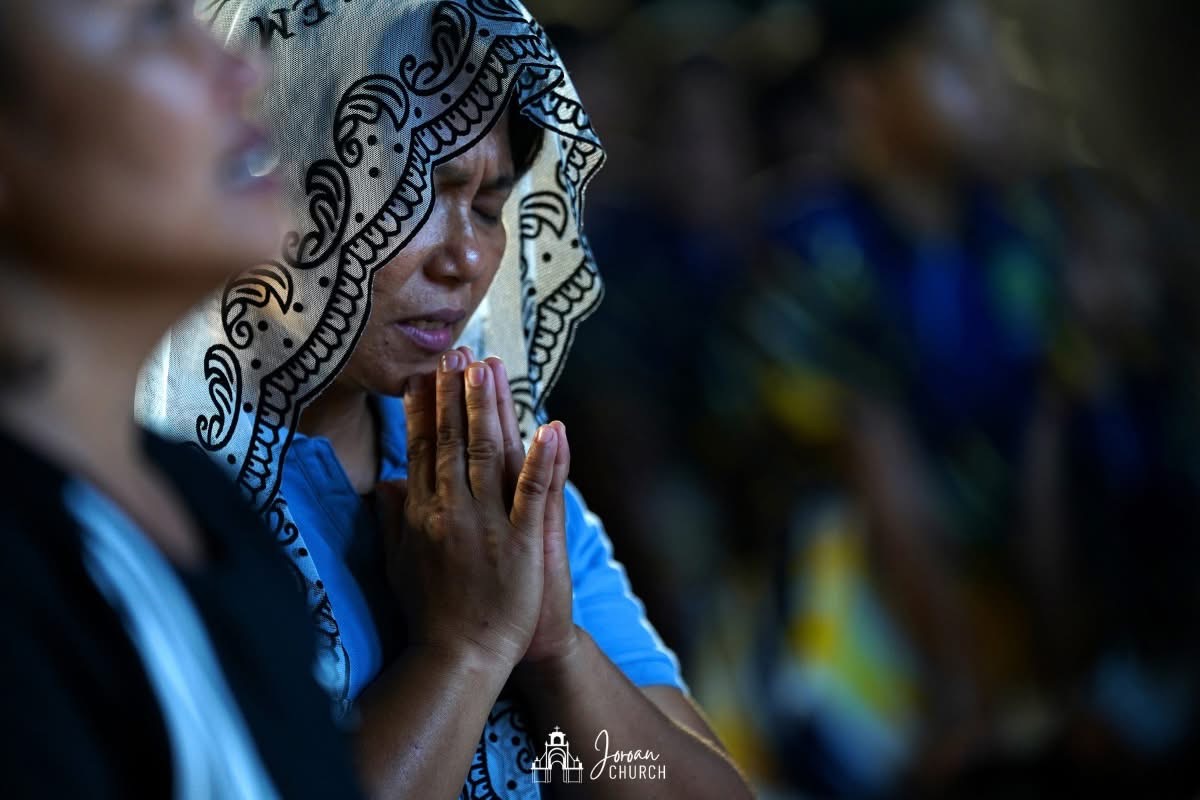
ALBAY, Philippines – For centuries, pilgrims from across Bicol have journeyed to the coastal shrine of Nuestra Señora de Salvación in the small town of Joroan, Tiwi, seeking the intercession of Albay’s heavenly patroness.
Devotees believe that through their enduring faith, the Virgin Mary will answer their prayers and offer the same gift of redemption granted to all humanity.
“When pilgrims come, they come tired and scared. Yet when they find a home in our shrines, they go home refreshed and renewed,” said Reverend Father Joseph Salando, the parish priest of Joroan Church.
Sena Azores, a resident of Barangay Buyuan in Legazpi City, said that like her, most villagers living in communities near the Mayon Volcano have maintained deep devotions due to the constant dangers their communities face. They believe the patroness will protect them just as she has protected her devotees since the 1770s.
“An Inang Mapag-ampon is our best hope for salvation and protector, especially during calamities when we have done everything we can and have nothing else to rely on,” she said.
“While we prepare and follow safety advisories, our prayers to Ina give us peace of mind that we will survive any eruption or storm.”
Azores said that they always pray to the patroness to keep their families safe, especially when their children are away from home.
With Mayon’s renewed threat of a stronger eruption following its unrest on Friday, October 30, the Diocese of Legazpi reminded residents that while they trust in the Lady through enduring faith, it is also their responsibility to remain vigilant and heed authorities’ advisories to stay safe.
“As Mayon Volcano shows signs of unrest, we entrust to the maternal care of Nuestra Señora de Salvación, Heavenly Queen of Albay, all our brothers and sisters, especially those living in communities near the volcano,” the Diocese said.
“We pray for their safety and protection, for the vigilance and wisdom of our authorities and disaster response personnel, and for the strength of families who may be affected by volcanic activity.”

Faith healing
Beyond keeping residents safe from calamities, devotees also pray to the patroness for healing from chronic illnesses.
Bicolana visual artist Deejai Tanji, who used to visit Joroan only to see her grandparents and relatives, shared how her devotion began when both she and her partner were diagnosed with cancer.
“Life led us through broken roads, hospital visits, and moments of fear and uncertainty. Somewhere along those difficult roads, we found ourselves turning to Ina — not just to ask for healing, but to find strength in the face of things we could no longer control,” Tanji said.
She shared that knowing of the Lady of Salvation is far different from truly experiencing Her presence, especially when carrying burdens one never imagined having to bear.
“I came to Her asking for healing for someone I love, but in the process, my own faith was transformed,” she added.
“Faith gives us something invaluable: a place to find grounding, hope, and a sense of belonging.”

Grateful for the strength and guidance that sustained her during her battle with cancer — which both she and her partner ultimately survived — Tanji has dedicated her art to the Lady of Salvation. She created a life-sized mural outside the shrine, where visiting devotees frequently take souvenir photos.
“I’ve learned that being a devotee isn’t just about asking for blessings, but about becoming a blessing to others. Through my art and the small ways I help my community, I try to turn what I believe into something people can actually feel and experience,” she said.
The artist hopes the younger generation of Albay residents will also discover a deep faith in the province’s heavenly mother. She emphasized that devotion to the patroness remains one of the cornerstones of Albay’s Catholic identity and its faith in Jesus Christ.
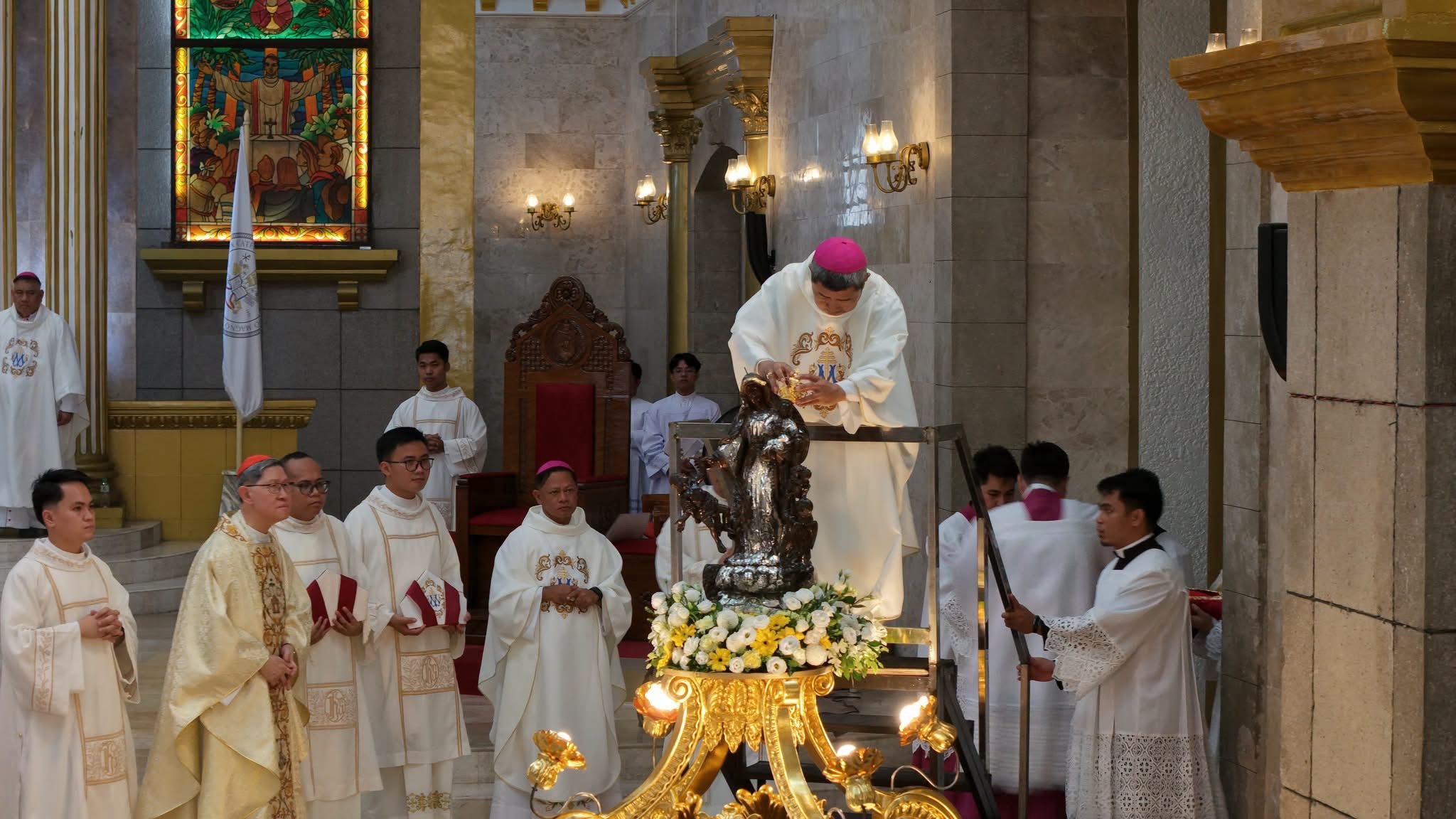
His Eminence Luis Antonio Cardinal Tagle, the dean of the college of cardinals of the Roman Catholic Church, also reminded devotees of the importance of truly knowing and drawing close to Nuestra Señora de Salvación during the Jubilee Mass commemorating the 75th anniversary of the Canonical Erection of the Diocese of Legazpi and the pontifical coronation of the image.
Tagle noted that through devotion to the patroness, the faithful can grow closer to Christ and deepen their trust in God’s enduring love.
“When you feel like drifting away from Jesus, reach out to the hand of Our Lady of Salvation. Her hands are always outstretched to catch us and bring us closer to Him,” Tagle said.
Roots of devotion
For the people of Albay, turning to Ina in times of crisis is an impulse forged over centuries: long before today’s fears of volcanic eruptions and severe typhoons, the sanctuary at Joroan was born out of centuries of vulnerability to violent storms and raiders.
In 1770, Don Silverio Arcilla, a haciendero (estate owner) from Cagnipa (now Joroan), was alerted by his tenant, Mariano Dacuba, about a chopped calpe tree trunk that did not wilt after being severed from its base. Seeking guidance, Arcilla consulted the parish friar of Buhi.
The friar commissioned a sculptor named Bagacumba to carve sacred images from the trunk. Bagacumba carved three images from the wood: Nuestra Señora de Salvación, San Antonio de Padua, and Nuestra Señora de la Soledad.
According to historical records, the image of Our Lady of Salvation was first lent to Cagnipa on August 25, 1776, on the condition that residents build a chapel for the image. This event laid the foundation for the region’s deep devotion to the patroness.
Years later, the settlement was renamed Horoan — after a species of fish commonly caught by local fishermen —and eventually became known as Joroan. Around the same time, Tiwi separated from Malinao, and Joroan later became part of Tiwi.

Around 1805, a severe storm heavily damaged the chapel housing the image, prompting its relocation to the town center and causing devotion across Tiwi to flourish. During this period, Moro raiders frequently targeted coastal villages across Albay, but local tradition holds that through the residents’ steadfast faith, invaders repeatedly failed to set fire to houses in Joroan and Tiwi — a protection attributed directly to the patroness.
As time passed, disputes over custodianship of the image arose between devotees in Joroan and Tiwi. In 1918, an assembly representing both communities agreed to return the image to Joroan and establish Joroan as an independent parish.
On September 15, 1919, a new shrine was completed on a 16-hectare land in Joroan, paving the way for the image’s return that same year. Meanwhile, a replica of the image was enshrined in Tiwi through the efforts of Bishop John Bernard McGinley.
The Diocese of Legazpi declared Our Lady of Salvation as the Heavenly Patroness of Albay on December 8, 1975. Pope Paul VI issued a decree on February 7, 1977, granting the request of the faithful to canonically crown Nuestra Señora de Salvación of Joroan.
The diocesan coronation had previously taken place on August 25, 1976, presided over by Archbishop Jaime Cardinal Sin of Manila as “a treasured expression of our people’s faith and Marian devotion.”
The church later clarified that the first crowning was considered a diocesan coronation, not a pontifical coronation.
A second major crowning took place in 2001, presided over by Bishop Jose Sorra. This silver jubilee re-crowning commemorated the patronage and episcopal coronation with a solemn renewal of consecration.

On October 28, 2026, Cardinal Tagle led the pontifical coronation following a papal decree of Pope Leo XIV recognizing centuries of documented miracles and devotion to Our Lady of Salvation in the Bicol region — elevating local veneration to global papal recognition.
The diocese explained that the crowning signifies a unity of the faithful in honoring Nuestra Señora de Salvación.
“May the crown offered to Inaexpress our enduring love for the Mother of the Lord, our thanksgiving to God, and our renewed commitment to His Word, the sacraments, and service to those most in need,” the diocese stated.
Beyond ecclesiastical recognition, residents like Azores and Tanji view the coronation as a reflection of their deep love and faith in the patroness they affectionately call Ina — the heavenly mother who carries them through their greatest trials. – Rappler.com
KioskNews shows a cleaned-up reading view extracted from the publisher’s page — the original always lives on their site, not ours.