10 Books From the 2000s That Are Perfect From Cover to Cover


Luc Haasbroek is a writer and videographer from Durban, South Africa. He has been writing professionally about pop culture for eight years. Luc's areas of interest are broad: he's just as passionate about psychology and history as he is about movies and TV. He's especially drawn to the places where these topics overlap.
Luc is also an avid producer of video essays and looks forward to expanding his writing career. When not writing, he can be found hiking, playing Dungeons & Dragons, hanging out with his cats, and doing deep dives on whatever topic happens to have captured his interest that week.
Sign in to your Collider account
The 2000s produced no shortage of great books. It was the decade when Harry Potter became practically unavoidable, and several ambitious literary novels became unlikely bestsellers. A few of these projects were experimental; others simply told a classic story exceptionally well.
This list looks at some of the finest of them, from unusually emotional horror stories to masterful fantasy debuts and poignant coming-of-age stories. All have aged well and are worth checking out, if you haven't already.
10 'Lisey's Story' (2006)

“Everything the same; everything different.” This is one of Stephen King's most personal novels, and one that he has cited among his favorites of his own work. Two years after the death of celebrated novelist Scott Landon, his widow Lisey is finally attempting to sort through the papers and possessions he left behind. That process forces her to reconsider a marriage whose most disturbing secrets she spent years deliberately avoiding.
In particular, Lisey learns more about Boo'ya Moon, an otherworldly place that Scott had access to, a realm at once beautiful, restorative, and unimaginably dangerous. However, instead of placing its supernatural horror at the forefront, this book is really about grief and the complexity of relationships. It's King getting honest and insightful about what marriage means, without sacrificing any tension or narrative momentum. He has written scarier and more famous books, but few that are more vulnerable.
9 'The Curious Incident of the Dog in the Night-Time' (2003)

“It was 7 minutes after midnight.” A dead dog, a garden fork, and a teenage boy determined to discover what happened. Author Mark Haddon builds these story elements into an entertaining and surprisingly poignant gem. The tale is told from the perspective of Christopher Boone, a 15-year-old who loves math, dislikes being touched, finds metaphors confusing, and initially decides to approach the death of his neighbor's dog Wellington as though he's Sherlock Holmes.
The resulting investigation quickly uncovers something considerably more important than the identity of Wellington's killer, however. Christopher discovers that adults he depends upon have hidden major truths from him, forcing him far beyond the routines and environments in which he feels comfortable. The plot is juicy, but the real appeal is the protagonist's unique voice. Christopher perceives things in his own way, frequently missing emotional nuance, but always staying determined to impose order on an unpredictable world.
8 'The Book Thief' (2005)
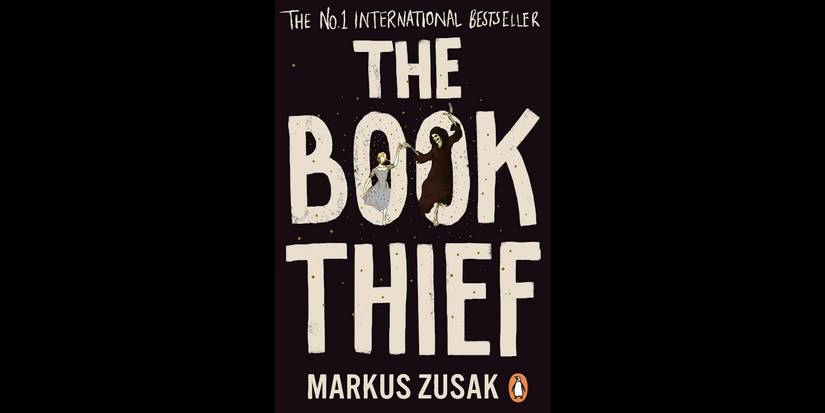
“I am haunted by humans.” This book is warm and wonderfully written, even though it deals with bleak subject matter (and is narrated by the literal Grim Reaper). With Death himself as our guide, we follow the story of Liesel Meminger, a girl sent to live with foster parents Hans and Rosa Hubermann in the fictional town of Molching during World War II. Her relationship with books begins during a moment of grief, when she steals one despite initially being unable to properly read it.
From there, words become inseparable from Liesel's attempts to understand and survive the world around her. Hans teaches her to read, she pilfers more books from fires and private libraries, and eventually she develops a friendship with Max Vandenburg, a Jewish man the Hubermanns hide in their basement. The tale is told with real care, and practically every page contains a gorgeous metaphor or memorable phrase.
7 'The Name of the Wind' (2007)
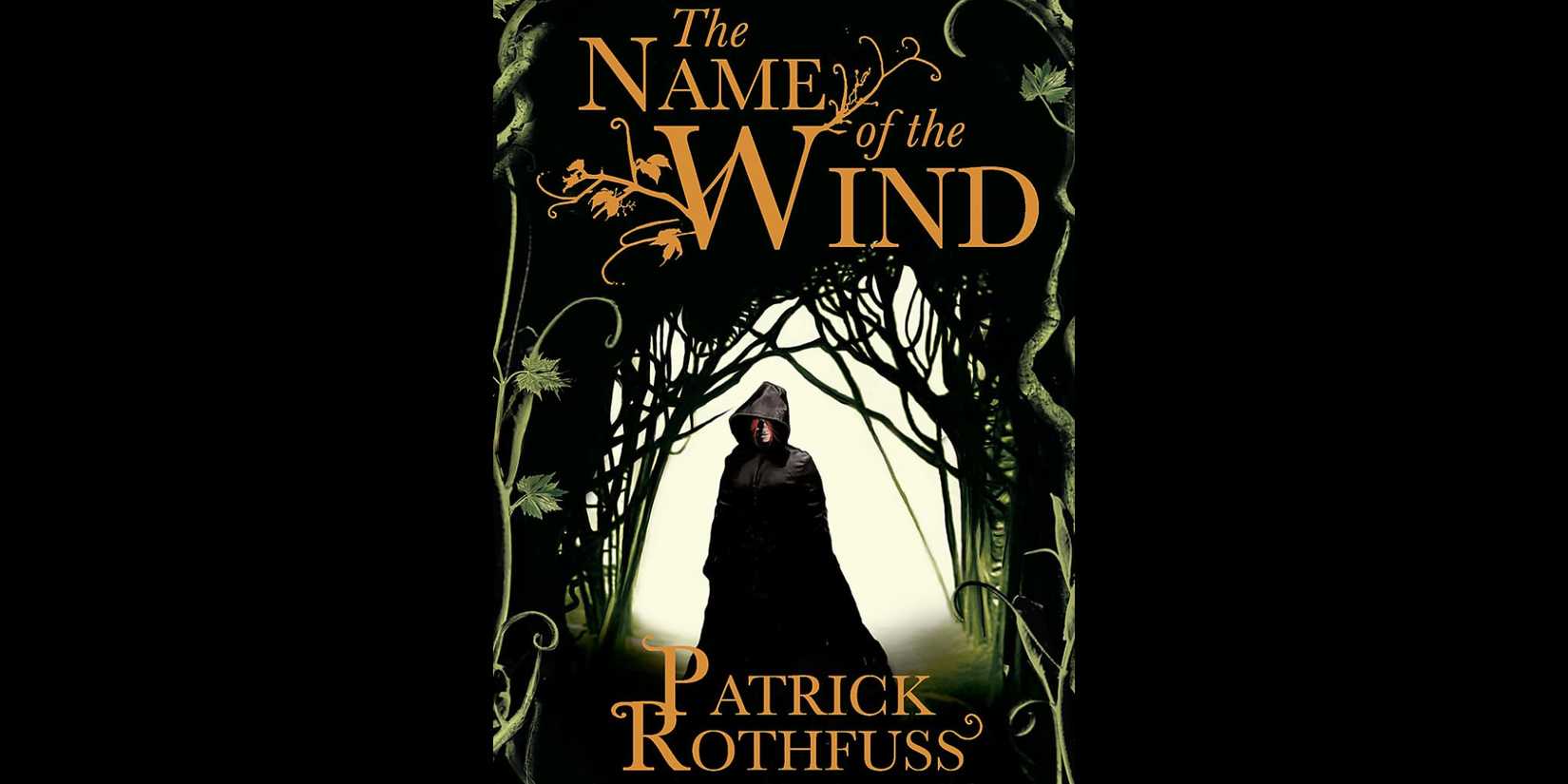
“It's the questions we can't answer that teach us the most.” This might be the finest fantasy book of the 21st century so far. In The Name of the Wind, we meet Kvothe, a famous adventurer now hiding under the name Kote and running a quiet inn in the middle of nowhere. He's a complex protagonist, genuinely brilliant but also an inveterate myth-maker, so it's hard to know what exactly is fact or fiction.
Kvothe recounts growing up among the Edema Ruh, losing his family, surviving poverty in the hardscrabble city of Tarbean, studying at the University, learning magical techniques, pursuing knowledge about the mysterious Chandrian, and repeatedly getting himself into trouble through a combustible combination of talent and pride. Author Patrick Rothfuss renders all these episodes in poetic, lovingly crafted prose, head and shoulders above most in the genre.
6 'Harry Potter and the Goblet of Fire' (2000)

“Differences of habit and language are nothing at all if our aims are identical and our hearts are open.” Several Harry Potter books could have made this list, but perhaps the most well-rounded of them is the fourth one. In Goblet of Fire, Hogwarts remains the center of gravity, but the Quidditch World Cup, visiting students from Beauxbatons and Durmstrang, and the Triwizard Tournament suddenly reveal how much larger the wizarding world really is.
It's rich, colorful world-building, ready to hit us with a charming new character or creature in almost every chapter. The tournament also gives the novel an almost perfect structural engine. Each task provides its own mystery and payoff, forcing Harry to confront dragons, underwater dangers, and finally an enchanted maze while trying to determine who entered his name into the Goblet. All this culminates in a gripping climax, darker and more tragic than anything that had come before in the series.
5 'Night Watch' (2002)
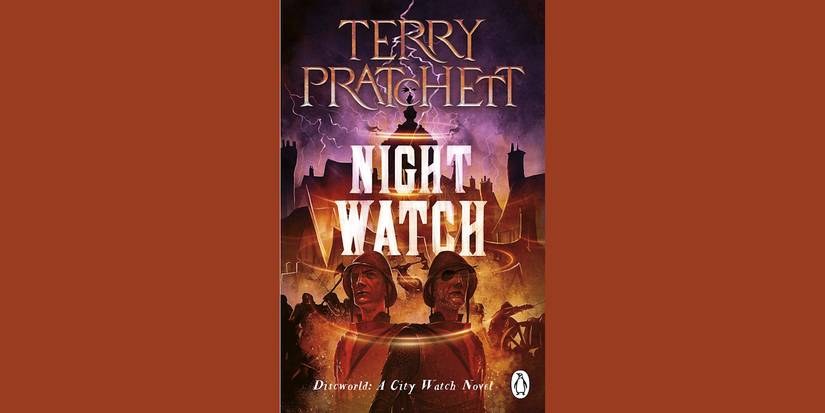
“There's no grays, only white that's got grubby.” Night Watch is one of Discworld's creative peaks, perfectly balancing humor and melancholy. In this one, an accident sends Commander Sam Vimes decades into the past, stranding him in a city on the brink of revolution. In this era, the City Watch is corrupt, political repression is intensifying, and a younger version of Vimes hasn't yet become the man readers know.
This time-travel premise allows writer Terry Pratchett to examine his protagonist from an unusually revealing angle, while serving up comedy and intrigue aplenty. Crucially, although Vimes knows roughly how history is supposed to unfold, including which people are going to die, possessing that knowledge doesn't necessarily give him the power to improve events without changing the future. The result is an entertaining, suspenseful story with some surprisingly deep themes around justice and policing.
4 'Atonement' (2001)

“A person is, among all else, a material thing, easily torn and not easily mended.” Ian McEwan has written many bangers across the last few decades, but Atonement is his masterpiece. The inciting incident here arrives when thirteen-year-old Briony Tallis sees her older sister Cecilia with Robbie Turner during a hot summer day in 1935. When a terrible crime occurs later that night, Briony's mistaken interpretation of the events shatters multiple lives.
McEwan then radically expands the novel, following Robbie into the retreat to Dunkirk and Cecilia into wartime nursing while Briony grows old enough to comprehend what she did. The structure is crucial because Atonement is ultimately fascinated by fiction itself: its ability to misunderstand reality, reshape it, and perhaps offer consolation when reality can't be repaired. All this adds up to a devastating statement on how a single error can occupy an entire lifetime.
3 'The Corrections' (2001)

“The correction, when it finally came, was not an overnight bursting of a bubble but a much more gentle letdown.” Critics flipped out over this book on release, hailing it as a new Great American Novel, and it still holds up today. The Corrections is a touching, frequently funny ensemble family drama about the Lamberts. Mom Enid desperately wants one final family Christmas together, while dad Alfred's deteriorating health makes that seemingly simple wish increasingly urgent.
Their children, meanwhile, arrive carrying marriages in trouble, professional failures, financial anxieties, affairs, resentment, and decades of unresolved frustration with their parents and one another. Refreshingly, each of these characters is drawn in shades of gray, and author Jonathan Franzen approaches them all with understanding rather than judgment. Finally, his prose itself is just as strong as his character development.
2 'Life of Pi' (2001)
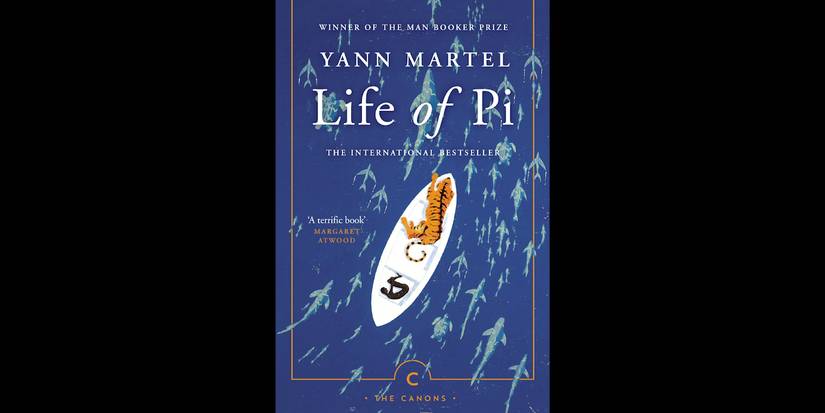
“To choose doubt as a philosophy of life is akin to choosing immobility as a means of transportation.” Piscine Molitor Patel grows up in Pondicherry, where his family owns a zoo and where he develops an enthusiastic interest in multiple religions. After the family decides to emigrate to Canada, their ship sinks in the Pacific. Pi survives, only to discover that his lifeboat is occupied by several animals, most importantly a tiger named Richard Parker.
What follows is simultaneously a survival adventure and a philosophical fable. Pi has to find food and water, establish territory, survive storms, and somehow prevent himself from being eaten. Author Yann Martel makes those practical details gripping, but the novel's final section then comes along to transform everything that came before. The result is a rich, beautiful story, skillfully told, one that charmed millions of readers around the world.
1 'Middlesex' (2002)

“I was born twice.” Middlesex is the defining project by Jeffrey Eugenides, who also wrote The Virgin Suicides. It's both a family saga and a deeply personal search for identity. The book centers on Cal Stephanides, who looks backward from adulthood to understand the complicated chain of relationships, migrations, secrets, and inherited traits that shaped his life. The story begins long before Cal's birth, following his Greek grandparents as they journey to the US and eventually settle in Detroit. The family's tale becomes a microcosm of America itself in the 20th century.
However, through all that, the book maintains an intimate focus on the protagonist himself, serving mainly as a coming-of-age story. Cal, an intersex man raised as a girl, discovers during adolescence that his body and identity are more complicated than his family understood. Ultimately, although Cal's struggles are highly specific, Eugenides' empathetic storytelling ensures that they feel relatable, touching on universal feelings.
COLLIDERInteractive
The Hat awaits
Movies/Wizarding World/The Sorting
Collider · The Sorting Hat Awaits
Which Hogwarts House
Are You?
Eight questions · four houses · one sorting
Four houses, one destiny. The Sorting Hat has weighed thousands of students and now it is your turn. Answer honestly and find out where you belong at Hogwarts School of Witchcraft and Wizardry. The four houses
Gryffindor
Slytherin
Hufflepuff
Ravenclaw
The Hat considers1 of 8
Question 1 of 8VALUES
01 What quality do you value most in yourself? Answer as honestly as you can. The Hat always knows.
Keys 1 to 4 or A to D · Enter to advance
The Hat considers2 of 8
Question 2 of 8CONFLICT
02 A friend is being treated unfairly. What do you do? How you protect other people says everything about you.
Keys 1 to 4 or A to D · Enter to advance
The Hat considers3 of 8
Question 3 of 8AMBITION
03 What does success look like to you? What you are working toward is what you are becoming.
Keys 1 to 4 or A to D · Enter to advance
The Hat considers4 of 8
Question 4 of 8FEAR
04 What is your greatest fear? Fear is the most honest thing about a person.
Keys 1 to 4 or A to D · Enter to advance
The Hat considers5 of 8
Question 5 of 8MORALITY
05 The rules say no. Your gut says go. What do you do? Every institution has rules. What you do with them is a choice.
Keys 1 to 4 or A to D · Enter to advance
The Hat considers6 of 8
Question 6 of 8FRIENDSHIP
06 What kind of friend are you? Who you are to the people you love is who you really are.
Keys 1 to 4 or A to D · Enter to advance
The Hat considers7 of 8
Question 7 of 8THE MIRROR
07 You look into the Mirror of Erised. What do you see? The mirror shows the deepest desire of your heart.
Keys 1 to 4 or A to D · Enter to advance
The Hat considers8 of 8
Question 8 of 8THE SORTING
08 The Hat pauses. It whispers: you could do well in any house. But what matters most to you, truly? This is the tiebreaker. The Hat always listens.
Keys 1 to 4 or A to D · Enter to advance
The Sorting Hat speaksYour house has been chosen
Gryffindor Gryffindor Tower · Scarlet and Gold Gryffindors do not act because they are fearless. They act because some things are worth being afraid for.
You have nerve. Not the reckless kind, but the deep and quiet sort that turns up even when you are terrified, and especially then. You stand up for people when looking away would be easier, and you go at what is right even when the odds are poor. That instinct has cost you before and you have never once decided it was not worth it. Why the Hat chose this
- You speak up in the room where it costs you something.
- You would rather be wrong and brave than right and silent.
- People come to you when something needs facing.
From the Collider file
- Dominic McLaughlin takes over as Harry in HBO's series, which arrives in 2027 after filming through 2025 and 2026.
- Daniel Radcliffe, Rupert Grint and Emma Watson were all cast in 2000, aged eleven, ten and ten.
- The Sorting Hat on screen was a practical puppet before any digital work went near it.
Nerve Acts first Stands up
Slytherin Slytherin Dungeon · Emerald and Silver At its best this is the house of people who refuse the limits other people set for them.
You are driven, sharp, and entirely clear-eyed about what you want and how to reach it. Slytherin has been misread for a long time, painted as the house of villains when what it really rewards is resourcefulness and the patience to play a long game. You know your own worth, you protect your own fiercely, and you have never needed anyone else's permission to aim high. Why the Hat chose this
- You think three moves ahead and say one of them out loud.
- You are loyal to a small circle and ruthless about the rest.
- Being underestimated has always suited you.
From the Collider file
- Alan Rickman knew Snape's ending from Rowling years before the films got there, and played it accordingly.
- Tom Felton read for Harry and for Ron before landing Draco.
- Paapa Essiedu takes the role of Snape in HBO's series.
Plays the long game Knows his worth Resourceful
Hufflepuff Hufflepuff Basement · Yellow and Black Not the safe house and not the leftover house. The house with the most heart.
You are the sort of person who makes a place better just by being in it. You turn up, you do the work, and you do not need glory or credit for any of it, because you do what is right on the grounds that it is right. Your loyalty does not waver when it is tested, which is the only time loyalty means anything at all. Hufflepuff has never been the consolation prize. Why the Hat chose this
- You are the one who remembers, and who follows through.
- You do the unglamorous part nobody volunteers for.
- Your word has never needed a backup.
From the Collider file
- Robert Pattinson played Cedric Diggory in Goblet of Fire a year before he was cast in Twilight.
- Eddie Redmayne's Newt Scamander put a Hufflepuff at the center of five Fantastic Beasts films.
- The common room sits beside the kitchens, which is the most Hufflepuff detail in the books.
Shows up Unwavering No credit needed
Ravenclaw Ravenclaw Tower · Blue and Bronze Not merely intelligence. The love of learning, and the rare nerve to say you do not know yet.
Your mind is your best thing and you have always known it. Ravenclaws are the questioners, the ones who cannot leave a puzzle alone and who find a good book better company than most rooms full of people. What marks the house out is not being clever, it is wanting to understand, and being willing to admit the gap. You see things with a clarity that other people find unsettling. Why the Hat chose this
- You would rather be corrected than comfortable.
- You notice the thing nobody else in the room noticed.
- You have never been able to leave a question alone.
From the Collider file
- Evanna Lynch was cast as Luna from an open call of roughly fifteen thousand girls, having written to Rowling as a fan.
- The tower door asks a riddle rather than a password, so a Ravenclaw can be locked out by thinking too slowly.
- Luna, Flitwick and Rowena Ravenclaw are all originals, which is rather the point of the house.
KioskNews shows a cleaned-up reading view extracted from the publisher’s page — the original always lives on their site, not ours.