Two Indian soldiers tied to the cannon mouths, blown apart: Diwali execution of 1857
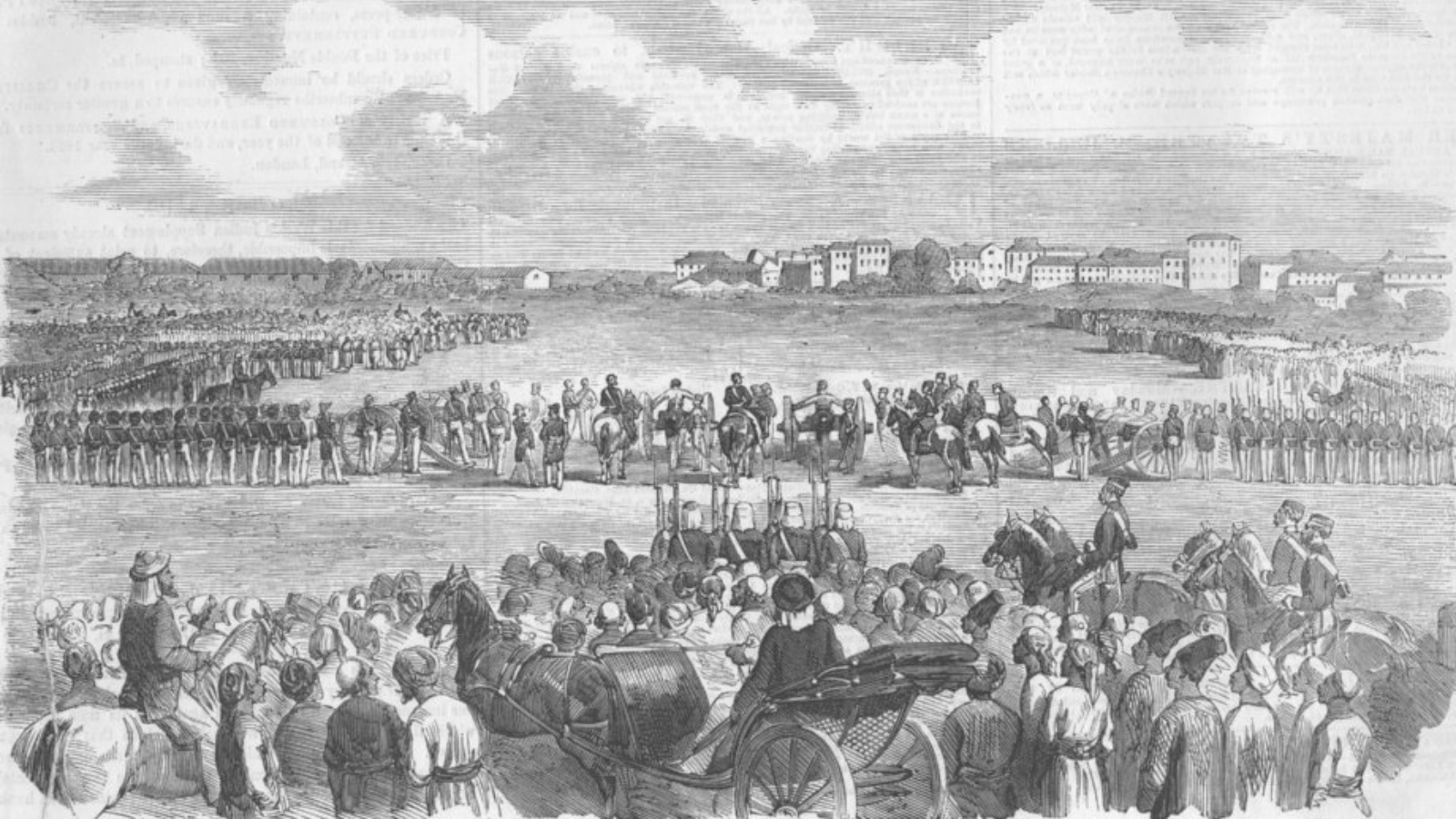
As Mumbai lights up for Diwali, a little-known chapter in its history takes us back to a very different October 15.
On that day in the year 1857, the first day of the five-day festival, two Indian soldiers were tied to the mouths of cannons on the Esplanade, the open ground that would later become part of what is now Azad Maidan, and blown into pieces by the British.
The executions came amid fears that the uprising against British rule, which had started in Meerut and later spread across northern and central India, would reach Bombay. The soldiers, Drill Havildar Syed Hoossein of the Marine Battalion and Private Mungal Guddrea of the 10th Regiment Native Infantry, had been convicted by a court-martial for their alleged role in a conspiracy to overthrow British authority.
The plot was uncovered by Charles Forjett, then Superintendent of Police in Bombay, who went about the city in disguise to gather intelligence on suspected rebels. His account, published in Our Real Danger in India in 1877, describes the climate of suspicion and surveillance that gripped Bombay during the uprising of 1857.
The revolt had erupted on May 10, when Indian soldiers in Meerut rebelled against the East India Company and marched to Delhi, declaring Mughal emperor Bahadur Shah Zafar their leader.
As the resistance spread to Kanpur, Lucknow and other parts of northern India, the Bombay administration feared that its own military garrison could join the uprising.
Suspicion extended beyond the cantonments. Even Jagannath Shankarshet, the prominent businessman and philanthropist, was suspected by some Europeans of having links with those challenging British rule.
Story continues below this ad
According to SM Edwardes’ The Bombay City Police: A Historical Sketch, 1672-1916 (1923), Governor Lord Elphinstone asked Forjett to investigate the allegations. The police chief found them to be baseless and vouched for Shankarshet.
Forjett adopted intimidating methods to keep the city under surveillance. He erected a gibbet in the compound of the police office and summoned men he believed could potentially lead an uprising, warning them that anyone found conspiring against the government would be hanged.
He also moved around Bombay in disguise, mingling with residents and listening to conversations at public gathering places. In his account, he says he would reveal his identity and arrest anyone whose remarks he considered seditious.
It was during this surveillance that Forjett learnt of a conspiracy being discussed at the house of Gunga Prasad in Sonapur, in the Dhobi Talao area. Prasad, who had gained the soldiers’ confidence, was persuaded to disclose details of the plan in return for a monetary reward.
Story continues below this ad
Forjett claims he entered the house in disguise and listened to the discussions. According to his account, the soldiers had planned an attack in Bombay during Diwali, and a march towards Poona, where they intended to proclaim Nana Saheb as the Peshwa of the Deccan.
The military authorities were initially reluctant to accept the intelligence. Forjett eventually persuaded Major Barrow, the commandant of one of the regiments, to accompany him in disguise and hear the discussions himself. Barrow was convinced and reported the findings to Brigadier Shortt.
The soldiers were arrested and tried by courts martial. Forjett records that two were sentenced to death and six others transported for life. Charles Rathbone Low, in The History of the Indian Navy (1613-1863), published in 1877, records that Syed Hoossein and Mungal Guddrea were tried on October 13 for attending a meeting at a house in Sonapur on October 3.
Two days later, the execution was conducted under heavy security. British infantry, Royal Artillery and hundreds of armed sailors were deployed around the parade ground to prevent any disturbance.
Story continues below this ad
Thousands of Indians and hundreds of Europeans had gathered to witness the proceedings. The two soldiers were stripped of their uniforms, tied to the mouths of the cannons and blown off.
According to Forjett, a subedar and five other sepoys were also sentenced to transportation for life, including soldiers from the 10th and 11th Native Infantry regiments.
Forjett was later commended by the Bombay government for uncovering the conspiracy. In a letter dated May 23, 1859, the Governor in Council praised his courage and judgement. Indian merchants also presented him with an address, recognising him for his role.
The execution took place on the Esplanade, a large open stretch outside Bombay’s fortifications. Following the demolition of the fort walls in the 1860s, the area was divided into several maidans. Azad Maidan acquired its present name much later and became associated with public meetings and the freedom movement.
Story continues below this ad
More than 150 years later, the Brihanmumbai Municipal Corporation erected the Amar Jawanjyot memorial near Azad Maidan in honour of the two soldiers. Their names are engraved on it as Sayyed Hussain and Mangal Gadiya.
KioskNews shows a cleaned-up reading view extracted from the publisher’s page — the original always lives on their site, not ours.