Government came to axe their livelihoods to light others’ homes. Then 5 villages fought back
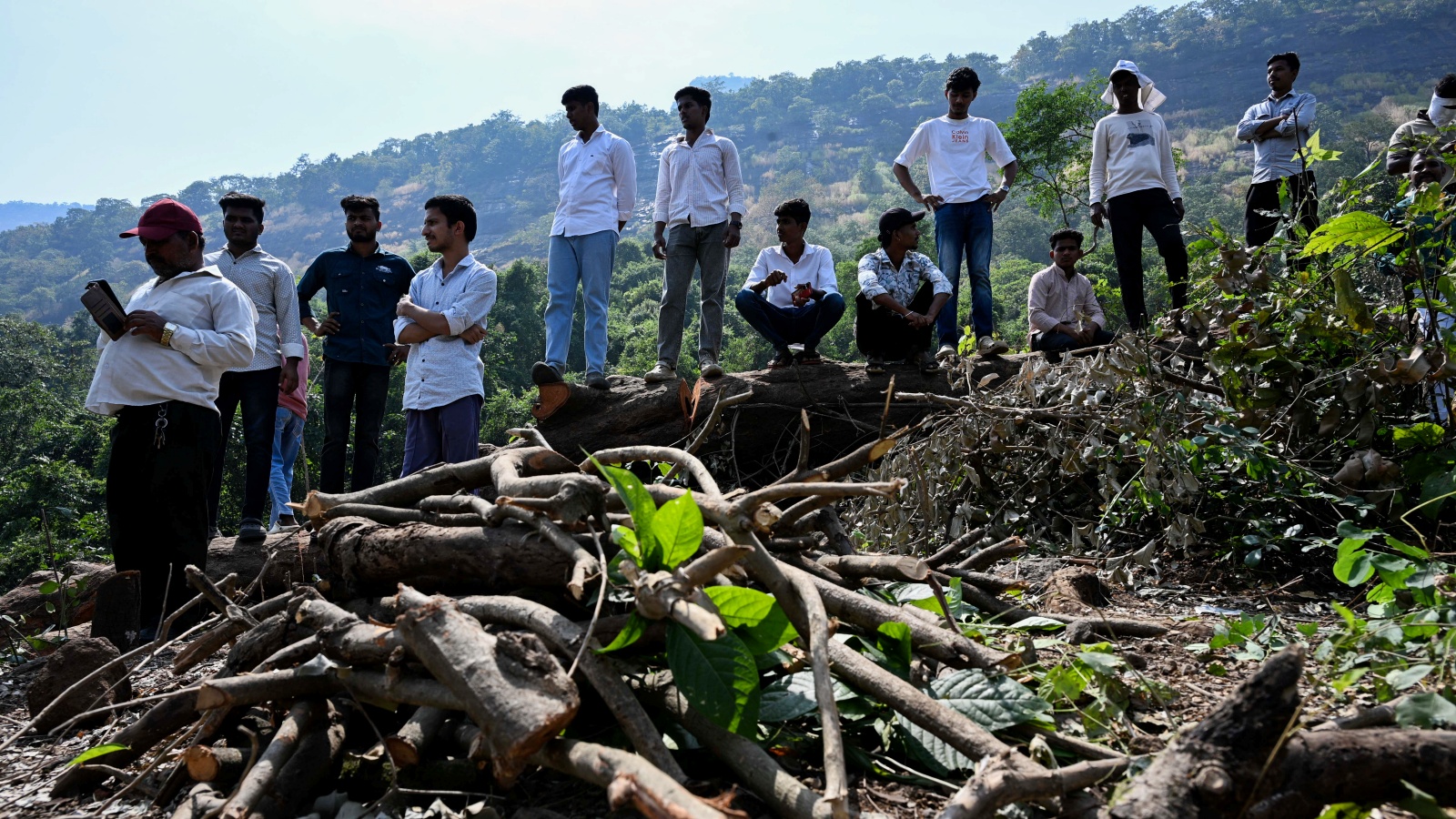
On the morning of Dussehra, residents of Pali village in Karjat taluka heard the sound of chainsaws coming from the forest. When they went to investigate, they found the forest department carrying out a tree felling operation for a proposed 3,000-MW pumped storage hydropower project.
The operation came as a shock to residents of Pali and four neighbouring villages, who say they had not been informed that trees in the forest they depend on would be cut. The proposed project requires 377 hectares of land, including 233 hectares belonging to the forest department and 144 hectares spread across Dhak, Pali, Potal, Ambot and Bhaliwadi. A total of 32,400 trees are to be felled.
The project, estimated to cost Rs 13,505 crore, is being developed by Gujarat-based Torrent Power. The tree felling has triggered protests by villagers, with political leaders, environmentalists and students visiting the site over the past week. The forest department has temporarily stopped the operation following the protests, but residents say they have not received clarity on whether the halt is official or permanent. More than 1,000 trees have already been cut.
“Around 7 am, we heard noises from the woods. Initially, we thought there was a fire… so we immediately rushed into the forest. That is when we saw machines being used to cut down trees. It was horrific to witness so many trees being felled at once,” said Anjana Mukane, 62, a resident of Mohamarwadi hamlet in Pali.
The five villages are located along the ridges of Saidongar Hill, named after a local village deity and part of the Sahyadri range. The hill is around 16 km from Bhimashankar forest, an ecologically sensitive area identified by the Western Ghats Ecology Expert Panel.
The forest has patches of dense vegetation and is home to medicinal plants such as gulvel (giloy) and adulsa (Malabar nut). It also provides habitat to wildlife, including the Indian giant squirrel, locally known as the shekru and Maharashtra’s state animal.
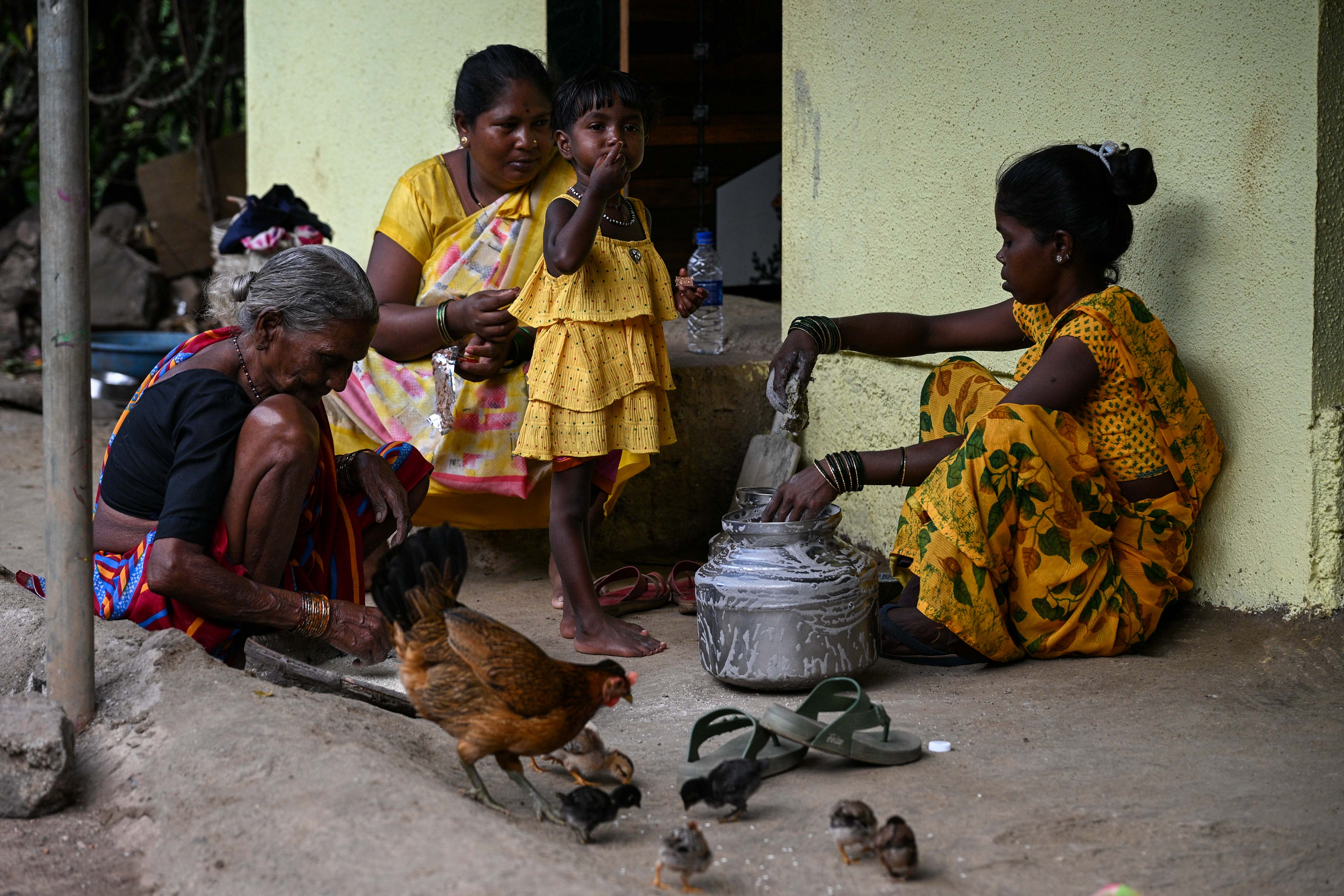 A tribal family shares a casual moment, at Mohmarwadi tribal village, at Karjat tehsil in Maharashtra on 28 October 2026. (Express photo by Sankhadeep Banerjee)
Source of income, food
For residents, however, the forest is also an important source of income and food. Most families in the five villages belong to the Katkari tribal community. Villagers collect wood from the forest and sell it in local markets, earning around Rs 150 to Rs 200 a day per family. They also grow fruits and vegetables, some of which are sold and the rest consumed at home.
Story continues below this ad
“The forest is our home, our protector, and we felt miserable and helpless to watch our protector being destroyed with saws and axes,” said Tukaram Bar, 62, a resident of Pali.
Bar said villagers had seen government officials visiting the forest at different hours over the preceding weeks but had not been told about the tree felling. Labourers had arrived the night before the operation began, he said.
“Over the past few weeks, we have seen groups of government officials visiting the forest at all hours, day and night. We tried asking them what was happening, but they avoided our questions. The night before the tree felling began, labourers arrived in the forest. Some of them spoke to us and said they had come from Palghar, but none of them disclosed the purpose of their visit,” he said.
After the operation began, residents of Pali contacted people in neighbouring villages. Villagers gathered at the site, recorded videos and circulated them on social media. The protests soon drew the attention of political leaders and environmental activists.
Story continues below this ad
Shiv Sena (UBT) leader Aaditya Thackeray and Maharashtra Navnirman Sena chief Raj Thackeray visited the affected villages. Maratha quota activist Manoj Jarange Patil also visited the area on Wednesday.
Nana Barku, 72, a former sarpanch, said he had been visiting the site every day since the operation began.
“I came here in the afternoon of Dussehra with 10 other villagers. The forest is our deity and we can’t allow the administration to massacre it like this,” he said.
Barku said villagers had staged a sit in at the site and his grandson had recorded a video that was circulated on social media. This prompted residents of neighbouring villages to contact them and extend support.
Story continues below this ad
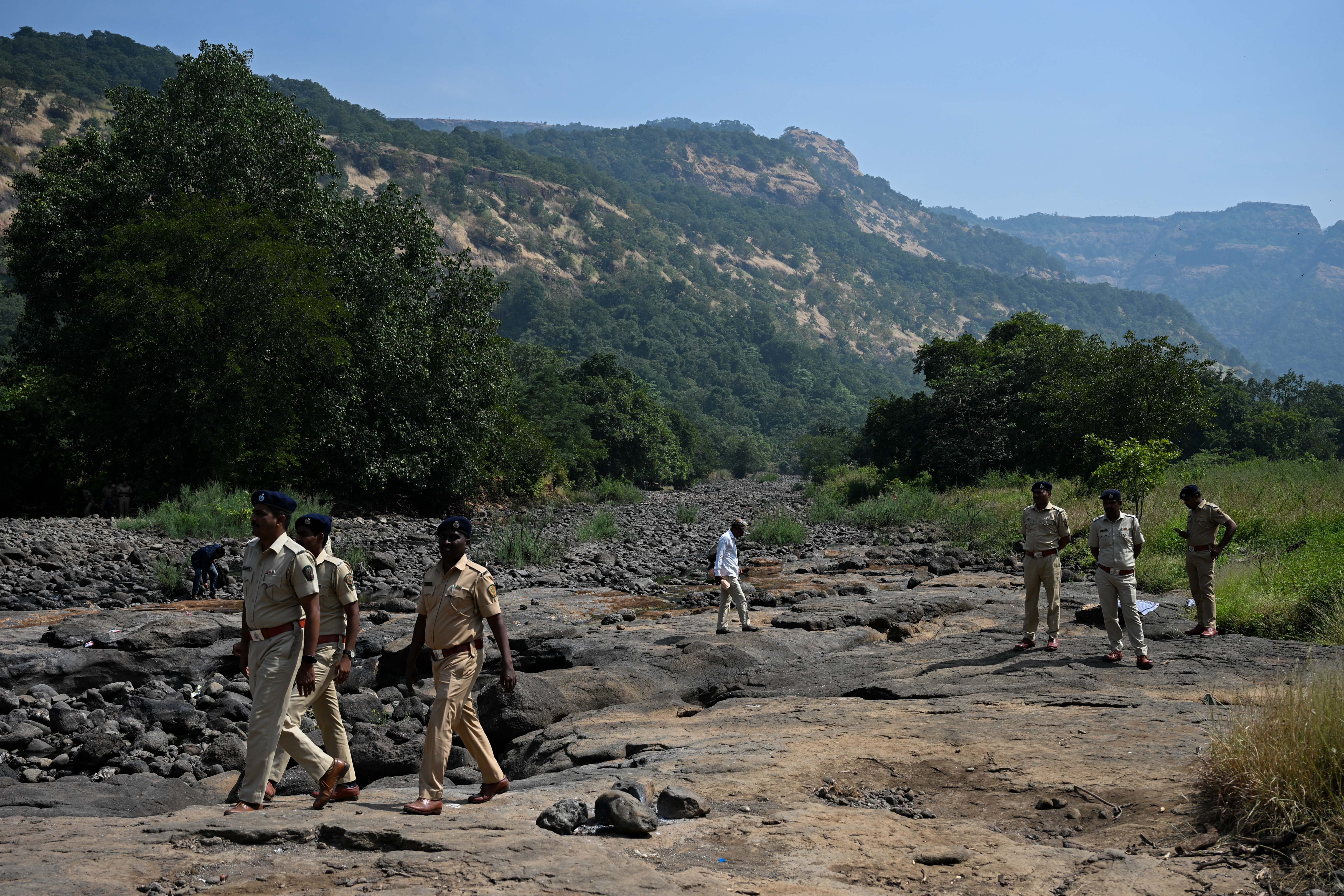 Forest officials patrol the riverbed of Pej river, at Karjat tehsil in Maharashtra on 28 October 2026. (Express photo by Sankhadeep Banerjee)
Support from outside
The protests have also brought people from outside. Badal Godekar, a nature enthusiast from Bhandup, travelled to Pali on October 26. He initially booked a hotel for two days but later began staying in his car because the hotel was far from the village.
“Initially, I had booked my hotel for two days. Later I found out that the hotel is very far away from the village, so I have been staying in my car since then,” he said.
Activist Bhagyashali Shinde said she had been visiting Pali every day since October 20. She said activists were keeping a presence near the village because they feared the tree felling could resume once they left.
“Whenever we are speaking with any villager or forest officer, we are recording it on our phones. Over the past two days, forest officials have increased their patrolling in the village and we are making sure that they don’t intimidate the villagers,” she said.
Story continues below this ad
The proposed project is being defended by the state government as a way to meet Maharashtra’s peak electricity demand and reduce dependence on thermal power.
A pumped storage project uses electricity during periods of lower demand to pump water from a lower reservoir to an upper reservoir. When demand rises, the water is released through turbines to generate electricity. The system is intended to help balance the intermittent supply from renewable sources such as solar and wind.
CM’s take, objections
Chief Minister Devendra Fadnavis has said the project will provide cleaner power during peak demand. “During peak demand, pumped storage enables us to provide clean renewable power that does not cause pollution,” he said earlier this week.
According to the environmental clearance document issued by the Union Ministry of Environment, Forest and Climate Change, the project is expected to generate employment for around 2,000 people during construction. The document also states that although the project will draw water from the Pej River, it will not affect downstream water availability for irrigation and drinking water supply.
Story continues below this ad
Fadnavis said the project includes a proposal to plant 90,000 trees and that land twice the size of the area acquired for the project has been provided to the forest department for afforestation. He has also argued that generating an equivalent 3,000 MW of electricity through coal would cause pollution comparable to the environmental impact of felling 28 crore trees.
The forest department issued a no-objection certificate for the tree felling on October 14. The permission letter reportedly stated that the operation should be completed by November 3, when Prime Minister Narendra Modi is tentatively scheduled to visit Karjat for the project’s bhoomipujan.
For the villagers, the proposed plantation and the government’s argument about cleaner energy have not addressed their immediate concern: the loss of a forest they depend on for their livelihood.
With the tree felling temporarily halted, residents say they will continue to visit the site to ensure that the operation does not resume.
KioskNews shows a cleaned-up reading view extracted from the publisher’s page — the original always lives on their site, not ours.