World Cup wounds and Mission LA: Indian hockey needs for a reset
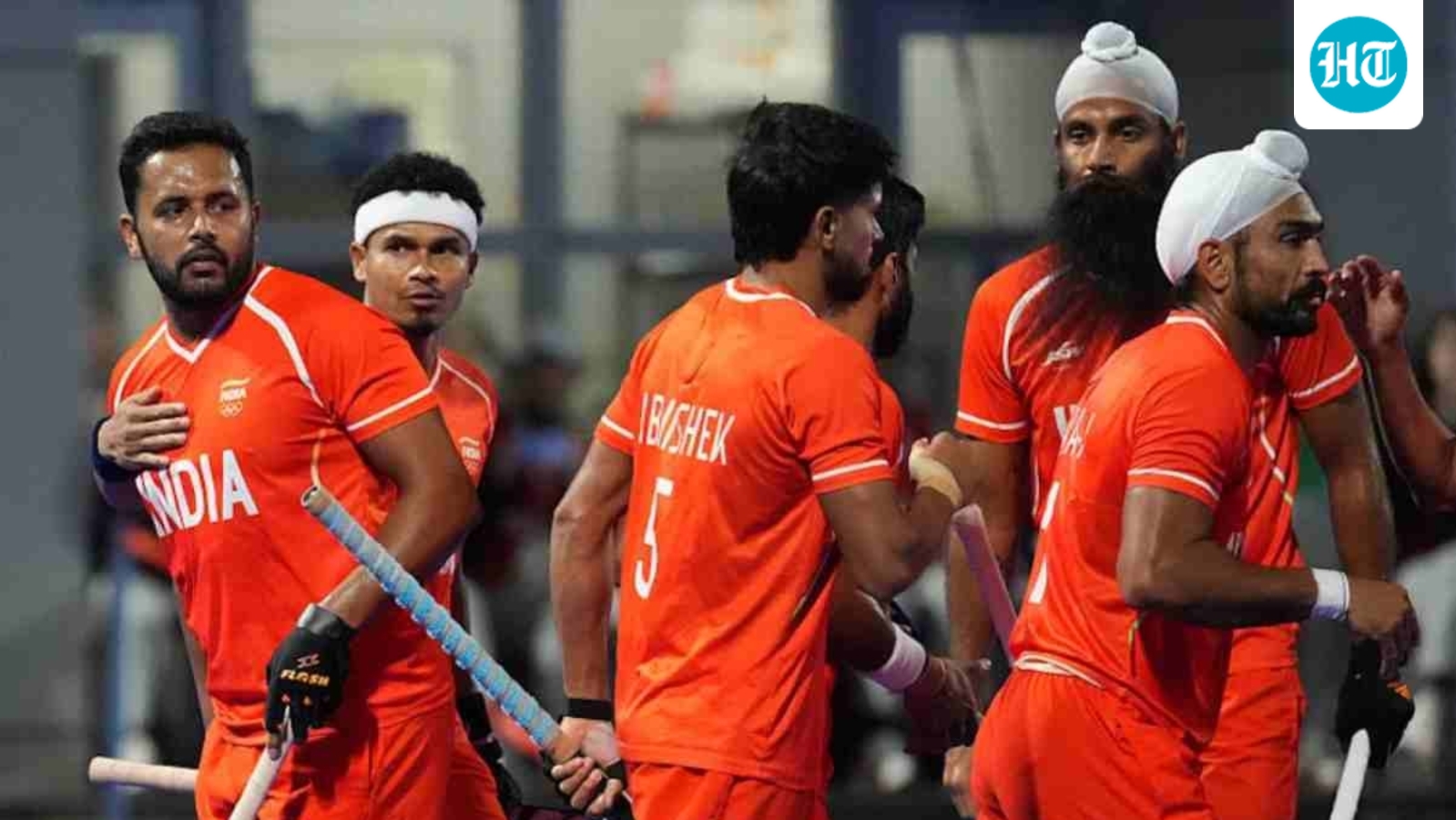
India’s Asian dominance fails to mask World Cup struggles. With overseas exposure, tactical improvements and fresh talent, hockey’s focus shifts to LA 2028.

 Prefer HTon Google

Soon after India crashed out of the Hockey World Cup in August, the team assembled for a post-series review. The morale was at an all-time low, and players were grappling with self-doubt.
Head coach Peter Fulton and captain Harmanpreet Singh took responsibility, but they didn’t mince their words either. Some players were shown the mirror and given a reality check. Harsh words were exchanged, stern lessons were delivered. But at the end of the day, this team did what any team must after a crushing World Cup defeat: learn from it and move forward.
It’s a tournament that India has historically struggled in. That they haven’t won the title since 1975 is one thing, but their best finishes in the last five decades have been a fifth place, in 1982 and 1994. In 2023, they finished ninth at home and in August, they finished eighth.
The team did well to bounce back, win the Asian Games gold, and book a ticket to the next Olympic games, dominating the competition with 58 goals in seven matches while conceding just eight. That momentum was carried into the Asian Champions Trophy, where they smashed 13 goals past Bangladesh in their tournament opener on Tuesday.
However, somewhere along the way, their dominance in Asia has failed to mask their struggles against stronger opponents.
India forward Abhishek Nain, who has been part of these ups and downs, recalls how important it was for the team and players to regroup after a deflating World Cup campaign in which they suffered comprehensive defeats against top sides such as England, Argentina, the Netherlands and Belgium.
“After the World Cup, the Asian Games was our top goal. To do well in Japan, we needed to put the World Cup behind us. Carrying that baggage into the Asian Games would have affected our performance. We had to move forward with a fresh mindset. The coach’s instructions on this were clear, and I believe that’s why we were able to do it,” Abhishek told Hindustan Times.
“We achieved our target at the Asian Games. The team atmosphere was, and continues to be, healthy. The World Cup was a tough experience for us. Asian teams mostly play man-to-man, whereas European teams play zonal defence. A lot of the errors we made were pointed out, and the structure was changed. Our mentality was that we couldn’t win. But after discussions, we let go of everything we had done wrong. The message was clear: ‘What’s done is done. Release the negativity and focus on the positives.’ Our mental health wasn’t good. We took psychological lessons, and that helped a lot.”
The most alarming aspect of India’s campaign was their lack of a stomach for a fight. In the crunch game against Argentina, they looked flat, were slow to react and left their defence exposed. They created very few opportunities and, rather than merely failing to convert their chances, repeatedly gifted Argentina openings and paid the price.
Their struggles with man-to-man marking and overdependence on captain Harmanpreet Singh have only reinforced the impression of a team that looks undercooked.
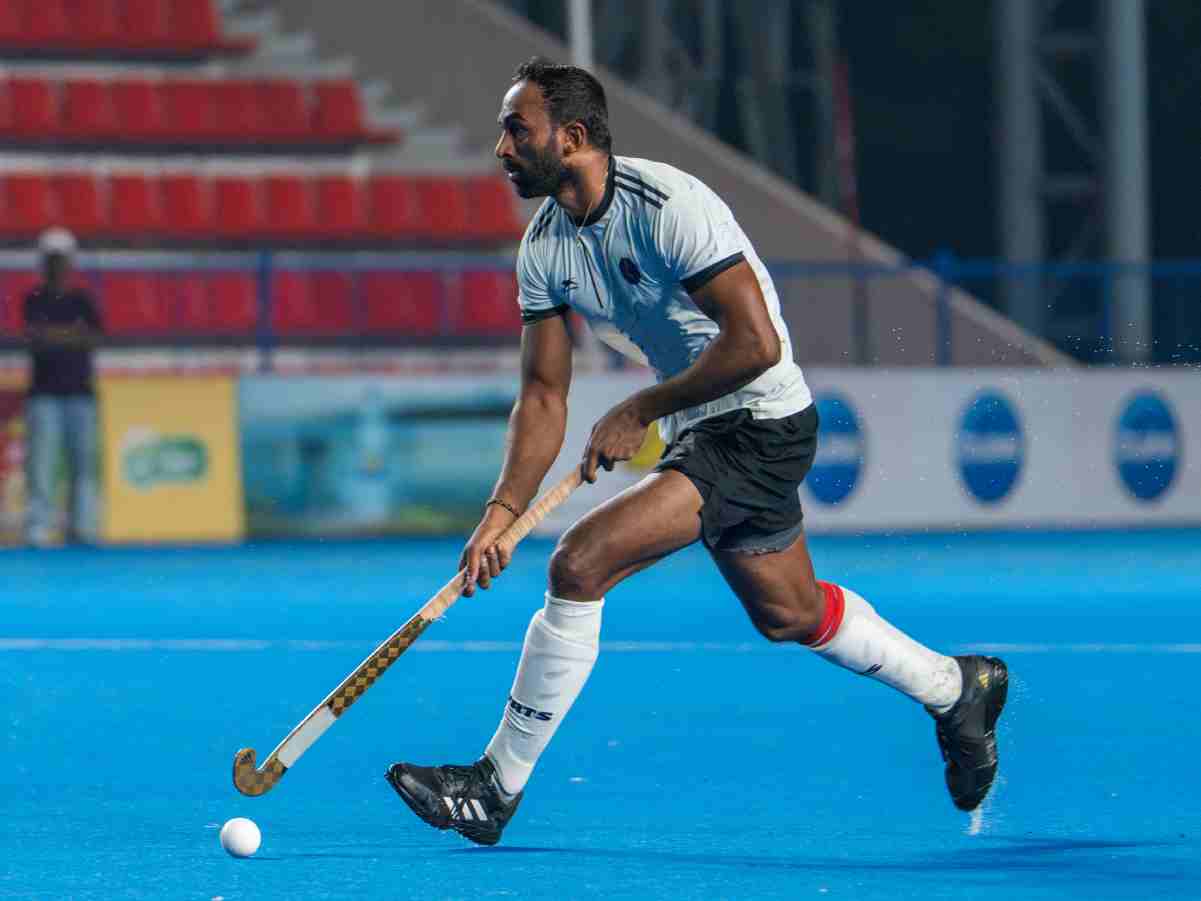
“More improvement is needed to perform well at the World Cup. Mentally, we need to develop that confidence, and the young players who have come in need more practice. We are doing well in Asia, but several aspects of our game appear weak against bigger teams. Our passing needs work, and we need to learn how to perform better against stronger opposition. We have been struggling at World Cups for years, and coaches and players need to give it a lot of thought. We are falling behind as European teams continue to evolve. In hockey, teams are often given specific scenarios to work on, with players guided through videos and tutorials to improve their man-to-man marking,” midfielder Pawan Rajbhar, currently playing for the Indian Navy in the Murugappa Gold Cup Hockey Tournament, told HT.
“The team must start preparing for the LA Olympics right away. Most importantly, we need more drag-flickers. Harman is good in that role, but it feels as though he alone is bearing the pressure. If he has a bad day, India need a backup.”
Play overseas
For the longest time, several Indian hockey players used their time off to turn out for their employers in national championships and domestic competitions, until Hockey India put a stop to the practice. The restriction was lifted in 2023, when players were also allowed to participate in European leagues. However, the response has been underwhelming, with gruelling schedules and national camp commitments standing in the way.
“In my opinion, Indian players should experience top-level hockey abroad during their careers. When I left the national team and decided to play overseas, my first goal was to play in the Netherlands, ideally in the top league and the EHL. I wanted to understand their culture and learn what it takes to play and sustain yourself at the highest level,” midfielder Devindar Walmiki, representing Bharat Petroleum Corporation Ltd, said.
“Playing abroad helps you maintain your fitness, learn about different cultures and languages, and adapt to new environments. In our national camp, we don't get to play against top teams such as Germany, Australia and the Netherlands as often as we would like. Playing against such opposition can make a big difference to Indian hockey. Over the last five or six years, I feel the level of hockey in Asia has dropped because India are the leading contenders for medals. We need to play more matches against top-ranked teams rather than rely primarily on Asian competition, where we are often the favourites.”
The biggest difference Walmiki noticed in Europe, particularly in the Netherlands, was the attention to detail. Coaches work extensively on the finer aspects of the game, while Indian hockey is still “gradually adapting to that approach”. The hockey environments in the Netherlands and India are chalk and cheese.
“I wanted to continue playing international-level hockey, which is why I decided to spend three years in the Netherlands. I became the first Indian to achieve what I did there, playing in the top league and the EHL. Not many people saw what I was doing because I was quietly working towards my goal of playing top-level hockey and returning to the national team. For some players, going abroad is about earning money in the short term. For me, it was about improving as a player. Many Indian players have struggled to last even a full season in European leagues, where the competition is demanding and the season is divided into phases. I completed three seasons, and that was a significant achievement.”
Young blood needed
Abhishek, one of the goal-scorers on Tuesday evening, wasn’t surprised by Nilakanta Sharma’s decision to retire from international hockey. A two-time Asian Games gold medallist who was also part of India’s bronze medal-winning Olympic campaign, Nilakanta had discussed the decision with his close friends and family, and the players were aware of it.
This only underscores the importance of a transition period for the Indian hockey team. With India set to introduce a new training squad for the next season, as announced by coach Fulton, could senior players such as Jarmanpreet Singh, Mandeep Singh and Amit Rohidas be heading towards an uncertain future? The answer will come in due time, but players believe it is time for more youngsters to come through. That, among other things, is the need of the hour if India are to win a third consecutive Olympic medal at LA 2028, let alone improve on it with gold.
“We surely need more youngsters in the team. The senior players have served well and the experience they bring to the table is unmatched. But hockey as a sport is evolving so fast that often some of the seniors will struggle to match up against some young players, who move brilliantly,” said Pawan.
Abhishek agrees.
“We are already playing against big teams. We need to ensure we don’t repeat the same mistakes again. We need to trust our structure, and work on things that are weak. We have two years to go before LA. And for that, young players need to be given more chances. And we need to create a pathway. We won’t get such chances often,” the forward said.
For Walmiki, the blueprint couldn’t be clearer: stay fit, play overseas and learn from the best.
“From my experience, I would say the players need to maintain peak fitness, stay injury-free and focus on recovery. The most important thing is how well they recover and sustain their performance while playing against top-level opposition. Playing more matches against the best teams will help them develop and learn. This can only benefit Indian hockey,” he said.
“This experience will help them move in the right direction and prepare for a shot at medals at the LA Olympics. They will be in a much better position to achieve that.”

Aditya Bhattacharya is the Sports Editor at Hindustan Times Digital, with close to 15 years of experience in sports journalism. Over the course of his career, he has worked with leading media organisations including Cricbuzz, The Times of India, Network18 and Zee. Primarily a cricket writer, Aditya has covered several marquee events, including the 2016 ICC World T20, the 2019 ICC World Cup in England and the 2023 World Cup in India. His reporting portfolio also includes international cricket across England, South Africa and New Zealand, along with forays into tennis, including coverage of the Australian Open. He has interviewed several prominent athletes across sports. Aditya began his career with a brief stint at CricketNext before getting his first major break at Cricbuzz, where he was part of the Times Network’s startup venture GoCricket, which later merged with Cricbuzz. After nearly 18 months there, he moved to The Times of India, covering his first World Cup assignment and reporting first-hand on landmark moments such as Virat Kohli’s iconic innings against Australia in Mohali. During his three-year tenure, he played a key role in both reporting and desk operations and was recognised as TOI Employee of the Quarter in 2016. He later joined Zee, where he covered the 2019 World Cup across five venues in England—an assignment he considers a career highlight. At Hindustan Times, Aditya’s leadership came to the fore as he was promoted to lead the sports team within 18 months. Under his stewardship, the section has delivered extensive coverage of global sporting events, including the IPL, Olympics, Cricket World Cups, FIFA World Cups, Commonwealth Games and Asian Games. In 2024, he was named HT DigiStar of the Year. Aditya continues to adapt to the evolving digital publishing landscape, with a sharp focus on search and audience engagement. Outside work, he occasionally plays the guitar and remains an avid gamer.Read More

KioskNews shows a cleaned-up reading view extracted from the publisher’s page — the original always lives on their site, not ours.