9 Creepiest Horror Movies Based on Books, Ranked

A New York native, Joe graduated from an avant-garde theater school upstate, where he was obsessed with sketch comedy. There, he and his lunatic friends founded The Sketchies — which still lives on at Skidmore College today. Living in New York City, a screenwriter friend of his then taught him how to write for film. This awakened a new passion in Joe. Since then his scripts have garnered over 200 festival selections, nominations, and wins all over the globe (including the BlueCat Best Feature award). Several of his screenplays have been made into feature films — some of them not that bad! Overall, he loves to create unique, hilarious, touching, and bizarre stories.
Sign in to your Collider account
Some films are flat-out scary. They frighten the viewer either with jump scares or more nuanced, psychological, cerebral ones. And then, there is a special breed of movies that are not just scary, they’re creepy. This brand of film makes the skin crawl rather than inspire a person to jump out of said skin.
Many of these creepy movies originated as creepy books, and it’s rather obvious why they succeed as films: authors can create entire, eerie worlds, and skilled filmmakers can translate those weird, conceptual universes into a viscerally vibrant, physical medium. Here are the nine creepiest films that originated as books. Some of these tome-based movies rely on the mysterious elements that the original authors conjured up, while others showcase entirely new aspects of the murky mind.
9 'Let the Right One In' (2008)

The novel Låt den rätte komma (Let The Right One In, in Swedish), by author John Ajvide Lindqvist, is a story about a “young” vampire girl, and it is creepy as all hell. Director Tomas Alfredson’s film toned down a few of the really unsettling particulars (like the clearly inappropriate relationship between the main vampire girl and her familiar…), but it still showcased a gruesomely glorious amount of crepuscular behavior and bleak murder…all in the name of love.
Oskar (Kåre Hedebrant) is a meek boy, routinely bullied and abused. When his new neighbor and de facto best friend, Eli (Lina Leandersson), turns out to be a little bloodsucker, Oskar’s life drastically changes (for the better, believe it or not). With sumptuous shadows and frigid, haunting images to spare, this movie is a genuine Swedish spine-tingler.
8 'Under The Skin' (2013)
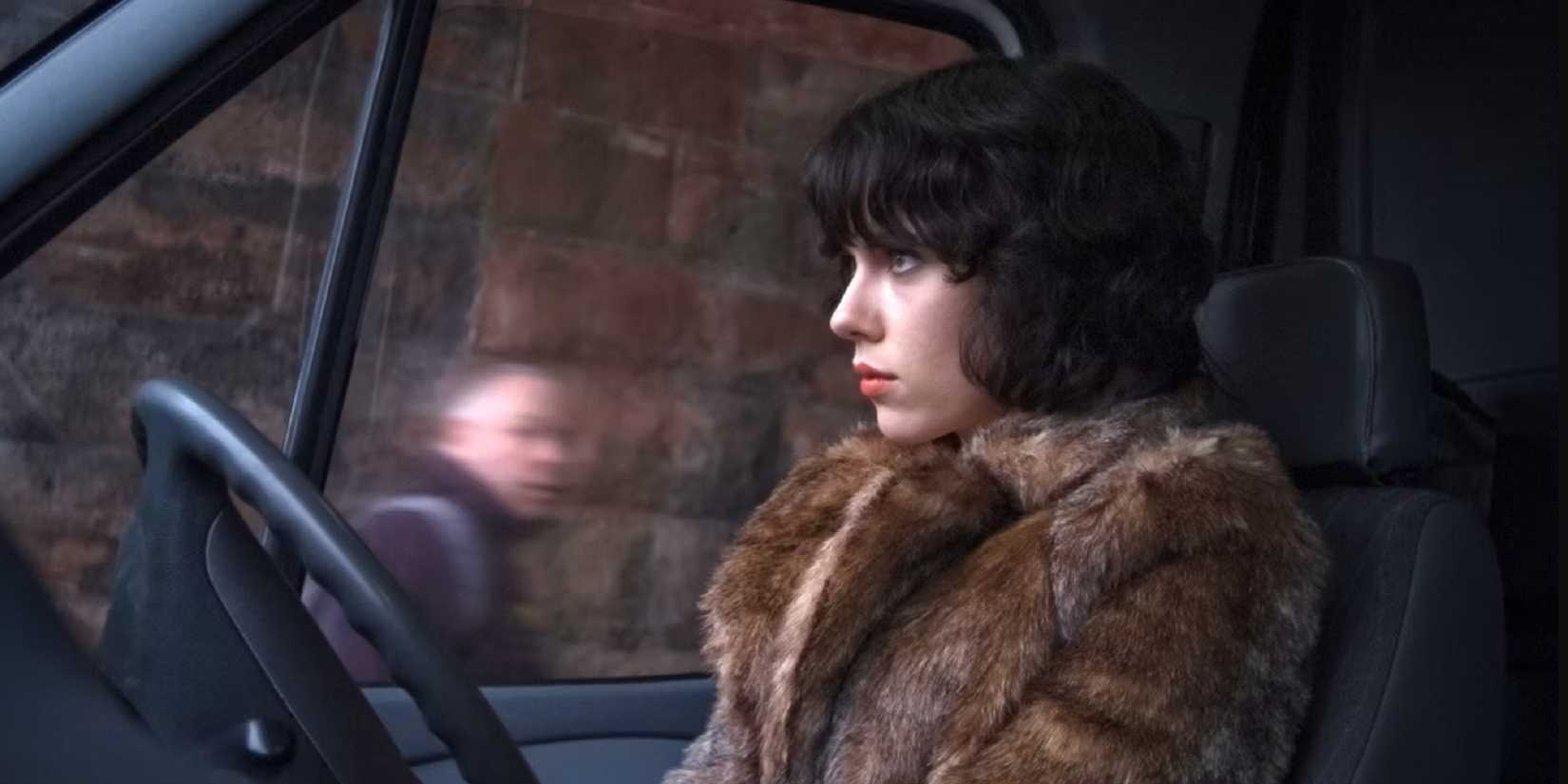
The novel Under The Skin by Michel Faber is one of the more interesting entries into the modern sci-fi canon. It follows an alien that assumes the form of an attractive woman and then lures unsuspecting (dumb) men into her trap and murders them, converting them into delectable snacks. It’s an ostensibly fairly simple premise, but the execution is where the true cleverness lies. The movie, directed by Jonathan Glazer, is a bizarre exploration of the dark corners of not only the mind, but of the universe.
The aforementioned alien (Isserley, in the book), simply called The Female (the out of this world Scarlett Johansson), is, yes, obviously quite the looker. Her journey through the underground world of man-stalking is a very psychedelic one, with swirling, trippy visuals that delight as much as they disorient. The death sequences (that involve a tar-like black liquid) are perhaps the oddest, most revolting part of it all, but there is a poignant quality to this movie as well, as The Female eventually begins to feel empathy for humans. Also, at times, Glazer uses “hidden cameras,” which create a cinéma vérité feel that is both discomforting and tantalizingly voyeuristic.
7 'The Invisible Man' (1933)

Is there a creepier concept than a person who can not be seen — who uses said attribute to creep around and spy on people? The original book, The Invisible Man by H.G. Wells, penned in 1897, took this unsettling concept and ran with it. When renowned horror director James Whale adapted this tale for the silver screen, he managed to maintain the eeriness, and even upped the ick factor.
The tale, conceived well over one hundred years ago, follows the (tumultuous) life of Dr. Jack Griffin (the always dependable character actor Claude Rains), a brilliant scientist with extraordinary vision. He develops a serum that turns the imbiber invisible (duh). Naturally, he tests it on himself, and it works like gangbusters — unfortunately, he can’t turn back to normal. The issue is that it also gives him homicidal inclinations, and very little impulse control. The see-through doctor goes on a vengeance-based killing spree of sorts, before karma finally catches up with him. Watching inanimate objects move around seemingly of their own accord is strange enough, but the bandage-wrapped get-up that Jack wears is quite unsettling to any viewer.
6 'Rosemary’s Baby' (1968)

Is there anything worse than nosy neighbors? Well, maybe ones who not only invade your privacy but also worship the dark lord Satan. In Ira Levin’s hit novel Rosemary’s Baby, the titular character is unwittingly involved in a plot to impregnate her with the devil’s spawn, and the movie’s plot stays almost entirely true to the source material. Director Roman Polanski simply took the riveting tale and brought it to well-saturated cinematic life.
Rosemary Woodhouse (Mia Farrow) and her wannabe actor husband, Guy Woodhouse (John Cassavetes), move into a new apartment and are almost immediately besieged by a host of, well, frankly, annoying neighbors who are determined to worm their way into the young couple’s lives. Eventually, of course, it’s revealed that these interlopers are part of a Lucifer-centric cult, and have chosen Rosie to birth the Antichrist. Polanski does a fantastic job of showcasing the dark and hallucinatory moments and then switching to the steadily encroaching, irksome ones featuring the kindly old, hell-bound neighbors.
5 'Misery' (1990)

Obviously, the morbid master of literary horror, Stephen King, was going to make a couple of appearances on this list. Many of his books are scarier than any other work in any other medium, but he also has some real creepers in his collection too. Misery ranks up there as one of the most disturbing books ever penned, simply for what the main character has to endure. The film version did a phenomenally freaky job of capturing all the eerie elements, and then some.
Paul Sheldon (James Caan) is a romance novelist who’s just finished the final book in his long-running Misery series. Only problem is, he gets into a car wreck and is rescued by a “nurse,” Annie Wilkes (Kathy Bates), who just happens to be his number one fan. Paul is incapacitated, and Annie vows to nurse him back to health. Eventually, it comes out that Annie is completely off her rocker and has no plans of ever releasing Paul (and has some methods, namely one involving a sledgehammer, of keeping Paul bedridden). Rob Reiner, at the helm here, is perfectly at home in the (uncharacteristic for him) horror genre. He features Annie in shots that are so unbelievably creepy, where just parts of her face are visible and her tone is so murderously muted, that the whole viewing experience is one big creep-fest.
Collider Exclusive · 8 Questions · 2 Minutes What Is Your Biggest Horror Nightmare? Elm Street · Chucky · Scream · The Conjuring
Four horror franchises. Four completely different ways of scaring you. One waits until you fall asleep. One makes sure nobody believes you. One is already in your group of friends. And one is in the house with your family. Answer eight quick questions about how you actually watch horror, and find out which nightmare was built for you.
😴Elm Street(Freddy Krueger)
🧸Chucky(Child's Play)
📞Scream(Ghostface)
🕯️The Conjuring(The Warren Files)
01
Which horror scene makes you cover your eyes? Four classic images. One of them is worse than the others for you.
02
You are home alone and you hear a noise. First thought? Everybody has one. It arrives before you have decided anything.
03
Which horror movie rule would you break first? Everybody thinks they would survive. Almost nobody actually does.
04
Something genuinely frightening happens. What do you do? Not in a film. In your actual living room, tonight.
05
How do you actually watch a horror film? Be honest about this one. Nobody is checking.
06
Somebody offers you serious money. Which do you still refuse? The amount does not matter. There is one on this list you are not doing.
07
Which feeling stays with you a week after the film? Good horror does not stop when the credits do.
08
Something wakes you at 3am. What is the worst possibility? Eight questions in, this is the one that decides your nightmare.
The Lights Just Went Out Your Nightmare Is…
Four franchises, four completely different ways of getting underneath your skin. This is the one built out of your particular fear, why it works so well on you, and what it would leave behind.
Elm Street
Your nightmare does not wait outside the door. It waits for you to close your eyes, which you are going to have to do eventually, because nobody has ever won that particular argument.
- Freddy is horror's cruellest idea: a threat that lives in the one place you cannot guard, cannot lock, and cannot avoid forever.
- You are the one who is fine during the film and wide awake at two in the morning. Your own head is where this does its damage.
- These films understood exhaustion as a horror engine. The kids on Elm Street do not lose because they are weak. They lose because they are tired.
- You can lock every door in the house. You still have to sleep.
Chucky
Your nightmare is not really the doll. It is the face of the person you tell, and the way they decide, very kindly, that you have imagined all of it.
- Chucky works precisely because he is absurd. That is the trap: the more accurately you describe him, the less anybody is going to believe you.
- You are the one shouting at the screen because the characters are not listening. You know that feeling from real life too.
- The franchise is at its best when the adults in the room are the real obstacle, and you have met those adults.
- By the time somebody finally believes you, you will have handled most of it on your own.
Scream
Your nightmare has your number, knows your name, and has almost certainly been inside your house before. The worst part is that you already know them.
- Scream is the only one of these where the killer takes the mask off and turns out to be somebody who was at the party.
- You are the person who calls the twist out loud before it lands. You watch people the same way you watch films.
- The franchise made the rules of horror part of the plot, which means the survivors are the ones paying attention. You would be paying attention.
- Everybody is a suspect, including the person who just offered to walk you home.
The Conjuring
Your nightmare is not really about you. It is about the people asleep down the hall, and the feeling that whatever is here is not interested in leaving.
- The Conjuring films are domestic horror. The house, the family, the perfectly ordinary room that quietly stops feeling ordinary.
- Your instinct is to get everybody into one room. Your fear is protective rather than personal, which is rarer than it sounds.
- This is the one franchise where belief is the weapon. The people who come through it are the ones who are not alone and refuse to be.
- Whatever is here did not come for you. It came for the household, and you are the one standing in the hallway.
4 'Psycho' (1960)
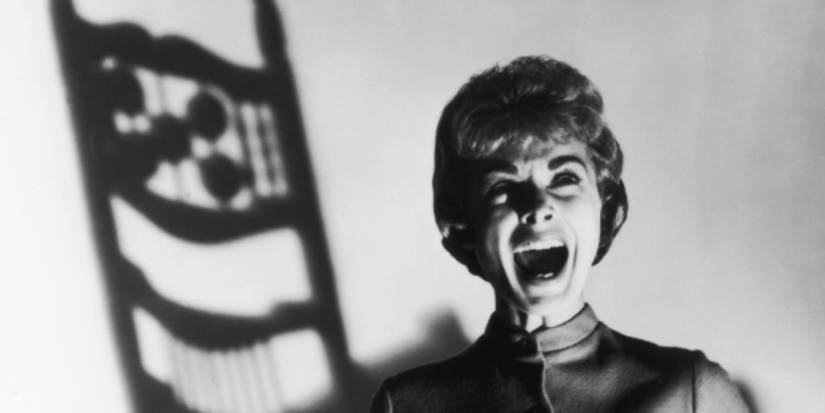
Just about everyone in the movie-watching world is acquainted with the groundbreaking Alfred Hitchcock film Psycho, but not everyone knows that the esteemed director’s source material was Robert Bloch’s 1959 novel of the same name. The book is reputedly darker (if that’s imaginable) than the movie, gorier, and more disturbingly detailed, too. Alas, Hitchcock used all his favorite filmic techniques to nail the ambience and nerve-wracking portions of the book, and the end result is a movie that has been creeping people out for well over six decades.
Norman Bates (Anthony Perkins) is a boy who loves his mother. He runs the now famous Bates Motel, and lives in a beautiful Victorian Gothic house that overlooks the establishment. When a woman on the run, Marion Crane (Janet Leigh), crashes at the motel for the night, someone ekes into her room and stabs her to death in the shower. The figure looks a lot like an elderly woman (who is mayhaps a tad too spry for her age). Oh, also, Norman is a taxidermist in his spare time. Ergo, there are creepy dead things all over the place. Basically every frame of this film has some form of masked uneasiness embedded within. The parting shot of the now fully realized psychotic Norman, grinning at the camera, is possibly the creepiest one ever caught on film.
3 'The Shining' (1980)

While the film The Shining does have some of the scarier images from 80s horror contained within, the overall concept of the story (just as in the book by Mr. King) is perhaps the most macabre aspect of all. The idea that a haunted house or building isn’t simply occupied by eldritch spirits that seek to terrify, but that the very structure itself is a purely evil entity, is bone-chilling. A devilishly dark idea, brought to life in very vivid color by Stanley Kubrick.
Jack Torrance (Jack Nicholson) just needs a little peace and quiet. He takes a job as a caretaker at the Overlook Hotel, a sprawling resort that shutters for the winter. The dull boy Jack tries to write the great American novel while there, as his wife, Wendy (Shelley Duvall), and son, Danny (Danny Lloyd), play in the snow…and try to not get murdered. As the Overlook slowly overtakes Jack’s very soul, the creepiness factor ratchets up, exponentially. Even the final shot of the Jack-cicle in the snow is, well, chilling.
2 ''The Silence of the Lambs' (1991)

With its rich tapestry of morbidly colorful characters and intricately detailed plot elements, it’s no surprise that the story of The Silence of the Lambs started out in the format of a novel. Thomas Harris wrote one heck of a scary and thrilling book, which was then developed into one of the best horror-thrillers ever made.
Agent Clarice Starling (Jodie Foster) is a tough, ambitious fed in the making. She’s given the Herculean task of extricating information about a new serial killer from one of the most famous cannibals to ever walk the earth, Dr. Hannibal Lecter (Anthony Hopkins). The premise is obviously rife with all sorts of creepy cinematic possibilities, and director Jonathan Demme and his off-the-charts talented cast deliver on every front. The images are creepy, the dialogue is as well, and even the unspoken implications in this movie (namely, that real-life evil is often lurking right around the corner) are hair-raising and unforgettable.
1 'The Ring' (2002)

The hit Japanese horror movie Ringu was based on a terrifying book, and the resulting film is one of the scarier additions to the horror genre. The American version, however, is definitely scary, but it’s even creepier. The director, Gore Verbinksi, does a masterful job of providing haunting imagery, and the editing team did the rest; whenever the “cursed videotape” is seen, it’s a dazzling, horrifying assemblage of quick-cut nightmare shots.
The story is about a reporter, Rachel (Naomi Watts), who learns about a VHS tape that allegedly kills you (in seven delightful days) after watching it. She first discovers it after her own niece, Katie (Amber Tamblyn), views the tape and perishes (with one of the most disturbing parting corpse shots caught on film). Rachel tries to track down the tape’s origin, and every scene thereafter contains some form of goose-bump-arousing creepiness or another. Add in a truly creep-tastic performance by David Dorfman as Aidan, Rachel’s son, a suicide-prone black stallion, a malevolent child (Daveigh Chase as the iconic Samara), and a moody, rain-drenched Pacific Northwest landscape, and you’ve got one of the creepiest movies of all time.
KioskNews shows a cleaned-up reading view extracted from the publisher’s page — the original always lives on their site, not ours.