How Megan Khung’s case could have unfolded differently if MSF’s new unit had been in place
SINGAPORE - Warning signs can be missed when information about a child’s safety and his or her family is scattered across different agencies. Connecting the dots - and taking timely action - can make a crucial difference for vulnerable children involved.
For four-year-old Megan Khung, who died in 2020 after prolonged abuse at the hands of her mother and her boyfriend, fragmented information about her circumstances played a part in the tragedy.
A new government unit officially launched on Sept 22 aims to strengthen the child protection system so cases like Megan’s are less likely to fall through the cracks.
SAFER, which stands for Sensemaking Alerts for Frontline Engagement and Response, collates and analyses information from the police, Central Narcotics Bureau and other agencies, and alerts protective services more promptly to the child’s risks.
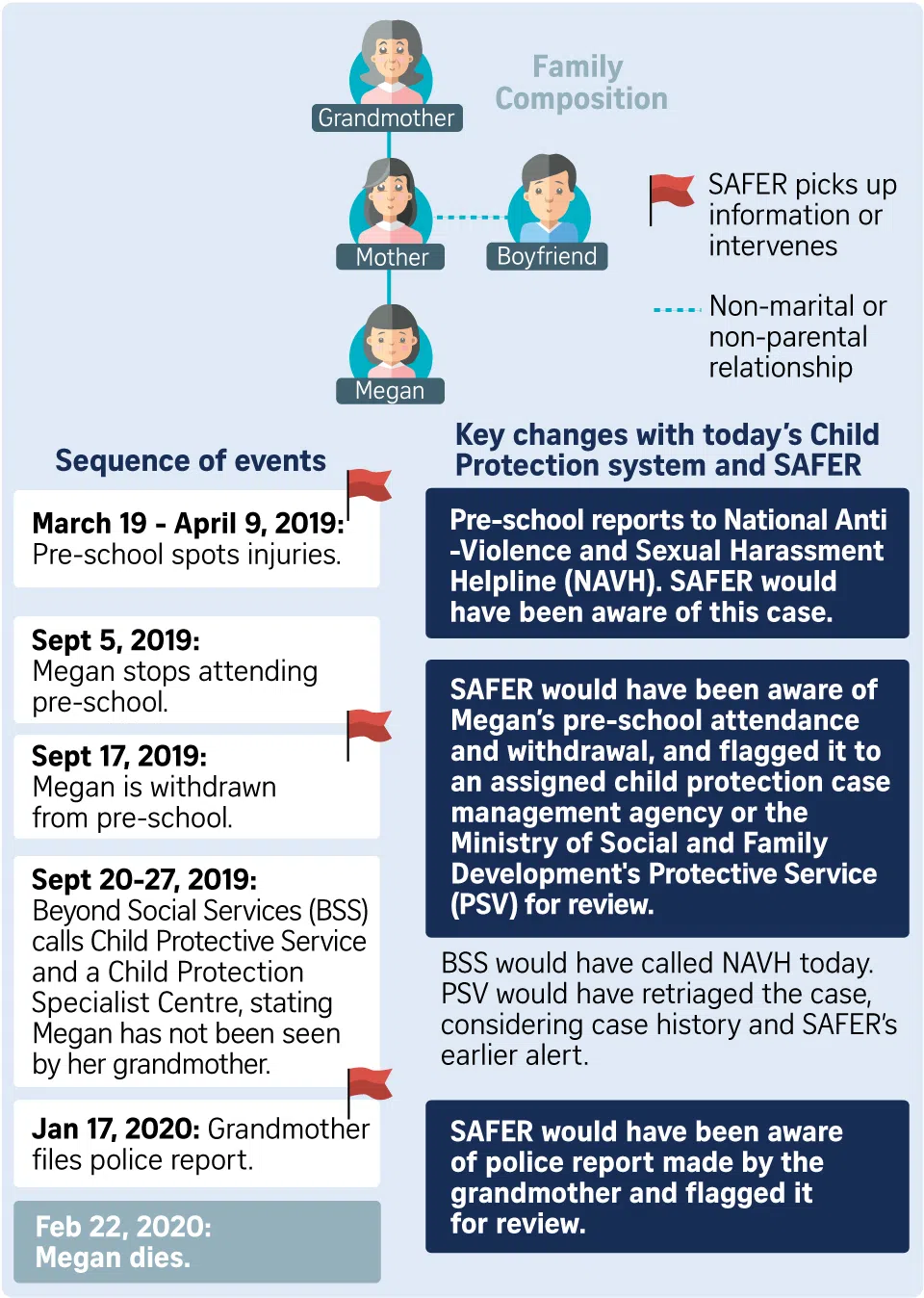
Had the new unit been in place then, Megan’s case would have been flagged for review about five months before her death, said the Ministry of Social and Family Development (MSF).
The unit started in June. In its first two months of operations, it has flagged 70 cases to the ministry’s Protective Service and specialised agencies which manage child abuse cases. Most of them were existing cases with notable developments, such as a parent’s arrest. One case was previously unknown to MSF or other agencies.
Here is how Megan’s case could have been unfolded differently if SAFER had existed at the time, and how the new unit has intervened in three other ongoing cases.
1) How Megan’s case could have been different
Among other information, SAFER would have known about the pre-school’s report about Megan’s injuries and the police report made by the girl’s grandmother when she went missing, and could have flagged it to the authorities.
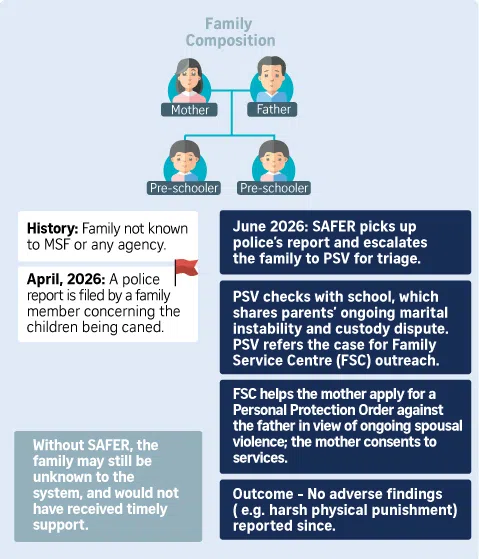
2) Discovering an unknown case
The authorities were not aware of this family, until SAFER picked up a police report filed by a family member and in June alerted the relevant agencies - which discovered there was more than met the eye.
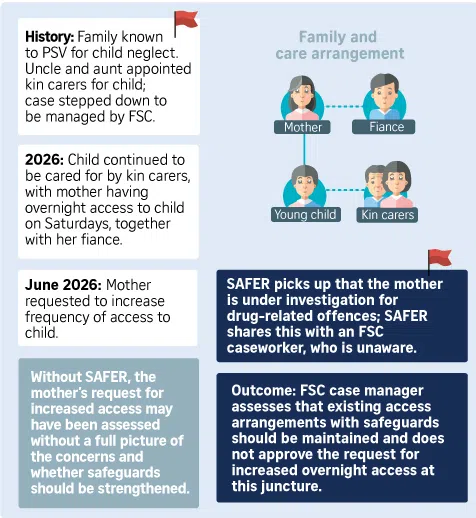
3) Assessing an existing case
When a mother asked to increase the frequency of access to her child in June, SAFER picked up crucial facts which helped the caseworker make an informed decision.
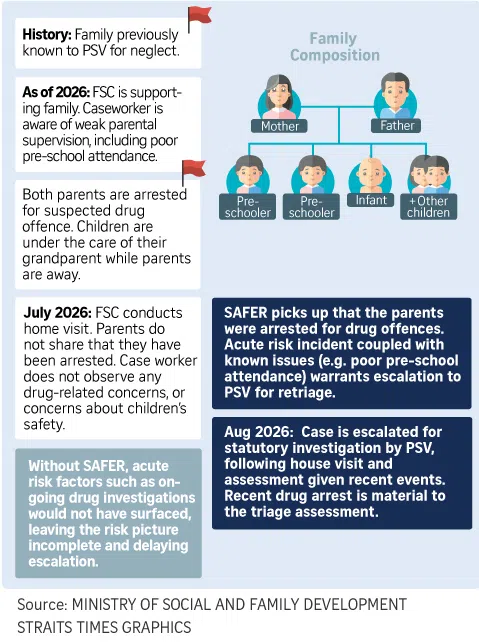
4) Escalating an existing case
These parents kept mum about their arrest for suspected drug offences, but it was uncovered by SAFER in time and their family’s case was escalated to the authorities in August.
Christine Tan is a correspondent at The Straits Times reporting on social affairs and issues of justice in Singapore.
KioskNews shows a cleaned-up reading view extracted from the publisher’s page — the original always lives on their site, not ours.