Supreme Court reinstates arrest order vs exec in P1.8-B shabu shipment
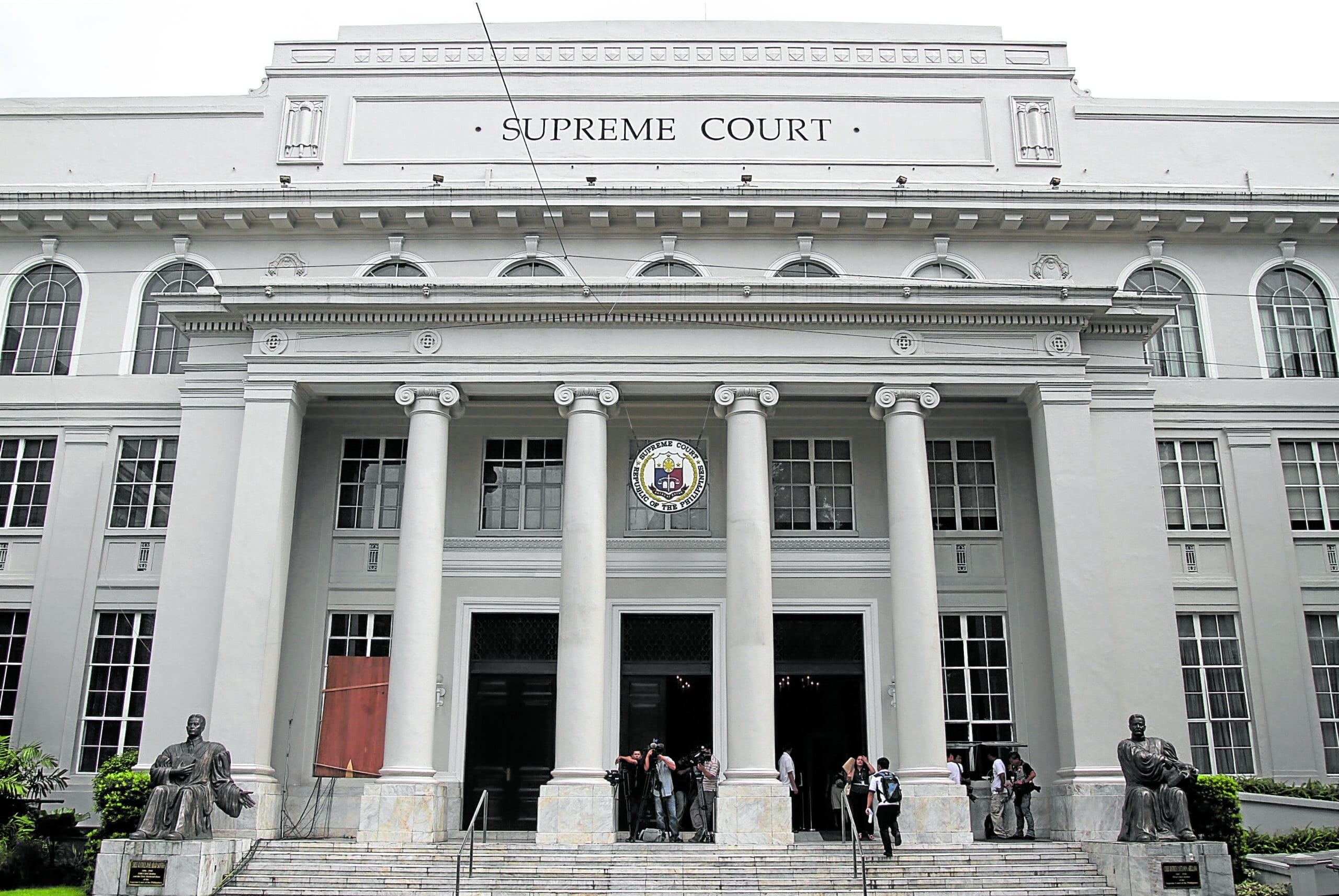

MANILA, Philippines — The Supreme Court (SC) has overturned a Court of Appeals ruling and reinstated the warrant of arrest against Bernand Lu Chong in connection with the 2019 seizure of P1.877 billion worth of illegal drugs.
In a decision made public Monday, the SC’s 2nd Division granted the petition filed by the Office of the Solicitor General on behalf of government prosecutors, challenging a Court of Appeals ruling that cited grave abuse of discretion on the part of the Manila court that issued the arrest order.
READ: P1.8 B shabu seized at Manila port
Article continues after this advertisement
“We find that the Court of Appeals erred in finding that the Regional Trial Court (RTC) committed grave abuse of discretion in finding probable cause for respondent’s arrest,” the SC, through Associate Justice Jhosep Lopez, said.
FEATURED STORIES
NEWSINFO
NEWSINFO
NEWSINFO
The SC remanded the case to Branch 53 of the Manila RTC for further proceedings, ordering the court to resolve it “with utmost dispatch.”
“The case is ordered remanded to Branch 53, Regional Trial Court of Manila for further proceedings, and to resolve the case with utmost dispatch,” the SC said.
The case stemmed from a March 22, 2019 joint operation by government authorities at the Manila International Container Port, which led to the seizure of 276,344.82 grams of methamphetamine hydrochloride, commonly known as shabu. The contraband was hidden in plastic resin sacks stored inside a 40-foot container that originated from Vietnam.
READ: Lacson hits BI: Chinese in P1.8-B ‘shabu’ shipment got in and out of PH
Article continues after this advertisement
Investigations revealed that Fortuneyield Cargo Services Corporation was listed as the declared consignee on the bill of lading. While Chong claimed he had already assigned his corporate shares and resigned as president of Fortuneyield before the shipment, prosecution records showed that a Client Profile Registration Form submitted to the Bureau of Customs listed Chong as the general manager responsible for the company’s overall operations.
In its ruling, the SC said the trial court was justified in relying on the prosecution’s public records. It explained that under the Comprehensive Dangerous Drugs Act of 2002, corporate officers can be held liable, noting that “it would be absurd to indict Fortuneyield’s operations officer without considering the probable participation of his superior who was in charge of the company’s overall operation.”
Article continues after this advertisement
Addressing the preliminary nature of the proceedings, the Court noted: “It should be emphasized that before issuing warrants of arrest, judges merely determine personally the probability, not the certainty, of guilt of an accused.”
It added that “it is not necessary to prove, at this point, that respondent is indeed guilty of the crime charged,” explaining that questions regarding Chong’s degree of involvement “are evidentiary in nature and are matters of defense that may be best passed in a full-blown trial on the merits.”
Meanwhile, Senior Associate Justice Marvic M.V.F. Leonen said the sheer scale of the drug haul required coordinated efforts rather than an individual actor.
“When a judge issues a warrant of arrest following the seizure of a considerable quantity of dangerous drugs, such determination should not be lightly disturbed absent a clear showing of grave abuse of discretion,” Leonen said.
He added that justice should be balanced between the accused and the State.
Your subscription could not be saved. Please try again.
Your subscription has been successful.
“The rights of the accused under the Bill of Rights remain fully protected. They may still be acquitted should the prosecution fail to establish their guilt beyond reasonable doubt. Their arrest does not imply their guilt. Rather, it signifies that the judicial process continues to operate and that the proper administration of justice prevails,” he said. /mcm
KioskNews shows a cleaned-up reading view extracted from the publisher’s page — the original always lives on their site, not ours.