From glasses to buttons, South Korea’s anti-cheating exam checks raise eyebrows
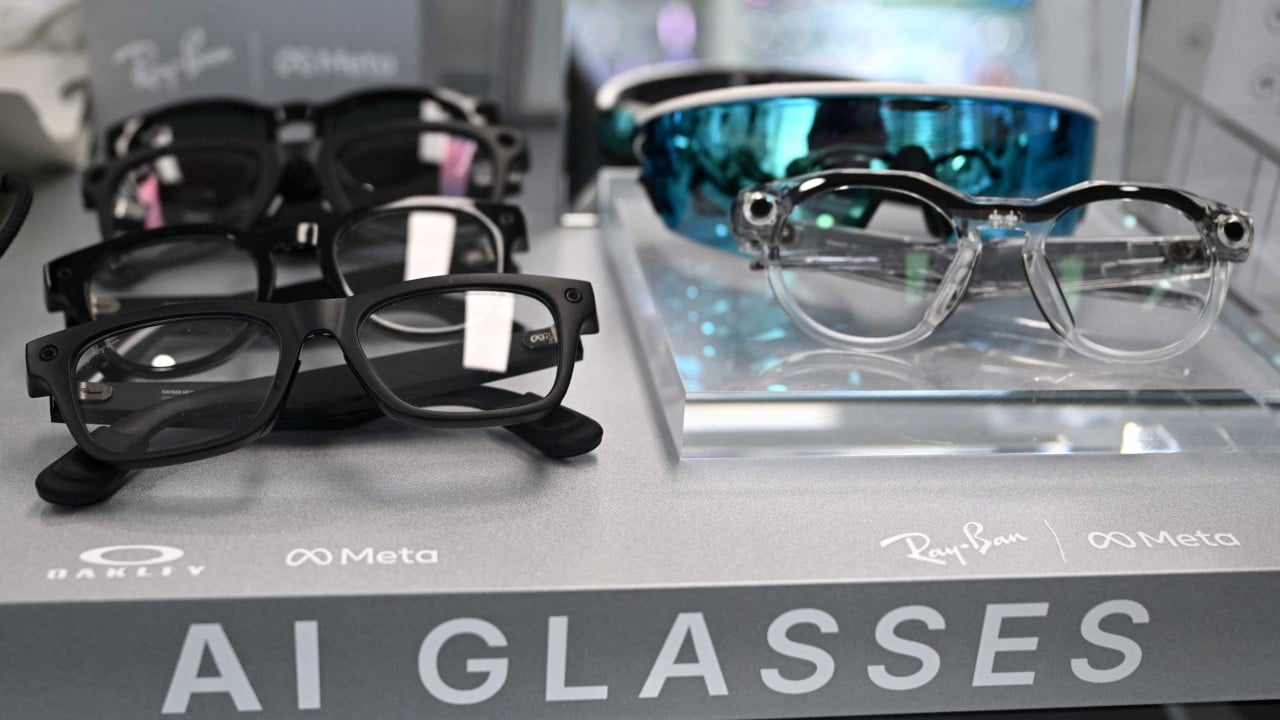
Students in South Korea worry about wearing thick-rimmed glasses, while others have had buttons on their clothes checked, as the country staged its annual college entrance examination on Thursday under unprecedented security measures to curb cheating through hidden cameras.
The crackdown, implemented after a series of high-profile AI-assisted cheating scandals, has raised questions about whether the government is protecting the integrity of the country’s most important examination or scrambling to contain a crisis it should have anticipated.
Authorities are offering rewards of 100 million won (US$75,000) or more to people who report confirmed cases of hi-tech cheating. They also plan to bar those found guilty of misconduct from retaking the examination for 10 years, compared with the current one-year ban.
The measures have alarmed students and teachers, with some observers warning they could foster an atmosphere of suspicion.
Park Dae-sok, a retired English teacher who has served as an invigilator multiple times, questioned whether the government was going too far in encouraging students to report suspected cheating.
“When I heard the news, I couldn’t believe my ears. The first thought that crossed my mind was this: do they want students to take exams or act as spies on others?” he said.
Park said the last-minute instructions issued by the education ministry would place “enormous pressure” on teachers assigned to supervise the examination.
“Throughout the day-long exam, you have to stay tense. If you make any mistakes, such as miscounting answer sheets, you would be held responsible,” he said.
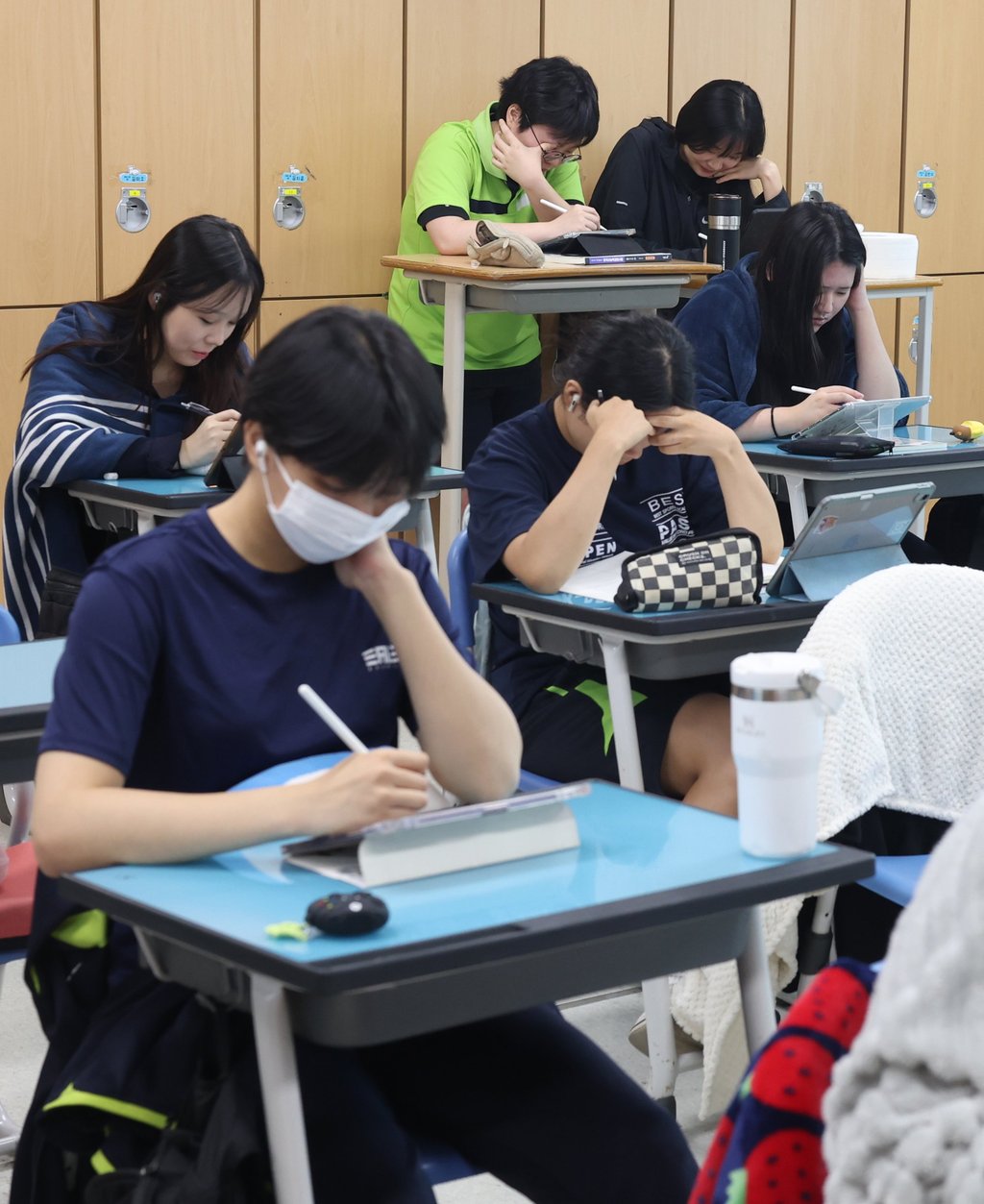
“Under the new measures, invigilators would have to walk around the room to ensure no one is using electronic devices or other prohibited items. This would be stressful for both invigilators and applicants.”
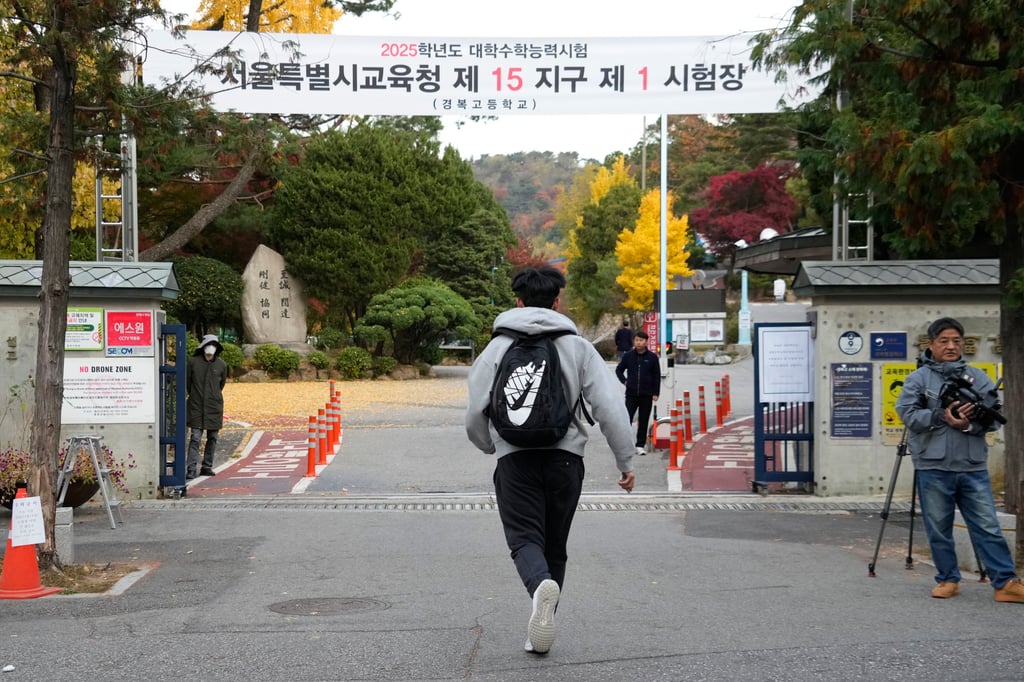
The sweeping security measures were introduced to prevent artificial intelligence-assisted cheating in the College Scholastic Ability Test (CSAT), also known as Suneung, which plays a crucial role in determining university admissions and future career prospects in South Korea.
More than half a million applicants are taking the examination at about 1,300 test centres nationwide throughout the day.
The crackdown followed a series of high-profile cheating scandals involving AI smart glasses, micro-cameras and generative AI tools in national licensing examinations, standardised tests and schools.
Among them, a top scorer in a national tax accountant examination admitted to using a miniature camera, smartphone and AI to obtain answers, raising questions about the authorities’ ability to detect increasingly sophisticated forms of cheating.
A Seoul National University dental student, Lee Jin-woo, who was facing a police investigation over allegations of AI-assisted cheating, was found in cardiac arrest at a motel in Seoul on Thursday afternoon and later pronounced dead in an apparent suicide.
Lee earlier gained national attention after achieving a perfect score on the Legal Education Eligibility Test (LEET), the entrance examination for South Korean law schools.
Against this backdrop, authorities stepped up surveillance of Thursday’s examination, introducing measures ranging from mobile alerts to physical inspections of students’ clothing and accessories.
The mobile alerts led to the discovery of 22 smartphones that test-takers had failed to surrender to invigilators, Vice-Education Minister Choi Eun-ok said. The students would face stern disciplinary action if misconduct were confirmed, she added.
Later on Thursday, authorities also confirmed that supervisors had discovered a miniature camera and an earphone during pre-exam checks at a test centre in Yongin, south of Seoul, prompting a police investigation.
Public Wi-fi networks within 100 metres of test centres were switched off for 24 hours from Wednesday evening.
Authorities gave invigilators checklists instructing them to inspect students’ glasses, place stickers over buttons on their clothes to prevent the use of miniature cameras and examine wearable devices.
Students were allowed to bring only black pencils into examination rooms, with stand-alone erasers and correction tape prohibited. They were required to leave their bags outside in the corridors.
The presidential office and the prime minister’s office have set up emergency response teams and arranged for post-examination investigations – in cooperation with police and global technology companies – to track suspected use of cloud-based AI services and communications records.
On Tuesday, Prime Minister Han Sung-sook said: “Under the firm principle that the honest efforts of students must not be undermined by cheating, the government will concentrate all its capabilities on this issue.”
The stringent measures have triggered anxiety among students and parents, with some taking precautionary steps to avoid attracting suspicion.
Teachers advised students sitting the examination not to wear clothes with buttons. Some students with thick-rimmed glasses considered buying new pairs with thinner frames to avoid unnecessary scrutiny.
“I was considering thick-rimmed glasses, but given this recent incident, I’m thinking of switching to thin-rimmed ones instead,” Lee Chae-min, a CSAT applicant, told MBC-TV.
The security crackdown followed a controversy over the government’s preparedness to tackle AI-assisted cheating.
Three days before the CSAT, Education Minister Choi Kyo-jin came under fire after suggesting during a parliamentary session that it would be difficult to detect all forms of cheating involving AI-powered devices.
Asked whether he was confident the government could catch 100 per cent of AI-assisted cheating, he replied: “I don’t think I could.”
Representative Park Jung-hun of the opposition People Power Party responded: “Oh, this is driving me crazy, really.”
When Park argued that the government’s capabilities must be limited if even the education minister acknowledged he could not guarantee the detection of cheating, the education minister said: “Maybe it’s because of my age, but I don’t think I could do that.”
Following his comments, the minister was sidelined, with Han stepping in to take charge of the government’s response.
03:33
Can you read your dog’s mind? South Korea’s pet owners turn to tarot
Lim Sung-hack, a political-science professor at the University of Seoul, said the AI-assisted cheating scandals were creating a crisis of confidence in the fairness and credibility of the country’s entire examination system, as traditional invigilation methods were increasingly failing to detect sophisticated forms of misconduct.
The government should have acted much earlier, such as setting up a task force to curb the cheating, he added, noting that concerns about AI-driven cheating had been mounting for a couple of years.
“This is nothing but a government failure,” Lim said. “The latest steps, including the bounty that encourages students to act like paparazzi, are little more than impulsive, stopgap measures.”
South Korea adopted the CSAT more than three decades ago on the premise that a standardised examination would provide a fair and objective way of selecting university students.
However, it had since become a system for selecting “paper test experts” rather than identifying creative and talented individuals, Lim said.
“This country should turn this crisis into a chance to develop new ways of educating and testing students that befit the AI age,” he added.
KioskNews shows a cleaned-up reading view extracted from the publisher’s page — the original always lives on their site, not ours.