Elon Musk admits “biggest problem” for his chatbot, and for all AI companies
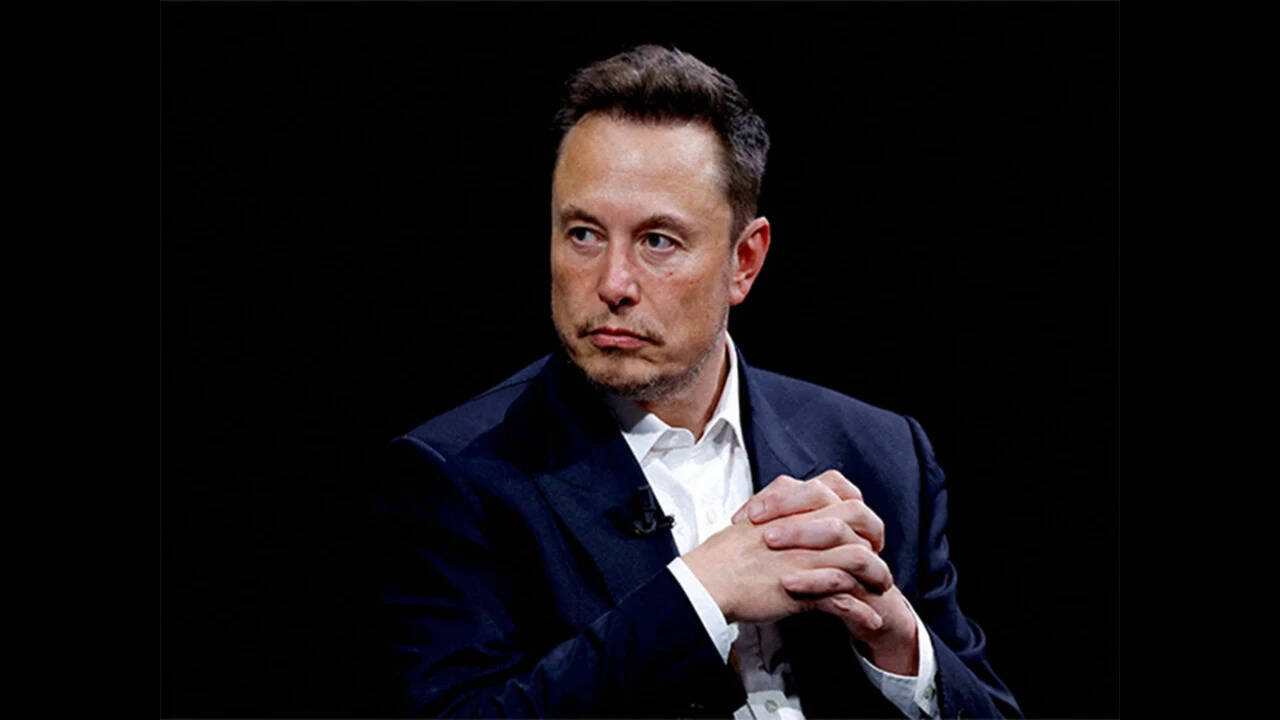
Elon Musk’s Undisclosed Succession Plans Are Drawing Fresh Attention As Tesla And SpaceX Explore A Potential Merger.
Elon Musk has acknowledged publicly that xAI curtailed compute allowances for its autonomous agent, Grok Bot, not because of runaway user demand, but because running the tool is bleeding cash faster than subscription fees can recoup.
The admission came in a recent exchange on X, formerly Twitter, after a paying subscriber requested an early reset of the weekly usage quota, complaining that users were exhausting their allocations far faster than usual. Musk offered neither the typical industry reply about scaling up to meet unprecedented traffic nor a concrete timetable for relief.Instead, he pointed directly to the unit economics and the Maths that's apparently 'not-so-great'.
“The cost of serving Grok Bot was unsustainably high relative to revenue,” Musk wrote.The brutal statement cuts against the standard public relations playbook of leading artificial intelligence (AI) labs. While competitors frequently blame capacity throttles on hardware shortages or unprecedented adoption, Tesla and Spacex CEO Elon Musk laid bare an uncomfortable reality: Heavy use of xAI’s flagship agent is fundamentally unprofitable under current pricing structures.
Unlike conventional, single-prompt conversational models, Grok Bot functions as an autonomous background agent capable of navigating the web, synthesizing research, and executing multi-step workflows inside isolated virtual environments. Because these systems iterate through reasoning loops and continuous execution rather than spitting out a single response, each session consumes orders of magnitude more graphics processing unit (GPU) cycles than standard text generation.Elon Musk's xAI launched the agent in August 2026, bundling it directly into existing paid tiers -- including $30-per-month SuperGrok subscriptions and Cursor developer plans-- without establishing dedicated standalone pricing. While reports from Teslanorth indicate Grok Bot scaled to roughly 800,000 paid weekly active users within two months, that rapid expansion appears to have magnified the underlying compute deficit rather than amortizing fixed overhead.The candid assessment also introduces fresh friction into xAI’s enterprise narrative. The startup recently secured a $200 million deployment contract with the US Department of Defense, while continuing to court private capital on the strength of its technical infrastructure.
How and why it is not Elon Musk's 'problem' alone
The friction highlights a broader, quiet reckoning across the generative AI sector. Rivals like OpenAI have increasingly tightened token caps and throttled complex multi-turn reasoning models behind paid walls, managing operating expenses through understated product adjustments.
Musk’s explicit confirmation breaks with that discretion. Earlier this year, Musk floated the idea of inserting sponsored links and advertisements directly into Grok’s outputs to help fund what he called “those expensive GPUs.
” His latest comments, however, suggest that the imbalance has already become a pressing operational issue.Gartner senior director analyst Will Sommer wrote recently that an AI infrastructure provider would need to make twice as much money on AI token usage as the investment it has made to provide these tokens.
“Every single token that can be monetised would need to earn a margin of over 100% between 2026 and 2030,” he said.
Growing AI graveyard
One of the poster boys of the AI industry, Character.AI last month filed for Chapter 11 bankruptcy following a string of legal challenges and the loss of top talent. Similarly, Relay, an AI-powered workflow automation tool built as an alternative to Zapier, shut down entirely in August this year.According to S&P Global Market Intelligence, as reported by TechCrunch, about 42% of AI initiatives are ultimately abandoned by their corporate parents. Reasons vary: insufficient funding, technical challenges, competition or difficulty scaling. The last one is almost the same as what Elon Musk just publicly admitted.
KioskNews shows a cleaned-up reading view extracted from the publisher’s page — the original always lives on their site, not ours.