Midterm elections preview: How might this year's vote change Washington?
Every four years, we get to choose our own president. But every two years, we have other elections, where we choose all 435 members of the House of Representatives, and a third of our Senators, and a whole lot of governors.
This is a midterm elections year, our chance to steer the direction of the country.
"These are historically viewed as referenda on the job performance of a president," said New Yorker politics columnist Susan Glasser. She believes Tuesday's elections will be historic in a long list of ways.
First, there's the matter of the president's steadily sinking popularity. "The president is the most unpopular American president in the history of modern polling going into a midterm election," Glasser said.
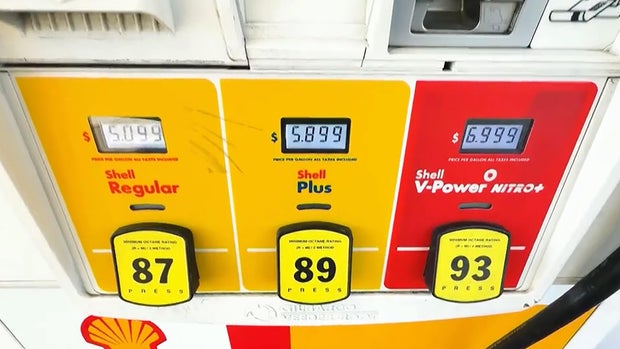
The main reason is the price of everything. "People are so angry," Glasser said. "It's symbolized in how much money they're paying to put gas in their cars at the pump, or how much money they're paying for groceries. But it's obviously much, much broader than that."
Another historic factor: The number of political ads. "This will be a record-breaking year basically any way you slice it," said Wesleyan University professor Erika Franklin Fowler, who studies political ads. "The amount of money that's being spent is enormous."
This year, midterm ad spending will be over $11 billion, a record. But do political ads actually change anybody's mind? "Really not all that much," Fowler said. "No amount of advertising is going to change citizens' minds about the cost of goods in this type of economy."
Also historic is the rise of artificial intelligence in the ads: Computer-generated scenes of candidates that look like real video. Fowler said, "It's having candidates say things that they never said or do things that they never did. Those are particularly concerning because it's not clear to the viewer that this never happened."
How is that legal? "There's no federal regulation of AI in advertising," said Fowler, "so most of it actually doesn't even carry a disclaimer."
And with just days to go before the election, is any ad, or any rally, going to change a voter's mind? "That might be the irony of it all – we're seeing a lot more early voting this year," Fowler said, "and so a lot of the advertising that's on air now is actually too late to make a difference."
The Trump factor
Pollster Anthony Salvanto, who conducts our CBS News polls, said, "We see, overall, the numbers shifting toward the Democrats. It's not historically unusual for a president's party to lose seats in a midterm."
So, what is driving voters: The war? Corruption? Gas prices? Salvanto said, "It all of the above."
Another big factor, according to Salvanto, is the president: "Two-thirds of folks tell us they're going to the polls for Congress either to support him (26%), or, in more cases, to oppose his policies (41%)."
The president is a factor for the candidates, too. Most ads for Republican candidates don't even mention Mr. Trump. Sometimes they even criticize his policies, such as Michigan Republican Senate candidate Mike Rogers' ad calling for an end to President Trump's tariff war against Canada.
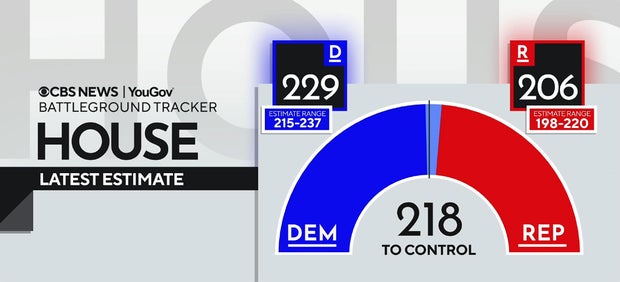
So at this moment, what's the state of play for the House and the Senate? According to the latest CBS News House model, the Democrats are on pace to win 229 seats, giving them the majority.
As for the Senate, Salvanto said, "At the start of the year, there weren't many folks who gave Democrats a chance to take the Senate. Well, what we've seen over time is that a lot of those red Republican states have in fact come into play. Doesn't mean the Democrats are going to win them, but they certainly look to be more competitive."
The idea that Texas and Kansas might elect Democratic Senators is definitely historic. Glasser said, "The last time that Democrats won a Senate seat in Kansas was in the 1930s. The last time a Democrat was elected to the U.S. Senate from Texas was Lloyd Bentsen in 1988."
What comes after the election?
So, if the Democrats win control of both houses of Congress, does that change anything? According to Susan Glasser, "I think you would see efforts to restrain the Defense Department from spending more money, for example on Trump's war with Iran. I think you might see very aggressive oversight and investigation hearings. I think you'll see them issue subpoenas."
But Glasser has more immediate concerns about what happens after the elections: "Donald Trump said that he won't accept the results of any election that he personally does not think were conducted the way he wanted them to be."
Asked if she thinks the president might try to invalidate or interfere with the results, Glasser laughed: "I don't think that's a speculative question. Remember that Donald Trump is the only president in all of American history ever to refuse to accept his defeat in a legitimate election. One of the things that Trump and his allies might try to do is to delay or block certification of incoming members of the Senate in close races."
Already, the Trump administration has ordered a criminal investigation into Alaska's Senate race, where Democrats are alleged to have recruited a candidate with the same name as the Republican opponent.
But even if the ride is bumpy, the midterm elections – especially these midterm elections – are a critical part of the American system of government. "I think it's absolutely a crucial midterm," Glasser said. "This is what the system was built to do, to balance and to constrain and to check among the different branches of government. I think we'd be looking at very different paths for our country depending on the outcome on Tuesday night."
Story produced by Gabriel Falcon. Editor: Ed Givnish.
See more:
- How to watch live 2026 midterm election results on CBS News
- Complete CBSNews.com coverage: Midterm Elections
KioskNews shows a cleaned-up reading view extracted from the publisher’s page — the original always lives on their site, not ours.