Hong Kong embarks on green shipping collaboration with Greek port
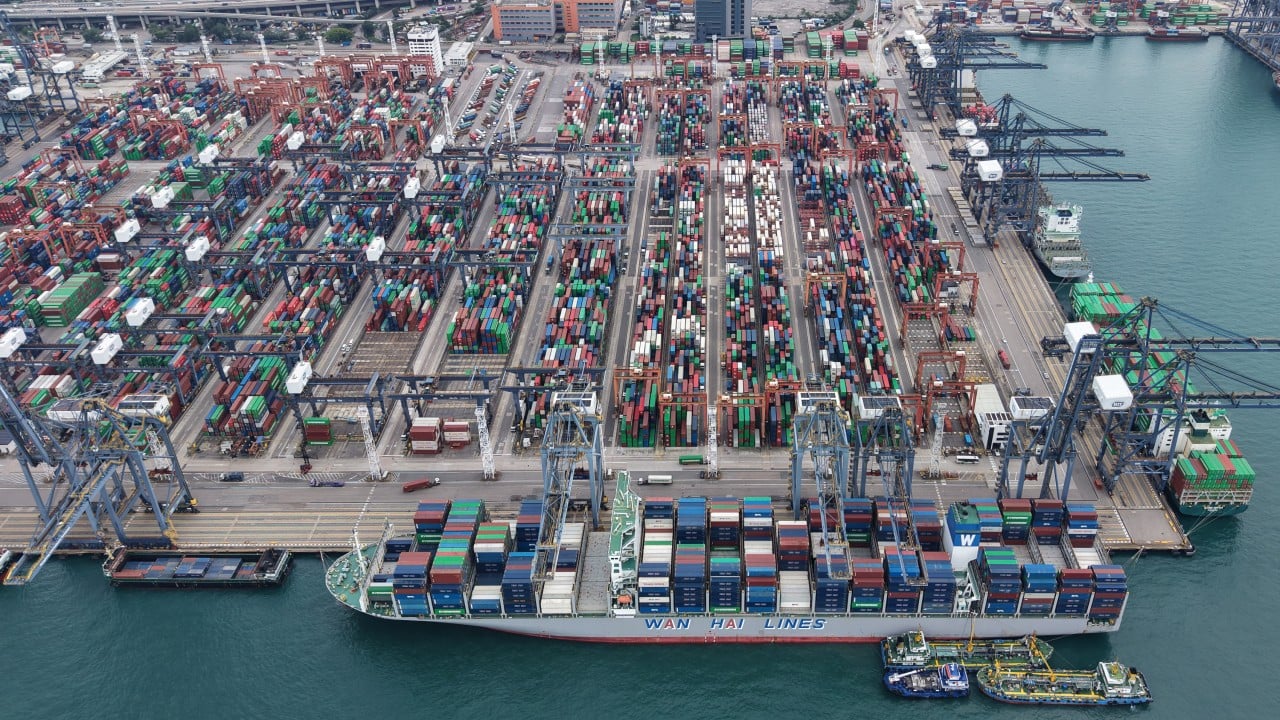
Hong Kong has established its first green shipping route with Greece to promote maritime decarbonisation, Chief Executive John Lee Ka-chiu announced on Monday, reaching a milestone in the city’s journey to become an international maritime hub.
Speaking at the World Maritime Merchants Forum, Lee also said that green-fuel supply chains would be boosted by deals signed with mainland ports and the formation of a dedicated task force to develop a green-fuel trading platform for the shipping industry.
“I’m pleased to announce … the establishment of a green shipping corridor between Hong Kong Port and the port of Piraeus in Greece. This landmark collaboration is a significant step forward in driving decarbonisation along major Asian-European shipping routes,” Lee said.
A green shipping corridor is defined by the UK Hydrographic Office as a route between ports where zero-emission shipping is demonstrated and monitored through the advancement of technological, commercial or regulatory initiatives.
The government’s Action Plan on Green Maritime Fuel Bunkering said that developing green shipping corridors would help to drive the green transformation of Hong Kong Port and speed up the construction of hardware for green maritime fuels.
It could also help stakeholders reach their decarbonisation targets, ultimately attracting more companies in the maritime industry to choose Hong Kong corridors and increasing the throughput and competitiveness of the city’s port in the long run.
Hong Kong’s focus on its maritime industry – alongside international finance, trade, aviation, innovation and technology and talent – is part of the “four centres and one hub” strategy in the city’s first five-year plan, which maps its development from 2026 to 2030.
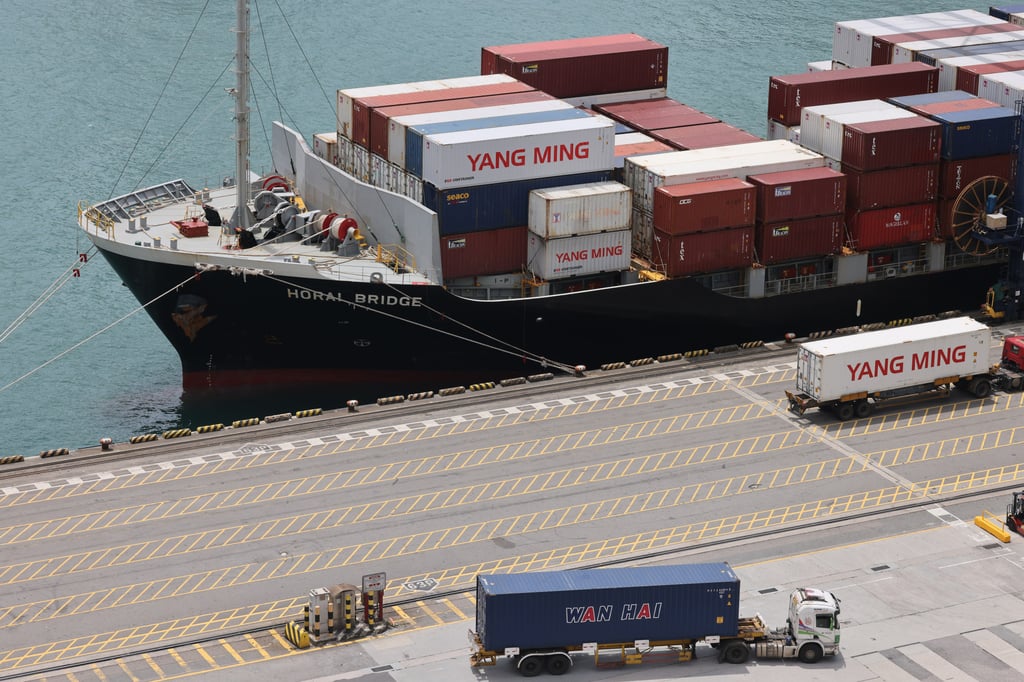
Hong Kong ranked fourth globally in this year’s International Shipping Centre Development Index. About 1,200 port and maritime-related enterprises call the city home.
On Monday, Lee also revealed that the city would soon sign memorandums of understanding (MOUs) to establish shipping partnerships with mainland cities, including a partnership with Yangpu Port in Hainan, southern China.
Another MOU between Hong Kong and Zhanjiang in Guangdong province would focus on the city’s first green energy corridor and “reinforce the commitment to end-to-end, low-carbon and green fuel supply chains”, he said.
“[It will also] connect green fuel produced in the Chinese mainland with global maritime markets,” he added. “These new partnerships with our mainland maritime partners show how closely our industry is connected.”
Under Hong Kong’s first five-year plan, five green energy corridors would be established by 2030 to help develop Hong Kong into a green maritime fuel bunkering and trading centre. The plan also included a target for 7 per cent of Hong Kong-registered vessels to be using green maritime fuels by 2030.
Lee explained in his policy address that the first corridor would be established with a mainland city to help develop Hong Kong’s green fuel centre. It would also ensure a stable supply of green maritime fuel, providing additional facilities and promoting trading.
In his speech on Monday, he said a dedicated task force of “leading industry experts” had been established to develop a green-fuel trading platform for the shipping industry, advising on its strategic direction, infrastructure and operating rules.
“The initiative will integrate the entire value chain … [to] forge partnerships to promote green fuel trading … [which] will help establish Hong Kong as an international hub for green maritime fuel trading,” Lee said.
Lee also noted that Hong Kong was building its maritime network, including by signing an agreement with Shanghai to create a “brother port” partnership, which followed last year’s “partner port” agreements with Guangxi and Dalian on the mainland and San Antonio Port in Chile.
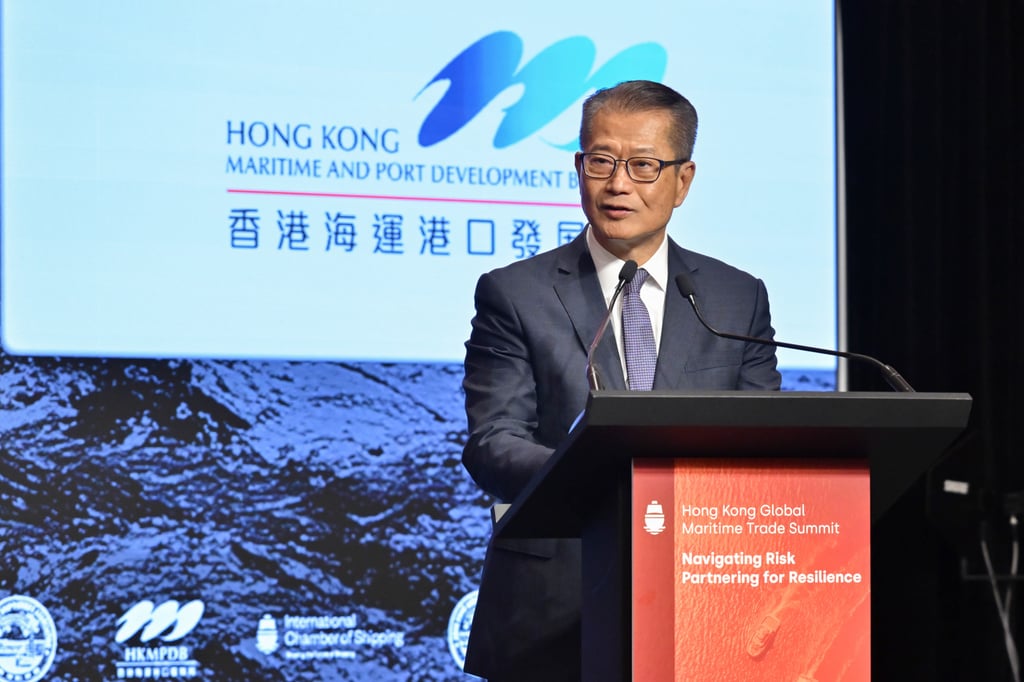
Speaking at the Hong Kong Global Maritime Trade Summit also on Monday, the city’s finance chief Paul Chan Mo-po stressed that Hong Kong would remain an open port that continues to uphold free trade and zero tariffs, with a focus on green fuel.
“The mainland has about 60 per cent of the world’s operating green methanol capacity. Our model is for fuel to be produced and stored in South China, bunkered and traded in Hong Kong, and supplied to the world’s ships,” he said.
“Trading matters as much as bunkering, because a fuel that can be priced and hedged is easier for producers to finance,” Chan added.
The forum and the summit are part of the 10th edition of Hong Kong Maritime Week, which runs until November 21.
KioskNews shows a cleaned-up reading view extracted from the publisher’s page — the original always lives on their site, not ours.