Israel said to freeze immigration of 2 Jews involved in defending Palestinian rights
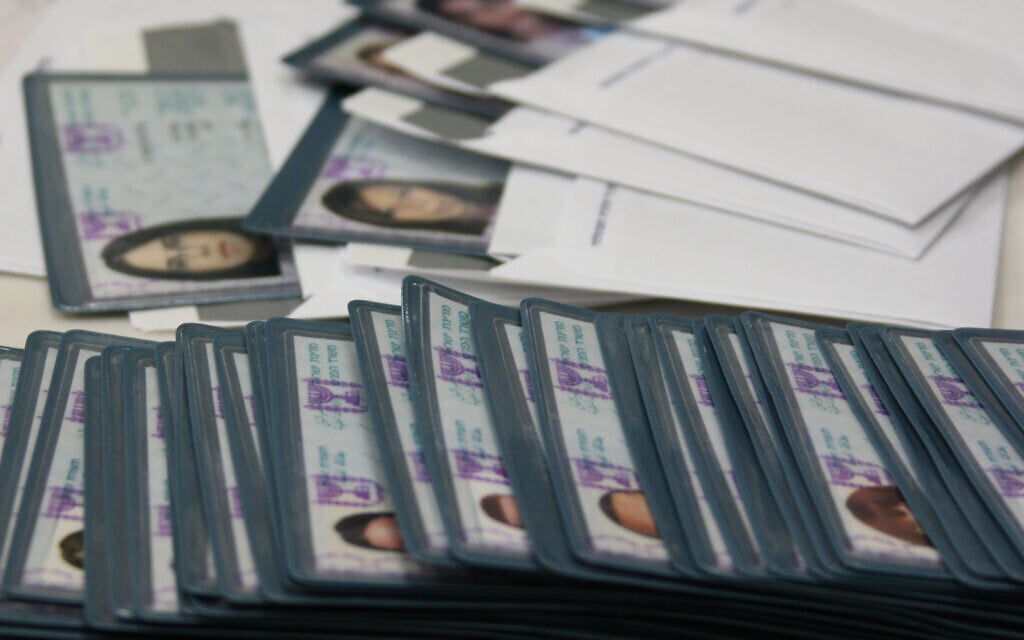
Two Jewish activists initially approved by the Jewish Agency for immigration to Israel have had their cases frozen by the Population and Immigration Authority (PIBA), according to a Monday report.
Although the agency, a department of the Interior Ministry, did not give a specific reason for revoking their immigration — known as aliyah — approval, it appeared that the revocation was due to their participation in “protective presence” activities in which civil rights groups provide assistance to Palestinian communities threatened by settler violence, Haaretz reported.
Under Israeli law, all Jews have the right to apply for immigration to Israel.
0:00 / 0:00
Promoted: Bridges for Peace

One of the candidates, Lawrence Shenkin of the UK, had spent five years in Israel after coming to the country to study in yeshiva at the age of 18, during which time he was active with the Bnei Avraham civil rights group in the West Bank. According to the group’s website, it works “alongside Palestinian activists with the goal of enabling Palestinian communities to remain on their land and preventing harm to the people of the Holy Land.”
In January 2026, Shenkin received an email from PIBA saying his electronic visa had been canceled due to “a change in the circumstances of his case.” He was unconcerned as two months earlier he had begun his immigration process, but he told Haaretz that he later found out at about that time many other protective presence activists who were not in the process of immigrating to the country had received similar notifications.
Get The Times of Israel's Daily Edition by email and never miss our top stories
By signing up, you agree to the terms
In April, he traveled to London to spend Passover with his parents but then found he was unable to obtain a visa to return to Israel, where he was renting an apartment.
His plans for studying to become a rabbi and to propose marriage to his girlfriend were disrupted as he has been unable to get back into the country.
“My life was completely ruined by this,” Shenkin said. “My whole life is there [in Israel].”
Undaunted, Shenkin began a new immigration process from London and in July was told that it had been approved. But then in August, he received a message telling him that on the basis of information PIBA received, and in accordance with Section 40 of entry to Israel laws, his immigration request was under review and had been “temporarily canceled.”
An attorney representing Shenkin told Haaretz that PIBA was apparently referring to a change in laws last year that prohibits entry to Holocaust deniers, October 7 Hamas attack deniers, and those who call for boycotting Israel or putting IDF soldiers on trial abroad. Shenkin insists he has never done any of those things, while his attorney told Haaretz that entry laws are irrelevant anyway to those applying to immigrate.
Shenkin’s current immigration request is set to expire in October, after which he will need to begin the paperwork again.
A second activist, a 27-year-old American Jewish woman who was similarly active with protective presence groups, also initially received confirmation of her aliyah request from the Jewish Agency, only to be subsequently informed that the approval had been frozen and the application was being reviewed by PIBA. She asked not to be named in the report.
The woman’s partner was in contact with a figure described as “senior” in PIBA. In messages between them seen by Haaretz, the official told the woman’s partner that the delay in her immigration was because “we don’t let activists into the country who act against Israel.”
Shenkin and the woman both assured Haaretz that they have never been involved in any violence or illegal activity in the West Bank, or any other part of the country.
PIBA said in response to the report that the applications are still under review and that the applicants will be informed when a decision is made.
The Jewish Agency told Haaretz it cannot discuss particular cases due to privacy concerns.
Bnei Avraham called the suspension of Shenkin’s aliyah approval “a dangerous precedent,” adding, “The right of return cannot be made dependent on the political position of a Jew, or on the question of whose side he is on.”
In August, The Forward reported that Israel had revoked entry permits for Jewish Americans who volunteered in the West Bank to protect Palestinians from settler violence.
The publication interviewed seven American Jews who have had their electronic travel authorizations (ETAs) revoked over “protective presence” activity over the past two years.
Times of Israel staff contributed to this report.
Help us report truthfully on social media

As a multimedia journalist, my job is to take the quality, fact-based journalism produced by The Times of Israel newsroom and make it accessible across every platform — from Instagram posts to podcasts to short-form videos.
This is how many, especially young people, consume news these days. But misinformation is rampant on social media. Our team at ToI produces accurate, responsible short-form reporting on Israel and the Jewish world.
If you believe in the importance of factual social media journalism, please consider joining our reader support group, The Times of Israel Community. Your financial support is essential to sustain responsible multimedia reporting.
— Gabriella Jacobs, multimedia journalist
Support our work Support our work Already a member? Sign in to stop seeing this
KioskNews shows a cleaned-up reading view extracted from the publisher’s page — the original always lives on their site, not ours.