The 10 Greatest Final Lines in Sci-Fi Books, Ranked

Diego Pineda has been a devout storyteller his whole life. He has self-published a fantasy novel and a book of short stories, and is actively working on publishing his second novel.
A lifelong fan of watching movies and talking about them endlessly, he writes reviews and analyses on his Instagram page dedicated to cinema, and occasionally on his blog. His favorite filmmakers are Andrei Tarkovsky and Charlie Chaplin. He loves modern Mexican cinema and thinks it's tragically underappreciated.
Other interests of Diego's include reading, gaming, roller coasters, writing reviews on his Letterboxd account (username: DPP_reviews), and going down rabbit holes of whatever topic he's interested in at any given point.
Sign in to your Collider account
Warning: Spoilers for Every Book Discussed!
First impressions matter almost as much as last impressions do; and when it comes to a great science fiction book in particular, the final line can make or break the whole experience. A bland or forgettable final line can leave a sour taste in the mouth of the reader by the time they close the book for the final time, but a hard-hitting final line written with care and attention to detail? That can make sure that the reader doesn't forget about that particular sci-fi masterpiece anytime soon.
From legendary soft sci-fi masterpieces like A Canticle for Leibowitz to foundational hard sci-fi gems like The Moon Is a Harsh Mistress, throughout history there have been 10 sci-fi books that have offered particularly noteworthy and unforgettable final lines. Whether they're beautifully poetic or powerfully bleak, or simply irresistibly catchy, these are the best closing lines in the history of science fiction. For the purposes of this list, anything between the penultimate and last period of a book is what will be considered the final line.
10 'A Canticle for Leibowitz' (1959)

Walter M. Miller Jr.'s A Canticle for Leibowitz is widely considered one of the most foundational classics of post-apocalyptic fiction and social science fiction, and for good reason. The story is set after a nuclear war destroys modern civilization, and follows humanity over the course of over 2,000 years as they constantly repeat their historical trajectory toward self-destruction.
"He was very hungry that season." Hunger serves as one of the book's driving thematic sparks, whether that's hunger for power, knowledge, or literal physical hunger. The novel's final passage, however, shifts the attention away from humanity and instead talks about the effects that the ash from another nuclear extinction event is having on the ocean. Miller ends by highlighting that all these ashes meant nothing for a singular shark other than a particularly hungry hunting season, thus highlighting humanity's insignificance in the grand scheme of the world.
9 'The Moon Is a Harsh Mistress' (1966)

Robert A. Heinlein is one of the most important and influential voices in the history of English-language science fiction literature, and many would make a strong argument in favor of The Moon Is a Harsh Mistress, one of the best Hugo Award winners of all time, as his magnum opus. Its narrative follows a lunar penal colony in 2075 that rebels against Earth's government with the aim of gaining independence.
"My word, I'm not even a hundred yet." The Moon Is a Harsh Mistress isn't comedic sci-fi, but it has a dry sense of humor sprinkled throughout that elevates the narrative greatly, a sense of humor that peeks through in this brilliant final line. Where most authors writing a sci-fi story about a sprawling revolution may have opted to end things off with an exhausted hero looking back on a broken world, Heinlein instead ends with a delightfully self-aware and surprisingly optimistic line which suggests that, with the revolution having succeeded, life is now just getting started.
8 'Mockingjay' (2010)

Saying that Suzanne Collins' Hunger Games series is one of the most influential dystopian book trilogies ever would almost be an understatement. It would perhaps be more accurate to say that it's one of the most pop-culturally significant book trilogies of all time, even when the final book in the series, Mockingjay, is almost universally agreed to be the weakest of the bunch. In it, Katniss becomes the public-facing symbol of the full-scale rebellion against the totalitarian Capitol and President Snow.
"But there are much worse games to play." It's a final line whose bittersweet and deeply poignant undertones are immediately apparent, yet not on-the-nose in the slightest. After having offered such a brutal piece of YA fiction, Collins refuses to offer the reader the blissful lie of a "happily ever after." Instead, Katniss reflects on where her journey has taken her up to this point, accepting her traumatic past with a cautiously optimistic sense of hope for the future.
7 'Dune' (1965)

There are those who would go so far as to say that Frank Herbert's Dune is the single greatest and most influential science fiction novel of the entire 20th century, and for good reason. It is, at the very least, one of the most essential sci-fi books of all time, about a young nobleman who has to survive betrayal and a harsh desert planet in order to fulfill his intergalactic destiny.
"While we, Chani, we who carry the name of concubine—history will call us wives." This final line is an absolutely brilliant way for Herbert to put a nice, final bow on his masterful subversion of traditional Hero's Journey tropes. Paul Atreides seems to have triumphed and won everything, but Herbert chooses to end this gargantuan epic not with Paul, but with two women standing off to the side and discussing how power, gender, propaganda, and the writing of history actually work. It's a powerful final statement in a mostly theme-driven piece of science fiction.
6 'Frankenstein; or, The Modern Prometheus' (1818)

Most experts and academics tend to agree that it was an 18-year-old Mary Shelley who created science fiction when she wrote Frankenstein; or, The Modern Prometheus. It's still a must-read over two centuries after its publication, and not only because of its historical significance, but also because it's still incredibly entertaining. In it, a young scientist animates a sentient creature using reanimated body parts and has to pay the tragic consequences of playing God.
"He was soon borne away by the waves and lost in darkness and distance." There are a myriad of reasons why this, the first sci-fi book in history, is also one of those horror masterpieces that became a blueprint for the genre, and its powerful final line is one such reason. The first final line in sci-fi history is powerfully visual, ambiguous, and poetic, hauntingly capping off the tragedy of Frankenstein's Monster.
5 'The War of the Worlds' (1898)
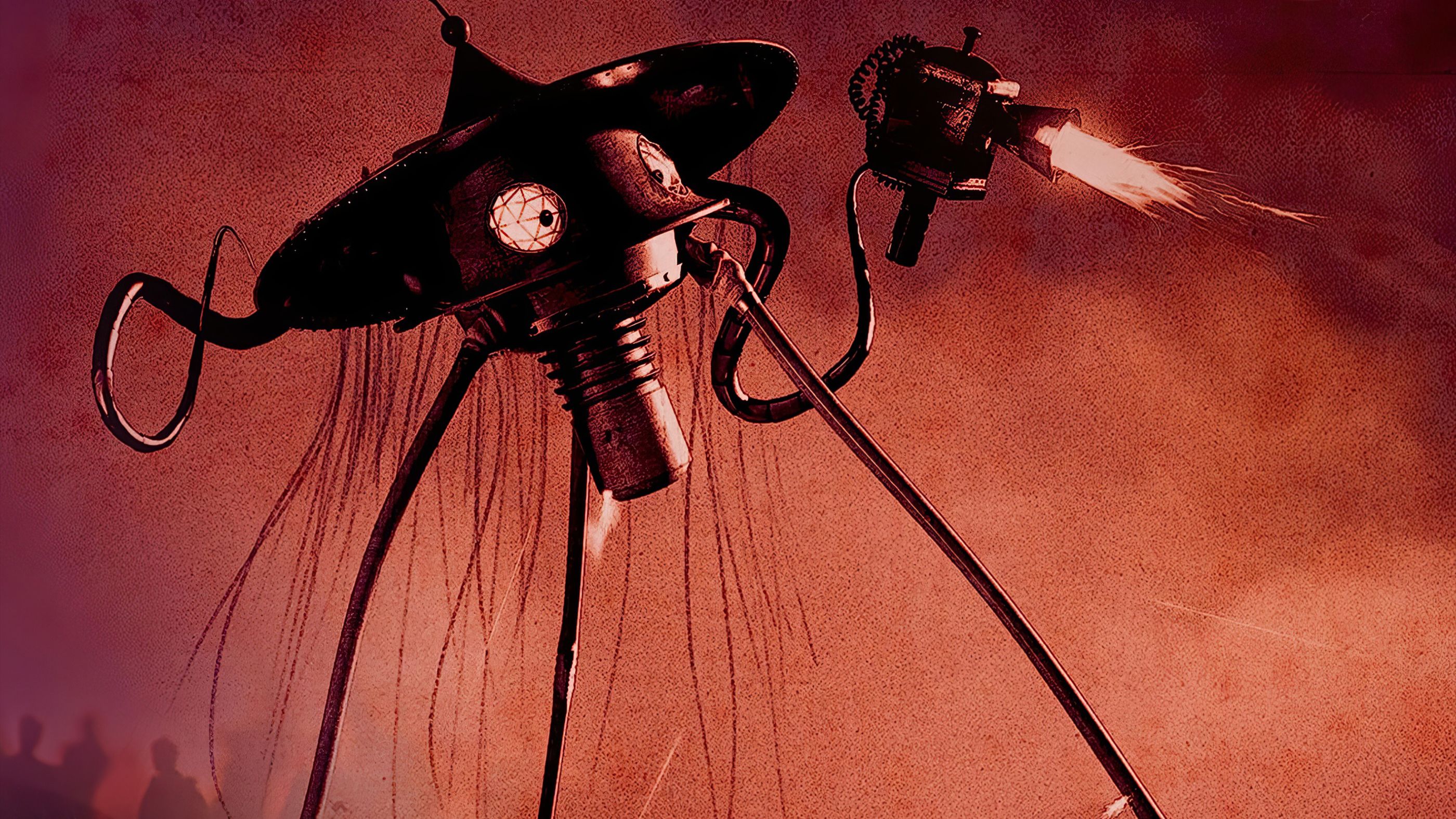
H. G. Wells was a foundational figure in the history of speculative fiction from the late 19th and early 20th centuries, often counted alongside people like Shelley and Jules Verne as one of the parents of science fiction. His most essential masterpiece is arguably The War of the Worlds, following an unnamed English writer as a Martian invasion destroys human civilization.
"And strangest of all is to hold my wife's hand again, and to think that I have counted her, and that she has counted me, among the dead." It speaks volumes about Wells' nature as a writer that, after spending around 200 pages describing the collapse of Victorian society and the technological superiority of the Martians, he chooses to end things off on a beautifully human note. Our final image is a husband and wife holding hands, proving that even after such a traumatic event, human connection still reigns supreme.
Collider Exclusive · Sci-Fi Personality Quiz Which Sci-Fi Hero Are You Most Like? Paul Atreides · Captain Kirk · Princess Leia · Ellen Ripley · Max Rockatansky
Five iconic heroes. Five completely different ways of facing an impossible universe. One of them shares your instincts, your values, and your particular way of refusing to back down. Eight questions will tell you which one.
🏜️Paul Atreides
🖖Capt. Kirk
✊Princess Leia
🔦Ellen Ripley
🔥Max Rockatansky
01
How do you lead when the stakes couldn't be higher? The way you lead under pressure is the most honest thing about you.
02
What is your greatest strength in a crisis? The quality that keeps you alive when everything else fails.
03
What is the thing you'd sacrifice everything else for? Your deepest motivation is your truest compass.
04
How do you relate to the people around you? Who you are to others under pressure is who you really are.
05
You're facing a threat that no one else believes is real. What do you do? How you respond when you're the only one who sees it defines everything.
06
What has your heroism cost you personally? Every hero pays. The question is what — and whether they'd pay it again.
07
How do you feel about the rules of the world you're in? Every hero has a relationship with the system. What's yours?
08
When everything is on the line, what keeps you going? The answer is the most honest thing about you.
Your Hero Has Been Identified Your Sci-Fi Hero Is…
Your answers point to the iconic sci-fi hero who shares your instincts, your values, and your particular way of facing the impossible.
Paul Atreides
You carry a weight most people would crumble under — the knowledge of what you're capable of, and the burden of what you might have to become.
- You see further ahead than others and you plan accordingly, even when the vision frightens you.
- You are driven by loyalty to your people and a sense of destiny you didn't ask for but can't escape.
- Paul Atreides is not simply a hero — he is someone who understands the cost of power and chooses to bear it anyway.
- That gravity, that willingness to carry what others won't, is exactly you.
Captain Kirk
You lead with instinct, warmth, and an absolute refusal to accept a no-win scenario — because you've always believed there's a third option nobody else has thought of yet.
- You take the mission seriously without ever taking yourself too seriously.
- Your crew would follow you anywhere, not because you demand it, but because you've earned it.
- Kirk's genius isn't tactical — it's human. He reads people, bends rules with purpose, and wills outcomes into existence through sheer conviction.
- That combination of warmth, audacity, and relentless optimism is unmistakably yours.
Princess Leia
You are the kind of person who holds the line when everyone else is losing faith — not because you're fearless, but because giving up simply isn't something you're capable of.
- You lead through conviction. Your voice carries because your belief is unshakeable.
- You gave up everything ordinary the moment you chose the cause, and you've never looked back.
- Leia is not a supporting character in her own story — she is the moral centre of the entire rebellion.
- That same fierce, principled, unbreakable core is what defines you.
Ellen Ripley
You are not reckless, not grandiose, and not particularly interested in being anyone's hero — you just refuse to stop when it matters.
- You see threats clearly, you document the truth even when no one listens, and when the time comes you handle it yourself.
- Ripley's heroism is earned, not performed. She doesn't have a speech — she has a flamethrower and a plan.
- You share her composure under the worst possible pressure, and her refusal to pretend the monster isn't there.
- When it counts, you don't flinch. That's everything.
Max Rockatansky
You have been through fire that would break most people — and what came out the other side is something the world underestimates at its peril.
- You don't ask for help, don't need validation, and don't wait for anyone to tell you the rules no longer apply.
- Your loyalty, when it finally arrives, is absolute — but it's earned in silence and tested in action, not in words.
- Max is not a nihilist. He is someone who lost everything and found, against his will, that he still has something worth protecting.
- That bruised, stubborn, ultimately human core is exactly yours.
4 '1984' (1949)
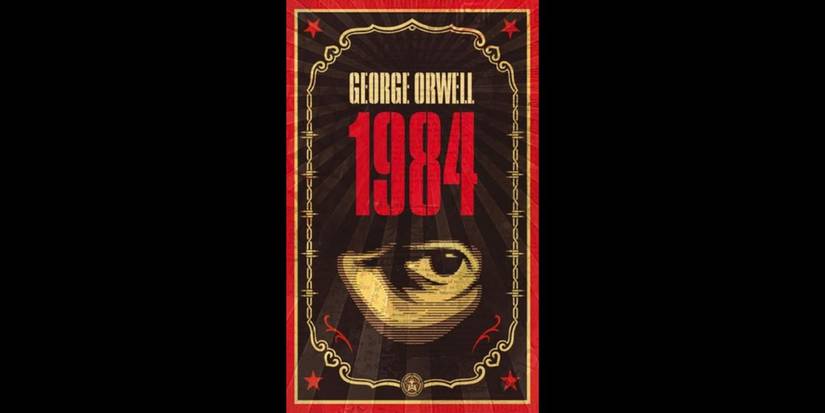
There are remarkably few—if any—dystopian sci-fi books more essential, foundational, or influential than the great George Orwell's 1984. What follows one of the best opening lines of any book in history is the story of Winston, a low-ranking government worker in a grim totalitarian superstate, as he secretly rebels against the regime.
"He loved Big Brother." Four simple yet undeniably chilling and haunting words are all Orwell needs in order to ensure that the reader won't forget what he has just read anytime soon after finishing the book. It's a brutally bleak final line, one that shatters virtually any last shred of hope that the reader might have had beforehand. The Party completely shattering Winston's rebellious spirit is a far crueler ending than his torture or death could have possibly been.
3 'The Dispossessed' (1974)

Rarely has history seen an author more important to speculative fiction as a whole than Ursula K. Le Guin, who proved that science fiction deserved the right to present itself as complex high art rather than exclusively pulpy entertainment. Le Guin achieved that through masterworks like The Dispossessed, a utopian sci-fi book about Shevek, a brilliant physicist from an anarcho-syndicalist moon who travels to a capitalist planet to bridge a centuries-old divide.
"His hands were empty, as they had always been." It's about as philosophically layered as sci-fi novel final lines come. Throughout the book, the people of the moon hold the belief that ownership corrupts human relationships, making empty hands the ultimate expression of existential freedom. The final line is injected with subtle thematic complexity and emotional power, showing how Shevek returns to his community as an ordinary man who has rejected the capitalist doctrine that wealth defines humanity's worth.
2 'Slaughterhouse-Five' (1969)

Kurt Vonnegut's Slaughterhouse-Five is widely considered one of the most influential anti-war novels ever written, as well as one of the most influential soft sci-fi books of all time. Published right at the height of the Vietnam War and heavily inspired by Vonnegut's traumatic experiences as a World War II prisoner of war, the book follows an American soldier who relives his experiences as a WWII POW and is abducted by aliens from the planet Tralfamadore.
"Poo-tee-weet?" Indeed, though it's a sci-fi dark comedy through and through, Slaughterhouse-Five is also a brilliant piece of postmodern metafiction with plenty of semi-autobiographical elements. Earlier in the book, Vonnegut tells the reader that things are always supposed to be quiet after a massacre, except for the chirping of birds. With the final scene of the novel taking place right at the end of WWII, Europe surrounded by death and destruction, how else could Vonnegut possibly end the book if not with the chirping of birds?
1 'Cloud Atlas' (2004)

David Mitchell's Cloud Atlas is almost universally recognized as one of the best sci-fi books of the 2000s, and for good reason. Winner of several major awards and a nominee for many others, it traces six interconnected stories broken into eleven parts structured with the utmost creativity. Hugely ambitious and masterfully genre-bending, it's a must-read for people who love sci-fi novels with thought-provoking thematic depth.
"Yet what is any ocean but a multitude of drops?" Over the past 22 years, many have argued in favor of this being the greatest final line in the history of sci-fi literature, and it isn't difficult to see all the reasons why. Finishing off a book with such vast, sprawling thematic ambitions was never going to be an easy task, but Mitchell managed beautifully. It's a philosophically titillating rhetorical question that potently sums up the core existential dilemma of Cloud Atlas: When held up against the overwhelming weight of time and history, how much can a single individual truly matter?
KioskNews shows a cleaned-up reading view extracted from the publisher’s page — the original always lives on their site, not ours.