Hard parties, cheap rents and horrible flats: how 90s art and fashion redefined British culture
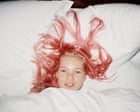
Here is Kate Moss, with pink hair splayed across a pillow, her face scrubbed of makeup, her smile sweet and wonky. Sarah Lucas’s Pauline Bunny artwork with its confrontational hosiery on a charity shop chair. Sean Ellis’s collaborative knights-in-grubby-armour shoot with Alexander McQueen. Here are happy ravers, in a club, or saluting the sun as it stretches and yawns over a litter-strewn hill.
These photos are old. They were taken a long time ago. But they’re young, too. They are curated by Edward Enninful for the Tate’s exhibition The 90s: Art and Fashion (Enninful worked at i-D in the 90s) and almost everyone involved is shiny and fresh. The models, whether professional or not, are mostly in their 20s, and the photographers are early in their careers. It gives the photos a youthful fizz, a verve. But the energy also comes from an understanding between photographer and subject. In many of the pictures you can feel the shared mischief, a “yes we’re serious about our ideas” but also a “look, we’re getting away with it!” delight.
At the time these photos were taken I was writing for magazines such as Select, the Face and Smash Hits. I know some of the subjects in the pictures, as well as some of the photographers. No surprise: I was out a lot, and so were a lot of people in what we now call the creative industries. We were excited: we had just moved to London, or Manchester, had recently left art college or school or university, managed to wangle our ways into occasional, seemingly glamorous jobs that hadn’t yet blossomed into careers. As every generation must, we were elbowing our way in from the edges to the mainstream, finding space for ourselves and people like us. Some of the people in these pictures eventually became very rich, and so moved into different circles. But at the time, everyone was on a level. Skint, hard-working and up for a good night out.
Parties were plentiful. Aside from the club scene, magazines threw them, art galleries threw them, some random person that you met in a late-night drinking den said, “I know this place”, so you went. When you were out, you met artists, photographers, musicians, actors, writers, promoters, dealers, “entrepreneurs”. Often you had no idea what they did: I once walked into an office and realised that the esteemed head of design was the character with whom I’d spent a full-on all-nighter at Glastonbury a month before.
Of the three, art parties were the best, often held for impoverished artists by very rich people who wanted to invest in work that would, eventually, make them even richer. I went to a party for an artist at a west London house that was so gorgeous I thought it was a restaurant when I first arrived. The woman who owned the house showed me and others the swimming pool in the basement, and informed us she’d insisted on it when her husband had said they were moving to London. The artist the woman was throwing the party for lived in a tiny housing association flat. Fashion parties were wild, but with a darker edge (rich older men have always been interested in young, insecure models), and more self-conscious. Music ones were cheaper, boozier and scuzzier. There were also parties thrown just because a venue was found: an empty lido, a disused warehouse, film studios vacated between shoots – inner-city spaces that today have almost all been repurposed into flash new apartments.
Such times were documented, of course, or these images would not exist. But in everyday life, we were less visually obsessed. When you went on a night out, one of your friends might have a camera with them, but they’d forget to use it or leave it in a pile of coats in a darkened corner, never to be seen again. You would embark on whatever adventure the evening might bring and afterwards there wouldn’t be much evidence of it; the sweat and grime washed off by a barely functioning shower. No wonder the good photographers capturing this era had a specialness, a status.
Now the 90s are far enough away for us to understand them, it’s clear that there was a hidden architecture to those times, one that supported this burst of creativity. It wasn’t just the party venues that were easy to find. The flats were horrible, but they were plentiful and central, and rent was cheap. I never paid more than £60 a week for a room in a flatshare. And if you couldn’t afford that, you could squat, or claim housing benefit until someone official caught on that you were working, too. So we had places to live, but there was no internet to keep us there: if we wanted food or drink or sex, we couldn’t magic them up on our phones. To get those, you had to leave the house, and we did, often not returning for days at a time. Some friends of mine had what they called “going home fear”. They’d only return to their flat for an hour, to wash and get changed before going straight back out again.
Another factor that propped up that time was that the music industry was flush with money from the invention of CDs. Such riches meant that major labels could afford to fund indie labels, indie labels could pay independent PRs to promote their bands, and music magazines could pay journalists to write about them. There were enough jobs in that industry, and in fashion and photography and art, for the people in power to take a punt on the enthusiastic newbie, someone who’d come from nowhere, who knew no one but who had interesting ideas and who kept on coming back. A whole generation of cocky, idea-fuelled kids trying their hands at modelling, writing, presenting, art. Or photography. These pictures are some of the results.
Miranda Sawyer is the presenter of the podcast Talk 90s to Me. The 90s: Fashion and Art is at Tate Britain, London, 8 October to 14 February.
Bright young things: photographers and curators on works in the show
Young Pink Kate by Juergen Teller, 1998 (main image)
Teller: “I first photographed Kate when she was 18, her first fashion campaign, for Katharine Hamnett. Since then we worked together a lot and became friends. She called me up one day, explained she dyed her hair pink for a Versace fashion show in Milan and wanted to dye it back, and asked whether I wanted to come over before and photograph her with pink hair.”
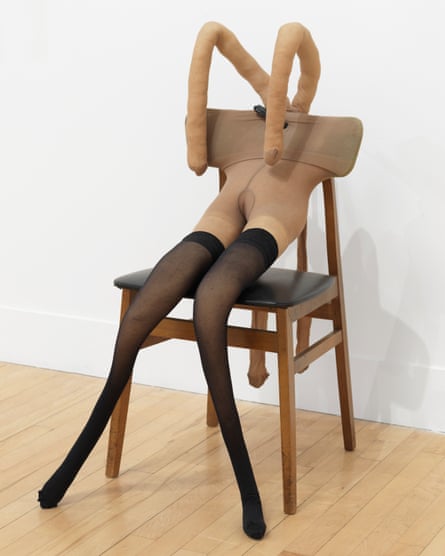
Pauline Bunny by Sarah Lucas, 1997
Dominique Heyse-Moore, senior curator: “Sarah had been stuffing tights with different kinds of materials, making spiders and all sorts of many-limbed creatures. But her “bunnies” are really the first time that women’s bodies began to be represented through this method. Her bunnies are named after Bunny Girls, the waitresses who worked in clubs earlier in the 20th century, though still around at this point. But the way she is slumped over a chair perhaps suggests that she is a sex worker. She’s also so slight: it’s a girl’s body in many ways. Sarah has continued to make bunnies. The recent ones have more folds, more flesh: older women’s bodies, but also more assertive, more confident in their sexuality.”
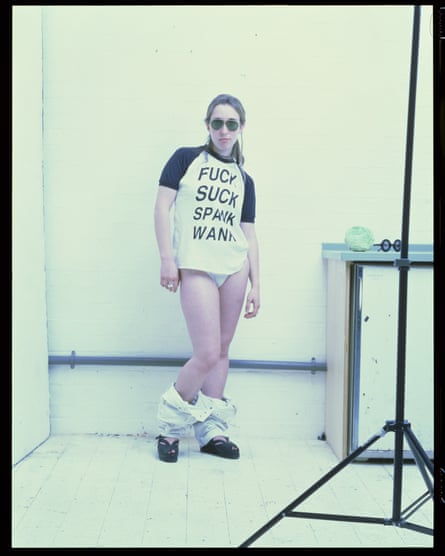
Fuck Suck Spank Wank by Sam Taylor-Johnson, 1993
Heyse-Moore: “A lot of these images are about girlhood, womanhood and youth; the experience of photographing and being photographed. All those themes are beautifully brought together here. There’s this way in which Taylor-Johnson is overtly and explicitly challenging the idea of how a woman is supposed to appear or behave in the making of her art. In the classic kind of 90s way, it’s poking at gender norms, not to mention the idea of the badly behaved artist.”
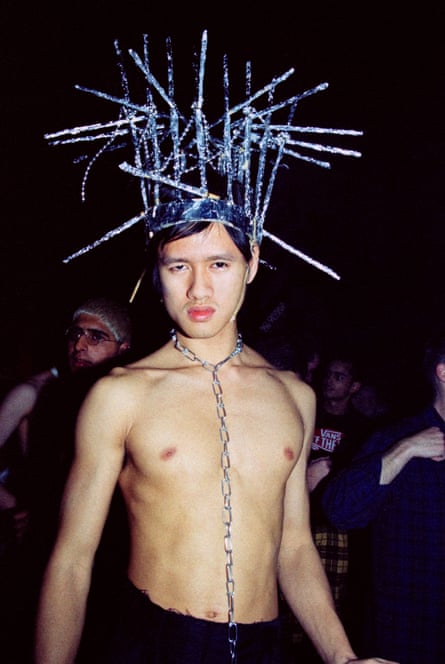
Flesh at Haçienda by Jon Shard, 1994
Shard: “I took this at Flesh in the early 90s. This guy had created this incredible headdress from silver wire, combined with the long chain around his neck. He was moving around the club like a piece of performance art. Flesh had a different feel from regular Haçienda nights. It was a gay night with its own look and energy, with people experimenting much more with how they presented themselves. I think this was what made the 90s so interesting: people creating things for themselves.”
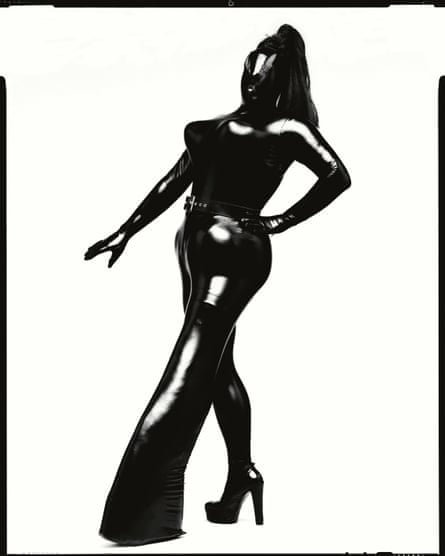
Leigh Bowery, Session VII, Look 38 by Fergus Greer, 1994
Greer: “This image of Leigh in a full-length rubber bodysuit, shot on large format, was made just before his sudden death from an Aids-related illness brought our six-year collaboration to an end. Leigh would spend hours preparing in the dressing room with his wife Nicola. When he finally emerged, the studio would fall into a pause of pure incredulity. My part was to find the magic that turned that moment into a photograph that would outlast us both. These are images people still want to reproduce, that 100 years on will hang on gallery walls and run in the media.”
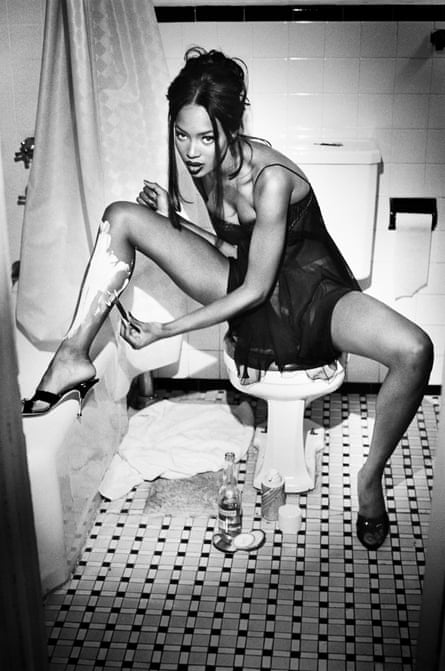
Naomi Campbell Babywoman album cover by Ellen von Unwerth, 1994
Heyse-Moore: “Naomi Campbell was a symbol of international Black beauty. But what we know now is that she often didn’t get booked in the UK. There was a persistent idea about what British style was: Kate Moss’s more androgynous, indie look. The Babywoman artwork is playing with the idea of her as a girl or a woman. Even the title speaks to questions around Black girlhood: research suggests that Black girls are not seen to be children. We hear so much about what it was like to be a vulnerable young white model but don’t really hear about that with Campbell.”
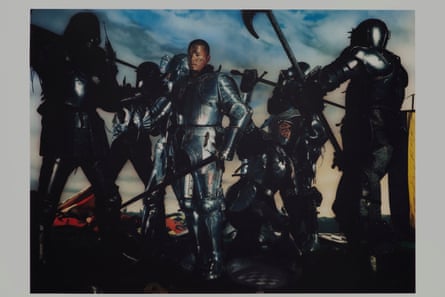
The Dark Knight Returns by Sean Ellis, styled by Isabella Blow, 1998
Ellis: “I was a huge fan of John Boorman’s film Excalibur and Isabella Blow was very good at mixing not only people but ideas. We spent a lot of time studying 16th-century battle paintings to work out the light and poses. I had a good relationship with Lee [Alexander McQueen, pictured centre]. You could tell he was on a collision course: he almost hated the industry he worked in. Here, he is outnumbered: there is a lowering of the sword as he faces his death. We did ones of him fighting back and another where all the knights are dead but this one, where he was fighting until he couldn’t fight any more, felt the strongest.”
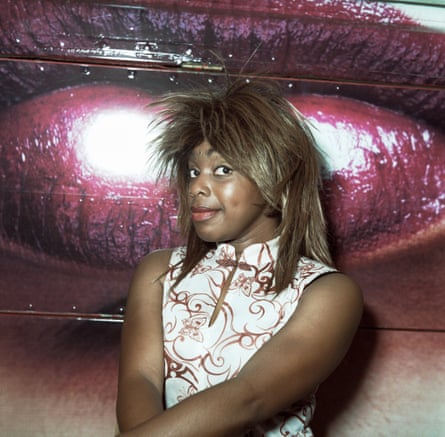
Untitled, Afro Hair and Beauty Show by Eileen Perrier, 1998
Heyse-Moore: “The Afro Hair and Beauty exhibition filled London’s Alexandra Palace every year. It was an amazing celebration and affirmation of the art of Black hair and makeup. One of the things that is wonderful about this image and the project [Perrier photographed the exhibition over five years] is it’s Black female photographer to Black female subject: there’s a really direct ‘looking at each other’ that takes place; an empowerment and agency for both. We don’t know how old the woman here is exactly, but we know she didn’t go to the show knowing that she and the other women pictured were going to be photographed that day. They’re getting dressed for themselves and for entering into that Black space. It’s a glimpse into this gigantic, quite private world, but with a performative element to it.”
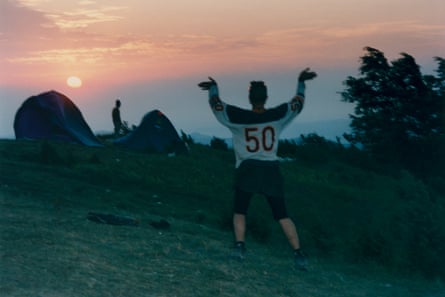
Paula Sunrise by Vinca Petersen, 1997
Petersen: “After the 1994 Criminal Justice Act outlawed raves in the UK, I spent a decade travelling around Europe in a van trying to recreate that way of living. This shot captures that feeling of having spent the whole night dancing in the dark in a huge crowd. There is something special about that moment when the sun slowly appears and you start to see the faces of all the people you’ve been surrounded by, and inevitably often sit down and end up talking about the big stuff in life. Nowadays I do kitchen discos. But that sense of freedom and creativity has stayed with us all. The last time I spoke to Paula she was working in the Houses of Parliament.”
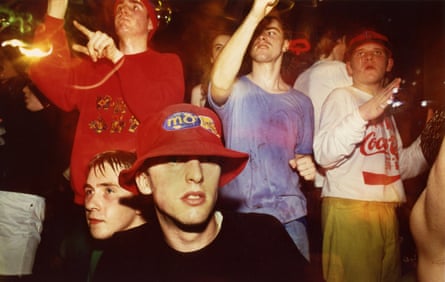
Ravers at the Eclipse, Coventry, by Tony Davis, 1991
Edward Enninful, curator: “The 90s were all about a shared energy, where fashion, art and music collided in the same spaces; a moment when a generation of outsiders rejected old hierarchies and for ever changed who gets to be seen. It’s a decade that established conditions that are still with us: the merging of high and low culture, the politicisation of fashion and image, and the emergence of diversity as a creative force.”
KioskNews shows a cleaned-up reading view extracted from the publisher’s page — the original always lives on their site, not ours.