5 Sci-Fi Books You Can Finish in a Weekend

Dyah (pronounced Dee-yah) is a Senior Author at Collider, responsible for both writing and transcription duties. She joined the website in 2022 as a Resource Writer before stepping into her current role in April 2023. As a Senior Author, she writes Features and Lists covering TV, music, and movies, making her a true Jill of all trades. In addition to her writing, Dyah also serves as an interview transcriber, primarily for events such as San Diego Comic-Con, the Toronto International Film Festival, and the Sundance Film Festival.
Dyah graduated from Satya Wacana Christian University in October 2019 with a Bachelor's degree in English Literature, concentrating on Creative Writing. On March 2026, Dyah graduated with Master's degree in English Literature Studies, with a thesis on intersectionality in postcolonial-feminist studies in Asian literary works.
Born and raised between Indonesia and Singapore, Dyah is no stranger to different cultures. She now resides in the small town of Kendal with her husband and four cats, where she spends her free time cooking or cycling.
Sign in to your Collider account
Sci-fi can be a lot to take in, and that's understandable. Luckily, some of the best sci-fi books can be finished in two days or less. From time travel and alternate universes to human-made dystopias, the genre explores familiar and unfamiliar concepts, imagining worlds where technology seems to have no bounds and human intelligence has reached unimaginable heights.
But progress comes with consequences, no matter how logical a decision might seem. Science cannot exist without the humans who practice it, and ultimately, their morals determine whether it is used for good or bad. That's some pretty heavy philosophical stuff, but certain writers know how to tackle these ideas in shorter books or through plots that are a breeze to read. From an absurdly ridiculous take on alien encounters to a survival thriller set on Mars, here are sci-fi books you can finish in a weekend.
'This Is How You Lose the Time War' (2019)
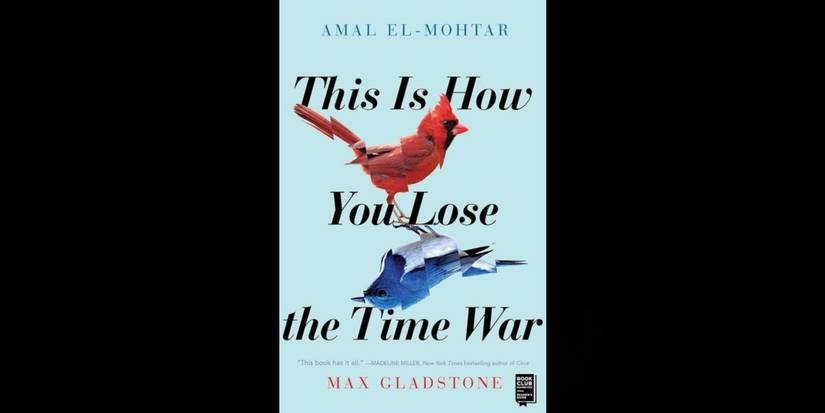
Winner of the 2020 Hugo Award for Best Novella, Amal El-Mohtar and Max Gladstone's This Is How You Lose the Time War follows Blue and Red, two rival agents working for opposing organizations across different timelines and universes in a post-apocalyptic future. Both women are tasked with manipulating events in the past to secure the future their respective factions desire. Although they've crossed paths countless times during their missions, they've never exchanged a word — that is, until Blue breaks the routine (and the rules) by sending Red a letter. What begins as a simple exchange soon blossoms into a companionship that puts their reputations, loyalties, and duties at risk.
At approximately 200 pages, This Is How You Lose the Time War is told in an epistolary format, which makes sense given that Blue and Red's main form of communication is through letters. This also makes the novel an easily digestible read that you can finish in two days. However, its shorter length doesn't take away from the ambitious scope of the story, especially when concepts like branching timelines and alternate universes are often reserved for longer novels with extensive worldbuilding. But this novel is more than just sci-fi. It's also about a forbidden love with consequences that extend beyond the two people involved. Their relationship could potentially threaten the fragile nature of the universes themselves, showing how something as personal as love can have far-reaching scientific implications that put humanity at risk.
'The Hitchhiker's Guide to the Galaxy' (1979)
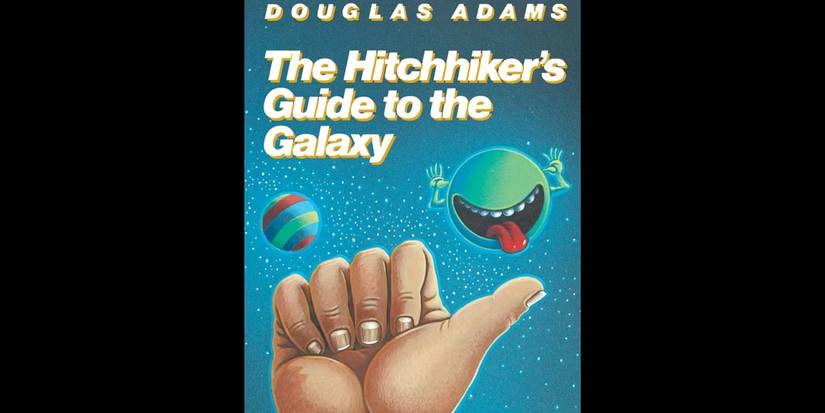
At around 200 pages, Douglas Adams' The Hitchhiker’s Guide to the Galaxy stuffs an entire universe of ridiculous adventures into a surprisingly quick read. It all starts when Earth is demolished by the Vogons to make room for a hyperspace bypass, leaving ordinary Englishman Arthur Dent scrambling to survive. He escapes with Ford Prefect, an alien friend who takes him across the galaxy alongside a bizarre group of companions: the two-headed president Zaphod Beeblebrox, the chronically depressed robot Marvin, and Trillian, another human survivor. Their journey eventually brings Arthur closer to discovering Earth's actual purpose, which, naturally, involves a supercomputer.
Adams wastes little time making it clear that this isn't your typical sci-fi adventure. The universe operates on its own ridiculous logic, whether that means destroying an entire planet for a space shortcut or electing a two-headed president. The jokes come so frequently that readers barely have time to question the absurdity before the next one arrives. Beneath all that humor, the novel also takes a swipe at humanity's obsession with finding meaning in everything. People spend their lives searching for the ultimate answer to existence, only for the universe to offer very little in return. And when the supercomputer finally delivers its answer, the result is so hilariously underwhelming that it makes the whole search even funnier.
'The Time Machine' (1895)

At just 84 to 176 pages, depending on the edition, H. G. Wells' The Time Machine is a Victorian-era predecessor to Back to the Future. The novella follows an eccentric English scientist known only as the Time Traveller, who builds a machine capable of traveling through time. Curious about humanity's future, he journeys to the year 802,701, where he encounters the Eloi, a seemingly carefree society living among the remnants of an advanced civilization. However, the world he discovers is far more complicated than it first appears, forcing him to reconsider what humanity’s future might look like.
Released during the Second Industrial Revolution, The Time Machine explores how technology shapes humanity and its relationship with nature. While these forces continue to intersect in the 21st century, seeing them through a late 19th-century perspective offers a fascinating glimpse into Victorian anxieties about progress. During this period, technological advancement was often seen as the key to Britain's continued dominance, reflecting the belief that humanity would only grow smarter, stronger, and more powerful. However, the Time Traveller's journey challenges that assumption. The book shows that human evolution has no guaranteed endpoint, and reaching what seems like the pinnacle of progress doesn't mean humanity's future will be any brighter.
Collider Exclusive · 8 Questions · 2 Minutes Which Star Wars Crew Should You Join? Falcon · Ghost · Skeleton Crew · Razor Crest
Eight honest questions about how you actually are: what your friends come to you for, how you handle a night that falls apart, what you want out of work, what keeps you going. Answer them and we will tell you which ship has your seat. Four crews are hiring: the smugglers, the rebels, the kids who got hopelessly lost, and the one man who works alone until he does not.
🚀Falcon(Original Trilogy)
👾Ghost(Star Wars Rebels)
🗺️Skeleton Crew(Skeleton Crew)
🪖Razor Crest(The Mandalorian)
01
What role do you play in your friend group? Everybody has one, whether they admit it or not.
02
How do you pack for a trip? This says more about people than it should.
03
Your plans collapse an hour before. What do you do? Everybody reacts to this differently.
04
What would you actually want out of a job? Be honest rather than impressive.
05
What do people come to you for? You already know which one it is.
06
How do you handle a disagreement with a friend? This is where people differ most.
07
What does a really good Saturday night look like? No wrong answers, but there are revealing ones.
08
What actually keeps you going? Eight questions in, this is the one that picks your crew.
Docking Clamps Released Your Crew Is…
Four ships, four completely different reasons to be up there at all. Here is the one that has your seat, what flying with them would cost you, and what it would give back.
Millennium Falcon
You belong on the fastest piece of junk in the galaxy, with a crew that took the job for the payday and then quietly stopped caring about the payday. Nothing on the Falcon has ever gone according to plan, and everybody aboard prefers it that way.
- You improvise better than you prepare, which is why you keep ending up in situations that a careful person would have avoided.
- The Falcon is the only ship on this list that is genuinely funny, and half of that comes from it breaking at the worst possible moment.
- You would pretend the whole thing is transactional right up until somebody you like is in trouble, and then the pretending stops instantly.
- This crew is the reason the rebellion had a chance at all, and not one of them would ever admit to that out loud.
The Ghost
You belong with the crew that turned a tiny cell of misfits into an actual rebellion. The Ghost is a home before it is a ship, and everybody who boards it arrived with something broken that the rest of them decided to look after.
- Found family is the whole engine here, and Rebels earns it by making you watch these people choose each other over and over again.
- You are in it for the cause, but what actually keeps you going is the four people who would notice immediately if you stopped showing up.
- Hera is one of the best captains in the franchise, and the show is smart enough to make her competence the quiet centre of everything.
- This crew pays for its wins, which is exactly what makes the wins land the way they do.
The Skeleton Crew
You belong with the four kids who found a buried ship, launched it by accident and are now extremely lost in a galaxy that eats people like them. Nobody here knows what they are doing, and that turns out to be the fun of it.
- Your instinct is to open the door that says do not open, and you would do it again tomorrow.
- Skeleton Crew is the closest Star Wars has come to an eighties adventure movie, where the stakes are real but the wonder never gets sanded off.
- You make friends out of whoever is standing next to you when things go wrong, which is a genuinely useful survival skill.
- The pirates in this one are properly frightening, and that is precisely why the kids being out of their depth works so well.
The Razor Crest
You belong in the quietest ship in the galaxy, with one small passenger and a code you have never explained to anybody. You told yourself this was a job, and then it stopped being a job somewhere around the second week.
- You work alone by preference and by habit, which lasts exactly as long as it takes for somebody small to need looking after.
- The Mandalorian works because almost nothing gets said out loud, and the armour does the acting that a face usually would.
- Your loyalty is narrow and absolute, so there are very few people on your list and nothing will move you off it.
- The Mandalorian and Grogu took all of that to the big screen over Memorial Day 2026, the first Star Wars film in seven years.
'The Martian' (2011)
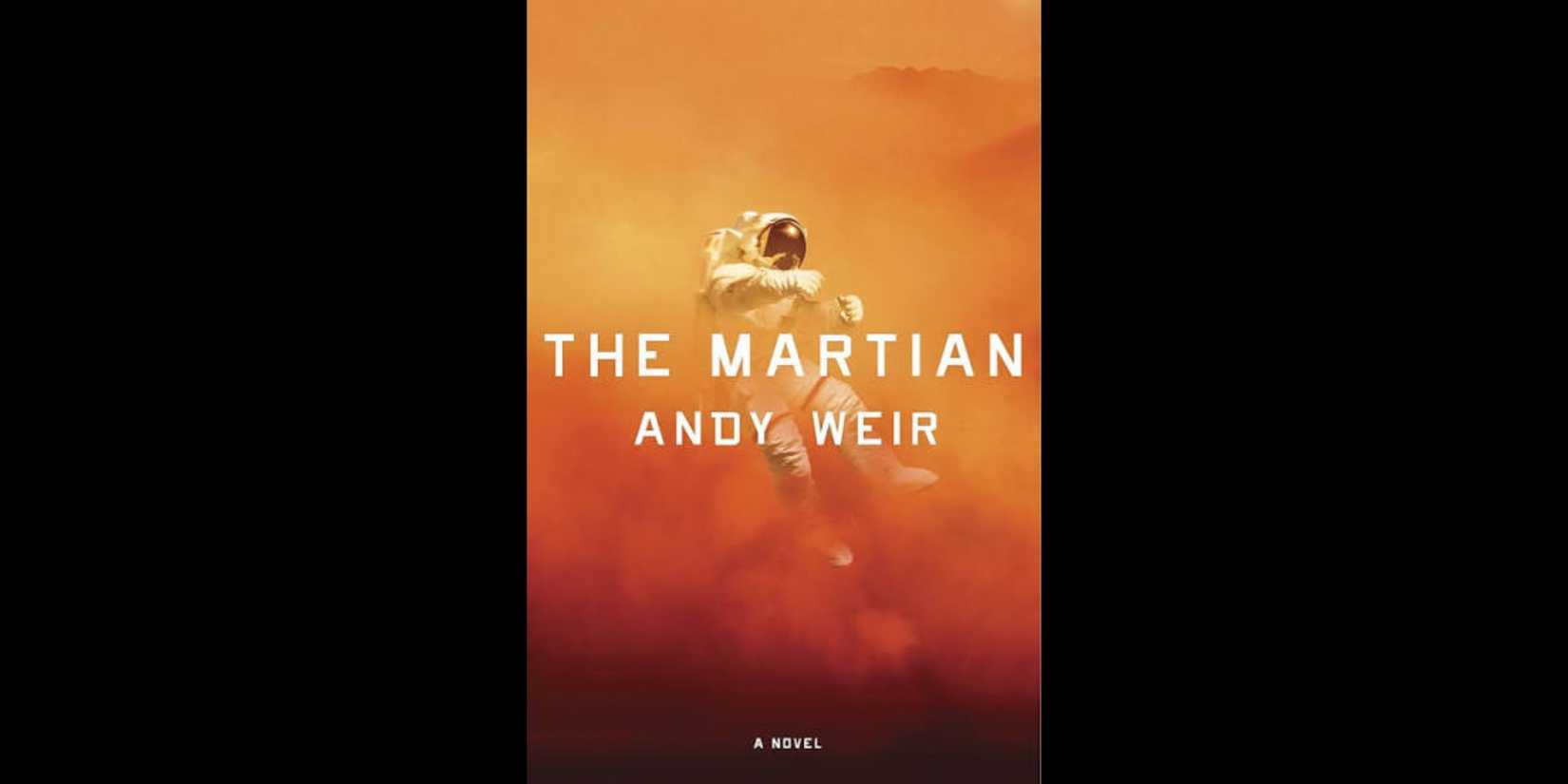
At roughly 370 pages, Andy Weir's The Martian is longer than some entries on this list, but its brisk pace—and the light, conversational tone from the lead character himself—makes it easy to keep turning pages. Mark Watney is on NASA's Ares 3 mission when a dust storm forces the crew to abandon Mars. An accident leaves him injured and separated from the others, who assume he is dead and head home. When Mark wakes up, he finds himself alone, with limited supplies, a damaged spacesuit, and no way to contact Earth. His only chance is to use his scientific knowledge to solve problems and find a way back.
The setup may sound like a straightforward survival thriller, but Weir gives the story an emotional purpose. Mark's resourcefulness keeps him alive, while the rescue effort shows how far people will go for someone they refuse to abandon. Back on Earth, NASA must decide whether another mission and its crew should be put at risk to bring him home. That dilemma gives the novel its heart. For all its science and engineering, The Martian comes down to one moral lesson: one person's life matters, even when saving it demands sacrifice. It's a reminder that survival is less of a solo achievement and more about people refusing to give up on you.
'Fahrenheit 451' (1953)

Reading is a crime in Ray Bradbury's Fahrenheit 451—arguably treated as more serious than murder. Anyone caught hiding, distributing, or even reading a book risks imprisonment. Firemen have an unusual job in this society: instead of putting out fires, they set books alight. Guy Montag has never questioned this arrangement until he meets Clarisse, a young neighbor whose curiosity about life challenges everything he has accepted as normal. His doubts deepen after he witnesses a woman choose to die with her books rather than surrender them. The encounter forces him to reconsider his job and the society he has served.
Depending on the edition, Fahrenheit 451 runs between 156 and 256 pages, but Bradbury packs a chillingly prophetic vision into that length. Published in the 1950s, the novel imagines a society that feels uncomfortably familiar today, from attempts to ban books deemed "controversial" to people spending hours glued to their phone screens. It also raises concerns about political forces seeking to silence criticism and discourage independent thought. Bradbury's warning is not simply that technology can distract people from the world. In the wrong hands, it can also become a tool for enforcing conformity, keeping the public occupied while those in power avoid scrutiny. Anyone who challenges that system risks consequences.

Fahrenheit 451
- Release Date
- September 7, 1966
- Runtime
- 113 minutes
- Director
- François Truffaut
- Writers
- Jean-Louis Richard
-

Clarisse / Linda Montag
-

Oskar Werner
Guy Montag
-
Cyril Cusack
Captain Beatty
-
Anton Diffring
Fabian / Headmistress
KioskNews shows a cleaned-up reading view extracted from the publisher’s page — the original always lives on their site, not ours.