Asian country with one of world's lowest birth rates weighs foreign security workers
Japan, which has one of the world's lowest birth rates, plans to establish an expert panel to consider allowing foreign workers to join the security industry as the sector faces a serious labor shortage.
The National Police Agency (NPA) announced the plan last week, saying the panel will discuss adding security services to the Employment for Skill Development Program, which is scheduled to begin in April 2027 and replace the technical intern training program.
It will also consider including the sector in the residency program for foreign workers with designated skills, Japan Times reported.
Based on the panel's recommendations, expected to be compiled as early as January, the NPA will ask the Ministry of Justice and other relevant authorities to revise the two programs.
The panel will comprise six experts with extensive knowledge of employing foreign workers, including a lawyer, a university professor and an industry representative.
 |
|
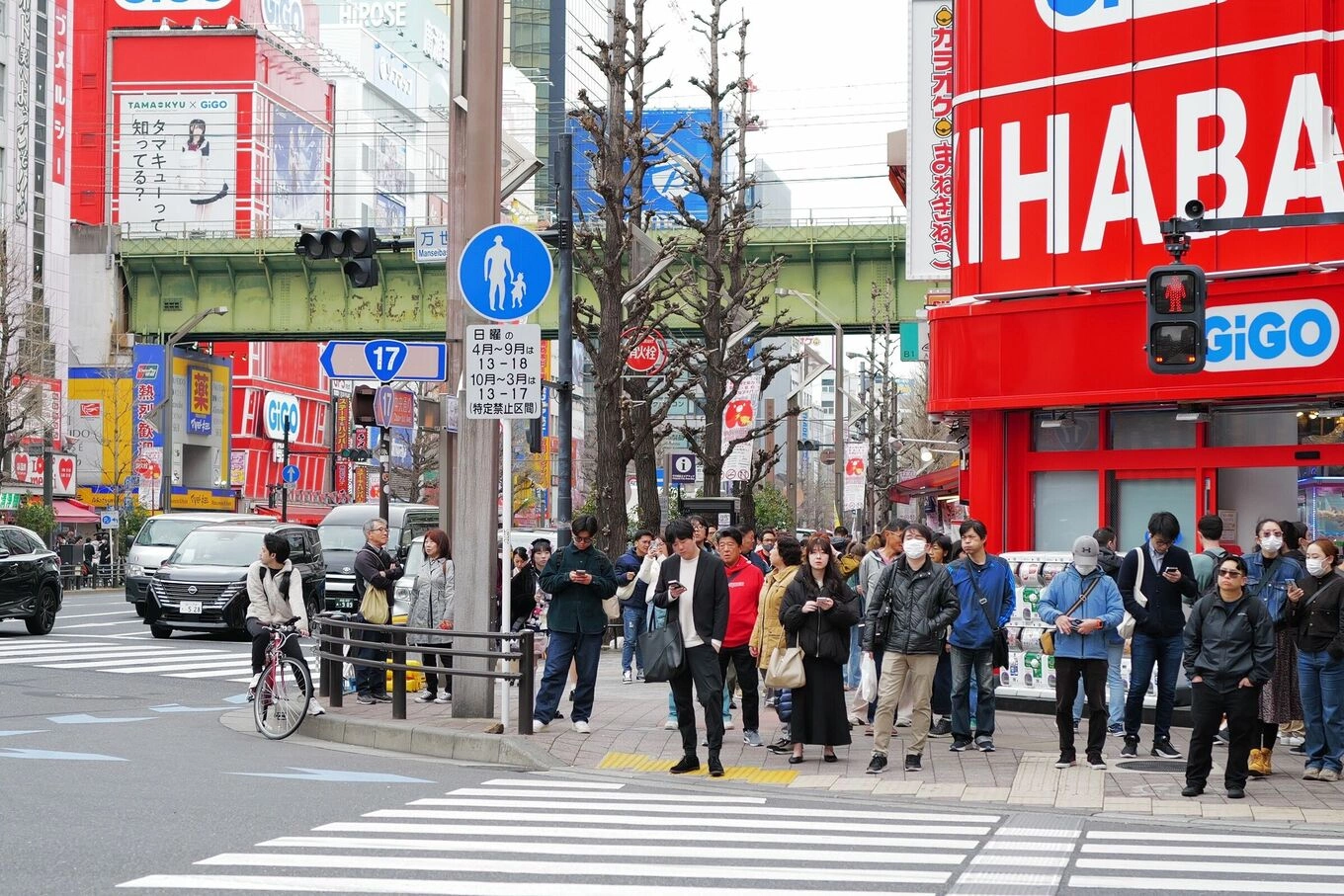
An intersection with pedestrians and storefronts in Tokyo, Japan, April 2024. Photo by Pexels |
They will examine how many foreign workers the security industry should be allowed to hire, what duties they could perform and what qualifications they would need, including the required level of Japanese proficiency.
Under the current security services law, there are no nationality restrictions on employment in the sector. Foreign residents and spouses of Japanese nationals can therefore work in security services.
According to the NPA, the ratio of active job openings to applicants for "protective service workers," which includes security personnel, has remained at around five to six in recent years, significantly higher than the average across all industries, The Mainichi reported.
The workforce is also aging, with employees aged 60 and above accounting for 47.3% of security workers at the end of 2025. Difficult working conditions have made recruitment increasingly challenging, prompting industry groups to call for measures to encourage the employment of young foreign workers.
Security work covers duties involving people's lives, physical safety and property, including guarding homes and businesses, directing traffic and transporting cash. Security firms also protect key facilities and government offices.
The NPA said some people may be concerned about foreign nationals entering the industry in significant numbers, making it necessary to establish a system that addresses those concerns.
Japan's population has continued to shrink and age rapidly, intensifying labor shortages across industries.
According to World Population Review's 2026 ranking, Japan has the world's seventh-lowest crude birth rate, at 6.093 births per 1,000 people.
The country had around 123 million residents by October last year, down 2.5% from 2020, while more than one in four people are aged 65 or older, according to its Population Census, as cited by Statista.
The total fertility rate also fell to a record low of 1.14 children per woman last year, marking its 10th consecutive annual decline.
KioskNews shows a cleaned-up reading view extracted from the publisher’s page — the original always lives on their site, not ours.